
Chef Juliette
John Dory (St. Pierre)
John Dory has the delicacy of sole and the firmness of turbot. A light flouring, a quick butter sauté, and nut-brown beurre noisette show exactly why looks never mattered.
A cooking platform built around craft, culture, and the stories behind what we eat.
Created by Chef Juliette
Based on No. 1766, Caneton Glacé aux Mandarines, from Le Guide Culinaire (1907) by Auguste Escoffier
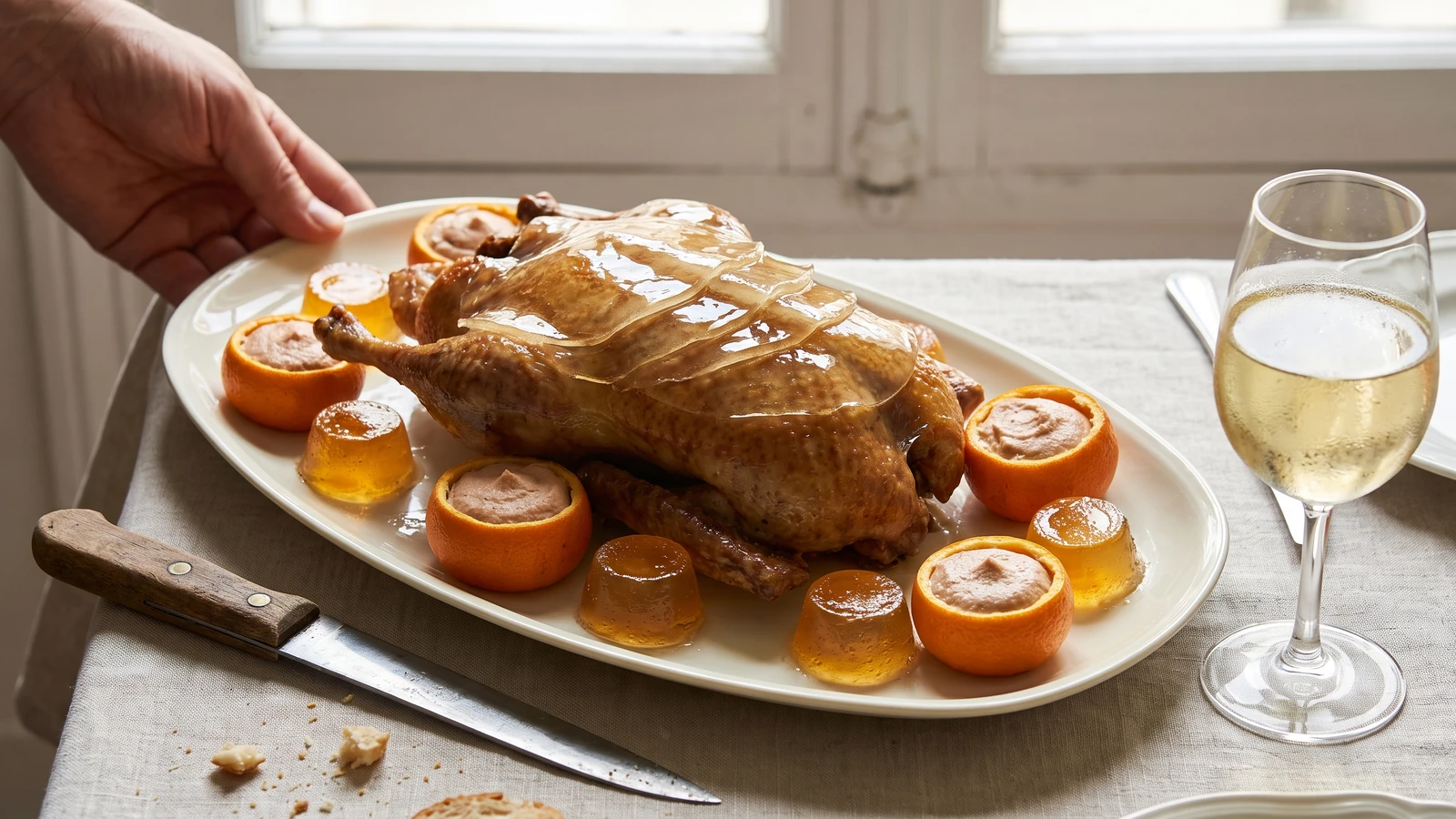
Caneton glacé aux mandarines arrives cold and gleaming: butter-poëled duck under a fine aspic coat, ringed with citrus cups of liver mousse and jewel-clear timbales, a celebration dish built by patience, not ceremony.
Caneton Glacé aux Mandarines (aspic-glazed duckling with mandarins) teaches the first law of cold cookery: fat that seems luscious when warm becomes heavy once chilled, so the poëling liquor must be strained, cooled, and stripped of every loose bead before it joins the aspic. The reward is generous and precise, burnished duck beneath a transparent glaze, rich liver mousse held in bright citrus shells, and little timbales that tremble when the platter moves.
The original service assumed a saucier on staff, a clear stockpot never off the fire, ranks of moulds in the garde-manger, and enough hands to carve a rice or bread cushion merely to raise the bird. A salamander has no office in this cold dish. At home, clear rich stock strengthened with gelatin replaces the standing aspic pot, a rack over a sheet pan replaces the glazing station, and silicone moulds release the timbales without argument. The edible cushion was buffet scaffolding, so it goes. The poëlé method (butter-roasting gently under cover), cooling in the cooking liquor, liver-and-foie-gras mousse, citrus aspic, and layered glaze are the dish itself, so they stay.
One duckling serves four, with six mandarin cups and six timbales arranged around it. The entry gives the composition rather than brigade weights, so these quantities supply exactly that home-scale arrangement without a stockpot of surplus. One cook, one stove, one evening of work, then the cold does the waiting. The decisive step is glazing: the duck must be thoroughly cold and dry, while the aspic must be fluid but beginning to thicken. Get those two temperatures right and the glaze clings like glass.
Caneton glacé aux mandarines belongs to the Parisian cuisine classique repertoire of the garde-manger, where cooked poultry was cooled, glazed in aspic, and arranged for formal cold service. The poëling method carried butter-rich covered roasting into that repertoire, while mandarins supplied both edible cups and the sweet acidity needed against duck and foie gras. It is sometimes mistaken for a southern citrus dish, but its logic is not Provençal; it is the composed cold-buffet language of the Parisian grand kitchen, scaled here for a home celebration.
Quantity
1 duckling, 4½ to 5 pounds (2 to 2.3 kg), prepared as Poëlings (No. 250), with 1½ cups (360 ml / 360 g) cooking liquor reserved
Quantity
8 medium, about 1¾ pounds (800 g)
six unblemished shells reserved and the sections juiced
Quantity
6 ounces (170 g)
trimmed and halved if large
Quantity
3 ounces (85 g)
softened
Quantity
4 tablespoons (60 ml / 57 g)
divided
Quantity
½ cup (120 ml / 120 g)
very cold
Quantity
1½ cups (360 ml / 360 g)
Quantity
4 packets, about 3 tablespoons (45 ml / 28 g)
Quantity
½ cup (120 ml / 120 g)
divided
Quantity
1 teaspoon (5 ml / 6 g), divided, plus more if needed
Quantity
⅛ teaspoon (0.6 ml / 0.3 g)
| Ingredient | Quantity |
|---|---|
| whole duckling with reserved poëling liquor | 1 duckling, 4½ to 5 pounds (2 to 2.3 kg), prepared as Poëlings (No. 250), with 1½ cups (360 ml / 360 g) cooking liquor reserved |
| mandarins or tangerinessix unblemished shells reserved and the sections juiced | 8 medium, about 1¾ pounds (800 g) |
| duck liverstrimmed and halved if large | 6 ounces (170 g) |
| plain fully cooked foie grassoftened | 3 ounces (85 g) |
| unsalted butterdivided | 4 tablespoons (60 ml / 57 g) |
| heavy creamvery cold | ½ cup (120 ml / 120 g) |
| clear, rich, lightly salted duck or chicken stock | 1½ cups (360 ml / 360 g) |
| powdered gelatin | 4 packets, about 3 tablespoons (45 ml / 28 g) |
| cold waterdivided | ½ cup (120 ml / 120 g) |
| fine sea salt | 1 teaspoon (5 ml / 6 g), divided, plus more if needed |
| ground white pepper | ⅛ teaspoon (0.6 ml / 0.3 g) |
Prepare the duckling according to Poëlings (No. 250), without reworking that preparation here; when finished, the thickest part of the thigh should register at least 165°F (74°C). Strain off 1½ cups (360 ml) of its cooking liquor. Reserve 1 cup (240 ml) for the timbales, then set the duckling on its back, breast upward, in a shallow nonreactive dish and spoon the remaining ½ cup (120 ml) over it. Nest the dish in an ice bath and turn it once as it cools, then refrigerate it within one hour. Chill the duckling and both portions of liquor thoroughly, keeping them at or below 40°F (4°C).
Cut a thin lid from the stem end of six unblemished mandarins. Ease out the sections with a small spoon or grapefruit knife without piercing the shells, then scrape away loose white membranes. Juice the sections from all eight fruits and strain them; measure ¾ cup (180 ml / 180 g) for the timbale aspic. Chill the six shells and their lids. If the fruit is dry and gives less juice, squeeze another mandarin rather than replacing its clean flavor with lemon or sweetened juice.
Reserve 1 tablespoon (15 ml) of the cream. Melt 2 tablespoons (28 g) of the butter over medium heat and cook the duck livers without crowding until browned outside and 165°F (74°C) at the center. Transfer the hot livers and pan butter to a food processor. Add the foie gras, remaining butter, ½ teaspoon (3 g) salt, and white pepper, then process until completely smooth and pass the purée through a fine sieve. If it looks grainy or oily, blend in the reserved tablespoon of warm cream while the mixture is still supple. Ça se rattrape. Cool it until no longer warm but not firm. Whip the remaining cold cream to soft folds and fold it through the liver base; this aeration is what makes it mousse rather than pâté. Cover and chill for at least 3 hours.
Divide the gelatin between two bowls, 2 packets (14 g) in each, and sprinkle ¼ cup (60 ml) cold water over each portion. Let both bloom for 10 minutes. For the glazing aspic, bring the clear stock just to a simmer, remove it from the heat, and dissolve one portion of bloomed gelatin in it. Strain into a shallow bowl. For the timbales, warm the reserved, thoroughly degreased 1 cup (240 ml) poëling liquor with the ¾ cup (180 ml) mandarin juice, remove it from the heat, and dissolve the second portion of gelatin. Taste both mixtures from a chilled spoon and season with the remaining salt only as needed, remembering that cold dulls seasoning. Do not boil either mixture after adding the gelatin.
Divide the mandarin and poëling-liquor aspic among six 3-ounce (90 ml) silicone moulds, using about ⅓ cup (80 ml) in each. Refrigerate them on a level tray for at least 3 hours, until firm enough to unmould without slumping. If a timbale refuses to release, dip only the base of its mould in warm water for two seconds and invert again. A longer bath melts the details and leaves a puddle.
Lift the cold duckling from its dish, remove any clinging fat or set liquor, and blot the skin completely dry. Set it on its back, breast upward, on a wire rack over a clean sheet pan. Cool the plain aspic over ice, stirring occasionally, until it has the body of light syrup but still flows. Spoon or brush on one thin coat and refrigerate for 8 to 10 minutes; repeat three or four times, warming the collected runoff gently and reusing it as needed. If the aspic slides off, stop. Either the bird is damp or the jelly is too warm: blot and rechill the duck, thicken the aspic over ice, then begin again. Ça se rattrape. Hold the finished bird cold until assembly.
Stir the chilled mousse just enough to make it spoonable, then fill the six mandarin shells generously and replace their lids at a slight angle. Set the glazed duckling directly on a low, long platter, still on its back with the breast uppermost. The carved rice or bread cushion is omitted because it raised a professional buffet display but adds nothing to the eating. Unmould the six timbales and alternate them with the filled mandarins around the bird. Keep the platter chilled until 15 minutes before serving, present it whole, then carve the breasts thinly and divide the legs, giving each plate some mousse and citrus aspic. Don't leave it at room temperature for more than 2 hours. À table!
1 serving (about 625g)
Culinary guides, cultural storytelling, and the editorial depth that makes cooking meaningful.
Discover Culinary ExplorerChef Juliette
John Dory has the delicacy of sole and the firmness of turbot. A light flouring, a quick butter sauté, and nut-brown beurre noisette show exactly why looks never mattered.

Chef Juliette
Fresh haddock proves its delicacy in the meunière pan: a fine flour crust, moist pearly flakes, and beurre noisette sharpened with lemon and parsley, ready from one skillet in half an hour.

Chef Juliette
Éperlans à l’Anglaise turns small fish into a lesson in disciplined coating: boned smelts under a close, crisp crumb, pan-fried in clarified butter and finished with bright, half-melted maître d’hôtel butter.

Chef Juliette
Tiny smelts, shallot, mushrooms, white wine, gratin sauce, and fine bread raspings meet a fierce oven, where the fish must turn tender in the same breath the buttered crust bronzes.