
Chef Juliette
John Dory (St. Pierre)
John Dory has the delicacy of sole and the firmness of turbot. A light flouring, a quick butter sauté, and nut-brown beurre noisette show exactly why looks never mattered.
A cooking platform built around craft, culture, and the stories behind what we eat.
Created by Chef Juliette
Based on No. 1678, Pilaw de Volaille, from Le Guide Culinaire (1907) by Auguste Escoffier
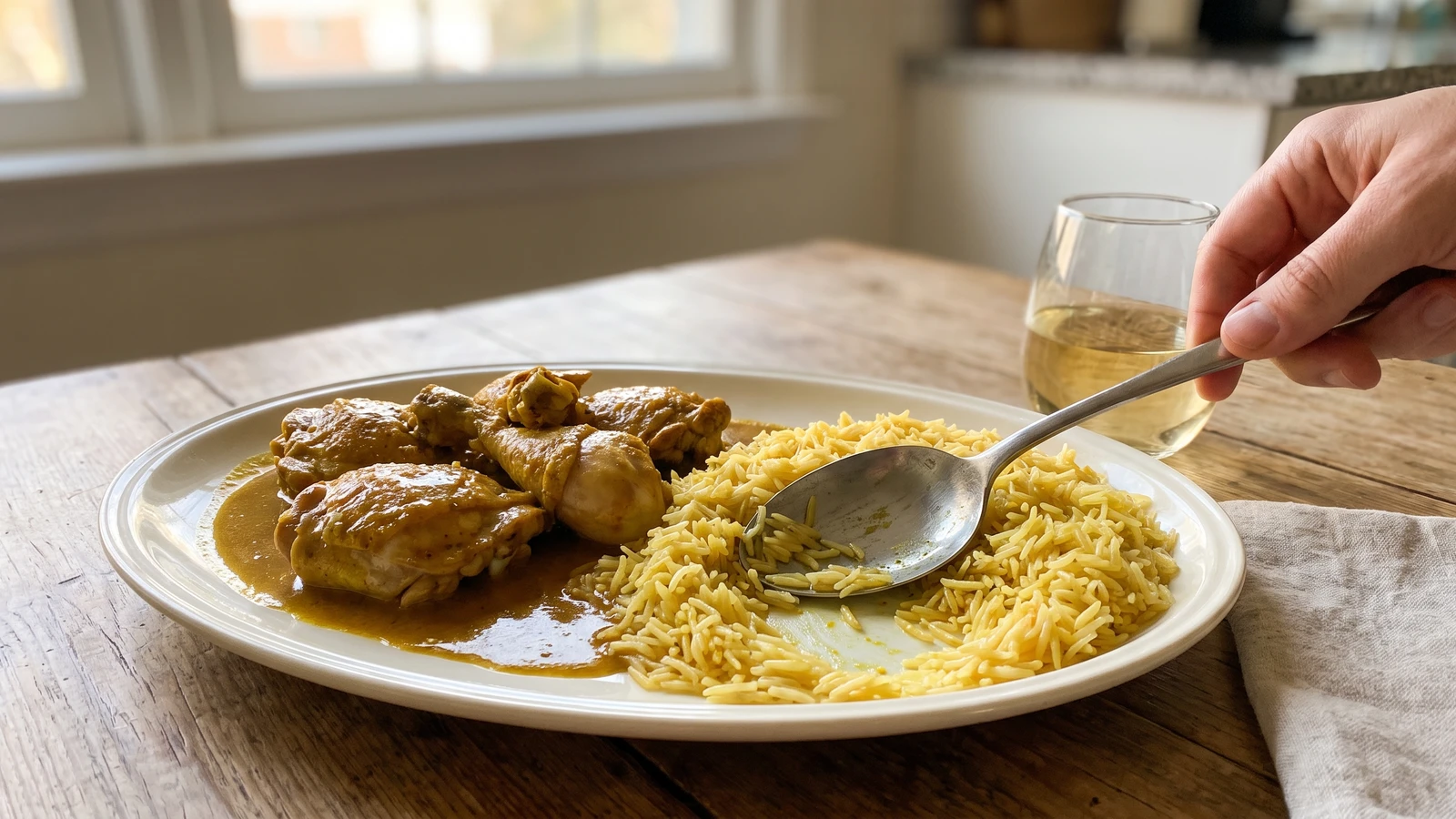
Pilaw de Volaille keeps its two promises apart: chicken simmered in a mild curry sauce, rice cooked nacré in butter and stock, then the two brought together only on the plate.
Pilaw de Volaille (poultry pilaf) teaches separation. The chicken is handled as a curry; the rice gets its own butter, stock, and covered cooking. Do not simmer them together. The one-pot promise belongs only to Pilaw à la Parisienne, while this entry depends on clear grains beside sauce-coated fowl.
The source gives the governing method rather than fixed quantities, so this home formula keeps that method and gives it a restrained French curry seasoning for four. The grand-kitchen arrangement assumed a saucier at the curry pan, an entremetier at the rice, and stock never off the fire. Two ordinary pans, one good prepared chicken stock, and staggered timing replace those extra hands. Parallel stations were scaffolding; separate cooking is the dish. One cook, one stove, one evening.
The step to guard is nacrer (coat until pearly): let every drained grain turn glossy in butter before the stock enters. That film, followed by quiet covered cooking and a proper rest, gives you rice that stays itself when the sauce arrives beside it.
Pilaw entered the French classical repertoire through Parisian grand kitchens, borrowing from a broad family of rice methods running from Persia through eastern Mediterranean tables rather than from one single national dish. In this classification, pilaff did not automatically mean meat and grain cooked together: curry-treated fowl and pilaw rice were normally prepared apart, with Pilaw à la Parisienne as the named exception. Nor is the rice Riz à l'Indienne; butter, stock, and covered cooking give it its own structure.
Quantity
8 pieces (about 3 lb 5 oz / 1.5 kg)
4 thighs and 4 drumsticks, patted dry
Quantity
2 teaspoons (10 ml / 12 g)
divided
Quantity
1 teaspoon (5 ml / 2 g)
freshly ground
Quantity
7 tablespoons (105 ml / 100 g)
divided
Quantity
1¾ cups (425 ml / 280 g)
finely chopped and divided
Quantity
1 tablespoon (15 ml / 8 g)
Quantity
2 tablespoons (30 ml / 16 g)
Quantity
4½ cups (1.06 L / 1.06 kg)
divided and kept warm
Quantity
1 small bouquet
Quantity
1½ cups (375 ml / 285 g)
rinsed until the water runs clear and drained for 15 minutes
Quantity
½ cup (120 ml / 120 g)
Quantity
1 tablespoon (15 ml / 15 g)
| Ingredient | Quantity |
|---|---|
| bone-in chicken pieces4 thighs and 4 drumsticks, patted dry | 8 pieces (about 3 lb 5 oz / 1.5 kg) |
| fine saltdivided | 2 teaspoons (10 ml / 12 g) |
| black pepperfreshly ground | 1 teaspoon (5 ml / 2 g) |
| unsalted butterdivided | 7 tablespoons (105 ml / 100 g) |
| yellow onionfinely chopped and divided | 1¾ cups (425 ml / 280 g) |
| mild curry powder | 1 tablespoon (15 ml / 8 g) |
| all-purpose flour | 2 tablespoons (30 ml / 16 g) |
| light, unsalted chicken stockdivided and kept warm | 4½ cups (1.06 L / 1.06 kg) |
| bouquet garni of parsley stems, thyme, and bay leaf | 1 small bouquet |
| long-grain white ricerinsed until the water runs clear and drained for 15 minutes | 1½ cups (375 ml / 285 g) |
| heavy cream | ½ cup (120 ml / 120 g) |
| fresh lemon juice | 1 tablespoon (15 ml / 15 g) |
Heat the oven to 350°F (180°C). Warm the chicken stock in the rice saucepan, then pour it into a heatproof measuring jug and keep it covered. Season the chicken with 1 teaspoon of the salt and all the pepper. Have the remaining ingredients measured before the chicken meets the pan, because the curry powder and flour follow one another quickly.
Melt 2 tablespoons of the butter in the sauté pan over medium-high heat. When the foam subsides, brown the chicken in two batches, beginning skin-side down and turning only when it releases easily. Aim for an even light bronze, not a dark roasted crust, about 8 to 10 minutes altogether. Set the pieces aside. If the butter begins to blacken, lower the heat at once and wipe out the burnt specks before continuing; bitter butter will follow the sauce all the way to the table.
Lower the heat to medium and add 2 tablespoons of butter with 1½ cups of the chopped onion. Cook for 7 to 8 minutes, stirring, until the onion is soft and translucent without taking colour. Add the curry powder and stir for 30 seconds, just until fragrant. Singer (dust with flour) the onions, then cook for 2 minutes so the flour loses its raw smell. Gradually whisk in 2¼ cups (530 ml) of the warm stock, scraping the chicken fond from the pan floor. Add the bouquet garni and return the chicken, skin-side up. Partially cover and hold at a bare simmer for 25 to 30 minutes, until the thickest pieces reach at least 165°F (74°C) and the joints move freely.
As soon as the chicken settles into its simmer, melt 2 tablespoons of butter in the clean ovenproof saucepan over medium-low heat. Add the remaining ¼ cup onion and cook without browning for 3 minutes. Add the well-drained rice and nacrer it for 2 to 3 minutes, stirring gently, until every grain gleams with butter and the edges look translucent. Pour in 2 cups (470 ml) of the warm stock, add ¾ teaspoon salt, and bring it to one full boil. Cover tightly, transfer to the oven, and bake for 18 minutes without stirring or lifting the lid.
Lift the cooked chicken onto a warm plate and discard the bouquet garni. Boil the sauce uncovered for 3 to 5 minutes, until it lightly naps the back of a spoon. Lower the heat, stir in the cream, and simmer gently for 2 minutes before adding the lemon juice. Taste and correct the salt, then return the chicken to warm through. If the sauce becomes too thick, whisk in the reserved stock a tablespoon at a time. If it looks grainy after the cream enters, take it off the heat and whisk in a spoonful of cold cream. Ça se rattrape.
Remove the rice from the oven and leave it covered for 5 minutes. Fold in the final tablespoon of butter with a fork, lifting rather than stirring, and taste for salt. If the rice is still firm and the pan is dry, sprinkle over 2 tablespoons of the reserved hot stock, cover, and rest for another 5 minutes. If it is wet, spread the grains loosely in the uncovered pan and return them to the oven for 3 minutes. Never beat wet rice into submission; give the moisture somewhere to go.
Spoon the rice in a loose mound along one side of a warm platter. Arrange the chicken beside it and pour the curry sauce around the meat, leaving the rice distinct rather than flooding it. Bring any remaining sauce to the table separately. The two preparations belong on the same plate, not in the same pan. À table!
1 serving (about 590g)
Culinary guides, cultural storytelling, and the editorial depth that makes cooking meaningful.
Discover Culinary ExplorerChef Juliette
John Dory has the delicacy of sole and the firmness of turbot. A light flouring, a quick butter sauté, and nut-brown beurre noisette show exactly why looks never mattered.

Chef Juliette
Fresh haddock proves its delicacy in the meunière pan: a fine flour crust, moist pearly flakes, and beurre noisette sharpened with lemon and parsley, ready from one skillet in half an hour.

Chef Juliette
Éperlans à l’Anglaise turns small fish into a lesson in disciplined coating: boned smelts under a close, crisp crumb, pan-fried in clarified butter and finished with bright, half-melted maître d’hôtel butter.

Chef Juliette
Tiny smelts, shallot, mushrooms, white wine, gratin sauce, and fine bread raspings meet a fierce oven, where the fish must turn tender in the same breath the buttered crust bronzes.