
Chef Juliette
Aioli Sauce, or Provence Butter
Aïoli is garlic pounded to silk, then bound with yolk and olive oil one patient drop at a time, an ivory-gold emulsion with enough force to anchor a long outdoor supper.
A cooking platform built around craft, culture, and the stories behind what we eat.
Created by Chef Juliette
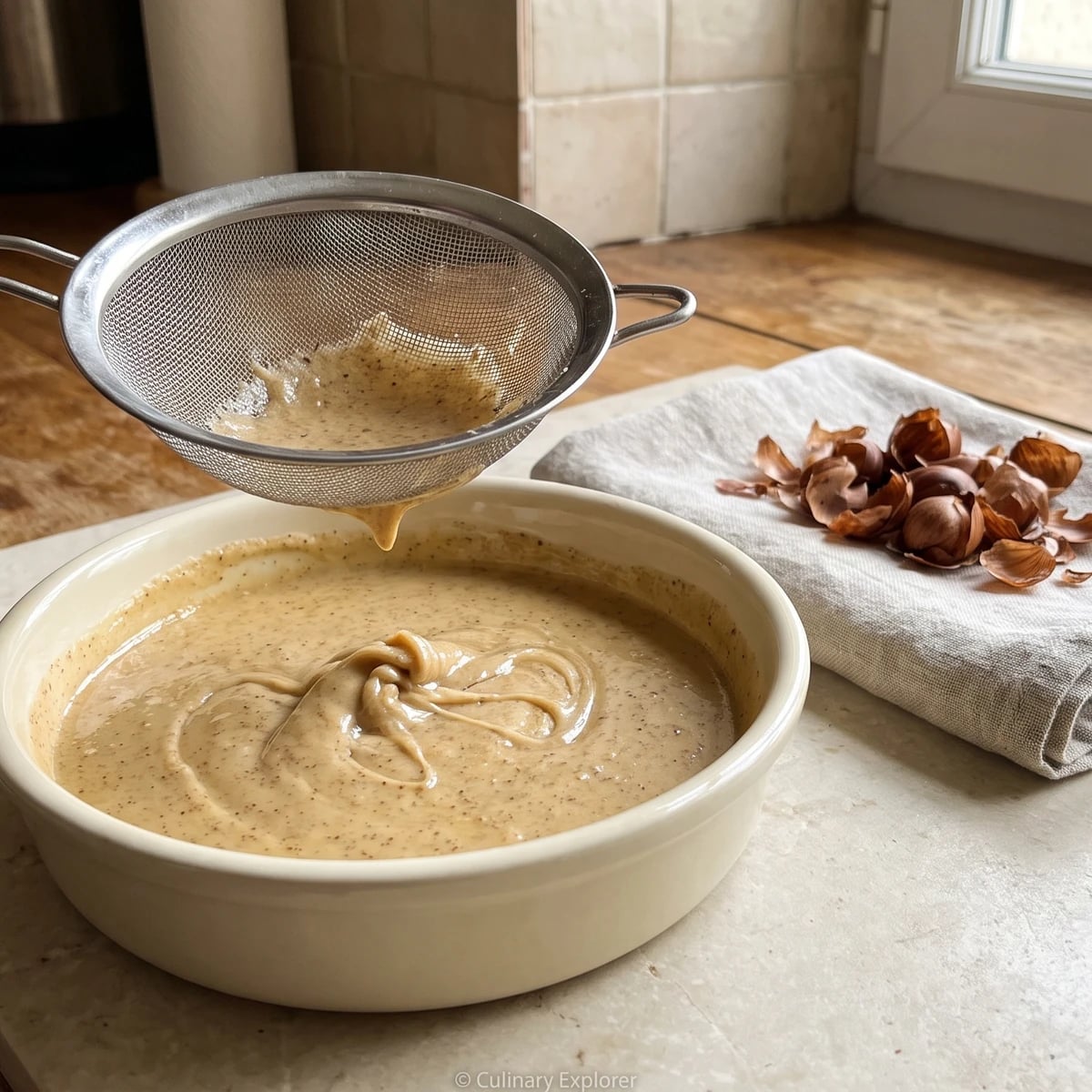
Beurre de noisettes teaches restraint: warm the nuts only enough to shed their skins, add water by drops as you pound, then marry the paste with its equal weight of butter.
Beurre de noisettes teaches a small but essential discipline: when a nut paste begins releasing its oil, more force only makes matters worse. A few drops of cold water, added while you pound, keep the hazelnuts bound into a smooth paste that will marry cleanly with the butter. That is the one true thing to know before touching the pan.
The original formula assumed a saucier at the mortar, a hot zone at the front of the oven, and a tammy broad enough for a professional batch. Your equivalents are a measured oven, a sturdy mortar or compact food processor, and a fine-mesh sieve. I have scaled the pair from eight ounces apiece to two, keeping the equal-weight ratio exactly; the brigade quantity was scaffolding, but warming, pounding with water, and sieving are the dish itself. One cook, one stove, one evening.
The finished beurre de noisettes should be pale biscuit-gold, dense and smooth, with the clean fragrance of hazelnut rather than the darker taste of a fully roasted nut. If the paste turns glossy with loose oil, stop. Ça se rattrape: chill it briefly, then pound in two drops of ice-cold water until it gathers again. Keep the paste cool and give it water by drops, never by spoonfuls.
Beurre de noisettes belongs to the French classical sauce pantry, especially the Parisian kitchens that organized beurres composés, compound butters, as ready finishing elements for service. Its particular work is to carry actual hazelnut into Sauce Noisette, which distinguishes it from beurre noisette, butter browned until it smells nutty but contains no nuts. The shared word noisette describes both the ingredient and the aroma, a small linguistic trap the technique resolves.
Quantity
7 tablespoons (105 ml / 56 g)
Quantity
1/4 cup (60 ml / 56 g)
softened but still cool
Quantity
Up to 1/8 teaspoon (0.6 ml / 0.6 g)
added drop by drop
| Ingredient | Quantity |
|---|---|
| shelled raw hazelnuts | 7 tablespoons (105 ml / 56 g) |
| unsalted buttersoftened but still cool | 1/4 cup (60 ml / 56 g) |
| ice-cold wateradded drop by drop | Up to 1/8 teaspoon (0.6 ml / 0.6 g) |
Heat the oven to 350°F (180°C). Spread the hazelnuts in one layer on a small tray and warm them for 6 to 8 minutes, shaking the tray once, until their skins look dry and begin to split but the nutmeats remain pale. The source's place at the front of the oven meant brief skin-loosening heat, not a deep roast; dark nuts would overwhelm the butter and change the intended flavour.
Tip the warm nuts into a clean kitchen towel, fold it over them, and rub firmly so the loosened skins flake away. Pick out the nuts and remove any large clinging patches, then let them cool completely. A few fine flecks will be caught by the sieve later. If the skins refuse to move, return the nuts to the oven for 2 minutes and rub again; forcing cold, stubborn skins off with a knife only wastes the nut.
Put the cooled nuts in a mortar and crush them first to crumbs, then begin pounding them toward a paste. As the crumbs grow damp-looking, add the ice-cold water one or two drops at a time, pounding thoroughly after each addition. If using a compact food processor, pulse in short bursts and scrape the bowl often so the paste never grows warm. Stop when it is cohesive, very fine, and matte rather than oily. If a glossy ring of oil appears, stop and chill the paste for 10 minutes. Ça se rattrape: pound in another two drops of cold water until the oil draws back into the paste.
Add the softened butter to the hazelnut paste in four additions, pounding or processing each one fully before adding the next. The weights must be equal, because that balance gives enough hazelnut to flavour the sauce without making the butter grainy or heavy. Continue until the mixture is uniform and pale biscuit-gold. If it slumps or looks greasy, it has grown too warm; chill it for 5 minutes, then continue.
Set a fine-mesh sieve over a cool bowl and rub the mixture through with the back of a sturdy spoon, working in small portions. Scrape every ribbon of smooth beurre de noisettes from the underside of the sieve and discard only the coarse skin and nut residue left above. This replaces the original tammy, but not the act of sieving; that final refinement is what lets the butter disappear smoothly into Sauce Noisette. If the mixture is too firm to pass, leave it for 5 minutes at cool room temperature. Do not heat it.
Scrape the beurre de noisettes into a small lidded jar, press parchment directly against its surface, and use it at once or refrigerate until needed. For Sauce Noisette, let the required portion lose its refrigerator chill before incorporating it so the butter disperses evenly. Add no salt or extra flavouring here; the finished sauce controls its own seasoning.
1 serving (about 14g)
Culinary guides, cultural storytelling, and the editorial depth that makes cooking meaningful.
Discover Culinary Explorer
Chef Juliette
Aïoli is garlic pounded to silk, then bound with yolk and olive oil one patient drop at a time, an ivory-gold emulsion with enough force to anchor a long outdoor supper.

Chef Juliette
Sauce Andalouse teaches the discipline of every cold derivative sauce: begin with a stable emulsion, add deep tomato in measured stages, then fold in fine capsicum without sacrificing its clean gloss.

Chef Juliette
Sauce bohémienne turns cold Béchamel into the steady heart of a mayonnaise, enriched with yolk and oil, sharpened with tarragon vinegar, then finished with mustard for the cold table.

Chef Juliette
Sauce Génoise is the cold emulsion that proves texture begins before oil: pistachios and pine nuts pounded to silk, built into mayonnaise, then sharpened with lemon and greened with four scalded herbs.