
Chef Juliette
John Dory (St. Pierre)
John Dory has the delicacy of sole and the firmness of turbot. A light flouring, a quick butter sauté, and nut-brown beurre noisette show exactly why looks never mattered.
A cooking platform built around craft, culture, and the stories behind what we eat.
Created by Chef Juliette
Based on No. 1344, Cassoulet, from Le Guide Culinaire (1907) by Auguste Escoffier
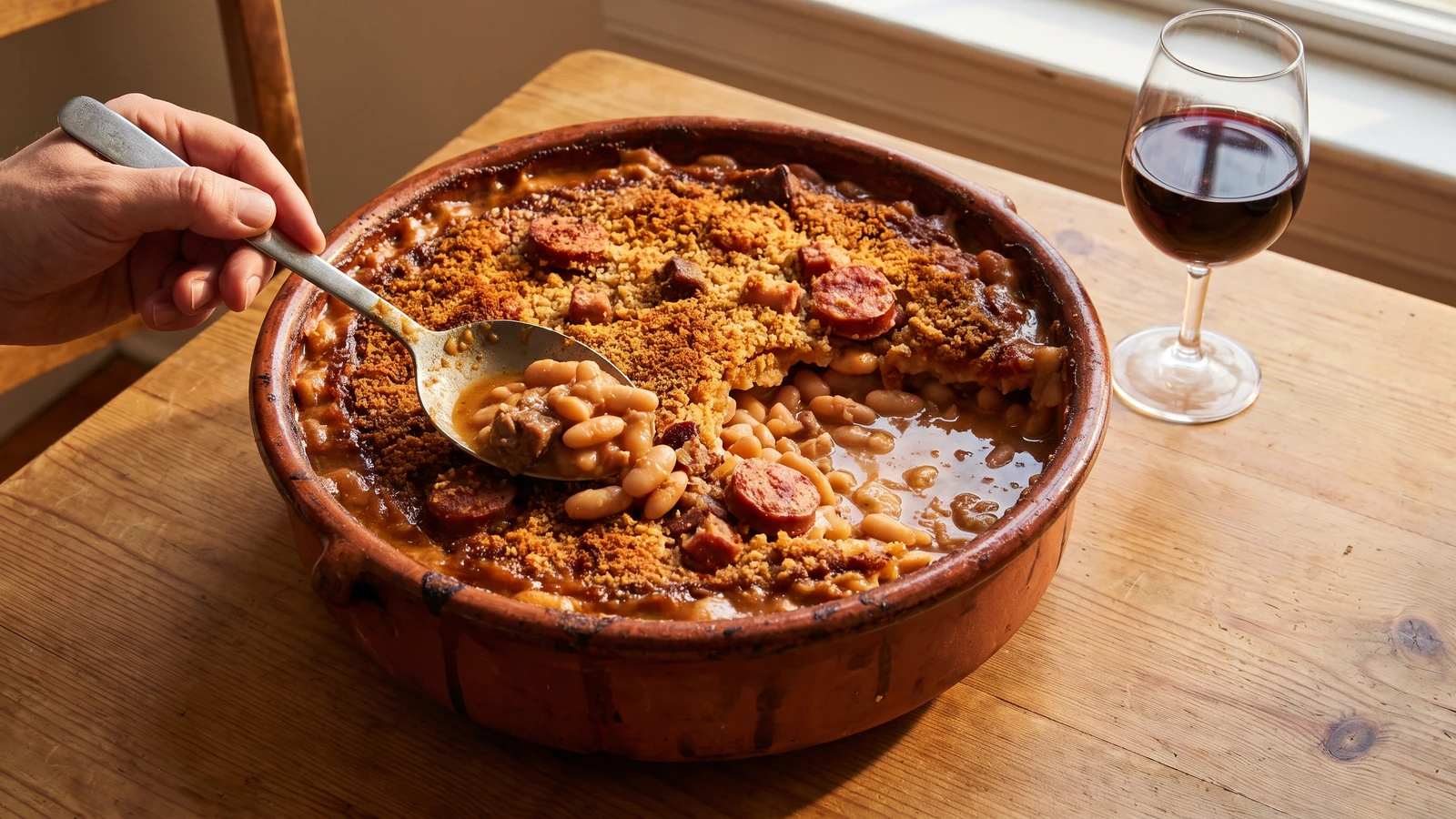
White beans, pork, mutton, and garlic sausage settle into a rind-lined cocotte beneath a burnished crust. Baste it, let the crust return, and the Southwest's great casserole proves patience is an ingredient.
Cassoulet (the white-bean and meat casserole of Languedoc) teaches the management of moisture. Know this before touching a pan: the crust is not decoration. It is the soul of the dish, but it forms properly only when the beans beneath remain generous with liquor, loose enough to baste and never so wet that they become soup.
The original entry assumed brigade quantities, two preparations moving in parallel, and enough hands to fill several cocottes. Here the quantities are halved for four people, the beans and mutton share one measured cooking liquor, and a single 4-quart cassole or deep cocotte replaces the row of service dishes. Fine dry breadcrumbs stand in for kitchen raspings because they make the same honest crust. The fresh pork rind, separate mutton braise, layered assembly, and full hour of gratin stay. Those steps are the dish, not scaffolding. No saucier or perpetual stockpot is hiding in the wings; the bean liquor builds the sauce. One cook, one stove, one evening.
The step that matters most comes at the end. Baste the crust lightly, then leave it alone long enough to form again. If the cassoulet dries before it bronzes, send hot reserved liquor down the side rather than flooding the surface. Ça se rattrape.
Cassoulet belongs to Languedoc in Southwest France and takes its name from the cassole, the wide earthenware vessel associated with the potters around Castelnaudary. Castelnaudary, Carcassonne, and Toulouse each defend a distinct composition, proving that cassoulet is a regional family rather than one fixed list of meats. The mutton, pork, and garlic sausage in this classical entry place it nearest Carcassonne's practice, while the layered method carries farmhouse cooking into the formal canon without surrendering its generous table character.
Quantity
2 cups (475 ml / 400 g)
Quantity
4¾ cups (1.1 L / 1.1 kg), plus more boiling water as needed
Quantity
2 teaspoons (10 ml / 12 g), divided
Quantity
½ medium (about 40 g)
Quantity
½ medium (about 75 g)
Quantity
1
Quantity
1
Quantity
3 cloves (about 9 g)
lightly crushed
Quantity
5¼ ounces (150 g)
cleaned
Quantity
1 application Blanchings (No. 273)
Quantity
5¼ ounces (150 g)
Quantity
5¼ ounces (150 g)
Quantity
2 tablespoons (30 ml / 28 g)
Quantity
8 ounces (225 g)
cut into 1½-ounce (40 g) pieces
Quantity
8 ounces (225 g)
cut into 1½-ounce (40 g) pieces
Quantity
1 medium (about 1 cup / 150 g)
finely chopped
Quantity
1 clove (about 3 g)
crushed
Quantity
3 tablespoons (45 ml / 50 g)
Quantity
½ cup (120 ml / 55 g)
Quantity
1 application Gratins (No. 268)
| Ingredient | Quantity |
|---|---|
| dried white haricot beans, preferably Tarbais | 2 cups (475 ml / 400 g) |
| cold water | 4¾ cups (1.1 L / 1.1 kg), plus more boiling water as needed |
| fine sea salt | 2 teaspoons (10 ml / 12 g), divided |
| carrot | ½ medium (about 40 g) |
| yellow onion for the bean pot | ½ medium (about 75 g) |
| whole clove | 1 |
| small bouquet garni of parsley stems, thyme, and bay | 1 |
| garlic for the bean potlightly crushed | 3 cloves (about 9 g) |
| fresh pork rindcleaned | 5¼ ounces (150 g) |
| cross-referenced preparation for the pork rind | 1 application Blanchings (No. 273) |
| unsmoked fresh pork belly | 5¼ ounces (150 g) |
| fresh coarse garlic pork sausage | 5¼ ounces (150 g) |
| pork lard | 2 tablespoons (30 ml / 28 g) |
| mutton shouldercut into 1½-ounce (40 g) pieces | 8 ounces (225 g) |
| mutton breastcut into 1½-ounce (40 g) pieces | 8 ounces (225 g) |
| yellow onion for the muttonfinely chopped | 1 medium (about 1 cup / 150 g) |
| garlic for the muttoncrushed | 1 clove (about 3 g) |
| good canned tomato purée | 3 tablespoons (45 ml / 50 g) |
| fine dry breadcrumbs | ½ cup (120 ml / 55 g) |
| cross-referenced preparation for the final crust | 1 application Gratins (No. 268) |
Rinse and pick over the beans. Prepare the fresh pork rind through Blanchings (No. 273), then cool and drain it as that preparation directs. Roll the rind tightly and secure it with kitchen twine so it can season the bean liquor without wandering through the pot. Keep the sheet as intact as possible because it will later line the cassole.
Put the beans in a heavy 5-quart pot with the cold water, ¾ teaspoon (about 5 g) of the salt, the carrot, the half onion stuck with the clove, the bouquet garni, three crushed garlic cloves, and the tied pork rind. Bring slowly to a boil, skim away the grey foam, then cover partially and hold at the gentlest simmer for 1 hour. Keep the beans just submerged, adding boiling water only when needed. A hard boil bursts their skins and muddies the liquor; if the pot becomes lively, lower the heat at once and shake it gently instead of stirring.
Heat the lard in a lidded ovenproof sauté pan or small cocotte. Fry the mutton shoulder and breast gently in batches until lightly browned on several sides, leaving room between the pieces. Transfer the meat to a plate, then pour away roughly half the fat while preserving the amber fond on the pan floor. Add the chopped onion and crushed garlic and cook until the onion takes only a slight golden colour. If the fond begins turning black, lower the heat and add a spoonful of water before it burns; bitterness cannot be hidden beneath beans.
Heat the oven to 325°F (165°C). Stir the tomato purée into the onions for 1 minute, return the mutton, and ladle in enough cooking liquor from the bean pot to cover the meat, about 1½ to 2 cups (350 to 475 ml). Replace any liquid taken from the beans with boiling water so they remain submerged. Cover the mutton and braise in the oven for at least 1½ hours, until the shoulder yields readily to a fork. Check once during cooking; if the liquid recedes below the meat, add another ladleful of hot bean liquor.
As soon as the beans have completed their first hour, settle the pork belly and whole garlic sausage into their pot. Add only half the remaining salt, keeping the rest back until the liquor has reduced and the sausage has given up its seasoning. Continue at a bare simmer for 45 to 60 minutes, until the beans are creamy within but still hold their skins. If the pork or sausage is ready before the beans, lift it out and continue cooking the beans alone. Ça se rattrape; meat can wait, hard beans cannot be hurried into tenderness.
Lift out the pork belly, sausage, and pork rind. Discard the carrot, clove-studded onion, and bouquet garni. Cut the pork belly into small dice and the sausage into thick roundels. Untie and open the rind. Taste the bean liquor and add only as much of the remaining salt as it needs. When the mutton is tender, lift out the pieces and reserve every drop of its tomato-darkened braising liquor.
Line the bottom and sides of a 4-quart cassole or deep ovenproof cocotte with the pork rind, skin side against the vessel. Build alternating layers of beans, mutton, diced pork belly, and sausage roundels, finishing with beans. Pour in enough combined bean and mutton liquor to rise just below the top layer, about 1½ cups (350 ml), keeping at least 1 cup (240 ml) hot for basting. The contents should shift when the dish is nudged but must not float. Scatter the breadcrumbs evenly over the surface.
Finish according to Gratins (No. 268), baking the uncovered cassoulet at 325°F (165°C) for about 1 hour. Every 15 to 20 minutes, baste dry patches with a few spoonfuls of the reserved hot bean liquor, then let the crust form again before the next basting. This repeated crust is the dish. If the edges dry before the top bronzes, pour hot liquor down the side; if the cassoulet remains soupy after 50 minutes, stop basting and give it another 10 to 15 minutes. If the crumbs darken too quickly, shield that patch loosely with parchment. Ça se rattrape.
Let the cassoulet rest for 15 minutes. The liquor settles into the beans, the crust firms enough to serve, and the pork rind leaves its gelatinous richness through the whole dish. Bring the cassole directly to the table and spoon deeply so every serving receives crust, beans, and each meat. À table!
1 serving (about 600g)
Culinary guides, cultural storytelling, and the editorial depth that makes cooking meaningful.
Discover Culinary ExplorerChef Juliette
John Dory has the delicacy of sole and the firmness of turbot. A light flouring, a quick butter sauté, and nut-brown beurre noisette show exactly why looks never mattered.

Chef Juliette
Fresh haddock proves its delicacy in the meunière pan: a fine flour crust, moist pearly flakes, and beurre noisette sharpened with lemon and parsley, ready from one skillet in half an hour.

Chef Juliette
Éperlans à l’Anglaise turns small fish into a lesson in disciplined coating: boned smelts under a close, crisp crumb, pan-fried in clarified butter and finished with bright, half-melted maître d’hôtel butter.

Chef Juliette
Tiny smelts, shallot, mushrooms, white wine, gratin sauce, and fine bread raspings meet a fierce oven, where the fish must turn tender in the same breath the buttered crust bronzes.