
Chef Juliette
John Dory (St. Pierre)
John Dory has the delicacy of sole and the firmness of turbot. A light flouring, a quick butter sauté, and nut-brown beurre noisette show exactly why looks never mattered.
A cooking platform built around craft, culture, and the stories behind what we eat.
Created by Chef Juliette
Based on No. 1304, Leg and Shoulder of Mutton, from Le Guide Culinaire (1907) by Auguste Escoffier
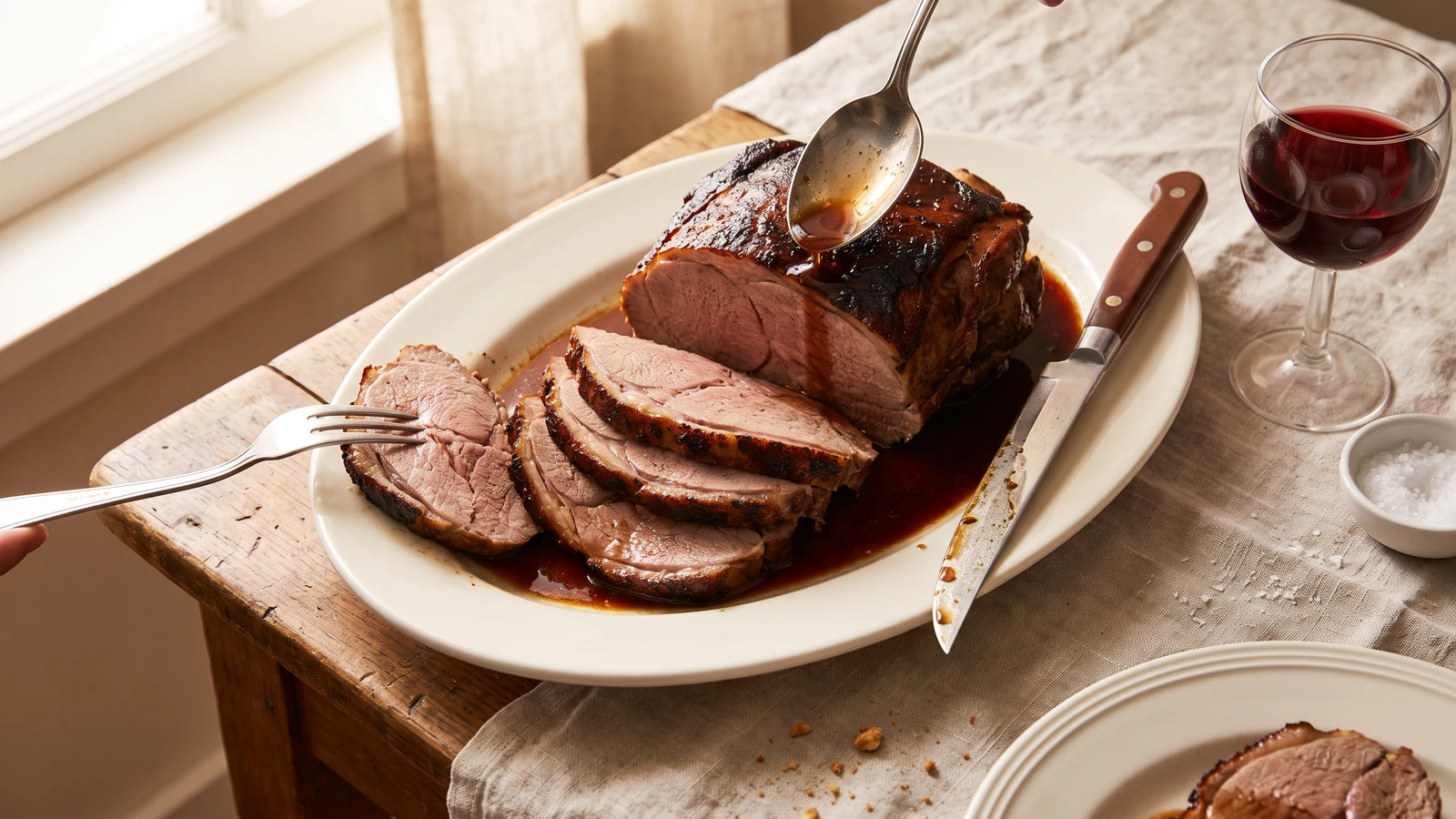
Choose the cut, then roast by its nature: a rosy gigot or tightly rolled shoulder, both deeply browned and served with a glossy pan jus built from the fond.
Gigot et épaule de mouton rôtis (roast leg and shoulder of mutton) teach the discipline behind every good roast: the clock offers an estimate, but the meat tells you when it is done. Leave the leg whole for clean, rosy slices. Bone the shoulder, season it inside, then roll and string it firmly so an irregular cut cooks as one even joint.
The old formula assumed a roast station, a practiced carver, and a shelf of finished garnishes ready for luncheon service. It required no saucier, stock never off the fire, or salamander, so inventing them now would be pomp, not fidelity. For one cook and four diners, you choose one joint rather than roasting both; a home oven supplies the heat, a thermometer replaces the carver's practiced touch, and hot water lifts the fond, the browned deposits in the tin, into a proper jus de rôti (roast jus). The parade of garnishes was brigade scaffolding and may go. Firm shaping, deep browning, resting, and careful carving are the dish.
The meat should reach the table with a dark bronze outside, generous slices within, and enough glossy jus to wet each plate. The decisive step is stopping at the temperature suited to your cut: pull the leg at 140°F (60°C) and the rolled shoulder at 154°F (68°C), then let the resting heat finish the work.
Gigot and épaule de mouton belong not to one province but to the French bourgeois luncheon table, where a roast joint could accept whatever seasonal garnish the household had chosen. The leg was left whole for carving, while the less costly shoulder could be boned, seasoned, rolled, and tied into equally presentable slices. Mouton means mature sheep, with deeper flavor than lamb; treating the word as merely an old name for lamb misses the character the preparation expects.
Quantity
1 joint: leg 3 to 3½ lb (1.4 to 1.6 kg), or shoulder 2¾ to 3 lb (1.25 to 1.35 kg)
Quantity
2½ teaspoons (12 ml / 15 g)
divided
Quantity
1 teaspoon (5 ml / 2 g)
divided
Quantity
3 tablespoons (45 ml / 42 g)
softened and divided
Quantity
1½ cups (360 ml / 360 g)
divided and used as needed
| Ingredient | Quantity |
|---|---|
| bone-in leg of mutton or boned mutton shoulder | 1 joint: leg 3 to 3½ lb (1.4 to 1.6 kg), or shoulder 2¾ to 3 lb (1.25 to 1.35 kg) |
| fine sea saltdivided | 2½ teaspoons (12 ml / 15 g) |
| freshly ground black pepperdivided | 1 teaspoon (5 ml / 2 g) |
| unsalted buttersoftened and divided | 3 tablespoons (45 ml / 42 g) |
| hot waterdivided and used as needed | 1½ cups (360 ml / 360 g) |
Heat the oven to 425°F (220°C) with a rack in the middle. For the leg, leave the covering of fat intact, trimming only loose membrane, then dry the joint thoroughly and season it all over with the salt and pepper. For the shoulder, spread the boned meat flat, season the inside with half the salt and pepper, roll it tightly with the fat toward the outside, and tie it at 1½-inch (4 cm) intervals; use the remaining seasoning outside. A loose shoulder cooks in thick and thin patches, so pull every loop of string firm enough to make an even cylinder without cutting into the meat.
Set the joint fat-side up on a rack in a sturdy roasting tin and rub it with 2 tablespoons (30 ml / 28 g) of the softened butter. Roast for 15 to 20 minutes, until the outside has taken a deep Maillard bronze. If the butter and drippings begin turning black before the meat browns, add 2 tablespoons (30 ml / 30 g) of hot water to the tin and lower the heat early. Ça se rattrape. Brown fond makes the jus; burnt fond only makes it bitter.
Lower the oven to 350°F (175°C) and pour ½ cup (120 ml / 120 g) hot water into the tin without wetting the meat. Continue roasting, basting once or twice with the buttery juices. Begin checking a leg after 50 minutes and remove it when the thickest part, clear of the bone, reaches 140°F (60°C), usually 50 to 75 minutes after lowering the heat. Begin checking a rolled shoulder after 75 minutes and remove it at 154°F (68°C), usually after 75 to 105 minutes. If the crust darkens too quickly, shield it loosely with foil; if the tin dries, add hot water a few tablespoons at a time before the fond scorches.
Transfer the joint to a warm platter and cover it loosely with foil. Rest the leg for 20 minutes or the shoulder for 25 minutes. The leg should rise to at least 145°F (63°C), while the shoulder approaches 158°F (70°C). Resting is part of roasting, not an interval to skip: it lets the juices settle through the meat instead of flooding the carving board. Pour any juices released during the rest back into the roasting tin.
Spoon excess fat from the roasting tin, leaving the brown fond and about 1 tablespoon of fat behind. Set the tin over medium heat, add ¾ cup (180 ml / 180 g) hot water, and scrape firmly as it comes to a simmer. Reduce for 4 to 6 minutes, until the jus tastes concentrated and lightly coats a spoon, then take it off the heat and whisk in the remaining 1 tablespoon (15 ml / 14 g) butter. If the jus looks greasy instead of glossy, remove another spoonful of fat, add 1 teaspoon cold water, and whisk off the heat. Ça se rattrape. Taste before adding more salt.
For the gigot, steady the bone and carve thin slices across the grain, turning the leg as its muscle groups change direction. For the shoulder, snip away every string and cut the roll into generous ⅜-inch (1 cm) rounds with a sharp slicing knife. Arrange the meat on a warm platter, spoon over just enough jus to give it a sheen, and serve the rest at the table. À table!
1 serving (about 270g)
Culinary guides, cultural storytelling, and the editorial depth that makes cooking meaningful.
Discover Culinary ExplorerChef Juliette
John Dory has the delicacy of sole and the firmness of turbot. A light flouring, a quick butter sauté, and nut-brown beurre noisette show exactly why looks never mattered.

Chef Juliette
Fresh haddock proves its delicacy in the meunière pan: a fine flour crust, moist pearly flakes, and beurre noisette sharpened with lemon and parsley, ready from one skillet in half an hour.

Chef Juliette
Éperlans à l’Anglaise turns small fish into a lesson in disciplined coating: boned smelts under a close, crisp crumb, pan-fried in clarified butter and finished with bright, half-melted maître d’hôtel butter.

Chef Juliette
Tiny smelts, shallot, mushrooms, white wine, gratin sauce, and fine bread raspings meet a fierce oven, where the fish must turn tender in the same breath the buttered crust bronzes.