Chef Juliette
Bouillabaisse à la Marseillaise
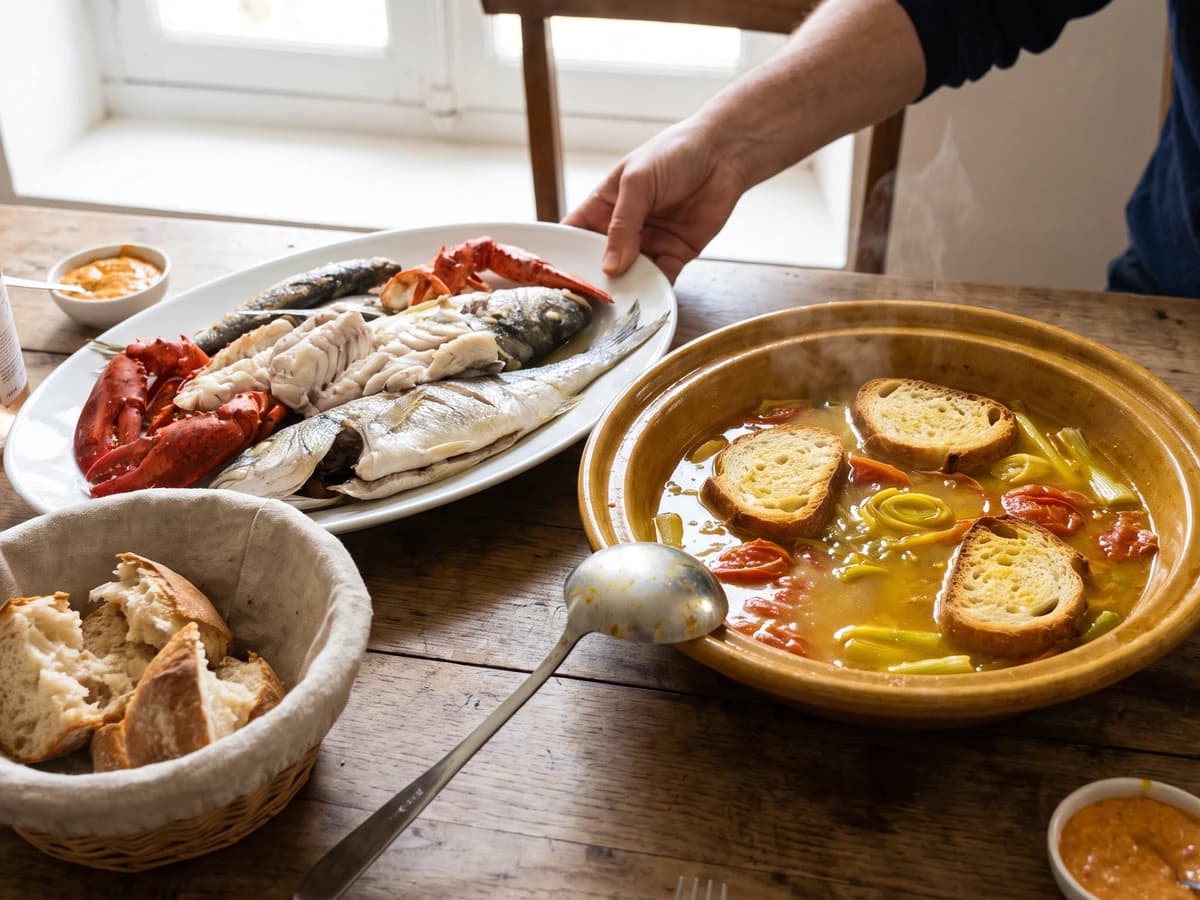
Marseille's great fish stew, saffron-gold and garlic-scented, proves that a hard boil can be the careful choice: it binds olive oil into broth before the whole pot meets bread.
A cooking platform built around craft, culture, and the stories behind what we eat.
Created by Chef Juliette
Based on No. 1280, Sauté de Veau à la Marengo, from Le Guide Culinaire (1907) by Auguste Escoffier
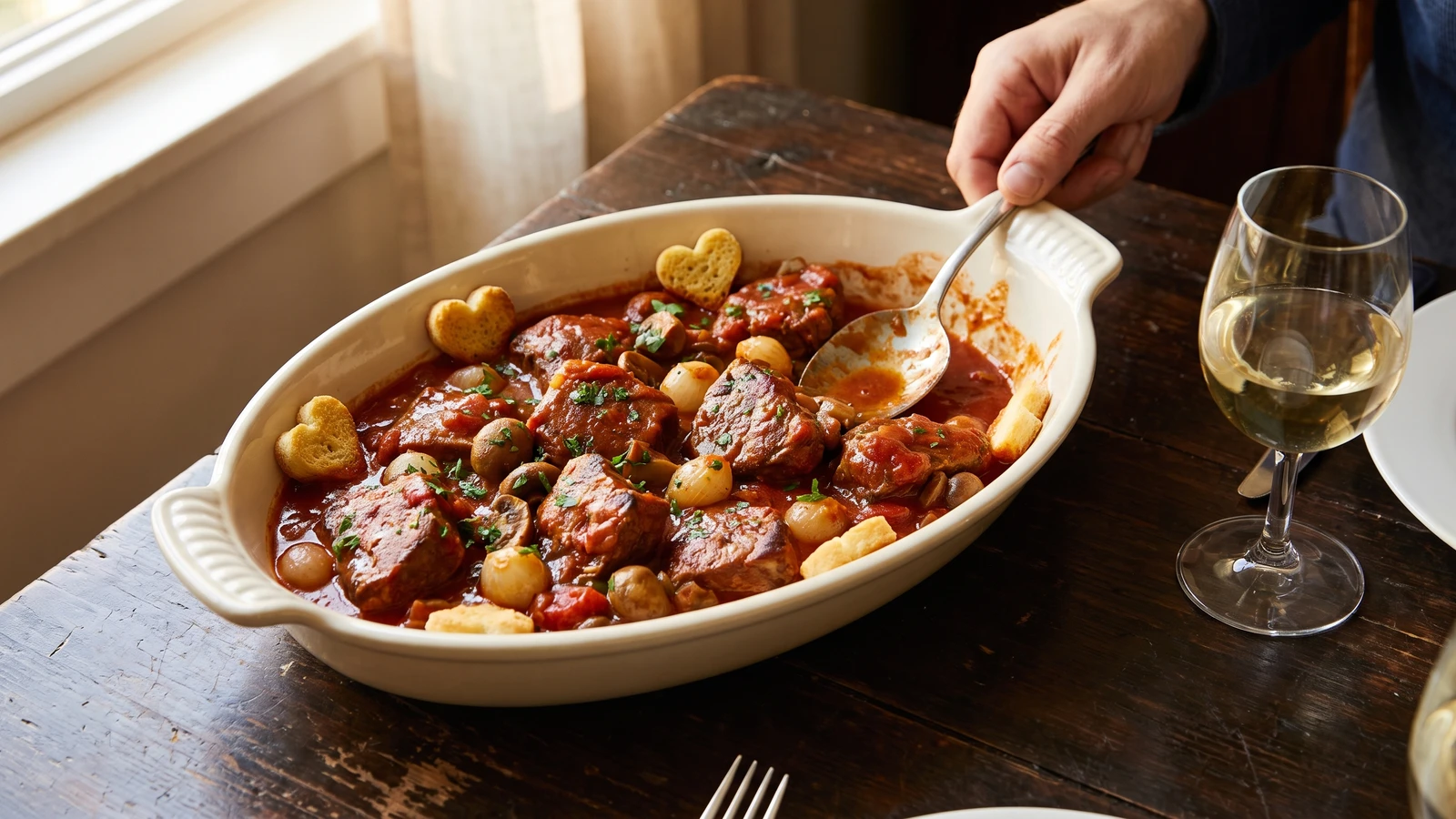
Sauté de Veau à la Marengo turns hard-browned veal, white wine, tomato, and Espagnole into a glossy braise, then brings glazed onions, mushrooms, parsley, and crisp heart-shaped croûtons to the table.
Sauté de Veau à la Marengo (veal browned and braised with tomato and white wine) teaches the discipline of a sauté that becomes a braise. The one true thing is this: the veal must fry in properly hot oil until every surface is well set and bronze. Pale meat gives the sauce nothing to build upon, however fine everything added afterward may be.
The entry assumed a broad sauté pan, a saucier on staff, a stockpot never off the fire, expressed here as finished thin Sauce Espagnole, and a pint of oil kept ready for service. For one cook, one stove, one evening, two pounds of veal makes four generous servings in a high-sided home sauté pan. We cut the working oil to one cup because it is drained away rather than absorbed into the sauce, and a warm deep serving dish replaces the timbale. That excess oil was brigade scaffolding. The Espagnole, the wine reduction, the tomato, and the two-stage finish are the dish, so they stay.
When it is right, the veal sits tender beneath a brick-red sauce with a clean gloss, pearl onions shine at the edges, mushrooms keep their shape, and fried bread hearts wait around the rim for the sauce. Before the pan gets hot, dry the veal completely; that first firm browning is the step that decides the Marengo.
Marengo names a village in Piedmont, but Sauté Marengo became a Parisian classical formula, identified by tomato, garlic, white wine, mushrooms, small onions, and croûtons rather than by an Italian regional stew. The tidy battlefield-improvisation story attached to the name is celebrated but disputed; what generations of kitchens actually standardized was this garnish and sauce family. Veal entered that family beside chicken, carrying the same Marengo grammar into a longer, gentler braise.
Quantity
2 pounds (907 g)
trimmed and cut into sixteen 2-ounce (57 g) pieces
Quantity
1 cup (240 ml / 220 g)
divided
Quantity
1/2 medium, about 1/2 cup (120 ml / 75 g)
finely chopped
Quantity
1/2 clove, about 1/2 teaspoon (2.5 ml / 2 g)
crushed
Quantity
1/2 cup (120 ml / 120 g)
Quantity
2 2/3 cups (630 ml / about 660 g)
prepared
Quantity
3 cups (710 ml / 680 g) tomatoes, or 2 cups (475 ml / 480 g) tomato sauce
tomatoes peeled, seeded, pressed, and roughly chopped
Quantity
1
Quantity
15, about 8 ounces (225 g)
peeled
Quantity
1 tablespoon (15 ml / 14 g)
Quantity
1 teaspoon (5 ml / 4 g)
Quantity
1/2 cup (120 ml / 120 g)
Quantity
About 2 cups (475 ml / 140 g)
trimmed and quartered if large
Quantity
2 tablespoons (30 ml / 8 g)
concass, roughly chopped
Quantity
4 thick slices, about 4 ounces (120 g)
cut into 8 small heart shapes
Quantity
as needed
| Ingredient | Quantity |
|---|---|
| boneless veal shouldertrimmed and cut into sixteen 2-ounce (57 g) pieces | 2 pounds (907 g) |
| refined sunflower or grapeseed oildivided | 1 cup (240 ml / 220 g) |
| yellow onionfinely chopped | 1/2 medium, about 1/2 cup (120 ml / 75 g) |
| garliccrushed | 1/2 clove, about 1/2 teaspoon (2.5 ml / 2 g) |
| dry white wine | 1/2 cup (120 ml / 120 g) |
| thin Sauce Espagnoleprepared | 2 2/3 cups (630 ml / about 660 g) |
| ripe tomatoes or plain tomato saucetomatoes peeled, seeded, pressed, and roughly chopped | 3 cups (710 ml / 680 g) tomatoes, or 2 cups (475 ml / 480 g) tomato sauce |
| bouquet garni of parsley stems, thyme, and bay leaf | 1 |
| small pearl onionspeeled | 15, about 8 ounces (225 g) |
| unsalted butter | 1 tablespoon (15 ml / 14 g) |
| granulated sugar | 1 teaspoon (5 ml / 4 g) |
| water | 1/2 cup (120 ml / 120 g) |
| small button mushroomstrimmed and quartered if large | About 2 cups (475 ml / 140 g) |
| flat-leaf parsleyconcass, roughly chopped | 2 tablespoons (30 ml / 8 g) |
| firm white breadcut into 8 small heart shapes | 4 thick slices, about 4 ounces (120 g) |
| fine sea salt | as needed |
Heat the oven to 300°F (150°C). Pat the veal thoroughly dry, then leave the pieces uncovered while you prepare the onion, garlic, tomatoes, bouquet garni, mushrooms, and parsley. Cut eight small hearts from the bread and hold them aside. Have the wine and thin Sauce Espagnole ready beside the stove, because once the oil is hot the opening sequence moves quickly.
Pour 3/4 cup of the oil into a wide, high-sided ovenproof sauté pan and heat it over medium-high heat until the surface shimmers and the first clean wisp appears. Brown the veal in two or three batches, leaving space between the pieces and turning them until every side is firm and deeply golden. If liquid begins collecting, lift the pieces out, let the oil recover its heat, and continue with a smaller batch. The meat has started to simmer rather than fry, but it is recoverable. Never crowd the pan and hope harder.
Return all the browned veal to the pan. Add the chopped onion and crushed garlic, then fry for about 2 minutes, stirring gently, until the onion softens at its edges and the garlic smells rounded rather than raw. Turn off the heat and lift the veal and aromatics to a tray with a slotted spoon. Pour the hot oil carefully into a heatproof container, leaving the brown fond behind. The book's lid-and-tilt drain suited practiced hands and a service pan; lifting the meat first is the honest home equivalent. Do not wipe the pan.
Return the veal and aromatics to the pan and set it over medium-high heat. Pour in the white wine, scrape every brown trace from the pan floor, and reduce until the liquid is nearly syrupy and no longer smells sharply alcoholic, about 4 minutes. Stir in the thin Sauce Espagnole, the prepared tomatoes or tomato sauce, and the bouquet garni. Bring the sauce just to a boil, stirring along the bottom so the tomato cannot catch.
Cover the pan and place it in the oven for 1 hour 30 minutes. Turn the veal once halfway through and check that the sauce moves at a bare tremble, never a hard boil. The meat is ready when a fork enters easily but the pieces still hold their shape. If the veal remains springy, give it another 15 minutes; toughness here usually means it needs more time, not more heat. If the sauce tightens around the edges, stir in 2 tablespoons of hot water and cover the pan firmly again.
While the veal braises, arrange the pearl onions in a small skillet with the butter, sugar, and water. Cover and simmer gently until nearly tender, about 12 minutes. Uncover and roll the onions through the reducing liquid until they become glossy and lightly golden. If the glaze darkens before an onion is tender, add a spoonful of water and continue gently. Hold the glazed onions aside.
Transfer the veal pieces one by one to a clean wide saucepan with the glazed onions and mushrooms. Discard the bouquet garni. Bring the sauce left in the sauté pan to a lively simmer and reduce it until it lightly naps the back of a spoon, then strain it through a fine sieve over the veal and garnish. Add the parsley concass, roughly chopped rather than minced, and simmer everything gently for 15 minutes. If the sauce becomes too tight, loosen it with a spoonful of hot water. Ça se rattrape. If it remains watery, lift out the veal and garnish, reduce the sauce alone for a few minutes, and return them.
Heat the reserved 1/4 cup oil in a small skillet until shimmering. Fry the bread hearts in a single layer, turning once, until the croûtons are crisp and evenly golden. Drain them on a rack or absorbent paper and salt them very lightly. Fry these near serving time; their purpose is to meet the sauce while their edges still crunch.
Skim every visible pool of fat from the surface of the Marengo, then taste the sauce and add salt only if the finished Espagnole requires it. Spoon the veal, mushrooms, and onions into a warmed deep serving dish, coat them generously with the glossy sauce, and surround the rim with the heart-shaped croûtons. Serve the remaining sauce from the dish, not in decorative streaks. Cooking well is not cooking fancy. À table!
1 serving (about 535g)
Culinary guides, cultural storytelling, and the editorial depth that makes cooking meaningful.
Discover Culinary ExplorerChef Juliette
Marseille's great fish stew, saffron-gold and garlic-scented, proves that a hard boil can be the careful choice: it binds olive oil into broth before the whole pot meets bread.
Chef Juliette
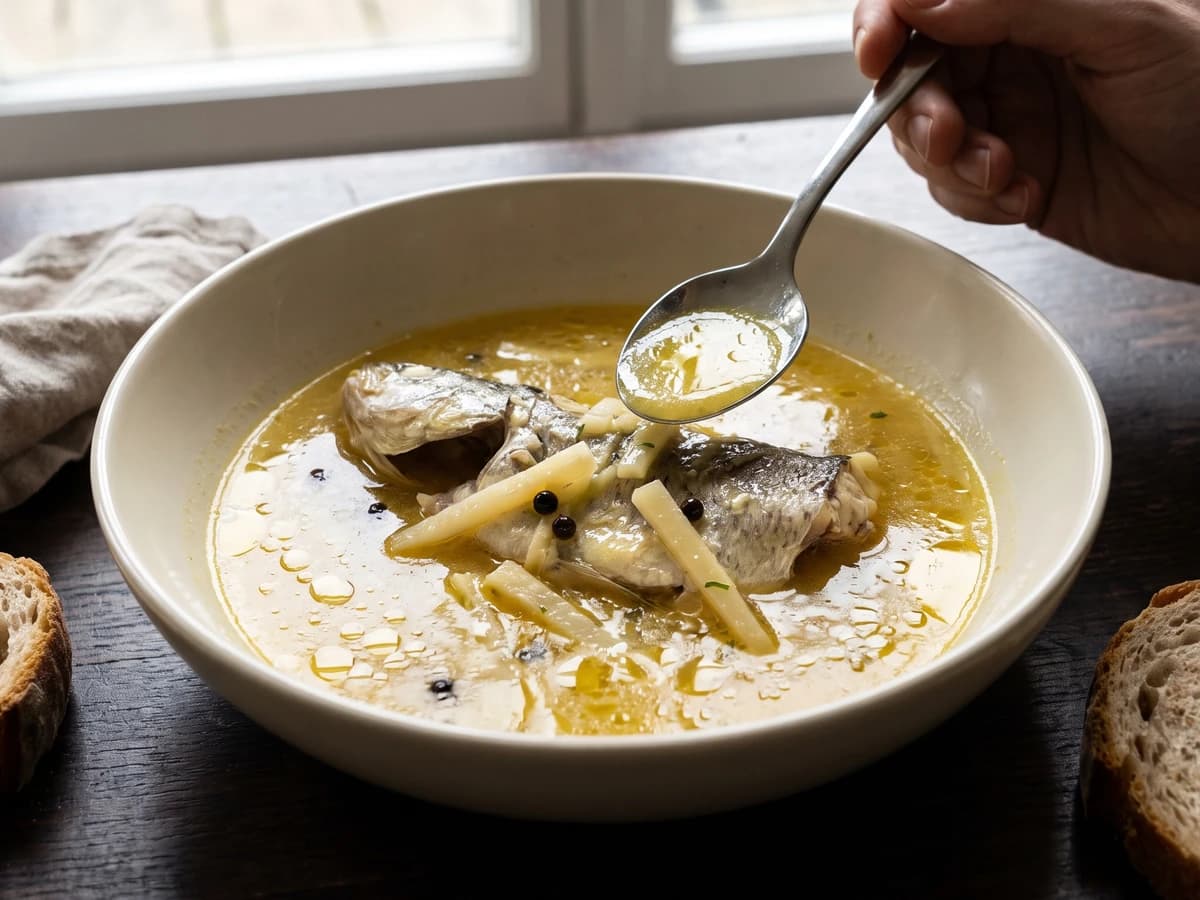
Waterzoi asks fresh, bone-in river fish to thicken its own buttery broth, with parsley root and pepper for company. No flour, no stockpot, just a brisk simmer watched closely.
Chef Juliette
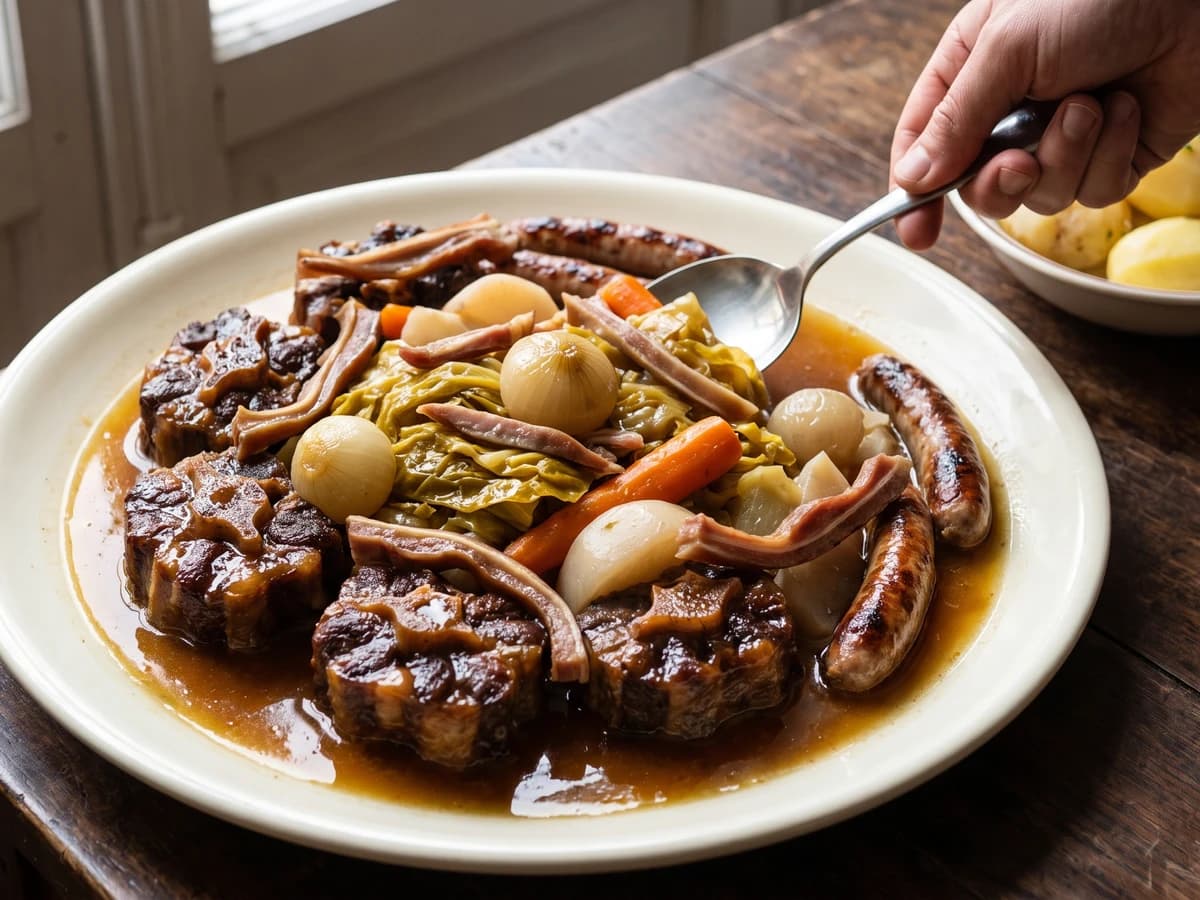
Queue de Bœuf en Hochepot gathers oxtail, pig's trotter and ear, cabbage, roots, and grilled chipolatas around a clear, gelatin-rich broth whose quiet simmer keeps every piece tender and distinct.
Chef Juliette
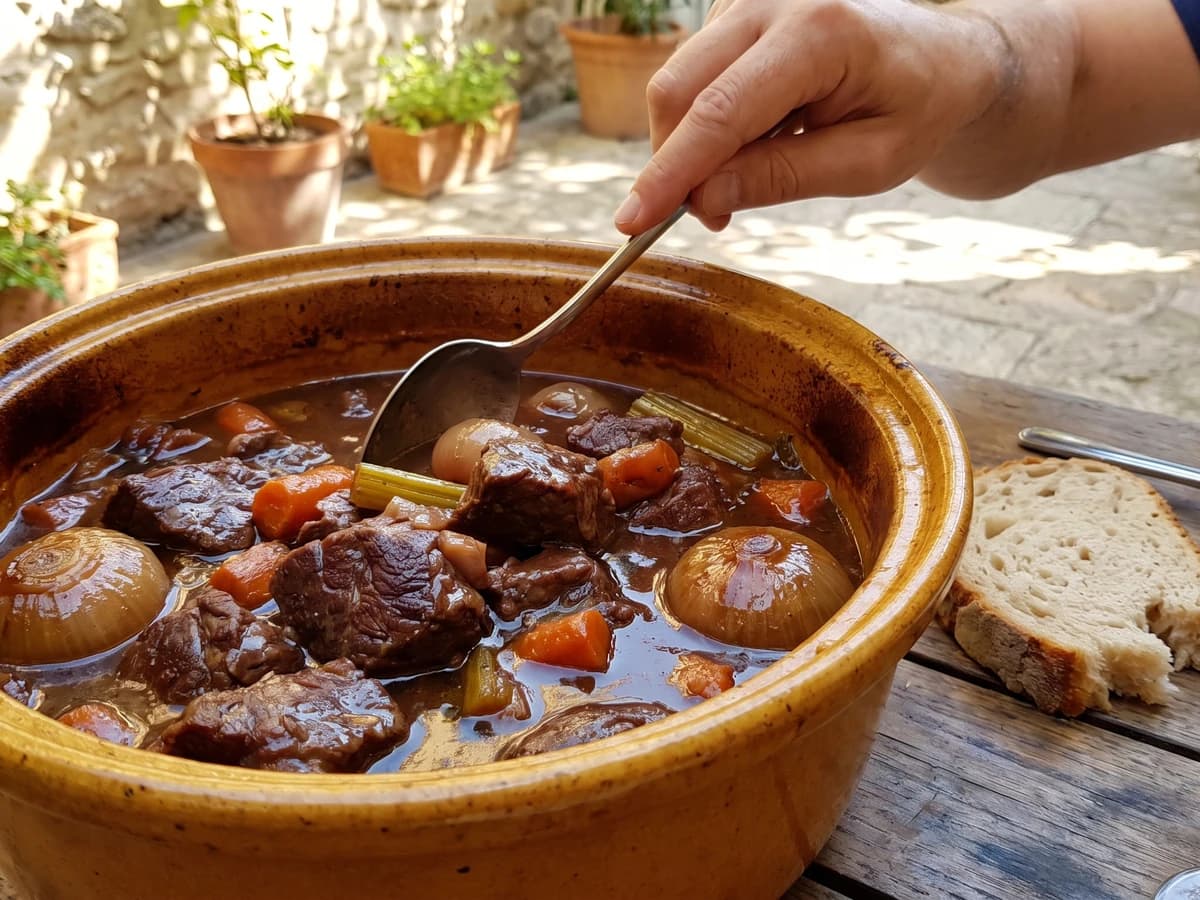
Beef shoulder larded with bacon, sharpened by red wine and vinegar, then sealed with garlic, vegetables, and dry lemon peel until the low oven turns it yielding and the gravy darkly glossy.