
Chef Juliette
John Dory (St. Pierre)
John Dory has the delicacy of sole and the firmness of turbot. A light flouring, a quick butter sauté, and nut-brown beurre noisette show exactly why looks never mattered.
A cooking platform built around craft, culture, and the stories behind what we eat.
Created by Chef Juliette
Based on No. 1049, Filet de Bœuf Dauphine, from Le Guide Culinaire (1907) by Auguste Escoffier
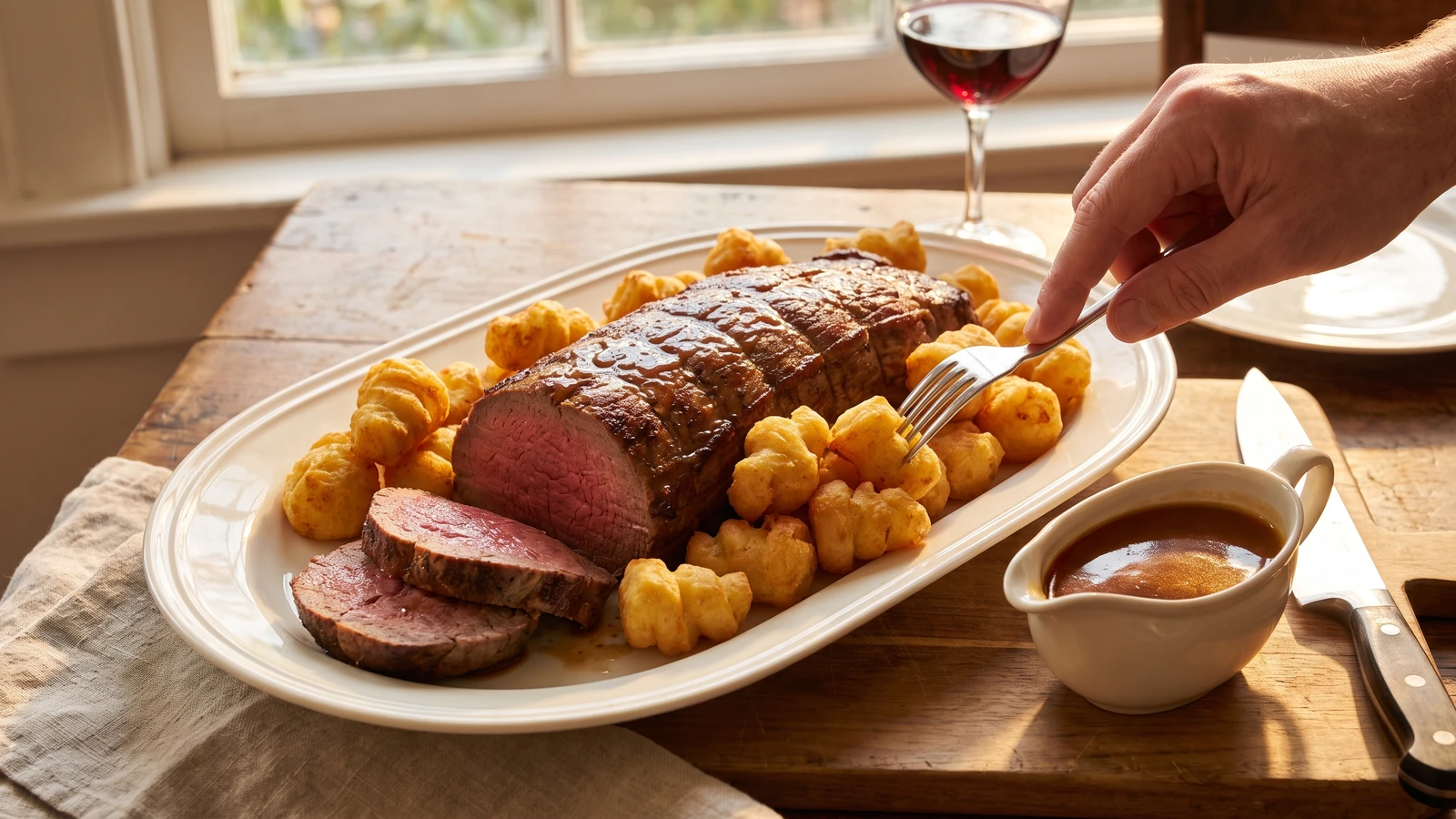
A butter-poëled fillet, rosy beneath its last glaze, ringed with cork-shaped pommes Dauphine and served with Madeira half-glaze apart: a lesson in timing, proportion, and three exact preparations meeting at the table.
Filet de Bœuf Dauphine (butter-poëled beef fillet with pommes Dauphine) teaches coordination. The one true thing to know before touching a pan is that the potatoes set the clock: the beef can rest and the sauce can wait, but a fried pomme Dauphine begins softening the moment it leaves the oil. When everything lands together, you have rosy fillet under a shining glaze, crisp bronze corks with airy potato-choux centers, and a Madeira sauce deep enough to justify its own sauceboat.
The original recipe assumed a whole larded fillet, a larding needle, a saucier with pale half-glaze and stock never off the fire, a fryer standing ready, and a salamander for the final glaze. At home, that becomes a 2-pound center-cut roast, a metal skewer for threading chilled back fat, a small pan of gelatin-rich stock and Madeira, a heavy pot of oil, and the broiler for one brief shining finish. The brigade portions and separate stations were scaffolding, so they go. The larding, poëling, potato and pâte à choux mixture, last-minute frying, and sauce served apart are the dish, so they stay.
One cook, one stove, one evening. Finish the sauce and shape the pommes before the fillet begins cooking, then fry them only while the meat rests. That order is the step that matters most.
Filet de Bœuf Dauphine belongs to the Parisian classical dining room, where a principal roast was identified by the garnish arranged around it and its sauce traveled separately in a sauceboat. Dauphine does not make the beef a regional specialty of the Dauphiné; the name points to pommes Dauphine, the potato and pâte à choux croquettes whose airy centers distinguish the plate. The combination passed naturally to the bourgeois celebration table, since the fillet could be presented whole while the ring of golden potatoes made abundance visible.
Quantity
1 roast, about 2 pounds (900 g), prepared through Poëlings (No. 250)
trimmed into an even cylinder
Quantity
12 batons (about 60 g)
chilled and cut roughly 3 inches (7.5 cm) long
Quantity
1 tablespoon plus 2 teaspoons (25 ml / 30 g)
divided
Quantity
1 teaspoon (5 ml / 2 g)
divided
Quantity
1½ pounds (680 g), weighed after peeling
quartered
Quantity
⅓ cup (80 ml / 80 g)
Quantity
2 tablespoons (30 ml / 28 g)
Quantity
⅓ cup plus 1 tablespoon (95 ml / 50 g)
Quantity
1 (about 50 g out of shell)
Quantity
1 (about 18 g)
Quantity
¼ teaspoon (1.25 ml / 0.5 g)
Quantity
⅛ teaspoon (0.6 ml / 0.25 g)
Quantity
1 quart (950 ml / 870 g)
Quantity
2 cups (475 ml / 475 g)
Quantity
¾ teaspoon (3.75 ml / 2 g)
use only if the chilled stock lacks natural body
Quantity
½ cup (120 ml / 120 g)
Quantity
1 tablespoon (15 ml / 14 g)
diced for finishing the sauce
| Ingredient | Quantity |
|---|---|
| center-cut beef fillet roasttrimmed into an even cylinder | 1 roast, about 2 pounds (900 g), prepared through Poëlings (No. 250) |
| pork back fatchilled and cut roughly 3 inches (7.5 cm) long | 12 batons (about 60 g) |
| fine sea saltdivided | 1 tablespoon plus 2 teaspoons (25 ml / 30 g) |
| freshly ground black pepperdivided | 1 teaspoon (5 ml / 2 g) |
| floury potatoes, such as russetquartered | 1½ pounds (680 g), weighed after peeling |
| water for the pâte à choux | ⅓ cup (80 ml / 80 g) |
| unsalted butter for the pâte à choux | 2 tablespoons (30 ml / 28 g) |
| all-purpose flour | ⅓ cup plus 1 tablespoon (95 ml / 50 g) |
| large egg | 1 (about 50 g out of shell) |
| large egg yolk | 1 (about 18 g) |
| ground white pepper | ¼ teaspoon (1.25 ml / 0.5 g) |
| freshly grated nutmeg | ⅛ teaspoon (0.6 ml / 0.25 g) |
| neutral frying oil, such as grapeseed or peanut oil | 1 quart (950 ml / 870 g) |
| unsalted pale veal stock, or good unsalted chicken stock | 2 cups (475 ml / 475 g) |
| powdered gelatin (optional)use only if the chilled stock lacks natural body | ¾ teaspoon (3.75 ml / 2 g) |
| medium-dry Madeira | ½ cup (120 ml / 120 g) |
| cold unsalted butterdiced for finishing the sauce | 1 tablespoon (15 ml / 14 g) |
Chill the back-fat batons until firm but not frozen. From each cut end of the fillet, use a long metal skewer to make narrow channels running with the grain, then ease the fat into them with the skewer or a slender chopstick. Space the lardoons through the meat rather than crowding its center. Tie the fillet at 1-inch (2.5 cm) intervals, season it with 1½ teaspoons of the salt and ¾ teaspoon of the black pepper, and refrigerate it uncovered while you prepare the garnish. The skewer replaces the larding needle, but the intention remains: the melting fat bastes this exceptionally lean cut from within.
If the stock does not set softly when chilled, spoon 2 tablespoons of it into a bowl, sprinkle over the gelatin, and let it swell for 5 minutes. Boil the Madeira in a small saucepan until reduced to about 3 tablespoons, then add the remaining stock and the softened gelatin. Simmer steadily, skimming when necessary, until about 1 cup (240 ml) remains and the sauce reaches nappe, coating the back of a spoon in a thin, glossy layer. Set aside 3 tablespoons for glazing the fillet and hold the rest without adding its finishing butter. If the sauce becomes too concentrated or salty before it coats, loosen it with unsalted stock. Ça se rattrape.
Cover the potatoes with cold water, add 1 tablespoon of the salt, and bring them to a gentle boil. Cook until a knife enters without resistance, about 15 minutes, then drain thoroughly. Return them to the dry pan over low heat and turn them for 1 to 2 minutes, letting excess moisture escape without browning. Pass them through a ricer while hot. Weigh 500 g for the pommes Dauphine and reserve up to 50 g more as insurance against a loose mixture. Dry potato matters because wet purée makes heavy croquettes that split in the oil.
Bring the water, 2 tablespoons of butter, and a pinch of the remaining salt to a full boil. Add the flour all at once and beat firmly with a wooden spoon until the panade, the cooked flour paste, gathers into a ball and leaves a light film on the pan, about 2 minutes. Let it cool for 2 minutes. Beat the whole egg and yolk together, then work them into the panade in three additions, stopping when the paste is smooth, glossy, and falls from the spoon in a heavy V. If the eggs are unusually large, you may not need the final spoonful; a loose choux paste cannot support the potato.
Beat the 500 g of hot, dry potato into the pâte à choux with the white pepper, nutmeg, ¼ teaspoon black pepper, and ½ teaspoon salt. The mixture should hold a clean ridge when stirred. If it slumps, work in the reserved dry potato a spoonful at a time. Portion the mixture into about 20 pieces and, with lightly dampened hands, mold each into a cork roughly 1½ inches (4 cm) long and ¾ inch (2 cm) thick. Set them on parchment and chill for at least 20 minutes. Pommes Dauphine have no breadcrumb coat; their crisp shell comes directly from the potato-choux mixture.
Take the fillet from the refrigerator about 30 minutes before cooking. Carry out Poëlings (No. 250) with the larded fillet, using the linked preparation in a snug, heavy casserole. Begin checking the center after 20 minutes and uncover for the final coloring as that preparation directs. Remove the meat at 118 to 122°F (48 to 50°C) for medium-rare, or 126°F (52°C) for medium; it will rise as it rests. If the proper internal temperature arrives before the surface has colored, stop the oven cooking. The final glaze and brief broiling will supply the finish without sacrificing the rosy center.
While the fillet cooks, pour the frying oil into a deep heavy pot, keeping the pot no more than half full, and heat it to 350°F (175°C). Set a rack over a sheet pan for draining. Rewarm the Madeira half-glaze over the gentlest heat and warm a long serving platter. Everything is now waiting for the beef, which is precisely where one cook needs it.
Transfer the fillet to a board, cover it loosely, and rest it for 12 to 15 minutes. Fry the chilled pommes Dauphine in small batches, leaving them room to move, until deep golden and crisp, about 3 to 4 minutes per batch. Keep the oil close to 350°F (175°C); if its temperature falls below 330°F (165°C), stop adding croquettes and let it recover, otherwise they absorb oil and soften. If a test cork splits, chill the remaining pieces for another 10 minutes and work a little reserved potato into any that feel loose. Drain on the rack and season lightly at once.
Preheat the broiler to its highest setting. Reduce the reserved 3 tablespoons of sauce in the smallest pan until syrupy, then brush a thin coat over the rested fillet. Pass the meat briefly under the broiler until the glaze shines and clings, usually 20 to 30 seconds. This is the home salamander, used for finish rather than further cooking. Apply a second thin coat only if needed; one thick coat scorches before it gleams.
Bring the remaining sauce just below a simmer, remove it from the heat, and whisk in the cold diced butter until glossy. Taste and correct the salt and pepper. Set the whole glazed fillet lengthwise on the warm platter and surround it closely with the cork-shaped pommes Dauphine. Pour the Madeira half-glaze into a warm sauceboat and send it separately, as the dish requires; pouring it over the potatoes would surrender their crispness before anyone lifts a fork. Carve the fillet into generous slices at the table. À table!
1 serving (about 455g)
Culinary guides, cultural storytelling, and the editorial depth that makes cooking meaningful.
Discover Culinary ExplorerChef Juliette
John Dory has the delicacy of sole and the firmness of turbot. A light flouring, a quick butter sauté, and nut-brown beurre noisette show exactly why looks never mattered.

Chef Juliette
Fresh haddock proves its delicacy in the meunière pan: a fine flour crust, moist pearly flakes, and beurre noisette sharpened with lemon and parsley, ready from one skillet in half an hour.

Chef Juliette
Éperlans à l’Anglaise turns small fish into a lesson in disciplined coating: boned smelts under a close, crisp crumb, pan-fried in clarified butter and finished with bright, half-melted maître d’hôtel butter.

Chef Juliette
Tiny smelts, shallot, mushrooms, white wine, gratin sauce, and fine bread raspings meet a fierce oven, where the fish must turn tender in the same breath the buttered crust bronzes.