
Chef Juliette
John Dory (St. Pierre)
John Dory has the delicacy of sole and the firmness of turbot. A light flouring, a quick butter sauté, and nut-brown beurre noisette show exactly why looks never mattered.
A cooking platform built around craft, culture, and the stories behind what we eat.
Created by Chef Juliette
Based on No. 1030, Cabillaud Salé, or Morue à la Hollandaise, from Le Guide Culinaire (1907) by Auguste Escoffier
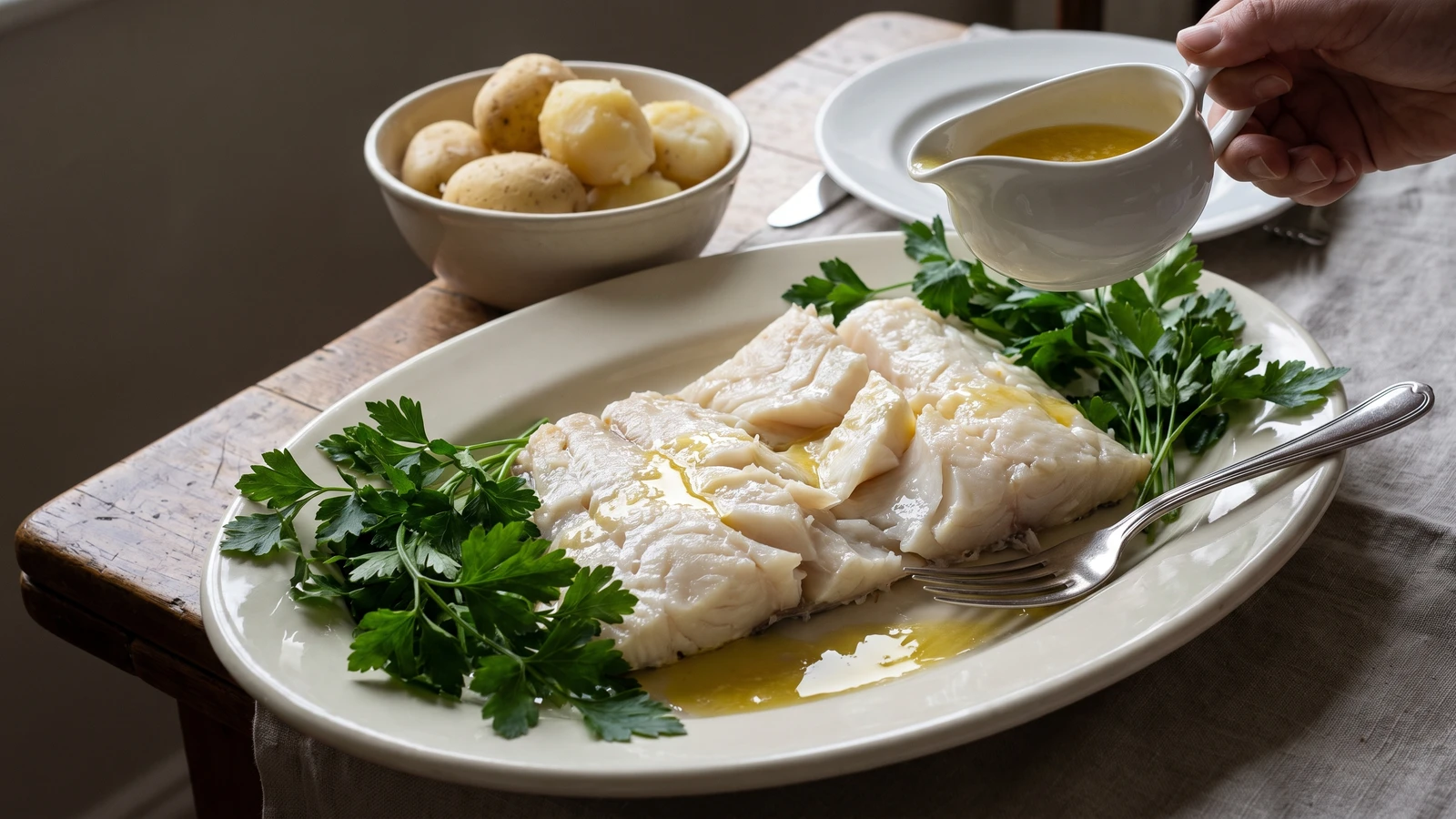
Morue à la hollandaise makes salt cod tender through a barely trembling poach, then serves it honestly with green parsley, floury potatoes, and melted butter ready at the table.
Cabillaud salé, ou morue à la hollandaise (salt cod with parsley, potatoes, and melted butter), teaches the gentlest lesson in fish cookery: the water may approach a boil, but through the ten-minute poach it must only tremble. Boiling tightens cured cod into dry little flakes; quiet water lets it open into moist, pearly leaves.
The entry calls on Sole à la Hollandaise (No. 829) and assumes a deep fish dish, a service napkin, and enough hands to land the potatoes and melted butter beside the fish at precisely the right moment. It asks for no saucier, stockpot, or salamander. At home, a wide lidded pan, two ordinary saucepans, and a clean towel do the work. This version keeps the cold-water start, covered ten-minute poach, parsley ring, plainly boiled potatoes, and exact two ounces of butter. The cod is merely divided into thick portions so it fits a home pan, and the wet service napkin becomes a brief drain on clean cloth before the fish reaches its platter. One cook, one stove, one evening, once the soaking is done.
Desalting is the preparation that decides everything before heat enters the matter. Test a small cooked flake rather than trusting the clock, and if the salt still stings, return the cod to fresh water for a few more hours. After that, guard the barely trembling poach. That is the dish.
Morue entered French kitchens through the Atlantic fishing ports, with Brittany's cod trade making salted fish an everyday pantry staple both on the coast and far inland. Classical table service carried it into bourgeois dining as morue à la hollandaise, borrowing the poaching and potato garnish of Sole à la Hollandaise (No. 829). The title preserves a useful distinction: cabillaud names fresh cod at the market, while salted cod becomes morue, and à la hollandaise here means parsley, plain potatoes, and melted butter, not Sauce Hollandaise.
Quantity
4 pieces, about 2 lb (900 g), for Sole à la Hollandaise (No. 829)
desalted as directed
Quantity
12 cups (2.8 L / 2.8 kg) per change, as needed
Quantity
16 cups (3.8 L / 3.8 kg)
divided between the cod and potatoes
Quantity
1½ teaspoons (7.5 ml / 9 g)
divided, with the portion for the cod used only if needed
Quantity
8 medium potatoes, about 2¼ lb (1 kg)
peeled and cut into equal pieces
Quantity
1 large bunch, about 3 cups (710 ml / 85 g)
washed, dried, and kept in generous sprigs
Quantity
4 tablespoons (60 ml / 57 g)
| Ingredient | Quantity |
|---|---|
| thick boneless dry salt cod piecesdesalted as directed | 4 pieces, about 2 lb (900 g), for Sole à la Hollandaise (No. 829) |
| fresh cold water for soaking | 12 cups (2.8 L / 2.8 kg) per change, as needed |
| fresh cold water for cookingdivided between the cod and potatoes | 16 cups (3.8 L / 3.8 kg) |
| fine sea saltdivided, with the portion for the cod used only if needed | 1½ teaspoons (7.5 ml / 9 g) |
| floury potatoespeeled and cut into equal pieces | 8 medium potatoes, about 2¼ lb (1 kg) |
| flat-leaf parsleywashed, dried, and kept in generous sprigs | 1 large bunch, about 3 cups (710 ml / 85 g) |
| unsalted butter | 4 tablespoons (60 ml / 57 g) |
Rinse the salt cod under cold running water, then place it in a nonreactive bowl and cover it generously with fresh cold water. Refrigerate for 24 to 36 hours, changing the water every 6 hours. After 24 hours, cut a small flake from the thickest piece, simmer it in plain water for one minute, and taste it. It should be pleasantly seasoned, not aggressively salty. If the salt still stings, return the cod to fresh water for another 2 to 4 hours and test again. Drain and pat the pieces dry.
Wash the parsley in cold water, dry it thoroughly, and leave it in generous sprigs. Keep it cool so it remains very green. Put the potatoes in a saucepan, cover them by 1 inch with about 8 cups (1.9 L / 1.9 kg) cold water, and add 1 teaspoon (5 ml / 6 g) of the salt. Arrange the cod in a single layer in a wide lidded sauté pan and cover it by 1 inch with the remaining cold water. Add the remaining ½ teaspoon (2.5 ml / 3 g) salt only if the test flake was fully desalted.
Bring the potatoes to a controlled boil, then lower the heat and cook them at a steady simmer for 18 to 22 minutes. A knife should pass through without finding a hard core, but the pieces must still hold themselves together. Begin heating the cod as soon as the potatoes settle into their simmer so both arrive freshly done.
Apply the method of Sole à la Hollandaise (No. 829): bring the cod and its cold water slowly toward a boil. The moment the first full bubble breaks, lower the heat, cover the pan, and poach gently for 10 minutes. The water should barely move. If it begins to boil hard, slide the pan off the burner, uncover it, and add ¼ cup (60 ml / 60 g) cold water from the measured cooking water before returning it to the lowest heat. Ça se rattrape. The cod is ready when its thickest part is opaque, reaches 145°F (63°C), and separates into broad, moist leaves under light pressure.
Drain the potatoes thoroughly, return them to their hot pan for 30 seconds, and shake once so their surfaces dry and turn softly floury. Cover them off the heat. Lift the cod carefully with a fish spatula and rest it on a clean lint-free towel for 30 seconds, just long enough to catch the poaching water. Transfer it to a warmed oval platter and arrange the very green parsley generously all around.
Melt the butter over gentle heat until completely fluid, golden, and glossy, without letting it brown. Pour it into a warmed sauceboat. Bring the cod, plainly boiled potatoes, and melted butter to the table together, exactly as the entry intends. This is melted butter, not Sauce Hollandaise; the name carries a different service here. Spoon it generously over fish and potatoes. À table!
1 serving (about 490g)
Culinary guides, cultural storytelling, and the editorial depth that makes cooking meaningful.
Discover Culinary ExplorerChef Juliette
John Dory has the delicacy of sole and the firmness of turbot. A light flouring, a quick butter sauté, and nut-brown beurre noisette show exactly why looks never mattered.

Chef Juliette
Fresh haddock proves its delicacy in the meunière pan: a fine flour crust, moist pearly flakes, and beurre noisette sharpened with lemon and parsley, ready from one skillet in half an hour.

Chef Juliette
Éperlans à l’Anglaise turns small fish into a lesson in disciplined coating: boned smelts under a close, crisp crumb, pan-fried in clarified butter and finished with bright, half-melted maître d’hôtel butter.

Chef Juliette
Tiny smelts, shallot, mushrooms, white wine, gratin sauce, and fine bread raspings meet a fierce oven, where the fish must turn tender in the same breath the buttered crust bronzes.