
Chef Juliette
John Dory (St. Pierre)
John Dory has the delicacy of sole and the firmness of turbot. A light flouring, a quick butter sauté, and nut-brown beurre noisette show exactly why looks never mattered.
A cooking platform built around craft, culture, and the stories behind what we eat.
Created by Chef Juliette
Based on No. 1026, Morue au Beurre Noir ou au Beurre Noisette, from Le Guide Culinaire (1907) by Auguste Escoffier
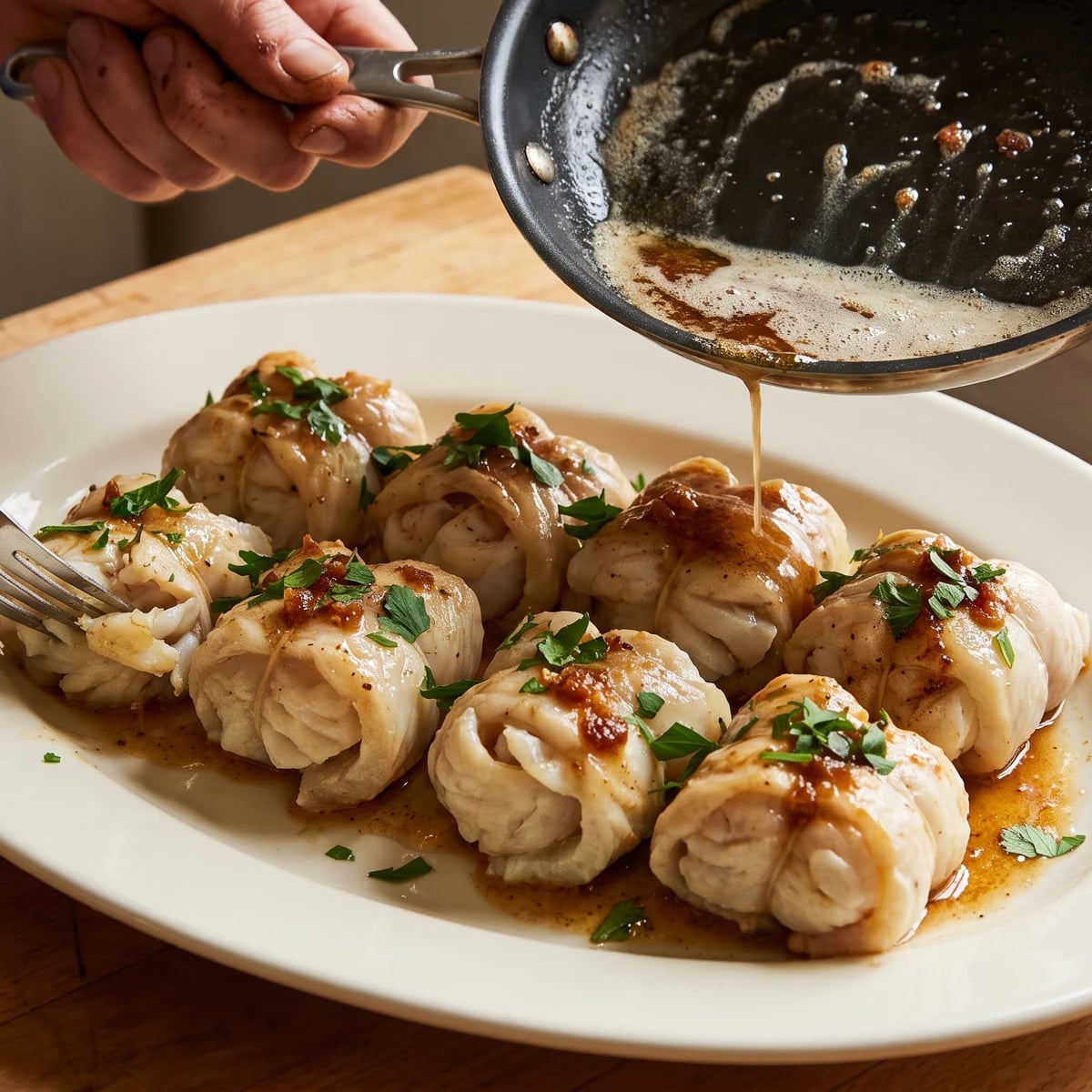
Morue turns four spare ingredients into a complete supper: salt cod curled into paupiettes, barely poached, brightened with lemon and parsley, then covered in beurre noisette stopped when it smells of toasted hazelnuts.
Morue au beurre noir ou au beurre noisette (salt cod scrolls with dark-browned or hazelnut-browned butter) teaches the sharpest lesson in butter cookery: the pan tells you when to stop. Foam first, then quiet; the milk solids move from pale gold to hazelnut to deep chestnut. The whole dish lives in the short distance between nutty and bitter.
The old entry assumed a saucier on staff watching the butter while another cook shaped and poached the fish, and it left “the usual way” unexplained. It gives no brigade quantity, so this home formula sets eight paupiettes, compact scrolls, two per person, and uses one wide pan plus one light-colored skillet. The entry calls for no stockpot kept simmering and no salamander, so neither is invented. Separate hands were scaffolding; the paupiettes, the gentle poach, then concassée parsley, lemon, and butter in that exact order are the dish and stay.
Begin with morue already desalted, and the work fits one cook, one stove, one evening. Keep a cool metal bowl beside the butter pan. The moment the solids smell of toasted hazelnuts is the one that matters most; pour at once for beurre noisette, or carry them only a shade darker for beurre noir.
Morue and fresh cabillaud have never been interchangeable on French tables; the classical pantry prized salt cod cured in Newfoundland or Iceland because it could travel from Atlantic ports through Brittany and Normandy deep into inland kitchens. This preparation belongs to the French bourgeois and bistro table rather than to one province: a practical preserved fish shaped as a paupiette and finished with the exact butter cookery of the national canon. Beurre noir is not burned butter, despite the name; it stops at deep chestnut, while blackened solids and an acrid smell mean the pan has gone too far.
Quantity
1¾ pounds (800 g)
fully desalted and checked for bones
Quantity
3 quarts (2.8 L / 2.8 kg), plus more as needed
for poaching, testing, and desalting
Quantity
¾ cup (180 ml / 170 g)
cut into 8 pieces
Quantity
¼ cup (60 ml / 15 g)
concassée
Quantity
2 tablespoons (30 ml / 30 g)
strained
| Ingredient | Quantity |
|---|---|
| skin-on salt cod filletsfully desalted and checked for bones | 1¾ pounds (800 g) |
| cold waterfor poaching, testing, and desalting | 3 quarts (2.8 L / 2.8 kg), plus more as needed |
| unsalted buttercut into 8 pieces | ¾ cup (180 ml / 170 g) |
| flat-leaf parsley leavesconcassée | ¼ cup (60 ml / 15 g) |
| fresh lemon juicestrained | 2 tablespoons (30 ml / 30 g) |
Start with fully desalted morue, cool and pliable. Cut a thumbnail-sized piece from the thickest section and poach it in a little of the measured water for 2 minutes, then taste it; the fish should be distinctly seasoned but not harsh. If it remains too salty, soak the rest in fresh cold water for 2 to 4 more hours and test again. Drain and pat it very dry, because excess water makes the rectangles slide while you roll them.
Run your fingers over the fish and pull any remaining bones with tweezers. Cut it into 8 squares or rectangles, each about 3 by 4 inches (7.5 by 10 cm) and roughly 3½ ounces (100 g). Split very thick sections horizontally if necessary so they will bend without force. Set each piece skin-side down, roll it from a narrow end into a snug paupiette, and tie one loop of cotton string around its middle. If a piece cracks, overlap the break on the inside and tie it gently; the poach will set the shape.
Arrange the tied paupiettes in one layer in a wide pan and add enough cold water to cover them by 1 inch (2.5 cm). Heat gradually until the water reaches 175 to 180°F (80 to 82°C), with tiny bubbles clinging to the edge but no boiling across the surface. Lower the heat and hold that gentle temperature for 8 to 10 minutes, until the fish is opaque and its center reaches 145°F (63°C). If the water begins to boil, pull the pan off the heat immediately and let it quiet before returning it; a hard boil tightens the fish and can unroll your careful work.
Lift the paupiettes with a wide slotted spatula onto a rack set over a towel and let them drain for 2 minutes. While they remain tied, use the back of a small knife to scrape or peel away the softened grey skin without disturbing the flesh. Snip off the strings and arrange the paupiettes on a warmed oval platter. Scatter the concassée parsley evenly over them, then spoon over the lemon juice. Cover loosely and hold for no more than 5 minutes while the butter browns.
Put the butter in a light-colored skillet over medium heat. Let it melt and foam, swirling the pan so the milk solids color evenly. For beurre noisette, pull the pan from the heat as the foam thins, the solids turn amber, and the butter smells clearly of toasted hazelnuts; immediately pour all of it over the fish. For beurre noir, continue only 10 to 20 seconds longer, until the solids reach deep chestnut and the aroma becomes more roasted, then pour. If the color races, decant the butter into the cool metal bowl at once; ça se rattrape. If the solids turn black or smell acrid, discard the butter, wipe the skillet, and begin again. Burned butter cannot be repaired with lemon.
Spoon the butter pooled around the platter back over the paupiettes so every fold gleams. Taste before adding anything, since properly desalted morue should need no further salt. Give each person 2 paupiettes and bring the platter straight to the table. À table!
1 serving (about 225g)
Culinary guides, cultural storytelling, and the editorial depth that makes cooking meaningful.
Discover Culinary Explorer
Chef Juliette
John Dory has the delicacy of sole and the firmness of turbot. A light flouring, a quick butter sauté, and nut-brown beurre noisette show exactly why looks never mattered.

Chef Juliette
Fresh haddock proves its delicacy in the meunière pan: a fine flour crust, moist pearly flakes, and beurre noisette sharpened with lemon and parsley, ready from one skillet in half an hour.

Chef Juliette
Tiny éperlans, lightly floured and fried until their tails stand crisp, arrive in a generous heap on a napkin with fried parsley and grooved lemon, a weeknight lesson in heat and restraint.

Chef Juliette
Éperlans à l’Anglaise turns small fish into a lesson in disciplined coating: boned smelts under a close, crisp crumb, pan-fried in clarified butter and finished with bright, half-melted maître d’hôtel butter.