
Chef Lupita
Arroz a la Oaxaqueña
Oaxaca's red rice, stained with tomato and fried in lard, steamed with carrots, ejotes, black beans, and epazote. The side that anchors a Oaxacan family meal and earns its place beside the main.
A cooking platform built around craft, culture, and the stories behind what we eat.
Created by
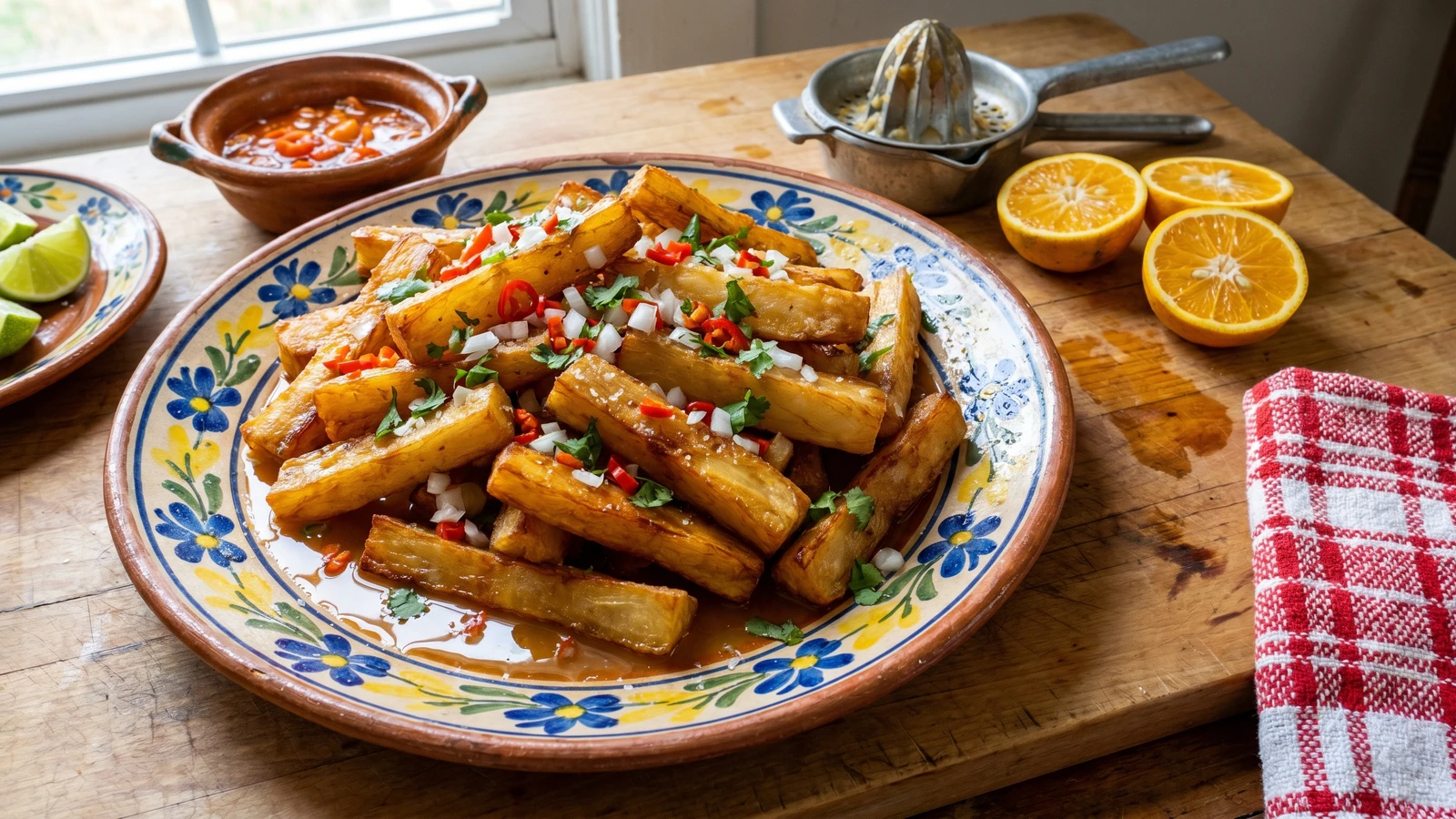
Peninsula yuca boiled until the edges split, fried in hot lard until the crust cracks, and dressed at the platter with naranja agria, habanero, and salt. A Maya kitchen staple, eaten the moment it leaves the pan.
This is from the Yucatán Peninsula. Yuca grows in the red soil of the Maya milpas alongside corn, beans, and squash, and it has been on Peninsula tables since long before anyone wrote a recipe down. You will eat this in Mérida, in Valladolid, in the small pueblos around Maní where the kitchens are still open to the patio and the cazuelas come out of wood-fired stoves.
The technique is two-part and you do not get to skip either half. First you boil the yuca with salt and bay until the flesh turns glassy and a knife slides through clean. Then you fry it in hot lard until the outside cracks and the inside stays soft. Boiling alone gives you a starchy, polite side dish that nobody will remember. Frying without boiling gives you yuca that is raw at the center and burnt on the outside. The two steps together give you what the Peninsula has perfected: a crust that breaks under the fork and a center that tastes like the earth it came from.
Naranja agria is the seasoning that makes this dish Yucatecan and not just fried root. The sour orange of the Peninsula is its own fruit, brought by the Spanish in the 16th century and adopted so completely by Maya cooks that it became the acid of the regional cuisine. It seasons cochinita, it cures relleno negro, and here it hits the hot lard on the surface of the yuca and turns the whole thing into something you cannot get with lime alone. If your market does not carry it, mix orange and lime and admit to yourself what you are doing.
My mother did not cook Yucatecan food. She was jalisciense and the closest she came was the cassava cake one of our neighbors brought to a christening. I learned this dish from a señora named Doña Manuela in a kitchen in Ticul who watched me peel my first yuca and told me, without smiling, that I was leaving too much on the bark. She was right. La cocina no es decoración, es trabajo.
Yuca, also called cassava or manioc, is native to South America and reached Mesoamerica long before the Spanish conquest, becoming one of the staple roots of the Maya Lowlands alongside maize. The Yucatán Peninsula's limestone soil and seasonal rainfall suit yuca cultivation well, and Maya farmers continue to grow it within the traditional milpa system that rotates corn, beans, squash, and root crops. Naranja agria, the bitter orange that defines so much of Yucatecan cooking, was introduced from the Mediterranean by Spanish colonists in the 16th century and was absorbed so thoroughly into the regional palate that it now reads as indigenous, a reminder that Mexican cuisine is the record of every encounter the land has survived.
Quantity
2 pounds
peeled and cut into 3-inch logs
Quantity
1 tablespoon
for the boiling water
Quantity
2
Quantity
1/2 cup
Quantity
1/3 cup
or 3 parts fresh orange juice to 1 part fresh lime juice
Quantity
1 teaspoon
to finish
Quantity
1
finely chopped
Quantity
1/2
finely diced
Quantity
2 tablespoons
chopped
Quantity
for serving
| Ingredient | Quantity |
|---|---|
| fresh yucapeeled and cut into 3-inch logs | 2 pounds |
| kosher saltfor the boiling water | 1 tablespoon |
| bay leaves | 2 |
| pork lard (manteca de cerdo) | 1/2 cup |
| fresh naranja agria juiceor 3 parts fresh orange juice to 1 part fresh lime juice | 1/3 cup |
| flaky sea saltto finish | 1 teaspoon |
| fresh chile habanerofinely chopped | 1 |
| small red onionfinely diced | 1/2 |
| fresh cilantrochopped | 2 tablespoons |
| lime wedges (optional) | for serving |
Slice off both ends of each yuca log. Stand the log on its flat end and run a sharp knife down the length to remove the thick brown bark and the pink layer underneath. Both layers come off. Cut the peeled flesh into 3-inch pieces. Split each piece down the center and pull out the woody fiber that runs through the core. That fiber will not soften no matter how long you boil it. Pretending otherwise is how people end up chewing rope at the dinner table.
Place the yuca pieces in a heavy pot. Cover with cold water by two inches. Add the kosher salt and the bay leaves. Bring to a low boil and cook for 20 to 25 minutes. The yuca is ready when a paring knife slides through with no resistance and the edges begin to look glassy and translucent. Some pieces will split open along the grain. That is what you want. Drain immediately and let them sit in the colander for five minutes so the surface steam comes off and the flesh dries a little before it meets the lard.
In a wide cast iron skillet or a Yucatecan clay cazuela, melt the lard over medium-high heat. Wait until the surface shimmers and a small piece of yuca dropped in starts to bubble at the edges immediately. Cold lard will give you greasy yuca. La manteca tiene que estar caliente. No me vengas con atajos.
Lay the drained yuca pieces in the hot lard in a single layer. Do not crowd the pan. Crowding drops the temperature and the pieces will steam against each other instead of crisping. Fry for 4 to 5 minutes per side without moving them. You are looking for a deep golden crust with darker amber edges where the starches caramelized against the iron. Turn each piece once. Cook another 4 minutes on the second side. When you press a piece with the back of a spoon, the outside should crack a little and the inside should be soft as boiled potato.
Lift the yuca out with a slotted spoon and pile it onto a warm platter, preferably a piece of Yucatecan slipware or a wooden board. While the yuca is still hot, pour the naranja agria juice directly over it. The juice will hit the hot lard on the surface and sizzle. That is the moment. The sour orange brightens the fat and seasons the crust at the same time. Sprinkle the flaky salt across the top. Scatter the chopped habanero, red onion, and cilantro over everything.
Bring the platter to the table with lime wedges on the side. Yuca frita is eaten hot. As it cools the crust softens and the fat loses its life. Serve it next to cochinita pibil, next to a pollo asado, next to a plate of frijoles colados. In a Peninsula home this is what fills the table around the main dish. Así se hace y punto.
1 serving (about 220g)
Culinary guides, cultural storytelling, and the editorial depth that makes cooking meaningful.
Discover Culinary ExplorerChef Lupita
Oaxaca's red rice, stained with tomato and fried in lard, steamed with carrots, ejotes, black beans, and epazote. The side that anchors a Oaxacan family meal and earns its place beside the main.
Chef Lupita
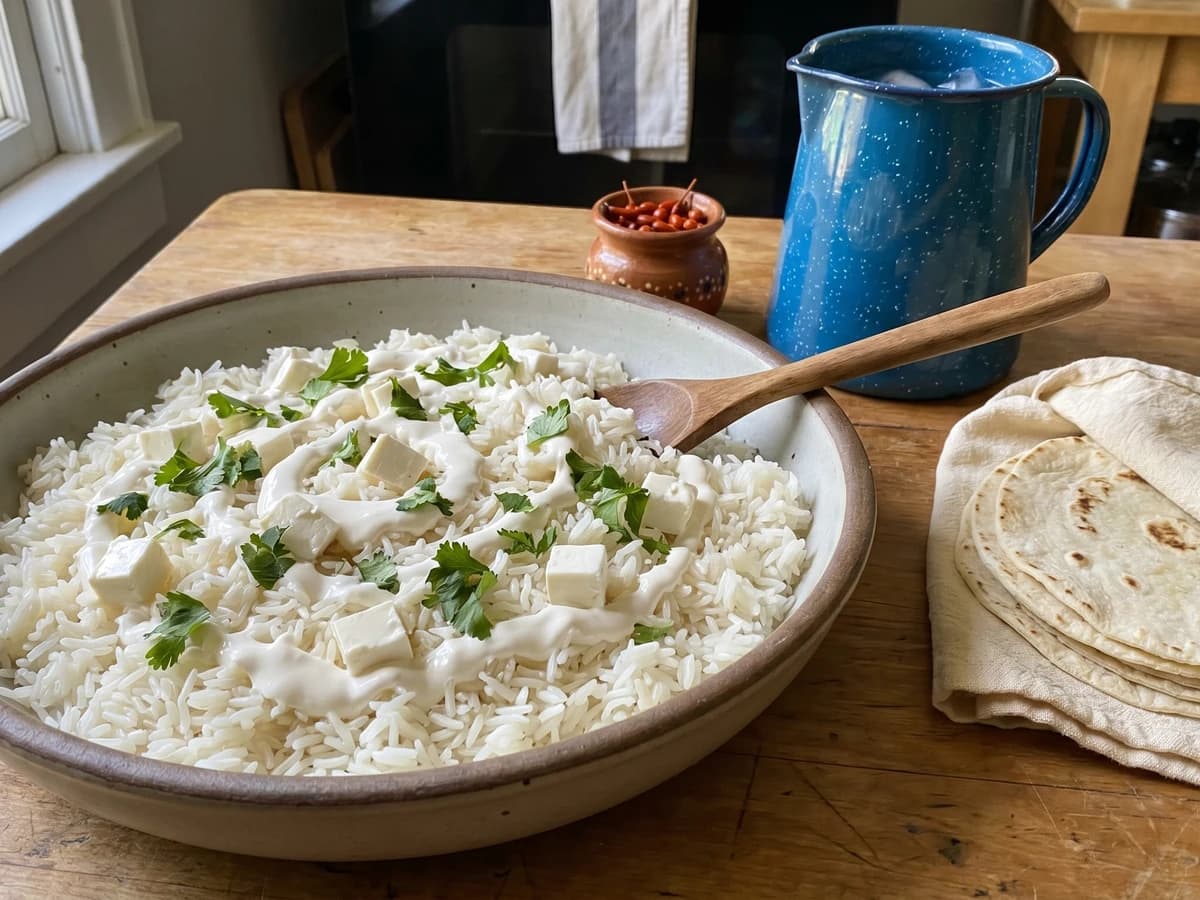
Sinaloa's home-cook white rice topped with cold cubes of cream cheese that soften into the warm grain, finished with crema and a sprinkle of chiltepin at the table. The trick that makes a side dish feel like a small luxury.
Chef Lupita
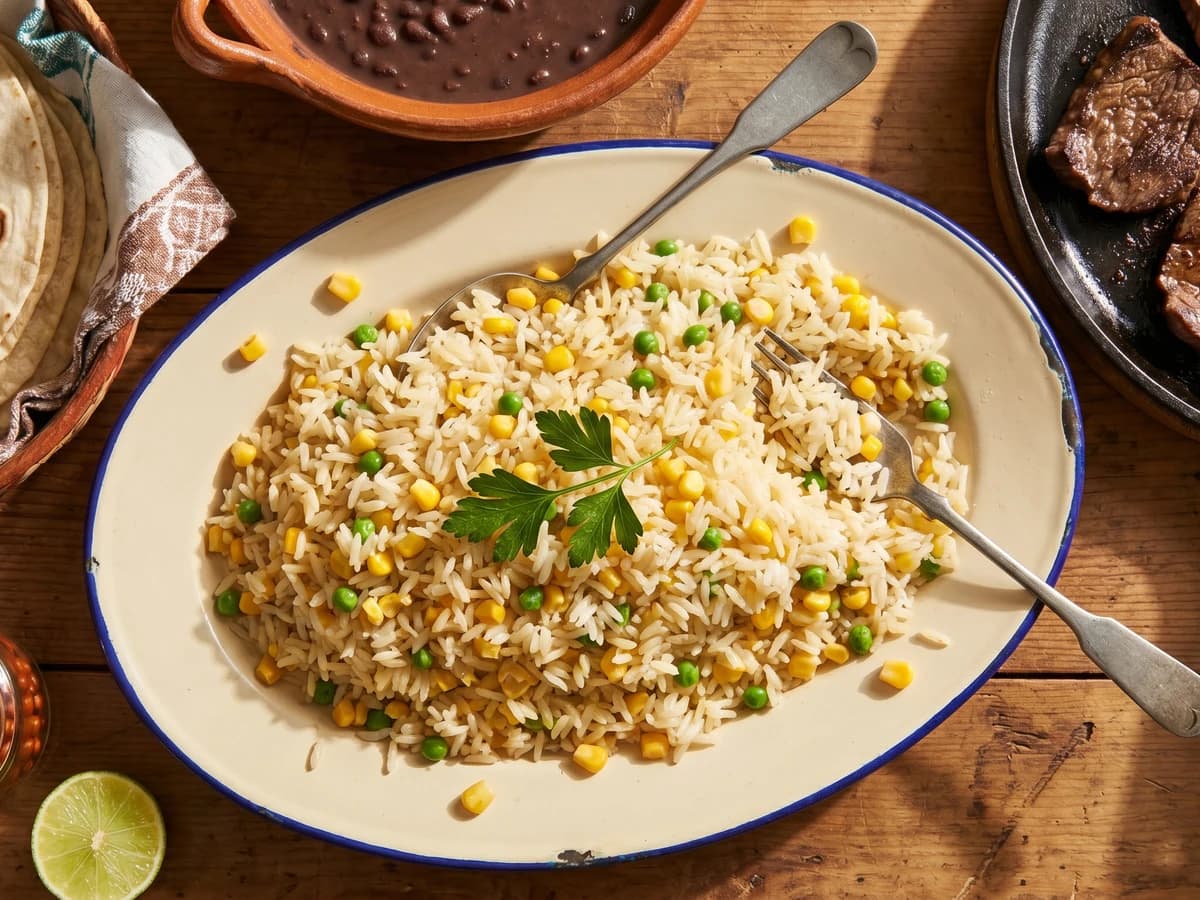
Sonora's white rice, toasted in butter and steamed with sweet corn and tender peas. The clean, quiet partner to a plate of carne asada, not the red rice of central Mexico.

Chef Lupita
Yucatán's white rice with sweet corn kernels, toasted in lard with garlic and onion. The quiet base that holds up against the peninsula's bold achiote-stained stews.