
Chef Lupita
Arroz a la Oaxaqueña
Oaxaca's red rice, stained with tomato and fried in lard, steamed with carrots, ejotes, black beans, and epazote. The side that anchors a Oaxacan family meal and earns its place beside the main.
A cooking platform built around craft, culture, and the stories behind what we eat.

Created by
Yucatán's everyday squash, sautéed in lard with chile dulce, tomato, and a late-added handful of epazote that turns a plain side into a dish you remember.
This is from Yucatán. Not from central Mexico, where calabacitas usually come with corn and crema, and not from the north, where they get charred over wood and dressed in butter. The Yucatecan version is its own thing: chile dulce instead of jalapeño, manteca instead of oil, and a serious quantity of epazote stirred in at the end.
Chile dulce is the Yucatecan sweet pepper. It looks like a small green bell pepper and it is not the same thing. The flavor is floral, almost fruity, with none of the grassy edge of a bell. If you cannot find chile dulce at a Mexican grocer that serves a Yucatecan clientele, half a bell pepper is the compromise. It will not be the same, but it will be honest. La cocina no es decoración, es trabajo.
The epazote is what makes this dish Yucatecan instead of generic. The señoras in the Mérida markets sell it in big bunches, the leaves still warm from the morning sun, and they will tell you to put it in at the end. Cook epazote too long and the volatile oils evaporate and you lose what you came for. Add it in the last few minutes, off the back of the spoon, and it perfumes the entire pan.
This is a weeknight side. Cochinita pibil takes hours. This takes twenty minutes. Together they are a Yucatecan supper. Cada estado, su propia cocina.
Epazote (Dysphania ambrosioides) is a pre-Columbian herb native to Mexico and Central America whose Nahuatl name 'epazotl' translates roughly to 'skunk sweat,' a reference to its pungent character. In Yucatán it sits alongside achiote, sour orange, and habanero as one of the defining flavors of the regional cuisine, used not just for taste but also for its traditional carminative properties when cooking beans and squash. Calabaza criolla, the dense pale-green squash favored in Mayan-influenced Yucatecan cooking, descends from cucurbit varieties domesticated in Mesoamerica more than 8,000 years ago, making the squash itself older than the corn it is so often paired with.
Quantity
2 pounds
cut into 1/2-inch half-moons
Quantity
3 medium
cored and chopped
Quantity
1 chile dulce or 1/2 bell pepper
seeded and diced small
Quantity
1/2 medium
finely chopped
Quantity
3
finely chopped
Quantity
1 large branch (about 2 tablespoons chopped leaves)
leaves stripped and roughly chopped
Quantity
2 tablespoons
Quantity
1 teaspoon, plus more to taste
Quantity
to taste
Quantity
1/4 cup, if needed
Quantity
for serving
warmed
| Ingredient | Quantity |
|---|---|
| Mexican calabacitas (calabaza criolla or pale-green zucchini)cut into 1/2-inch half-moons | 2 pounds |
| ripe Roma tomatoescored and chopped | 3 medium |
| chile dulce (Yucatecan sweet pepper) or green bell pepperseeded and diced small | 1 chile dulce or 1/2 bell pepper |
| white onionfinely chopped | 1/2 medium |
| garlic clovesfinely chopped | 3 |
| fresh epazoteleaves stripped and roughly chopped | 1 large branch (about 2 tablespoons chopped leaves) |
| manteca de cerdo (pork lard) | 2 tablespoons |
| kosher salt | 1 teaspoon, plus more to taste |
| freshly ground black pepper | to taste |
| water | 1/4 cup, if needed |
| hand-pressed corn tortillas (optional)warmed | for serving |
Trim the ends off the calabacitas and slice them into 1/2-inch half-moons. In Yucatán they use calabaza criolla, the pale-green local squash with a denser flesh than the dark zucchini sold in American supermarkets. If you cannot find criolla, a firm pale-green Mexican zucchini will do. Cut all the pieces the same size. Uneven cuts cook unevenly, and a side dish that is half mush and half raw is not a side dish.
Melt the manteca in a wide skillet or a clay cazuela over medium heat. When it shimmers, add the chopped onion and the chile dulce. Cook for 3 to 4 minutes, stirring, until the onion is translucent and the chile softens. The chile dulce smells like a bell pepper but tastes nothing like one, sweet, floral, almost fruity. It is the Yucatecan pepper. La manteca es el sabor. Olive oil here is a compromise, not an upgrade.
Stir in the garlic and cook for 30 seconds, just until fragrant. Add the chopped tomato and the salt. Raise the heat slightly and cook for 5 to 6 minutes, mashing the tomato pieces against the pan with the back of your spoon, until the tomato breaks down into a loose sauce and the lard reddens at the edges. This is your base. Do not skip this step. Raw tomato thrown in with the squash gives you watery vegetables and nothing tastes of anything.
Add the calabacitas to the pan and stir to coat every piece in the tomato base. Season with black pepper. Cover the pan and lower the heat to medium-low. The squash will release its own water in the first few minutes, that is what cooks it. If the pan looks dry after 5 minutes, add the 1/4 cup of water. If it is wet enough, do not.
After about 8 minutes, when the calabacitas are halfway tender, scatter the chopped epazote across the top and stir it in. Epazote goes in late. Cook it from the beginning and the volatile oils that give it that pungent, almost gasoline-and-mint character cook off and you have wasted the herb. The whole point of this dish is the epazote. Treat it like the soul of the pan, not the garnish.
Cover again and cook for another 5 to 7 minutes, until the calabacitas are tender but still hold their shape. They should yield easily to a fork but not collapse. Taste for salt. The dish should taste of squash first, tomato second, and epazote curling underneath both. Serve immediately, family-style, in the same cazuela you cooked it in, beside cochinita pibil, poc chuc, or pollo pibil. With warm corn tortillas at the table. Así se hace y punto.
1 serving (about 300g)
Culinary guides, cultural storytelling, and the editorial depth that makes cooking meaningful.
Discover Culinary ExplorerChef Lupita
Oaxaca's red rice, stained with tomato and fried in lard, steamed with carrots, ejotes, black beans, and epazote. The side that anchors a Oaxacan family meal and earns its place beside the main.
Chef Lupita
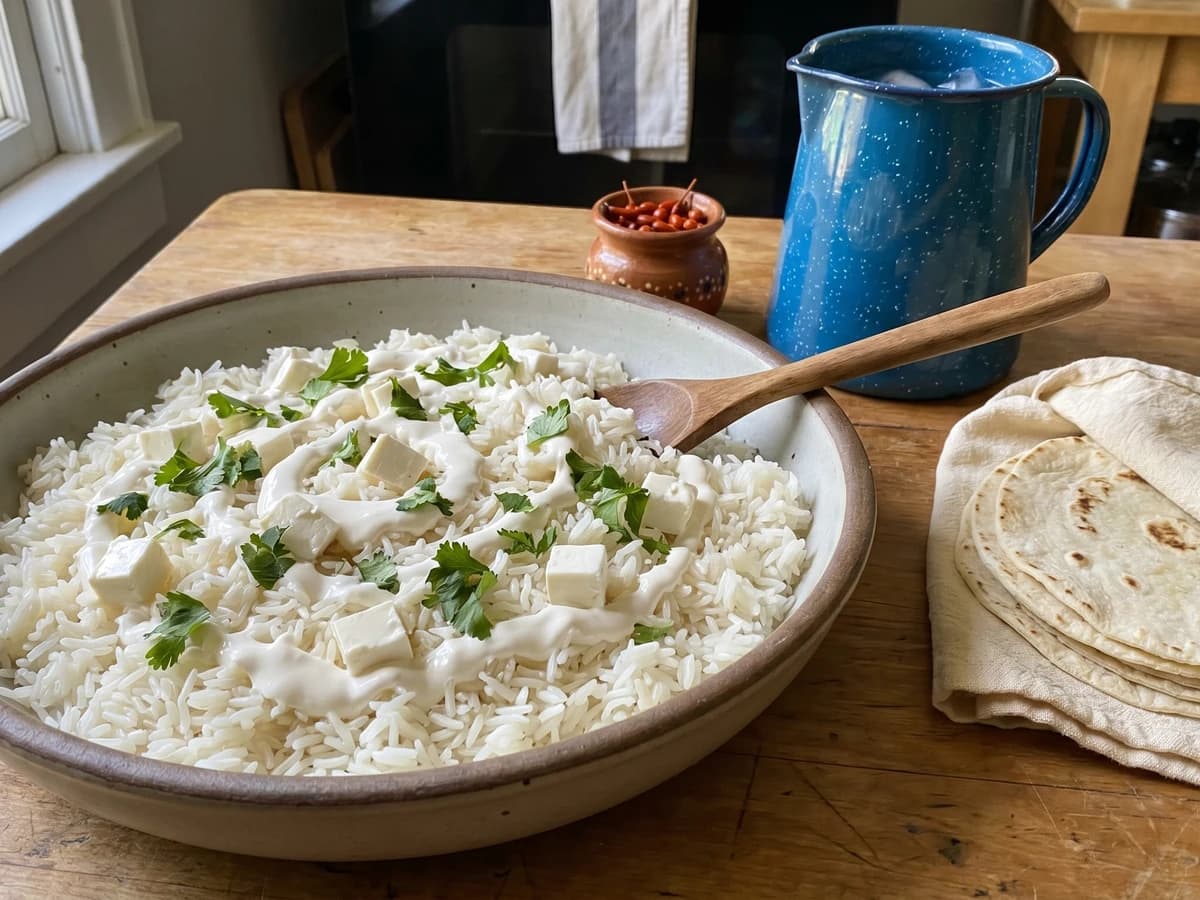
Sinaloa's home-cook white rice topped with cold cubes of cream cheese that soften into the warm grain, finished with crema and a sprinkle of chiltepin at the table. The trick that makes a side dish feel like a small luxury.
Chef Lupita
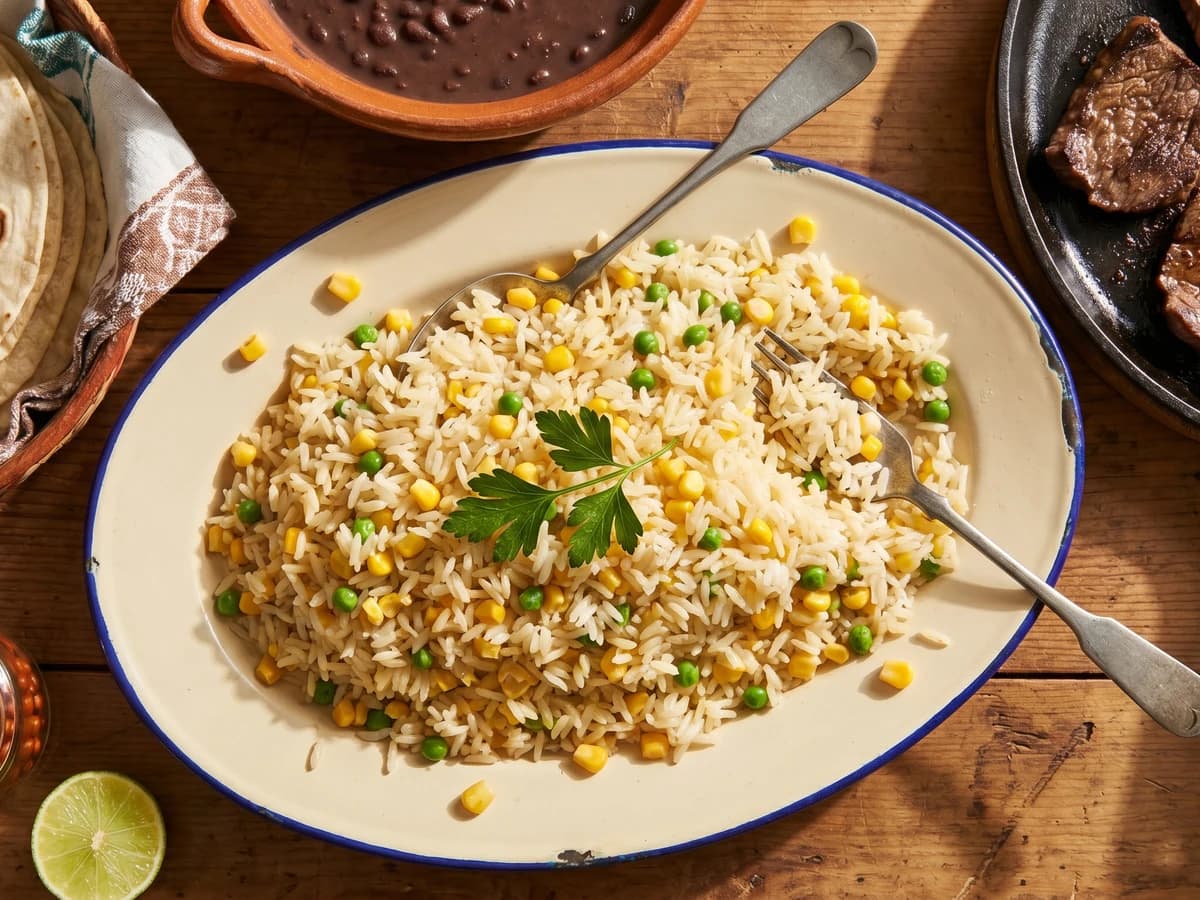
Sonora's white rice, toasted in butter and steamed with sweet corn and tender peas. The clean, quiet partner to a plate of carne asada, not the red rice of central Mexico.

Chef Lupita
Yucatán's white rice with sweet corn kernels, toasted in lard with garlic and onion. The quiet base that holds up against the peninsula's bold achiote-stained stews.