
Chef Lupita
Arroz a la Oaxaqueña
Oaxaca's red rice, stained with tomato and fried in lard, steamed with carrots, ejotes, black beans, and epazote. The side that anchors a Oaxacan family meal and earns its place beside the main.
A cooking platform built around craft, culture, and the stories behind what we eat.

Created by
Yucatán's white sweet potato fried in manteca until the edges turn deep gold and the centers stay starchy and earthy. The quiet side that anchors a poc chuc lunch in Merida.
This is a Yucatán dish. The camote blanco is not the orange sweet potato most people outside Mexico picture when they hear the word. It is a different root, drier, starchier, far less sugary, and in the southeast it belongs to the table the way black beans and white rice belong to the table. You will see it next to poc chuc, next to bistec, next to coliflor capeada in the comedores of Merida and Valladolid.
The technique is simple and unforgiving. Slice the camote, fry it in manteca de cerdo, salt it the moment it comes out of the fat. That is the whole recipe. What makes it Yucateca is the lard, the cut, and what you put around it: a squeeze of naranja agria, a spoon of salsa de chiltomate, a tangle of cebolla morada en escabeche stained pink from sour orange and habanero. Without those things on the table, you have fried sweet potato. With them, you have camote frito yucateco.
My mother did not cook Yucateca food. She was jalisciense and her notebook stops at the Bajio. I learned this dish in a comedor in Merida from a señora named Doña Reyna who fried camote in the same cast iron pan she had used for thirty years. She told me the trick was to leave the slices alone. Cooks who fuss with the camote, who flip it three times and poke at it, end up with pale, soft, greasy pieces. Cooks who trust the lard and the heat end up with what you want. No me vengas con atajos. Saber cocinar es saber vivir.
The white sweet potato (Ipomoea batatas), known regionally as camote blanco or boniato, is native to the Americas and was cultivated across the Yucatán Peninsula long before Spanish contact, alongside yuca, jicama, and macal as the starchy backbone of the Maya diet. The shift from boiled or pit-roasted preparations to frying in lard followed the introduction of pigs by the Spanish in the 16th century, and by the colonial period camote frito had taken its place as a humble accompaniment in mestizo Yucatecan cooking, where it remains tied to working-class comedor lunches rather than ceremonial or festival food. The dish is rarely written about outside the peninsula, in part because Yucatán's cuisine, with its Maya, Spanish, Lebanese, and Caribbean inheritances, has long been treated as a regional curiosity in the national imagination rather than the distinct culinary tradition it is.
Quantity
2 pounds
peeled
Quantity
1/2 cup, plus more as needed
Quantity
1 teaspoon, plus more to taste
Quantity
1/2 teaspoon
freshly ground
Quantity
2
halved
Quantity
for serving
Quantity
for serving
| Ingredient | Quantity |
|---|---|
| white sweet potato (camote blanco)peeled | 2 pounds |
| manteca de cerdo (pork lard) | 1/2 cup, plus more as needed |
| sea salt | 1 teaspoon, plus more to taste |
| black pepperfreshly ground | 1/2 teaspoon |
| sour oranges (naranja agria) (optional)halved | 2 |
| habanero salsa or salsa de chiltomate (optional) | for serving |
| pickled red onion (cebolla morada en escabeche) (optional) | for serving |
Peel the white sweet potatoes and cut them into rounds about half an inch thick. Even thickness matters. Thinner pieces burn before the centers cook, thicker pieces stay raw at the heart. The camote blanco of Yucatán is denser and drier than the orange variety, so it holds its shape and asks for a confident hand with the knife.
Place the rounds in a bowl of cold water for ten minutes to pull out some of the surface starch. Drain and dry each piece thoroughly with a clean towel. Wet camote will sputter in the lard and steam itself soft instead of frying crisp. Dry is the whole point.
In a heavy skillet, a cast iron pan or a wide clay cazuela works best, melt the lard over medium heat until it shimmers. La manteca es el sabor. Vegetable oil will fry the camote, but it will not give you the flavor that a Yucateca cook recognizes as her own. Use the lard.
Lay the camote rounds into the hot lard in a single layer. Do not crowd the pan. Crowded pieces steam each other. Fry for about six to eight minutes per side without moving them, until the underside turns deep gold and crisp. Then flip once and cook the second side for another five to six minutes. The interior should be tender enough to give to a fork, the exterior dark gold with crackled edges.
Lift the rounds out with a slotted spatula onto a wire rack or a plate lined with a clean cotton servilleta. Season immediately with sea salt and a few cracks of black pepper. Hot lard carries the salt into the crust. If you wait, the salt sits on top instead of becoming part of the bite.
Arrange the camote on a platter alongside whatever the rest of the meal is, poc chuc, bistec encebollado, or simply white rice and black beans. Squeeze sour orange over the top at the table. Set the salsa habanera and the pickled red onion within reach. In Yucatán, the camote is not a fussy side. It sits next to the main and earns its place by being honest. Así se hace y punto.
1 serving (about 200g)
Culinary guides, cultural storytelling, and the editorial depth that makes cooking meaningful.
Discover Culinary ExplorerChef Lupita
Oaxaca's red rice, stained with tomato and fried in lard, steamed with carrots, ejotes, black beans, and epazote. The side that anchors a Oaxacan family meal and earns its place beside the main.
Chef Lupita
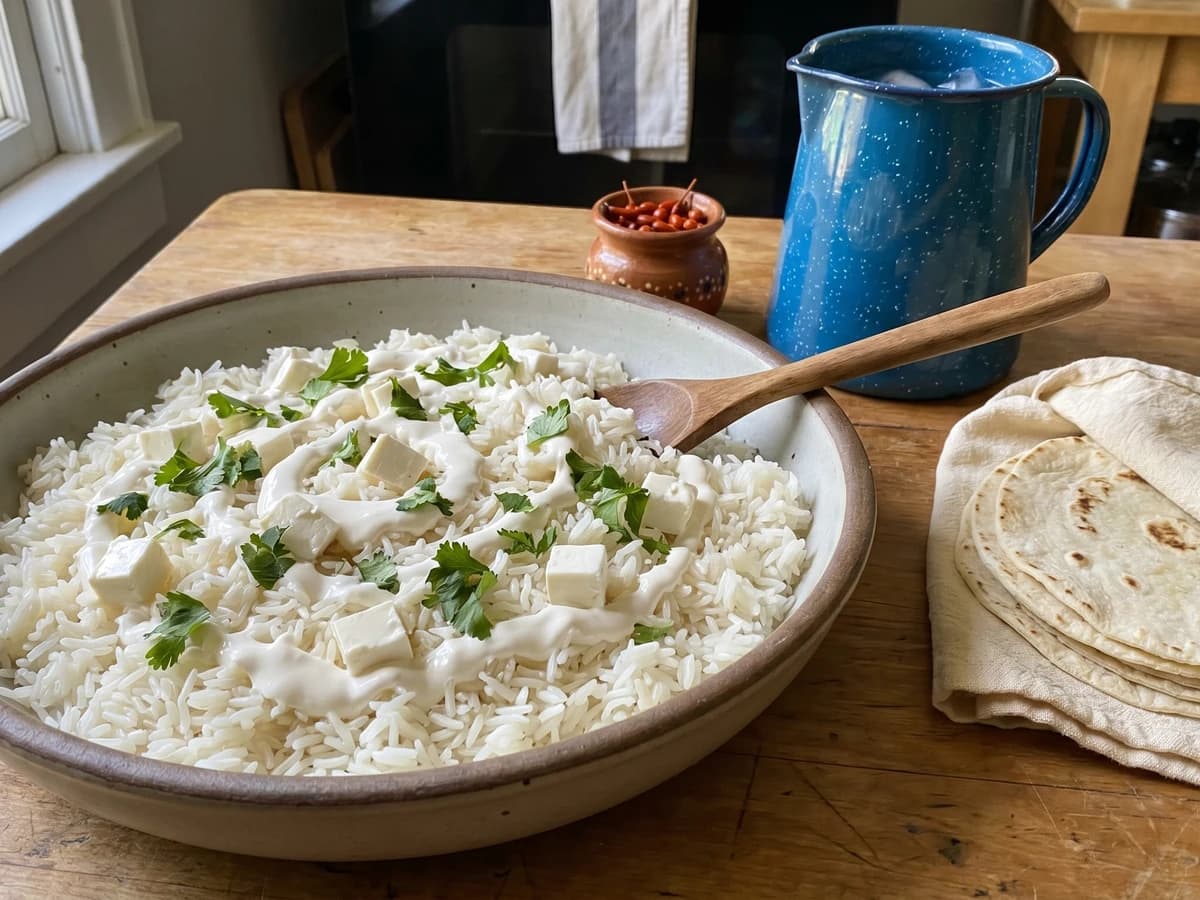
Sinaloa's home-cook white rice topped with cold cubes of cream cheese that soften into the warm grain, finished with crema and a sprinkle of chiltepin at the table. The trick that makes a side dish feel like a small luxury.
Chef Lupita
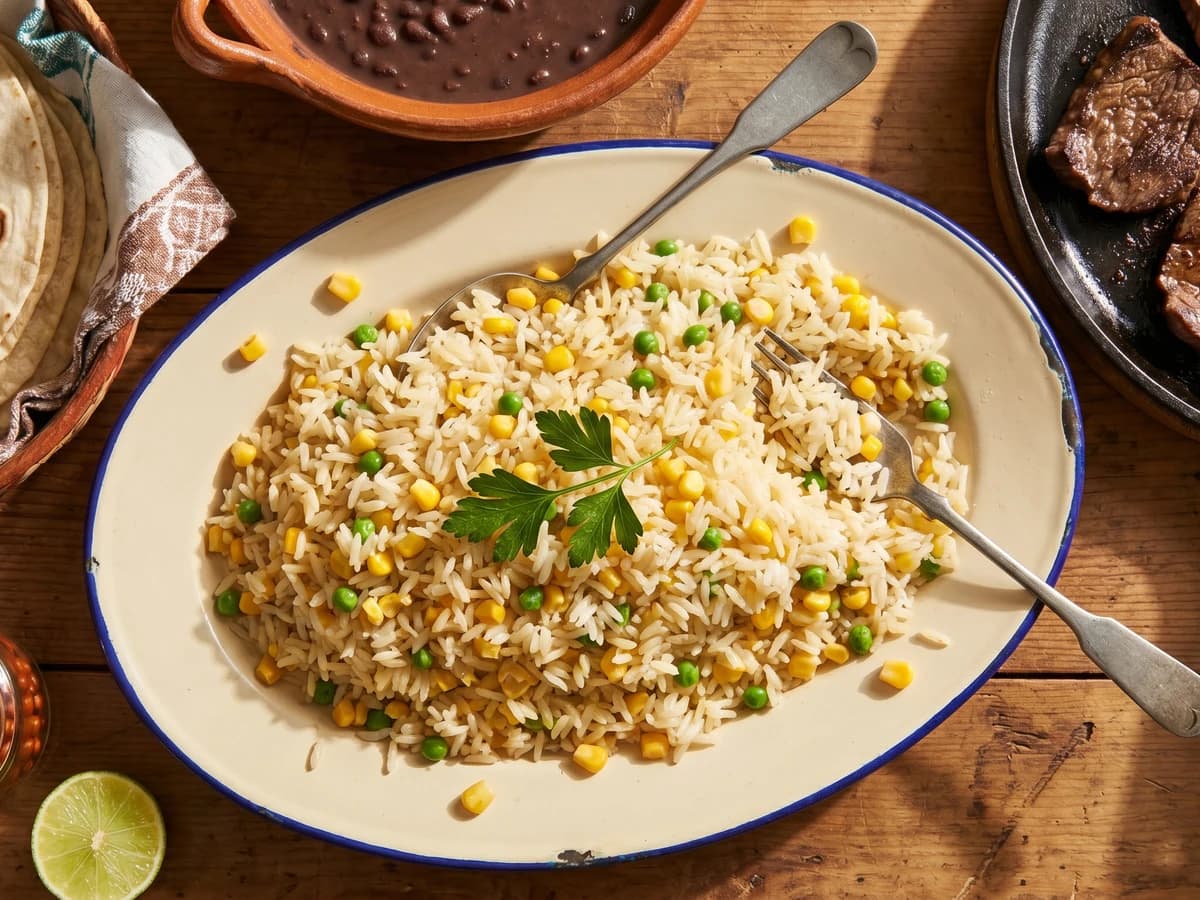
Sonora's white rice, toasted in butter and steamed with sweet corn and tender peas. The clean, quiet partner to a plate of carne asada, not the red rice of central Mexico.

Chef Lupita
Yucatán's white rice with sweet corn kernels, toasted in lard with garlic and onion. The quiet base that holds up against the peninsula's bold achiote-stained stews.