
Chef Thomas
A Proper Ploughman's Board
A board of good cheddar, thick ham, proper pickle, hard-boiled eggs, and crusty bread. Not cooking so much as assembling with conviction, and one of the finest lunches the English kitchen has ever produced.
A cooking platform built around craft, culture, and the stories behind what we eat.
Created by Chef Thomas
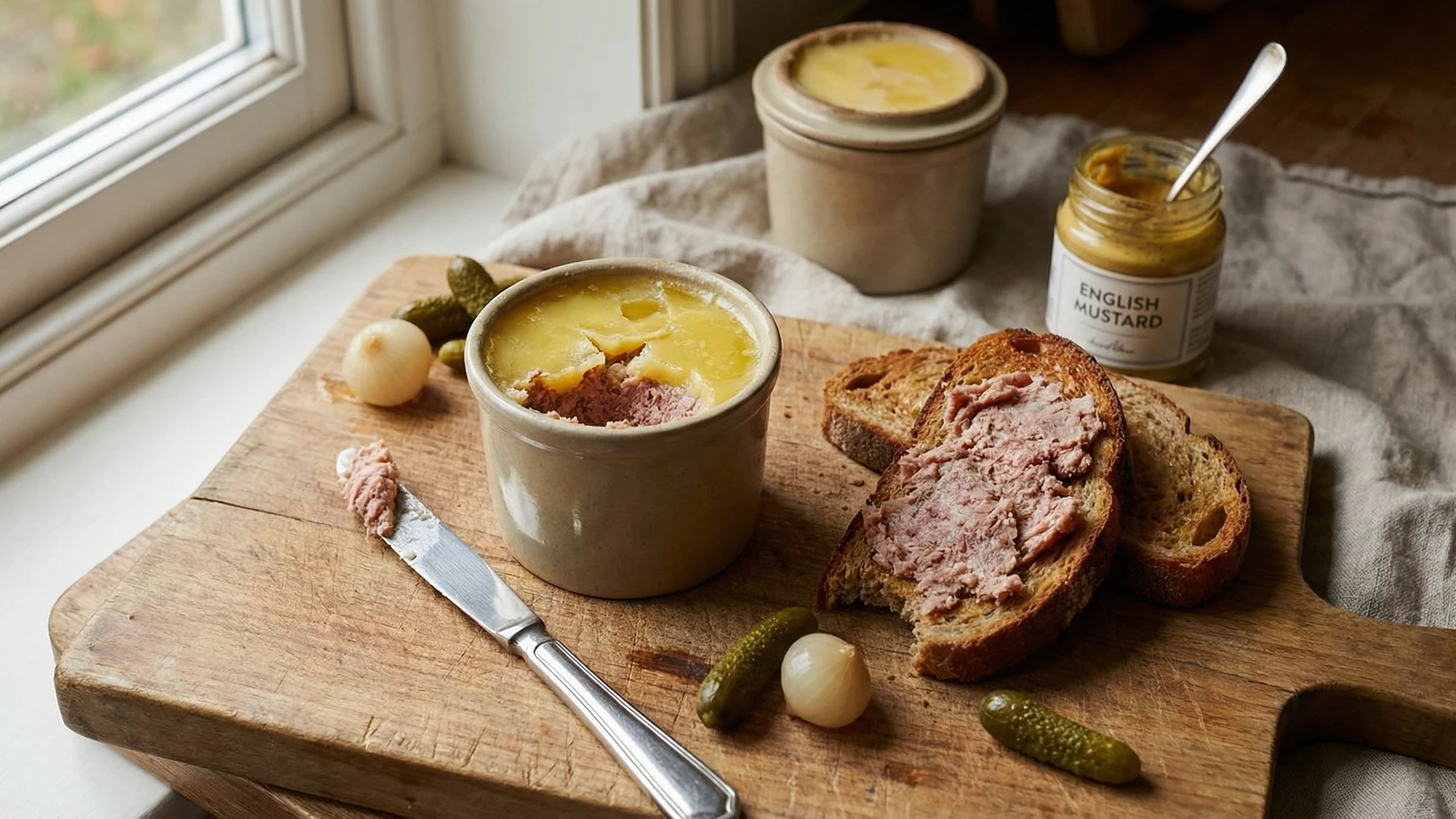
Cold roast ham pounded with soft butter, English mustard, and a whisper of mace, packed into pots and sealed under clarified butter. The Boxing Day meal that asks almost nothing of you and gives back more than it should.
The kitchen on Boxing Day has a particular quiet to it. The big effort is behind you. The roast has been carved, the table cleared, and somewhere in the fridge there's a ham that still has a good deal of life left in it. This is its second act.
Potted ham is old Yorkshire thrift dressed up as something worth wanting. You take yesterday's meat, shred it by hand, work it together with soft butter and English mustard and a pinch of mace that smells like Christmas even when Christmas is nearly over. You press it into small pots, seal it under a layer of clarified butter, and put it in the fridge. The next day you have something that spreads on warm toast like a quiet gift: savoury, spiced, rich with butter, the sort of thing that makes a cold lunch feel like an occasion.
I make this every year between Christmas and New Year, when the fridge is full of leftovers and the appetite wants something simple. I wrote it down in the notebook years ago: ham, butter, mustard, mace, Boxing Day. It hasn't changed since. A recipe is a conversation, not a contract, but some conversations don't need revising.
There are few better feelings than putting a pot of this in front of someone with a pile of toast and a jar of pickles, and watching them spread it on, take the first bite, and reach for more without saying a word. We're only making dinner. Or lunch. Or something to pick at while the rain comes down and the year winds itself out.
Quantity
400g
ideally leftover from a roast, roughly shredded
Quantity
150g
Quantity
80g
Quantity
1 tablespoon
Quantity
generous pinch
Quantity
pinch
Quantity
pinch
Quantity
freshly ground, to taste
Quantity
to serve
Quantity
to serve
| Ingredient | Quantity |
|---|---|
| cooked hamideally leftover from a roast, roughly shredded | 400g |
| unsalted butter, softened | 150g |
| unsalted butter, for sealing | 80g |
| English mustard | 1 tablespoon |
| ground mace | generous pinch |
| ground cloves | pinch |
| cayenne pepper | pinch |
| black pepper | freshly ground, to taste |
| good toast or oatcakes (optional) | to serve |
| cornichons and pickled onions (optional) | to serve |
Take the leftover ham and pull it apart with two forks, working against the grain until you have a pile of rough shreds. Some people mince it. I prefer to shred it by hand because you get a texture that feels honest, not industrial. A mix of fine and coarse is what you want. Pick out any large pieces of fat, but don't be too fastidious. A little fat carries flavour.
Put the shredded ham in a large bowl with the softened butter, mustard, mace, cloves, cayenne, and a good grinding of black pepper. Work it together with a fork, pressing and mashing until the butter and ham are properly combined. You're not making a smooth paste. You want it rough, spreadable, somewhere between a pâté and a rillette. Some people use a food processor. I don't. The fork gives you control and the texture stays interesting. Taste it. Adjust the mustard if you want more heat, the mace if you want more warmth. Season and taste. Then taste again.
Press the mixture firmly into ramekins or small stoneware pots, pushing it down with the back of a spoon to remove any air pockets. Leave about a centimetre of space at the top. Smooth the surface. The packing matters. Air is the enemy of keeping, and a well-packed pot will hold for days in the fridge.
Melt the remaining butter gently in a small pan. Let it foam and settle, then carefully pour the clear golden liquid over the top of each pot, leaving the milky solids behind in the pan. The butter should form a smooth, even seal about half a centimetre thick. Put the pots in the fridge and leave them alone for at least four hours, overnight if you can manage it. The flavours need time to settle and marry. Boxing Day patience.
Take the pots from the fridge twenty minutes before you plan to eat. The butter seal softens just enough to spread, and the ham beneath it comes to life as it loses its chill. Serve with good toast, cut thick and still warm, or oatcakes if you can find them. A few cornichons alongside. A pickled onion or two. A glass of something cold. That's Boxing Day sorted.
1 serving (about 108g)
Culinary guides, cultural storytelling, and the editorial depth that makes cooking meaningful.
Discover Culinary ExplorerChef Thomas
A board of good cheddar, thick ham, proper pickle, hard-boiled eggs, and crusty bread. Not cooking so much as assembling with conviction, and one of the finest lunches the English kitchen has ever produced.

Chef Thomas
Puff pastry twisted with anchovy and Parmesan, baked until golden and shattering and salty, the kind of thing you put out with drinks that disappears before anyone sits down.

Chef Thomas
Fresh oysters wrapped in crisp streaky bacon and grilled until the salt of the sea meets the smoke of the cure, served on hot buttered toast the way the Victorians intended, only simpler and at home.

Chef Thomas
Boiled eggs wrapped in a dark, spiced coat of sausage meat and crumbled black pudding, fried to a deep gold. The kind of thing you eat standing up in the kitchen, still warm, with mustard on your thumb.