
Chef Thomas
A Proper Ploughman's Board
A board of good cheddar, thick ham, proper pickle, hard-boiled eggs, and crusty bread. Not cooking so much as assembling with conviction, and one of the finest lunches the English kitchen has ever produced.
A cooking platform built around craft, culture, and the stories behind what we eat.
Created by Chef Thomas
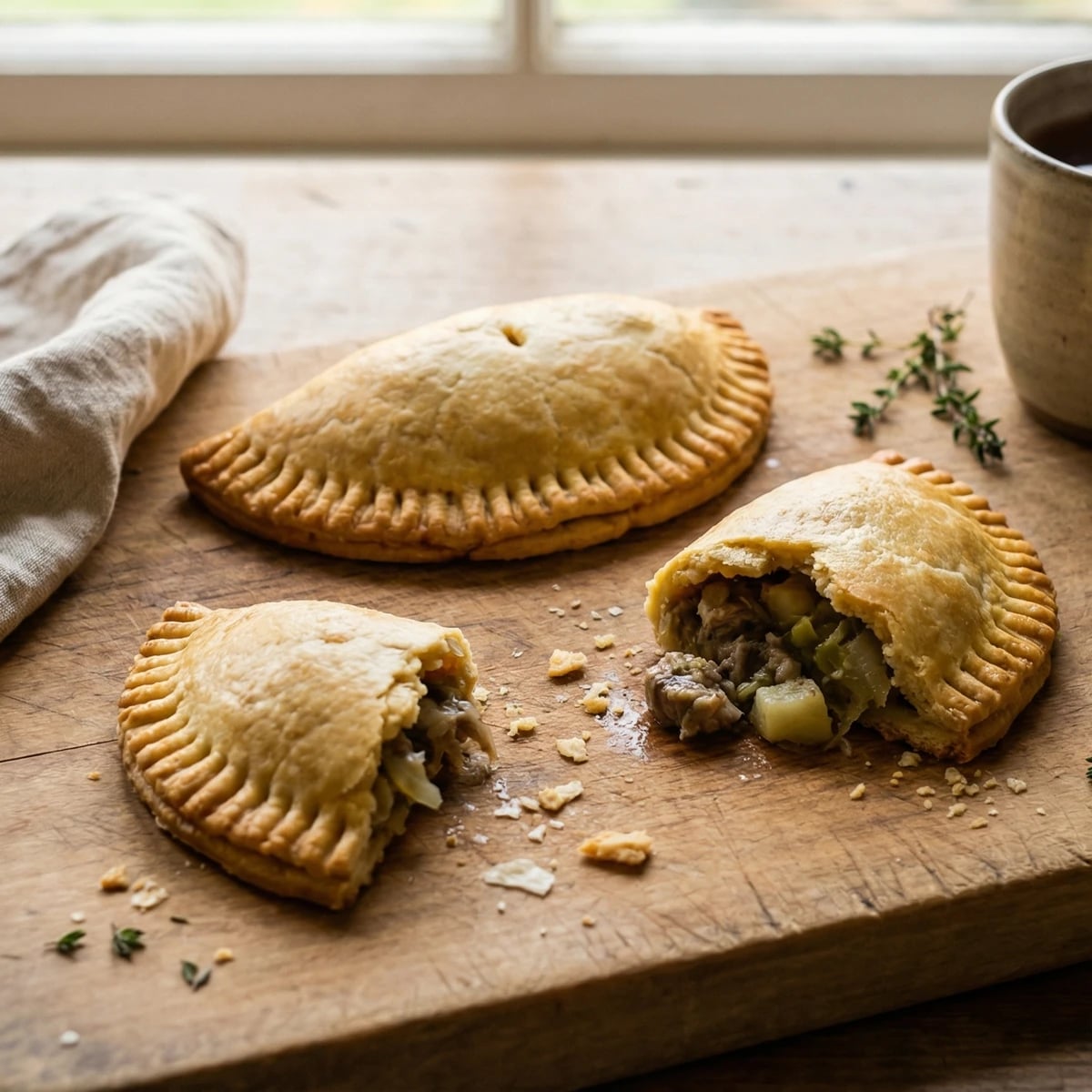
Lamb, leeks, potato, and onion folded into sturdy shortcrust pastry: the Welsh miners' answer to a proper meal, held in one hand and eaten without apology.
The first leeks of autumn are at the market this morning, pale and tight, with that clean, sharp smell that softens into something sweet and almost buttery the moment they meet heat. This is when I start thinking about oggies.
A Welsh oggie is, at its simplest, a pasty. Lamb instead of beef. Leeks instead of swede. The pastry is thick and sturdy because it was built for purpose: carried down a mine in a coat pocket, eaten in the dark with filthy hands, the crimped edge held and then thrown away. Practical food, made with care, for people who needed it. There's nothing romantic about coal dust and twelve-hour shifts, but there is something worth respecting in a meal designed to travel into the earth and still taste good when it got there.
I make mine on weekends in late autumn, when the leeks are firm and the lamb is good and the house needs something in the oven. The filling goes in raw, which is the point. As the pastry bakes, everything inside renders and softens and steams into a pocket of savoury warmth. The leek does the quiet work, turning sweet and silky against the lamb. A recipe is a conversation, not a contract, so adjust the filling to what you've got and what you like. More leek, less potato. A handful of chopped parsley if the garden still has some. Your kitchen, your rules.
I wrote it down in the notebook last October: lamb, leeks, thyme, rain on the window, the oven doing all the work. That's the kind of evening this is for.
Quantity
350g
Quantity
175g
cubed
Quantity
pinch
Quantity
3-4 tablespoons
Quantity
300g
cut into small dice
Quantity
2 medium
halved, washed, and sliced
Quantity
2 medium
peeled and cut into small dice
Quantity
1
finely chopped
Quantity
a few sprigs
leaves picked
Quantity
to taste
Quantity
1
beaten, for glazing
| Ingredient | Quantity |
|---|---|
| plain flour | 350g |
| cold unsalted buttercubed | 175g |
| fine sea salt (for pastry) | pinch |
| cold water | 3-4 tablespoons |
| lamb neck fillet or shouldercut into small dice | 300g |
| leekshalved, washed, and sliced | 2 medium |
| potatoespeeled and cut into small dice | 2 medium |
| onionfinely chopped | 1 |
| fresh thymeleaves picked | a few sprigs |
| fine sea salt and black pepper | to taste |
| eggbeaten, for glazing | 1 |
Put the flour and salt in a large bowl. Add the cold butter and rub it in with your fingertips until the mixture looks like rough breadcrumbs. Some pieces of butter should still be visible, flat little shards the size of oat flakes. That's what gives the pastry its short, flaky character. Add the cold water a tablespoon at a time, bringing it together with a knife and then your hands. Stop the moment it holds. Overwork it and you'll lose the crumble. Wrap it in cling film, press it into a flat disc, and rest it in the fridge for at least thirty minutes.
While the pastry rests, combine the diced lamb, sliced leeks, potato, onion, and thyme leaves in a bowl. Season generously with salt and pepper and toss everything together with your hands. The filling goes in raw, which matters. As the oggies bake, the lamb renders its fat into the vegetables, the leeks soften and go sweet, and the potato absorbs the juices. The filling cooks itself inside the pastry. That's the whole principle.
Set the oven to 190C/170C fan. Roll the pastry out on a floured surface to the thickness of a pound coin. Cut six circles, roughly the size of a side plate. Pile the filling onto one half of each circle, leaving a border. Don't be timid with the filling, but don't overstuff either. You need room to fold and seal. Brush the edges with beaten egg, fold the pastry over to make a half-moon, and press the edges firmly with a fork. Each one should feel solid in your hand, a proper parcel.
Set the oggies on a lined baking tray. Brush the tops with the remaining beaten egg and cut a small slit in each to let the steam escape. Bake for forty to forty-five minutes, until the pastry is deep golden and the kitchen smells of butter and lamb and thyme. When you tap the base of one, it should sound hollow and feel firm. Let them cool for ten minutes before eating. The filling inside is fierce.
1 serving (about 230g)
Culinary guides, cultural storytelling, and the editorial depth that makes cooking meaningful.
Discover Culinary Explorer
Chef Thomas
A board of good cheddar, thick ham, proper pickle, hard-boiled eggs, and crusty bread. Not cooking so much as assembling with conviction, and one of the finest lunches the English kitchen has ever produced.

Chef Thomas
Puff pastry twisted with anchovy and Parmesan, baked until golden and shattering and salty, the kind of thing you put out with drinks that disappears before anyone sits down.

Chef Thomas
Fresh oysters wrapped in crisp streaky bacon and grilled until the salt of the sea meets the smoke of the cure, served on hot buttered toast the way the Victorians intended, only simpler and at home.

Chef Thomas
Boiled eggs wrapped in a dark, spiced coat of sausage meat and crumbled black pudding, fried to a deep gold. The kind of thing you eat standing up in the kitchen, still warm, with mustard on your thumb.