
Chef Thomas
A Proper Bacon Sandwich
Back bacon in a hot pan, good white bread, soft salted butter. Ten minutes between waking up and the first bite of something that makes the morning make sense.
A cooking platform built around craft, culture, and the stories behind what we eat.
Created by Chef Thomas
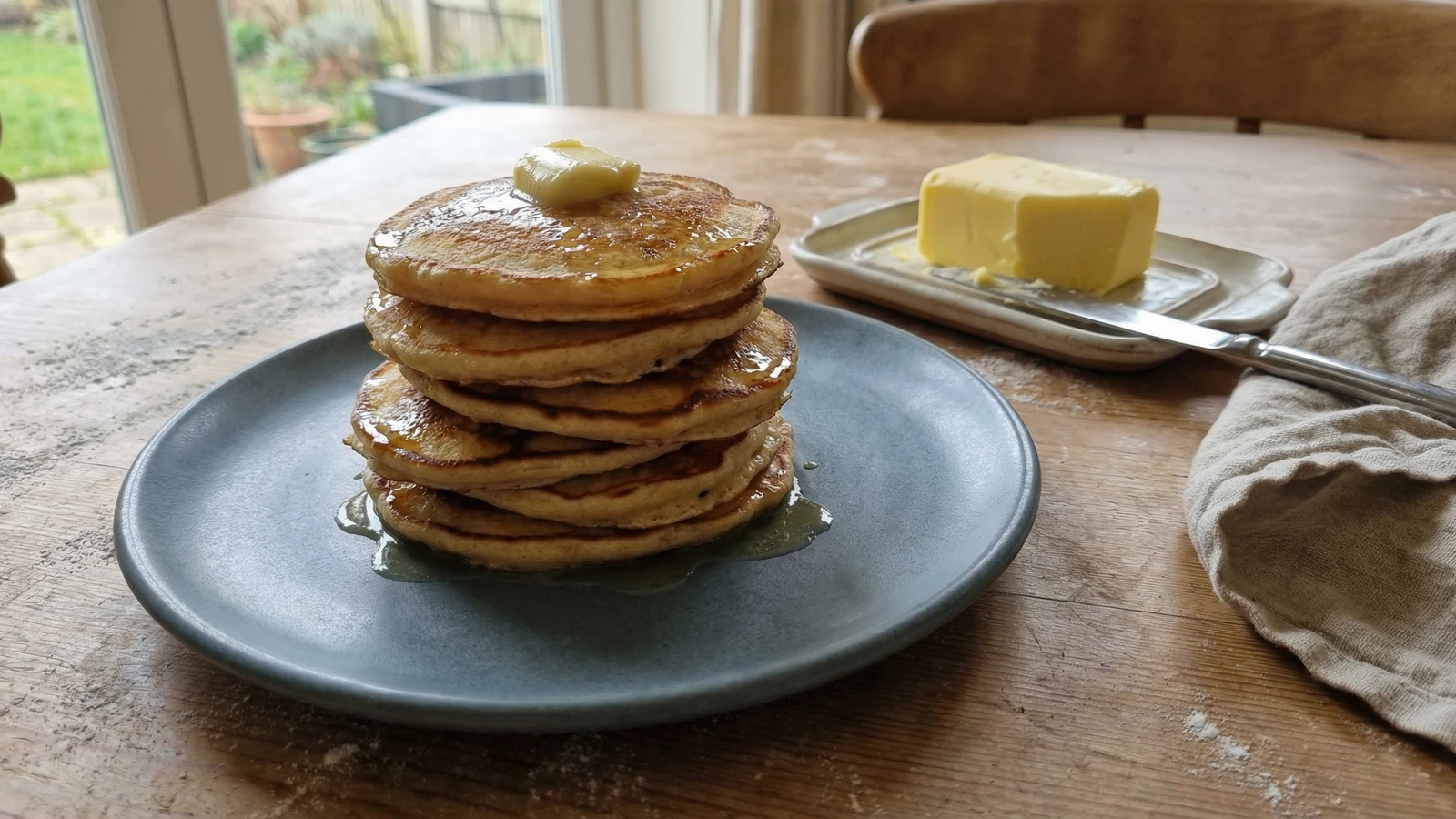
Thick, soft buttermilk pancakes cooked on a hot bakestone and stacked with salted butter between each one, the kind of thing that turns a cold morning into something worth getting out of bed for.
The kitchen smells of warm butter and the faintly sour tang of buttermilk hitting a hot pan. It's March, the first of the month, and outside the weather is doing that thing it does in early spring where it can't decide between rain and something almost hopeful. The crempog don't care about the weather. They belong to this time of year.
Thicker than an English pancake, softer than a Scotch one, risen with buttermilk and cooked on a bakestone until the underside is an honest gold. You butter them as they come, stacking one on top of another so the warmth from each keeps the stack together, the butter pooling between layers. There's a word for this in Welsh that I won't butcher with my pronunciation, but the meaning is clear enough: small, round, and good.
I first had these in a farmhouse kitchen in Carmarthenshire, standing at a table that had clearly seen decades of flour and butter. The woman who made them didn't measure anything. She poured the batter from a jug and knew by sight when to turn them. I wrote it down that evening: buttermilk, bakestone, salted butter, March. A recipe is a conversation, not a contract. This one barely needs writing down at all.
They're traditional on St David's Day and again on bonfire night, which tells you something about their nature. They're for cold evenings and occasions that call for warmth without spectacle. We're only making pancakes. But sometimes that's everything.
Quantity
250g
Quantity
1 tablespoon
Quantity
pinch
Quantity
1
Quantity
300ml
Quantity
50g
melted, plus extra for cooking
Quantity
generous amount
softened, for spreading
| Ingredient | Quantity |
|---|---|
| self-raising flour | 250g |
| caster sugar | 1 tablespoon |
| fine sea salt | pinch |
| large egg | 1 |
| buttermilk | 300ml |
| unsalted buttermelted, plus extra for cooking | 50g |
| salted buttersoftened, for spreading | generous amount |
Tip the flour, sugar, and salt into a large bowl and make a well in the centre. Crack in the egg and pour in about half the buttermilk. Whisk from the centre outward, pulling flour in from the edges as you go, then add the rest of the buttermilk and the melted butter. Whisk until smooth but don't overwork it. The batter should be thick, thicker than English pancake batter, more like a lazy, slow-pouring cream. If it feels stiff, add a splash more buttermilk. Let it rest for five minutes while the pan heats.
Set a flat griddle, bakestone, or heavy frying pan over a medium heat. Give it a proper few minutes to come up to temperature. Rub the surface with a scrap of butter on a piece of kitchen paper. The butter should sizzle gently the moment it touches the pan. If it scorches and smokes, pull the pan off the heat for thirty seconds. You want steady, even warmth, not fierce heat. Crempog need time to rise and set through without burning underneath.
Drop a generous tablespoon of batter onto the pan for each crempog, leaving room between them. They should spread to about eight centimetres across, no wider. Let them cook undisturbed. After a minute or two, small bubbles will appear on the surface and the edges will start to look set and dry. When the underside is a good, even gold, flip them. The first one is always wrong. Accept it, eat it standing at the stove, and adjust the heat if you need to. The second batch will be better. Cook for another minute or so until the other side matches. They should feel light when you lift them, springy if you press the centre gently.
As each crempog comes off the pan, spread it generously with softened salted butter and stack it on a warm plate. The butter melts into the surface and the stack stays warm, each pancake keeping the one below it company. Keep going, re-buttering the pan between batches, until the batter is finished. Bring the whole stack to the table and let people pull them off the pile. No fuss. No ceremony. Just warm pancakes and good butter.
1 serving (about 160g)
Culinary guides, cultural storytelling, and the editorial depth that makes cooking meaningful.
Discover Culinary ExplorerChef Thomas
Back bacon in a hot pan, good white bread, soft salted butter. Ten minutes between waking up and the first bite of something that makes the morning make sense.

Chef Thomas
Tinned beans warmed with butter and Worcestershire, spooned over thick toast and topped with a fried egg. The meal that half the country falls back on when the day asks nothing more of them.

Chef Thomas
Oats soaked overnight in milk and cream with grated apple and lemon, then spooned into bowls and buried under whatever the orchard and the hedgerow are offering this week.

Chef Thomas
Thick slices of black pudding fried crisp in butter, served alongside sharp apple wedges softened in the same pan. A cold-morning breakfast that smells like someone is paying attention.