
Chef Thomas
A Proper Bacon Sandwich
Back bacon in a hot pan, good white bread, soft salted butter. Ten minutes between waking up and the first bite of something that makes the morning make sense.
A cooking platform built around craft, culture, and the stories behind what we eat.

Created by Chef Thomas
Oats soaked overnight in milk and cream with grated apple and lemon, then spooned into bowls and buried under whatever the orchard and the hedgerow are offering this week.
September mornings have a particular quality of light. Cooler. The kitchen window misted from the kettle. The apples on the tree outside have gone from hard and green to something worth picking, and the pears at the market are finally ripe enough to yield when you press a thumb to them. This is when bircher muesli makes sense.
The Swiss invented it. A doctor called Bircher-Benner, which sounds like a name someone made up for a children's book. The original was austere: oats, condensed milk, lemon, apple. We've softened it over the decades, as the British tend to do with borrowed things, adding cream and yoghurt and honey, piling the fruit higher, making it ours. I don't feel guilty about this. The improvement is real.
You make it the night before. That's the beauty of it. Fifteen minutes of stirring and grating, then the fridge does the work while you sleep. In the morning, you spoon it into bowls and pile on whatever fruit the season has given you: sliced pears, blackberries still cool from the punnet, a scattering of pomegranate seeds if autumn is far enough along. Toasted hazelnuts for the crunch. A thread of honey. It's the kind of breakfast that feels like someone has looked after you, even if the someone is yourself.
I wrote it down in the notebook last October. "Bircher. Cox's apples from the garden. Pear from the market. Blackberries from the lane. Ate it standing up in the kitchen at seven. Good morning." It didn't need more than that.
Quantity
200g
not instant
Quantity
300ml
Quantity
150ml
Quantity
100ml
Quantity
1
juiced
Quantity
2 tablespoons, plus more for drizzling
Quantity
2
Cox's or Braeburn, grated
Quantity
1
cored and sliced thinly
Quantity
a handful
roughly chopped and toasted
Quantity
a handful
Quantity
seeds of half a pomegranate
| Ingredient | Quantity |
|---|---|
| rolled oatsnot instant | 200g |
| whole milk | 300ml |
| natural yoghurt | 150ml |
| double cream | 100ml |
| lemonjuiced | 1 |
| honey | 2 tablespoons, plus more for drizzling |
| eating applesCox's or Braeburn, grated | 2 |
| ripe pearcored and sliced thinly | 1 |
| hazelnutsroughly chopped and toasted | a handful |
| blackberries or seasonal berries (optional) | a handful |
| pomegranate seeds (optional) | seeds of half a pomegranate |
Tip the oats into a large bowl. Pour over the milk, yoghurt, and cream. Add the lemon juice and honey and stir it all together. The lemon might seem odd, but it does something quiet and necessary: it lifts the whole bowl, stops it tasting heavy and porridgey. Grate the apples in, skin and all, straight into the oats. Stir once more. Cover and put it in the fridge.
Walk away. The oats need at least six hours, overnight is better. They'll soften and swell, absorbing the milk and cream and the sweet, sharp juice from the grated apple. By morning the texture should be creamy and thick, somewhere between porridge and pudding but not quite either. If it has thickened too much overnight, loosen it with a splash more milk until it feels right to you.
Scatter the chopped hazelnuts into a dry pan over a medium heat. Stay close. Shake the pan every thirty seconds or so. When they start to smell warm and toasty and the colour has deepened a shade, they're done. Tip them onto a plate straight away. Left in the hot pan, they'll burn. Trust your nose here. It knows before your eyes do.
Give the soaked oats a good stir. Spoon generously into bowls. Slice the pear thinly and lay it on top, alongside the blackberries or whatever berries looked best at the market. Scatter over the toasted hazelnuts and the pomegranate seeds, if you have them. A thread of honey over everything. Don't stir it in. Let whoever is eating do the mixing, or not. The pleasure is partly in how it looks: the pale oats, the fruit piled on top, the dark jewel of the berries against the cream.
1 serving (about 365g)
Culinary guides, cultural storytelling, and the editorial depth that makes cooking meaningful.
Discover Culinary ExplorerChef Thomas
Back bacon in a hot pan, good white bread, soft salted butter. Ten minutes between waking up and the first bite of something that makes the morning make sense.

Chef Thomas
Tinned beans warmed with butter and Worcestershire, spooned over thick toast and topped with a fried egg. The meal that half the country falls back on when the day asks nothing more of them.

Chef Thomas
Thick slices of black pudding fried crisp in butter, served alongside sharp apple wedges softened in the same pan. A cold-morning breakfast that smells like someone is paying attention.
Chef Thomas
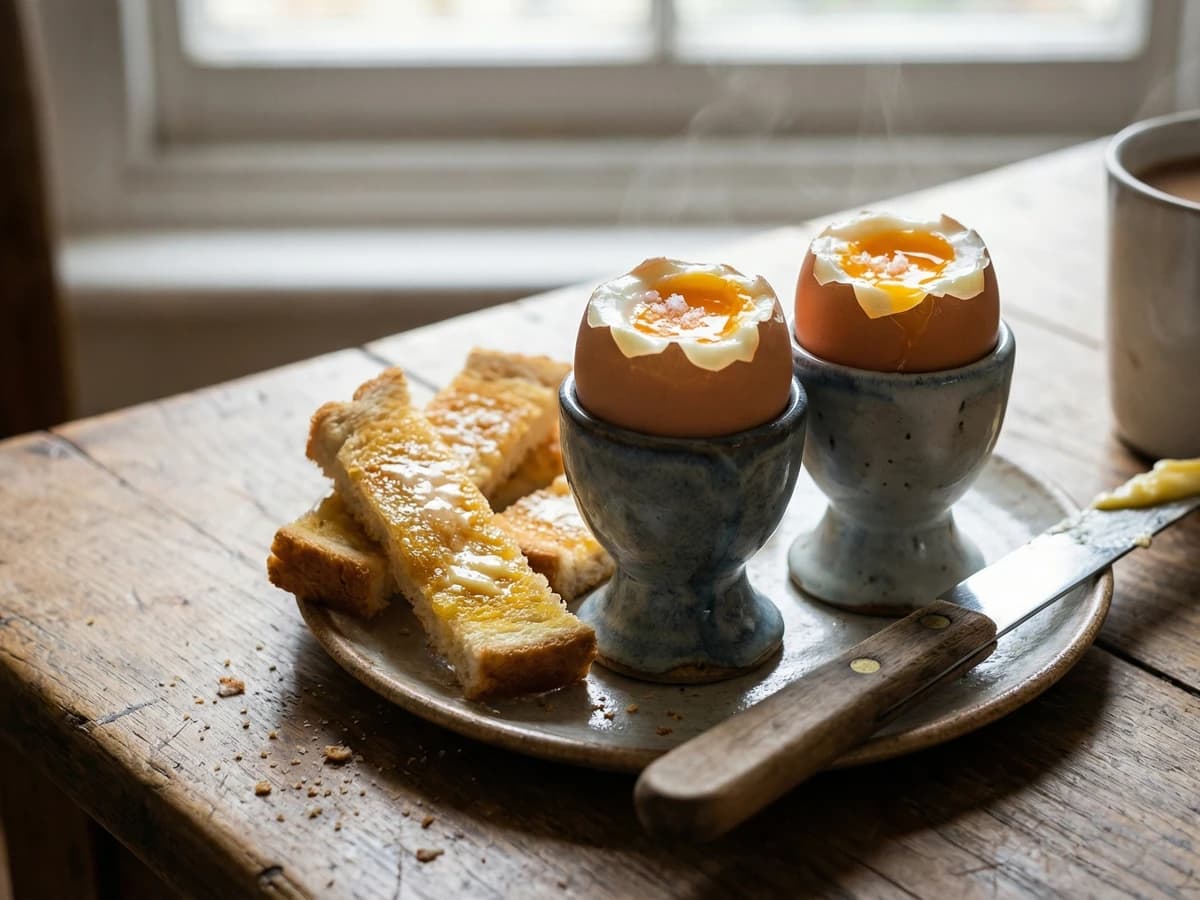
A soft-boiled egg cracked open at the table, the yolk bright and molten, with buttered toast soldiers lined up and ready. The simplest breakfast, and the one most worth getting right.