Culinary Explorer

A cooking platform built around craft, culture, and the stories behind what we eat.
Discover Culinary Explorer
Watercress, Orange and Red Onion Salad

Watercress, Orange and Red Onion Salad

Created by Chef Thomas

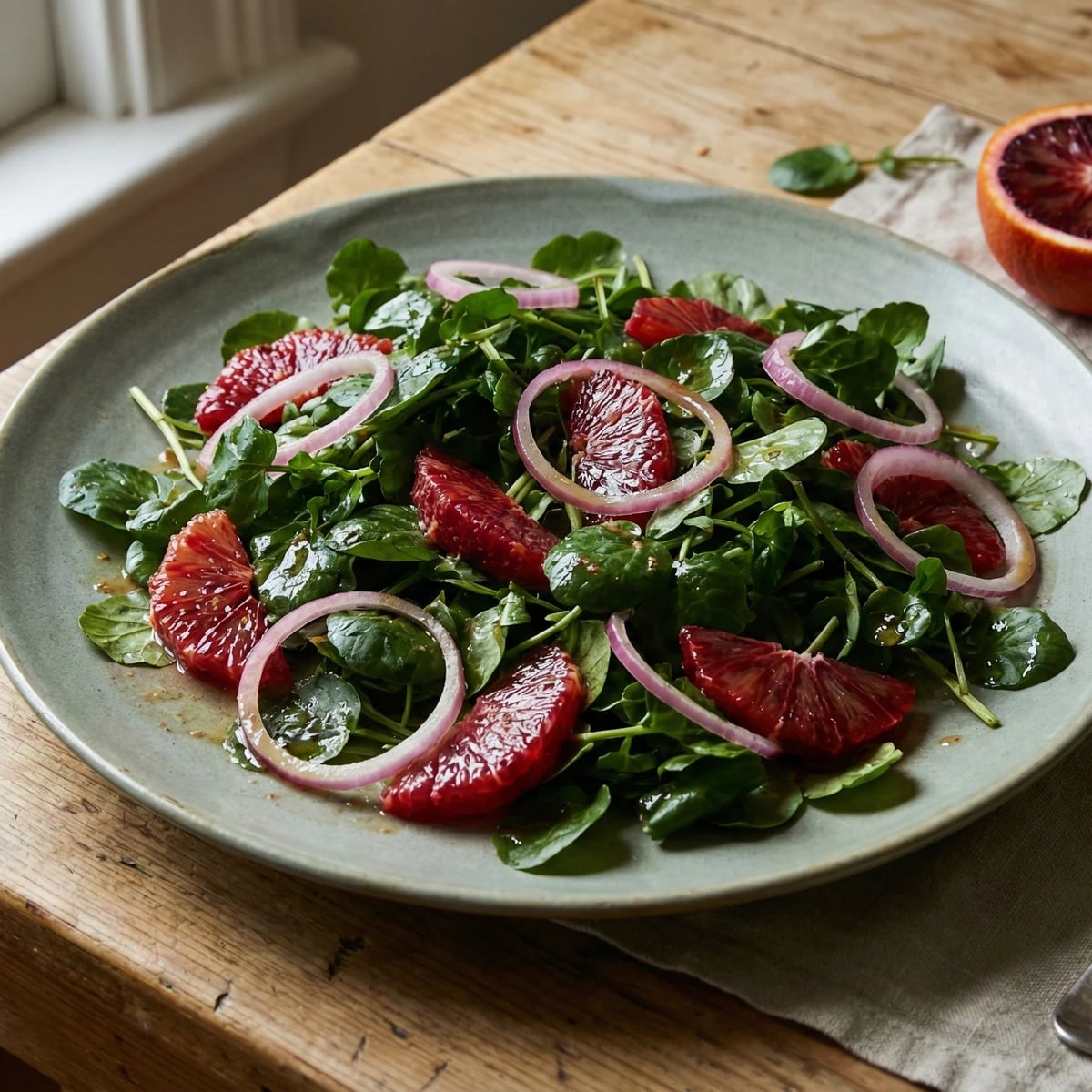
Peppery watercress, blood orange segments, and slivers of red onion dressed in nothing more than the orange's own juice and good olive oil. A winter salad that earns its place at the table.

Salads
British
Weeknight
Dinner Party
15 min
Active Time
0 min cook15 min total
Yield4 servings

January is not a month most people associate with salad, but this is the exception. The blood oranges arrive in the market around the same time the cold properly sets in, and their colour alone is enough to justify the trip: that deep crimson bleeding into ruby, as if someone had stained them overnight. Next to a pile of watercress, dark and peppery and still damp, they look like they belong together. They do.

This is an old combination. The Victorians knew it, serving watercress with orange at winter tables when not much else was green and growing. I don't know whether they used blood oranges or navels, but I can tell you the blood oranges are worth waiting for. They bring a tartness that ordinary oranges don't quite have, and that colour against the dark watercress leaves is something you want on the table.

The dressing is barely a recipe. Juice from the orange trimmings, good olive oil, a flake of salt. The onion goes in thinly sliced and soaked for a few minutes in vinegared water, which tames the bite without killing it. That's it. No mustard, no honey, no garlic. The ingredients are good enough to carry the whole thing without interference.

I make this through the winter months whenever the blood oranges look right at the market. Sometimes it sits alongside a roast chicken or a piece of fish. Sometimes it is the meal, with bread and cheese and a glass of something cold. I wrote it down in the notebook last February: watercress, blood orange, red onion, Tuesday. The rain had been going all day. The salad was the brightest thing in the kitchen.

The technique, the tradition, and the story behind every dish.

Discover Culinary Explorer

Ingredients

watercress

Quantity

2 large bunches

thick stems removed

blood oranges

Quantity

3

peeled and segmented

red onion

Quantity

1 small

peeled and sliced into thin rings

red wine vinegar

Quantity

a splash

extra virgin olive oil

Quantity

3-4 tablespoons

orange juice

Quantity

from the trimmings

flaky sea salt

Quantity

to taste

black pepper

Quantity

to taste

Equipment Needed

  • Sharp knife for segmenting citrus
  • Wide, shallow serving plate or bowl

Instructions

  1. 1

    Soak the onion

    Slice the red onion as thinly as you can manage. Drop the rings into a small bowl of cold water with the splash of red wine vinegar. Leave them while you prepare everything else. Ten minutes is enough. This softens the raw heat without losing the colour or the crunch. Drain them well and pat dry.

    If the onion makes your eyes water, it's a good one. The sharper it is raw, the more it benefits from the soak.
  2. 2

    Segment the oranges

    Cut the top and bottom off each orange so it sits flat, then carve away the peel and pith in strips, following the curve of the fruit. Work over a bowl to catch the juice. Now cut between the membranes to release clean segments. Squeeze the leftover membrane into the bowl. That juice is half your dressing.

  3. 3

    Make the dressing

    To the collected orange juice, add three or four tablespoons of your best olive oil and a pinch of flaky salt. Stir it with a fork. Taste. It should be bright and slightly sharp, balanced by the fruitiness of the oil. If it needs a drop more vinegar, add it. If it's too tart, a little more oil. You'll know when it's right.

  4. 4

    Assemble the salad

    Spread the watercress across a wide plate or shallow bowl. Tuck the orange segments in amongst the leaves. Scatter the drained onion rings over the top. Spoon the dressing over everything with a generous hand, letting it pool in the leaves. Finish with a few flakes of salt and a grind of black pepper. Bring it to the table immediately. Watercress waits for nobody.

    A wide, flat plate works better than a deep bowl. You want the salad spread out so every leaf gets dressed, not piled into a heap where the bottom drowns and the top stays dry.

Chef Tips

  • Hampshire watercress, if you can find it, has a clean peppery bite that supermarket bags can't match. Look for bunches with dark, glossy leaves and crisp stems. If the leaves are yellowing or limp, walk past.
  • Blood oranges have a short season, roughly January through March. When they're gone, use navels, but accept it won't be quite the same salad. The blood orange brings an edge that a navel smooths over.
  • Don't dress this in advance. Watercress wilts the moment it meets oil and acid. Assemble it, dress it, and bring it straight to the table. It's at its best in the first five minutes.
  • This sits beautifully next to roast chicken, grilled fish, or a good piece of cheese. It also works as a first course at a dinner party, the sort of thing that looks effortless and tastes like you meant it.

Advance Preparation

  • The onion can be sliced and soaked in its vinegar water up to an hour ahead. Keep it in the fridge.
  • The oranges can be segmented and the juice collected a few hours in advance. Cover and refrigerate.
  • Do not assemble the salad until the moment you are ready to eat. Watercress dressed too early turns sad and limp, and there is no recovering it.

Frequently Asked Questions

Nutrition Information

1 serving (about 190g)

Calories
160 calories
Total Fat
11 g
Saturated Fat
2 g
Trans Fat
0 g
Unsaturated Fat
9 g
Cholesterol
0 mg
Sodium
165 mg
Total Carbohydrates
15 g
Dietary Fiber
3 g
Sugars
11 g
Protein
2 g

Note: Chef personas and recipes are created with AI assistance. Cook with care: follow safe food-handling practices, check doneness with a thermometer when needed, and adapt for allergies and your kitchen.

Where cooking meets culture.

Culinary guides, cultural storytelling, and the editorial depth that makes cooking meaningful.

Discover Culinary Explorer

More from British Salads

Browse the full collection