
Chef Thomas
A Ploughman's Salad
The old pub ploughman's, shaken loose from its board and laid across butter lettuce with a sharp mustard dressing, for the kind of lunch that feels like you've given yourself the afternoon off.
A cooking platform built around craft, culture, and the stories behind what we eat.
Created by Chef Thomas
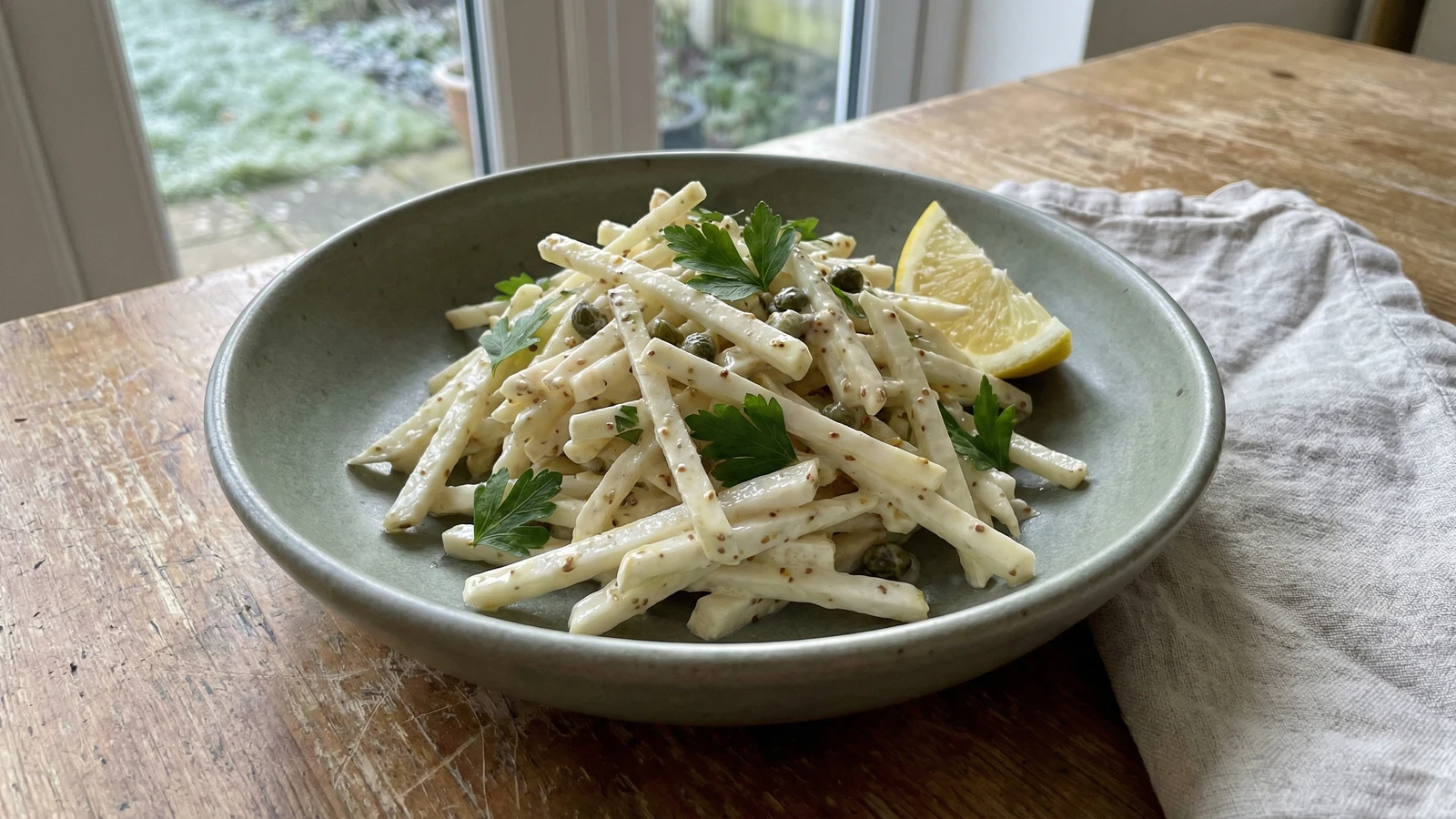
Celeriac cut into pale matchsticks and dressed in sharp mustard and crème fraîche, the sort of thing you make on a Sunday and find yourself eating from the bowl with a fork on Tuesday.
Celeriac is not a beautiful vegetable. It arrives at the market looking like something pulled from the ground by force, which it was, covered in root hairs and caked mud and a general air of not caring what you think of it. This is part of the appeal. The flavour is hidden inside all that ugliness: clean, celery-bright, with a nuttiness that only shows itself once you've taken a knife to it.
Remoulade is a French word for something that doesn't need a French word. You cut the celeriac into matchsticks, dress it in mustard and crème fraîche, and leave it alone for a while. The dressing softens the raw edges. The mustard does the talking. It's the kind of thing that gets better the longer it sits in the fridge, which makes it invaluable if you're feeding people later and want one less thing to think about.
This is a winter salad in the truest sense. Celeriac comes into season around October and stays good through to March, and during those months there's very little I'd rather have on the table beside a piece of cold meat or a slab of smoked mackerel. I wrote it down in the notebook the first time I made it, years ago: celeriac, mustard, lemon, Tuesday, rain. I've made it most weeks since, and the note hasn't needed updating.
The knife work is the only real task here. Fine matchsticks, as thin as your patience allows. Everything else is stirring and waiting. A recipe is a conversation, not a contract, and this one doesn't ask much of you. A sharp knife, a steady hand, and the good sense to use more mustard than seems reasonable.
Quantity
1 medium (about 800g before peeling)
peeled and julienned
Quantity
1
juiced
Quantity
3 tablespoons
Quantity
1 tablespoon
Quantity
1 tablespoon
Quantity
1 small
very finely minced
Quantity
1 tablespoon
roughly chopped
Quantity
small handful
chopped
Quantity
to taste
Quantity
to taste
| Ingredient | Quantity |
|---|---|
| celeriacpeeled and julienned | 1 medium (about 800g before peeling) |
| lemonjuiced | 1 |
| crème fraîche | 3 tablespoons |
| Dijon mustard | 1 tablespoon |
| good mayonnaise | 1 tablespoon |
| shallotvery finely minced | 1 small |
| capersroughly chopped | 1 tablespoon |
| flat-leaf parsleychopped | small handful |
| fine sea salt | to taste |
| black pepper | to taste |
Take a heavy knife and cut the celeriac in half through its equator. Set each half flat side down on the board. The peel is thick and gnarled, so use the knife rather than a peeler, cutting downward in sections, following the shape. You'll lose more than you'd like. That's normal. What remains is pale, dense, and smells of celery and wet earth. Cut it into thin slices, then stack the slices and cut again into matchsticks, as fine as you have the patience for. The finer the cut, the better the dressing clings. A mandoline helps if you have one, but a sharp knife and ten minutes of attention will get you there.
In a bowl large enough to hold everything, stir together the crème fraîche, mustard, mayonnaise, the remaining lemon juice, and the minced shallot. The dressing should taste sharp and assertive on its own, more mustard than you think is polite. The celeriac will absorb it and mellow the edges. If it tastes perfectly balanced now, it'll be bland in half an hour. Season well with salt and pepper.
Add the celeriac matchsticks to the bowl and turn everything together with your hands or a pair of tongs until every strand is coated. Fold in the capers. Cover and leave in the fridge for at least thirty minutes. The celeriac softens slightly in the dressing, loses its raw bite, and becomes something altogether more willing. An hour is better. Overnight is better still.
Take the remoulade from the fridge, stir it through once, and scatter the parsley over the top. Serve it as it is, or next to something that wants its company: cold roast beef, smoked fish, a slice of good ham, or just bread and butter and nothing else. It's a side dish with the quiet confidence to be the main event.
1 serving (about 185g)
Culinary guides, cultural storytelling, and the editorial depth that makes cooking meaningful.
Discover Culinary ExplorerChef Thomas
The old pub ploughman's, shaken loose from its board and laid across butter lettuce with a sharp mustard dressing, for the kind of lunch that feels like you've given yourself the afternoon off.

Chef Thomas
Double-podded broad beans and sweet peas, dressed simply with torn mint, lemon, and good olive oil. The kind of bowl that tastes the way a June garden smells.

Chef Thomas
Bitter chicory leaves carrying sharp apple, crumbled Stilton, and toasted walnuts, dressed with cider vinegar and honey. A winter salad that earns its place at the table when the garden has shut up shop.

Chef Thomas
Floury potatoes dressed in sharp, mustardy homemade salad cream with spring onion and white pepper. The potato salad of village fetes, garden tables, and Saturday evenings that stretch on until the light goes.