
Chef Lupita
Aguascalientes Beef Tongue Pozole (Pozole de Lengua)
Aguascalientes' Bajio pozole de lengua, built with cacahuazintle hominy, tender beef tongue, chile ancho and guajillo, with xoconostle brightness and table garnishes.
A cooking platform built around craft, culture, and the stories behind what we eat.
Created by
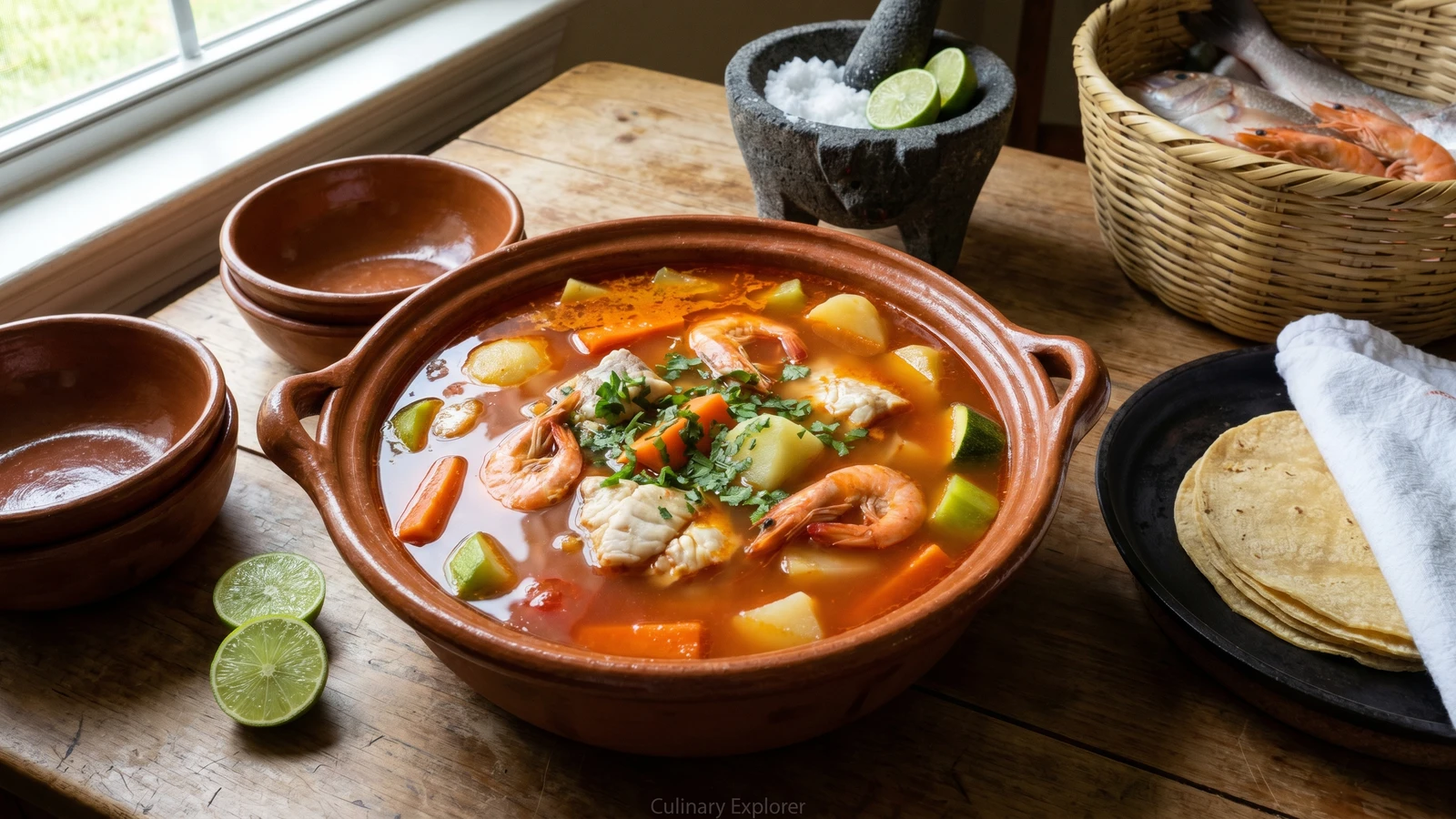
Veracruz's Gulf coast caldo, built from shrimp shells, fish bones, tomato, chile chipotle, oregano, bay, and white fish, finished with lime the way a coastal kitchen expects.
Veracruz, especially the Gulf coast from the port down toward Alvarado and Tlacotalpan, knows how to make a fish broth that tastes like the sea without tasting dirty. This caldo lives where fish comes in early, shrimp is sold by women who know which boat landed it, and lunch is decided by what looked alive at the market that morning.
The base is tomato, garlic, white onion, chile chipotle seco, Mexican oregano, bay leaf, and the shells from the shrimp. That last part matters. Do not throw away the shells and then complain the broth has no body. The señoras in the mercado will tell you the same thing: the flavor is in what careless cooks discard.
This is not a heavy stew. It is a clear, red, direct caldo with white fish added at the end so it stays whole, not shredded into sadness. Robalo, huachinango, mero, or mojarra all work if they are fresh. If the fish smells strong before it reaches the pot, no chile will save it. Si no conoces el mercado, no conoces la cocina.
Serve it in wide clay bowls with lime halves, warm corn tortillas, and a small dish of chopped cilantro. Veracruz cooks with the Gulf in front of them and the port behind them. Cada estado, su propia cocina.
Veracruz's coastal cooking was shaped by Gulf seafood, Indigenous tomato and chile traditions, and the Spanish port trade that brought bay leaf, olive oil, and Mediterranean-style aromatics into local kitchens. Fish caldos in the state vary from clear fisherman-style broths to tomato-red versions enriched with shrimp shells, dried chile chipotle, and oregano, especially along the Sotavento coast. The dish is part of the same Veracruz logic as pescado a la veracruzana: local seafood first, then tomato, aromatics, and just enough chile to deepen the broth, not to bury the fish.
Quantity
1 pound
peeled and deveined, shells reserved
Quantity
1 1/2 pounds
robalo, huachinango, mero, or mojarra, cut into 2-inch pieces
Quantity
1 pound
rinsed well
Quantity
2 tablespoons
Quantity
1 medium
half chopped and half left whole
Quantity
4
2 smashed and 2 finely chopped
Quantity
4
ripe, chopped
Quantity
2
stemmed
Quantity
1
Quantity
1 teaspoon
Quantity
1
peeled and sliced into half-moons
Quantity
1
peeled and cut into 1-inch chunks
Quantity
1
peeled, pitted, and cut into 1-inch chunks
Quantity
1
cut into thick half-moons
Quantity
1 sprig
Quantity
2 teaspoons, plus more to taste
Quantity
8 cups
Quantity
1/2 cup
chopped
Quantity
for serving
Quantity
for serving
| Ingredient | Quantity |
|---|---|
| large shell-on shrimppeeled and deveined, shells reserved | 1 pound |
| firm white fish filletsrobalo, huachinango, mero, or mojarra, cut into 2-inch pieces | 1 1/2 pounds |
| fish bones or fish headsrinsed well | 1 pound |
| olive oil | 2 tablespoons |
| white onionhalf chopped and half left whole | 1 medium |
| garlic cloves2 smashed and 2 finely chopped | 4 |
| Roma tomatoesripe, chopped | 4 |
| dried chile chipotle seco or chipotle mecostemmed | 2 |
| bay leaf | 1 |
| dried Mexican oregano | 1 teaspoon |
| large carrotpeeled and sliced into half-moons | 1 |
| medium potatopeeled and cut into 1-inch chunks | 1 |
| small chayotepeeled, pitted, and cut into 1-inch chunks | 1 |
| small zucchinicut into thick half-moons | 1 |
| fresh epazote | 1 sprig |
| kosher salt | 2 teaspoons, plus more to taste |
| water | 8 cups |
| fresh cilantro (optional)chopped | 1/2 cup |
| lime halves (optional) | for serving |
| warm corn tortillas (optional) | for serving |
Put the reserved shrimp shells, fish bones or heads, half onion, 2 smashed garlic cloves, bay leaf, 1 teaspoon salt, and 8 cups water in a stockpot. Bring just to a simmer over medium heat, then lower the heat and cook gently for 25 minutes. Do not boil hard. Fish broth turns cloudy and rough when you bully it.
Strain the broth through a fine-mesh sieve into a clean bowl. Press lightly on the shrimp shells, then stop. If you press fish bones too hard, you push bitterness and grit into the broth. Discard the solids. You should have about 6 cups of clean seafood broth.
Put the dried chile chipotle seco in a small bowl and cover with hot water for 15 minutes, until pliable. Hot water is enough. Boiling makes the skin stubborn and can drag bitterness into the caldo. Keep 1/4 cup of the soaking water.
Heat the olive oil in a wide clay cazuela or heavy pot over medium heat. Add the chopped onion and cook until glossy, about 4 minutes. Add the 2 finely chopped garlic cloves and cook until fragrant, about 30 seconds. Add the tomatoes, softened chipotles, Mexican oregano, and the remaining 1 teaspoon salt. Cook for 8 to 10 minutes, stirring often, until the tomato collapses and the oil turns orange-red around the edges.
Transfer the tomato-chipotle mixture to a blender with 1 cup of the seafood broth and 1/4 cup chile soaking water. Blend until smooth. Return it to the pot and cook for 5 minutes, until the color deepens. This is where the broth gets its backbone. Raw tomato in caldo tastes thin. Cooked tomato tastes like somebody was paying attention.
Pour the remaining seafood broth into the pot. Add the carrot, potato, and chayote. Bring to a gentle simmer and cook for 12 to 15 minutes, until the potato is almost tender. Add the zucchini and epazote and cook 5 minutes more. Taste for salt now. The broth should taste complete before the fish goes in.
Lower the fish pieces into the simmering broth and cook for 3 minutes. Add the shrimp and cook 2 to 3 minutes more, just until the shrimp turn pink and the fish flakes when touched with a spoon. Do not stir like you are washing clothes. Move the pot gently so the fish stays in pieces. Así se hace y punto.
Remove the epazote sprig. Ladle the caldo into wide bowls, making sure each serving gets fish, shrimp, vegetables, and enough red broth to drink from the spoon. Set chopped cilantro, lime halves, and warm corn tortillas on the table. The lime is squeezed at the table, not cooked into the pot. Fresh lime wakes the broth. Boiled lime turns bossy.
1 serving (about 650g)
Culinary guides, cultural storytelling, and the editorial depth that makes cooking meaningful.
Discover Culinary ExplorerChef Lupita
Aguascalientes' Bajio pozole de lengua, built with cacahuazintle hominy, tender beef tongue, chile ancho and guajillo, with xoconostle brightness and table garnishes.

Chef Lupita
Veracruz's Gulf coast rice from Alvarado, built with seafood stock, tomato, chile chipotle, epazote, shrimp, fish, jaiba, and pulpo, served loose and brothy in a clay cazuela.

Chef Lupita
Costa Chica's wet salt-beef stew, built from chile costeño, guajillo, tomato, manteca, yuca, plantain, and masa dumplings, the ranching pot of Cuajinicuilapa and Pinotepa.

Chef Lupita
Michoacán's P'urhépecha atápakua is a masa-thickened sauce and stew at once, built with pork, chile guajillo, and hierbabuena added only at the end.