
Chef Lupita
Aguascalientes Beef Tongue Pozole (Pozole de Lengua)
Aguascalientes' Bajio pozole de lengua, built with cacahuazintle hominy, tender beef tongue, chile ancho and guajillo, with xoconostle brightness and table garnishes.
A cooking platform built around craft, culture, and the stories behind what we eat.
Created by
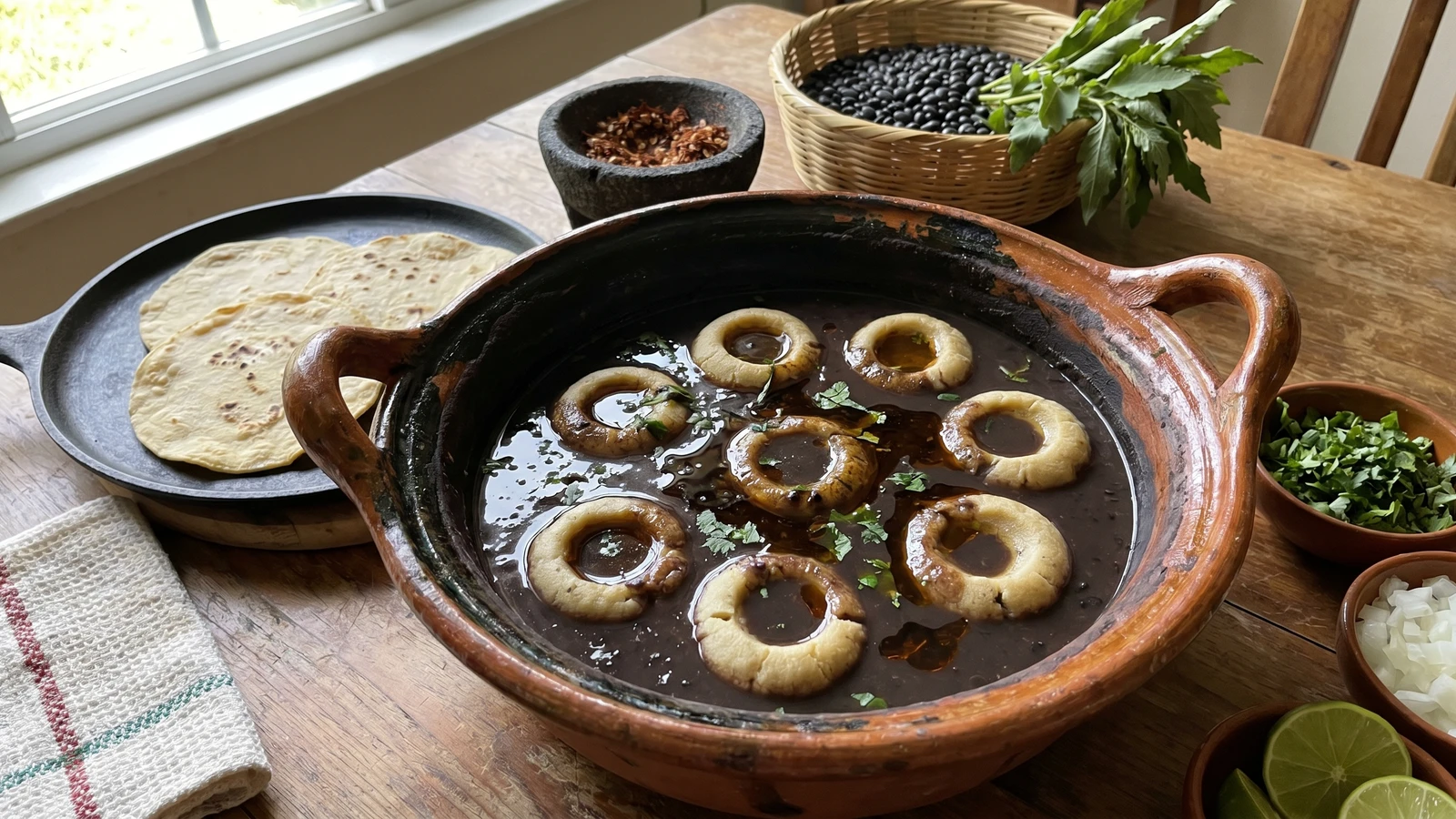
Veracruz's Gulf-coast black bean stew, built with chile de arbol, epazote, manteca de cerdo, and thumb-pinched masa chochoyotes that thicken the pot as they cook.
Veracruz, especially the coastal kitchen around the port and the Sotavento, belongs to the black bean. Not pinto. Not bayo. Frijol negro. The Gulf humidity, the Afro-Caribbean memory, the old trade routes, the plantains and rice and seafood nearby, they all sit around this pot even when the dish is only beans and masa.
Frijoles jarochos are not fancy. They are serious. The beans cook until their broth turns dark and glossy, then a salsa of chile de arbol, garlic, and onion is fried in manteca de cerdo and stirred into the pot. The heat is direct but not stupid. Chile de arbol gives sharpness, epazote gives that green, almost medicinal bite, and the lard carries everything into the beans. La manteca es el sabor, and here it is not decoration.
The chochoyotes are the lesson. You pinch masa with lard and salt into small dumplings, then press a dimple in the center with your thumb. That little hollow catches broth and helps the masa cook through. I learned this from a woman near Alvarado who made them without measuring, her hands moving faster than my notebook. She looked at my first batch and said, 'Too big. You're feeding people, not making stones.' She was right.
Serve this in a deep clay cazuela, with warm corn tortillas and lime if the table wants it. No cheese blanket. No flour tortillas unless you are in the north, and Veracruz is not the north. Cada estado, su propia cocina.
Black beans became deeply associated with Veracruz through Gulf trade, Caribbean exchange, and the state's humid lowland agriculture, where frijol negro fit the cooking patterns of coastal households better than northern pinto beans. Chochoyotes, small dimpled masa dumplings, come from the broader Mesoamerican practice of cooking nixtamalized corn directly in broths, a technique that predates wheat flour dumplings by centuries. In Veracruz and neighboring regions, epazote remained the defining herb for bean pots because it grows readily in warm climates and cuts through the density of legumes with its sharp green aroma.
Quantity
1 pound
picked over and rinsed
Quantity
8 cups, plus more as needed
Quantity
1/2 medium
Quantity
3
peeled
Quantity
2 large sprigs
Quantity
2 teaspoons, plus more to taste
Quantity
6
stemmed
Quantity
2 medium
charred on a comal
Quantity
1/4 medium
charred on a comal
Quantity
2
charred on a comal
Quantity
3 tablespoons
Quantity
2 cups
or 1 1/2 cups masa harina mixed with 1 cup warm water
Quantity
2 tablespoons
for the chochoyotes
Quantity
1/2 teaspoon
for the chochoyotes
Quantity
2 to 4 tablespoons
only if the masa feels dry
Quantity
for serving
Quantity
for serving
Quantity
for serving
Quantity
for serving
| Ingredient | Quantity |
|---|---|
| dried black beanspicked over and rinsed | 1 pound |
| water | 8 cups, plus more as needed |
| white onion | 1/2 medium |
| garlic clovespeeled | 3 |
| fresh epazote | 2 large sprigs |
| kosher salt | 2 teaspoons, plus more to taste |
| dried chile de arbolstemmed | 6 |
| Roma tomatoescharred on a comal | 2 medium |
| white onioncharred on a comal | 1/4 medium |
| garlic clovescharred on a comal | 2 |
| manteca de cerdo | 3 tablespoons |
| fresh masa for tortillasor 1 1/2 cups masa harina mixed with 1 cup warm water | 2 cups |
| manteca de cerdofor the chochoyotes | 2 tablespoons |
| kosher saltfor the chochoyotes | 1/2 teaspoon |
| warm wateronly if the masa feels dry | 2 to 4 tablespoons |
| chopped cilantro (optional) | for serving |
| diced raw white onion (optional) | for serving |
| lime halves (optional) | for serving |
| warm corn tortillas (optional) | for serving |
Put the black beans in a heavy pot with the water, half onion, 3 garlic cloves, and one sprig of epazote. Bring to a simmer, then lower the heat and cook partially covered until the beans are tender, about 1 hour 45 minutes to 2 hours. Add hot water as needed to keep the beans covered by an inch. Salt goes in once the beans have softened, not at the beginning if your beans are old and stubborn.
Heat a dry comal over medium. Toast the chile de arbol for 10 to 15 seconds per side, just until fragrant and a shade darker. They are thin and they burn fast. If they blacken, throw them out. Burned chile makes bitter broth, and no amount of beans will hide it.
On the same comal, char the tomatoes, the quarter onion, and 2 garlic cloves until blistered in spots and softened. Blend them with the toasted chile de arbol and 1/2 cup of bean broth until smooth. This is not a raw salsa. The comal gives the tomato sweetness and takes the sharp edge off the garlic.
Melt 3 tablespoons manteca de cerdo in a wide clay cazuela or heavy pot over medium heat. Pour in the blended salsa. It will sputter, so stand back and let the pot speak. Cook 6 to 8 minutes, stirring often, until the salsa darkens and the fat begins to shine at the edges. That frying is what makes the chile taste cooked instead of thin and raw.
Remove the onion, garlic, and spent epazote from the beans. Stir the fried chile base into the beans. Add the remaining fresh epazote sprig and 2 teaspoons salt. Simmer 15 minutes so the bean broth and chile base become one caldo. Taste it now. It should be earthy, salty enough, and bright from the epazote.
Mix the masa with 2 tablespoons manteca de cerdo and 1/2 teaspoon salt. Knead until soft and smooth, adding warm water one tablespoon at a time only if it cracks. Pinch off pieces the size of a large marble. Roll each one between your palms, then press your thumb into the center to make a deep dimple. Too large and they stay heavy inside. Too small and they disappear. Aim for the size a spoon can carry.
Keep the beans at a gentle simmer and drop in the chochoyotes one by one. Do not stir hard or you will break them before they set. Shake the pot gently, then simmer 18 to 22 minutes, until the chochoyotes float and taste cooked through, with no raw masa flavor at the center. The dumplings will thicken the caldo slightly. That is the point.
Ladle the beans and chochoyotes into deep bowls or bring the clay cazuela to the table family-style. Finish with chopped cilantro and diced raw white onion if you like, with lime halves and warm corn tortillas on the side. Let the broth stain the tortilla when you tear and dip it. Saber cocinar es saber vivir.
1 serving (about 335g)
Culinary guides, cultural storytelling, and the editorial depth that makes cooking meaningful.
Discover Culinary ExplorerChef Lupita
Aguascalientes' Bajio pozole de lengua, built with cacahuazintle hominy, tender beef tongue, chile ancho and guajillo, with xoconostle brightness and table garnishes.

Chef Lupita
Veracruz's Gulf coast rice from Alvarado, built with seafood stock, tomato, chile chipotle, epazote, shrimp, fish, jaiba, and pulpo, served loose and brothy in a clay cazuela.

Chef Lupita
Costa Chica's wet salt-beef stew, built from chile costeño, guajillo, tomato, manteca, yuca, plantain, and masa dumplings, the ranching pot of Cuajinicuilapa and Pinotepa.

Chef Lupita
Michoacán's P'urhépecha atápakua is a masa-thickened sauce and stew at once, built with pork, chile guajillo, and hierbabuena added only at the end.