
Chef Juliette
John Dory (St. Pierre)
John Dory has the delicacy of sole and the firmness of turbot. A light flouring, a quick butter sauté, and nut-brown beurre noisette show exactly why looks never mattered.
A cooking platform built around craft, culture, and the stories behind what we eat.
Created by
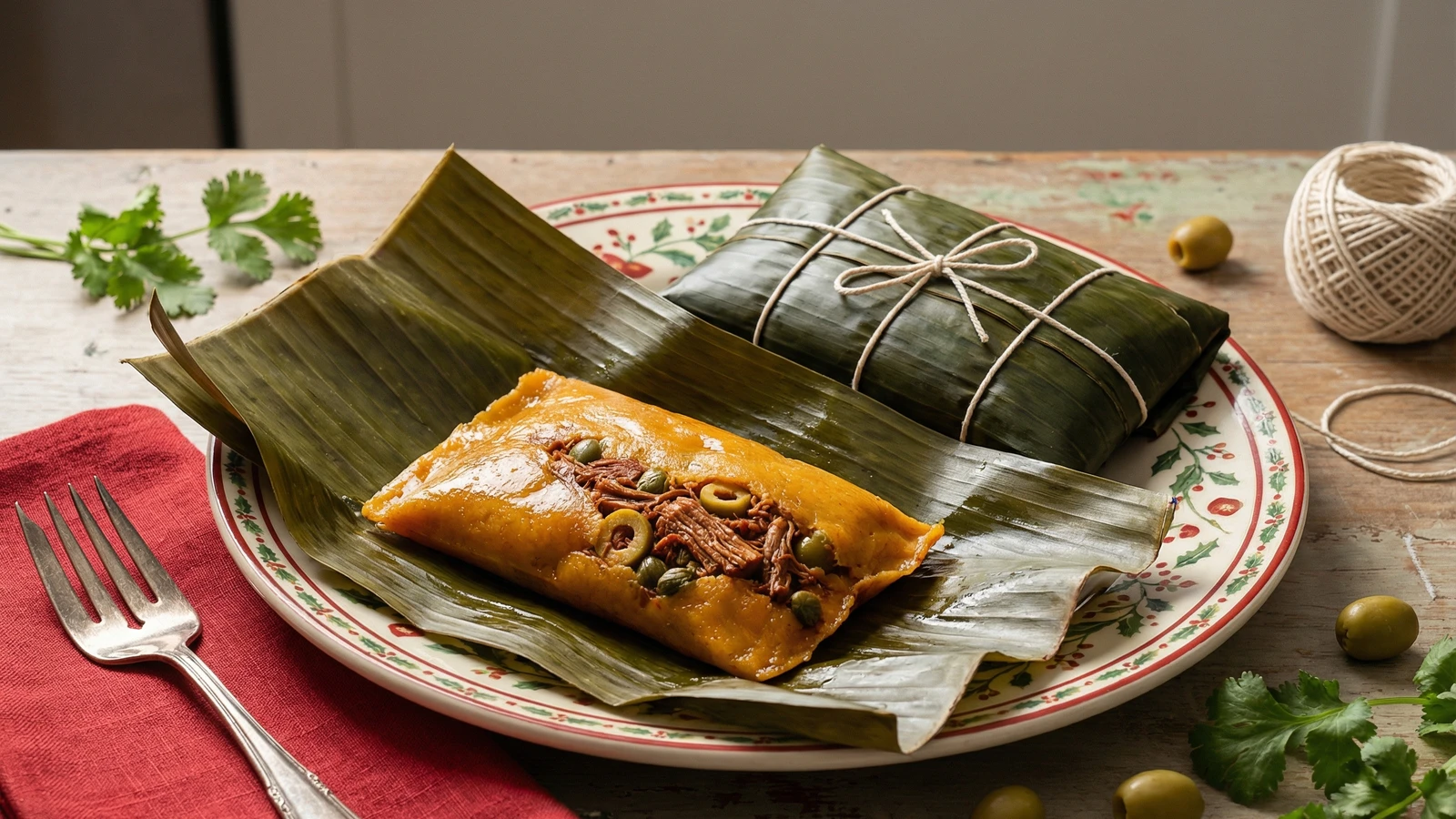
Golden corn masa embracing a rich stew of three meats, studded with olives and capers, wrapped in fragrant banana leaves. This is Venezuela's Christmas on a plate, a dish that demands family, time, and love.
Every Venezuelan family has their hallaca recipe, guarded and debated with the fervor Americans reserve for barbecue. This is not a dish you make alone. Hallacas are communal by nature, born in kitchens where three generations gather around tables covered in banana leaves, each person assigned a task: one spreads the masa, another portions the guiso, someone else adds the adornos, and the final hands wrap and tie. The Christmas season begins when the hallacas begin.
The dish traces its roots to colonial Venezuela, where indigenous corn traditions merged with Spanish and African influences. What emerged was something entirely new. The masa carries echoes of pre-Columbian cookery. The stew, called guiso, shows Spanish technique in its slow-cooked complexity. The banana leaf wrapper came from African culinary wisdom. Together they created a dish that belongs to no single tradition and yet defines an entire nation's holiday table.
Making hallacas requires commitment. This is a two-day project at minimum. The guiso must be prepared a day ahead to allow flavors to marry and the mixture to firm enough for portioning. The masa benefits from resting. The assembly itself takes hours. But here is the reward: hallacas freeze beautifully. A day of work yields dozens of perfect parcels that transform any December meal into a celebration. This is cooking as investment, effort that pays dividends for weeks.
I learned this recipe from a Venezuelan colleague who watched me struggle with tamales and declared, with gentle pity, that I needed to understand the real thing. She was right. Hallacas are tamales' sophisticated cousin, richer in filling, more complex in flavor, wrapped with greater care. Master this technique and you'll understand why Venezuelan families spend entire weekends in December doing nothing else.
Quantity
2 pounds
cut into 1-inch cubes
Quantity
1 pound
cut into 1-inch cubes
Quantity
1 pound
cut into 1-inch pieces
Quantity
1 cup
Quantity
1/2 cup
Quantity
1
finely diced
Quantity
1
finely diced
Quantity
1
finely diced
Quantity
8 cloves
minced
Quantity
1 cup
Quantity
1/2 cup
Quantity
2 tablespoons
Quantity
1 tablespoon
Quantity
1 teaspoon
Quantity
1/2 teaspoon
Quantity
1/4 cup
drained
Quantity
1/2 cup
Quantity
1/2 cup
Quantity
4 cups
Quantity
3 cups
Quantity
1 cup
Quantity
2 tablespoons
Quantity
2 teaspoons
Quantity
2 packages
thawed
Quantity
as needed
| Ingredient | Quantity |
|---|---|
| pork shouldercut into 1-inch cubes | 2 pounds |
| beef chuckcut into 1-inch cubes | 1 pound |
| boneless chicken thighscut into 1-inch pieces | 1 pound |
| dry white wine | 1 cup |
| red wine vinegar | 1/2 cup |
| large onionfinely diced | 1 |
| red bell pepperfinely diced | 1 |
| green bell pepperfinely diced | 1 |
| garlicminced | 8 cloves |
| chicken stock for guiso | 1 cup |
| tomato sauce | 1/2 cup |
| Worcestershire sauce | 2 tablespoons |
| ground cumin | 1 tablespoon |
| sweet paprika | 1 teaspoon |
| ground black pepper | 1/2 teaspoon |
| capersdrained | 1/4 cup |
| pimiento-stuffed green olives | 1/2 cup |
| raisins | 1/2 cup |
| pre-cooked white corn flour | 4 cups |
| warm chicken stock for masa | 3 cups |
| rendered pork lard or vegetable shortening | 1 cup |
| annatto oil (onoto) | 2 tablespoons |
| salt for masa | 2 teaspoons |
| frozen banana leavesthawed | 2 packages |
| kitchen string | as needed |
Combine the pork, beef, and chicken in a large bowl. Add the white wine, vinegar, half the diced onion, half the garlic, cumin, paprika, and black pepper. Mix thoroughly with your hands, ensuring every piece of meat gets coated. Cover and refrigerate for at least 4 hours, preferably overnight. The acid tenderizes while the aromatics penetrate. Your kitchen will smell like a Venezuelan Christmas.
Heat three tablespoons of lard or oil in a large Dutch oven over medium heat. Add the remaining onion and both bell peppers. Cook, stirring occasionally, until softened and just beginning to color at the edges, about 8 minutes. Add the remaining garlic and cook until fragrant, another minute. The vegetables should glisten and smell sweet.
Remove the meats from the marinade, reserving the liquid. Increase heat to medium-high. Working in batches to avoid crowding, add the meat to the pot and sear until browned on all sides, about 4 minutes per batch. Return all meat to the pot. Pour in the reserved marinade, chicken stock, tomato sauce, and Worcestershire. The liquid should come about halfway up the meat. Bring to a simmer.
Reduce heat to low, cover, and simmer gently for 90 minutes. The meat should become tender enough to shred with a fork. Remove the lid and continue cooking until the liquid reduces to a thick, sauce-like consistency that clings to the meat, another 20 to 30 minutes. The guiso should be moist but not soupy. Stir in the capers, olives, and raisins. Taste and adjust salt. Let cool completely, then refrigerate overnight.
Wipe each banana leaf with a damp cloth to remove any residue. Using kitchen scissors, cut the leaves into rectangles approximately 12 by 14 inches, cutting along the natural grain. Pass each piece briefly over a gas flame or lay flat in a dry hot skillet for 10 seconds per side. The leaves will turn from matte to glossy, becoming pliable. They should bend without cracking. Stack the prepared leaves and cover with a damp towel.
In a large bowl, combine the corn flour and salt. In a separate container, whisk together the warm chicken stock, softened lard, and annatto oil until the fat disperses. Pour the liquid into the flour gradually, mixing with your hands. Knead for 3 to 4 minutes until you achieve a smooth, pliable dough that holds together without cracking. It should feel like soft clay. If too dry, add stock by the tablespoon. If sticky, add flour sparingly. The masa should spread easily but not stick to your fingers.
Clear a large work surface. Arrange your components in assembly-line order: banana leaves, masa, cold guiso, and separate small bowls containing olives, capers, and raisins for adding additional adornos if desired. Cut kitchen string into 24-inch lengths. Have at least 24 pieces ready. Organization here prevents chaos later.
Place a banana leaf rectangle shiny-side up on your work surface. Scoop about 1/3 cup of masa onto the center. Using wet fingers or the back of a spoon, spread the masa into an oval about 6 inches long and 5 inches wide, keeping it about 1/4 inch thick. Leave at least 2 inches of bare leaf on all sides. The masa should look like a golden oval canvas waiting for its filling.
Spoon approximately 3 tablespoons of cold guiso down the center of the masa oval. The filling should form a line, not a mound. Add 2 olive halves, a few capers, and 4 or 5 raisins if you want extra adornos. These treasures will reveal themselves when the hallaca is unwrapped, small gifts inside the larger gift. Don't overfill. Greed here leads to bursting during cooking.
Lift the two long sides of the banana leaf and bring them together over the filling, allowing the masa to fold onto itself and encase the guiso completely. The masa edges should meet and seal. Fold down the joined leaf edges to create a seam running along the top. Now fold each short end underneath, like wrapping a gift. You should have a neat rectangular package about 5 by 3 inches. The banana leaf is the wrapper, not the container. The masa inside should be completely sealed around the filling.
Place the wrapped hallaca seam-side down on your work surface. Take a length of string and wrap it around the width of the package twice, tying firmly in the center. Then wrap the string around the length twice and tie again, creating a cross pattern. The string should be snug but not so tight it cuts through the leaf. A properly tied hallaca looks like a small, elegant parcel ready for gifting.
Bring a very large pot of salted water to a rolling boil. You need enough water to submerge the hallacas completely with room for them to move. Working in batches of 6 to 8 to avoid crowding, lower the hallacas into the boiling water. They will sink initially, then float as the masa cooks. Maintain a gentle boil for 45 minutes to 1 hour. The hallacas are done when the masa feels firm through the leaf and has pulled slightly away from the wrapper.
Remove hallacas from the water with tongs and let them drain on a wire rack for at least 15 minutes. This resting period allows the masa to set fully. Serve warm by cutting the string and unwrapping at the table, letting each guest reveal their own treasure. The banana leaf should peel away cleanly, leaving behind a golden pillow of corn with glimpses of the rich filling inside.
1 serving (about 160g)
Culinary guides, cultural storytelling, and the editorial depth that makes cooking meaningful.
Discover Culinary ExplorerChef Juliette
John Dory has the delicacy of sole and the firmness of turbot. A light flouring, a quick butter sauté, and nut-brown beurre noisette show exactly why looks never mattered.

Chef Juliette
Fresh haddock proves its delicacy in the meunière pan: a fine flour crust, moist pearly flakes, and beurre noisette sharpened with lemon and parsley, ready from one skillet in half an hour.

Chef Juliette
Éperlans à l’Anglaise turns small fish into a lesson in disciplined coating: boned smelts under a close, crisp crumb, pan-fried in clarified butter and finished with bright, half-melted maître d’hôtel butter.

Chef Juliette
Tiny smelts, shallot, mushrooms, white wine, gratin sauce, and fine bread raspings meet a fierce oven, where the fish must turn tender in the same breath the buttered crust bronzes.