
Chef Joost
Bavarois met Frambozensaus
A French-Bavarian name, a Dutch party mould, and the quiet trick of gelatine: custard cooled just enough, cream folded gently, and a dessert made ahead like a host with sense.
A cooking platform built around craft, culture, and the stories behind what we eat.
Created by
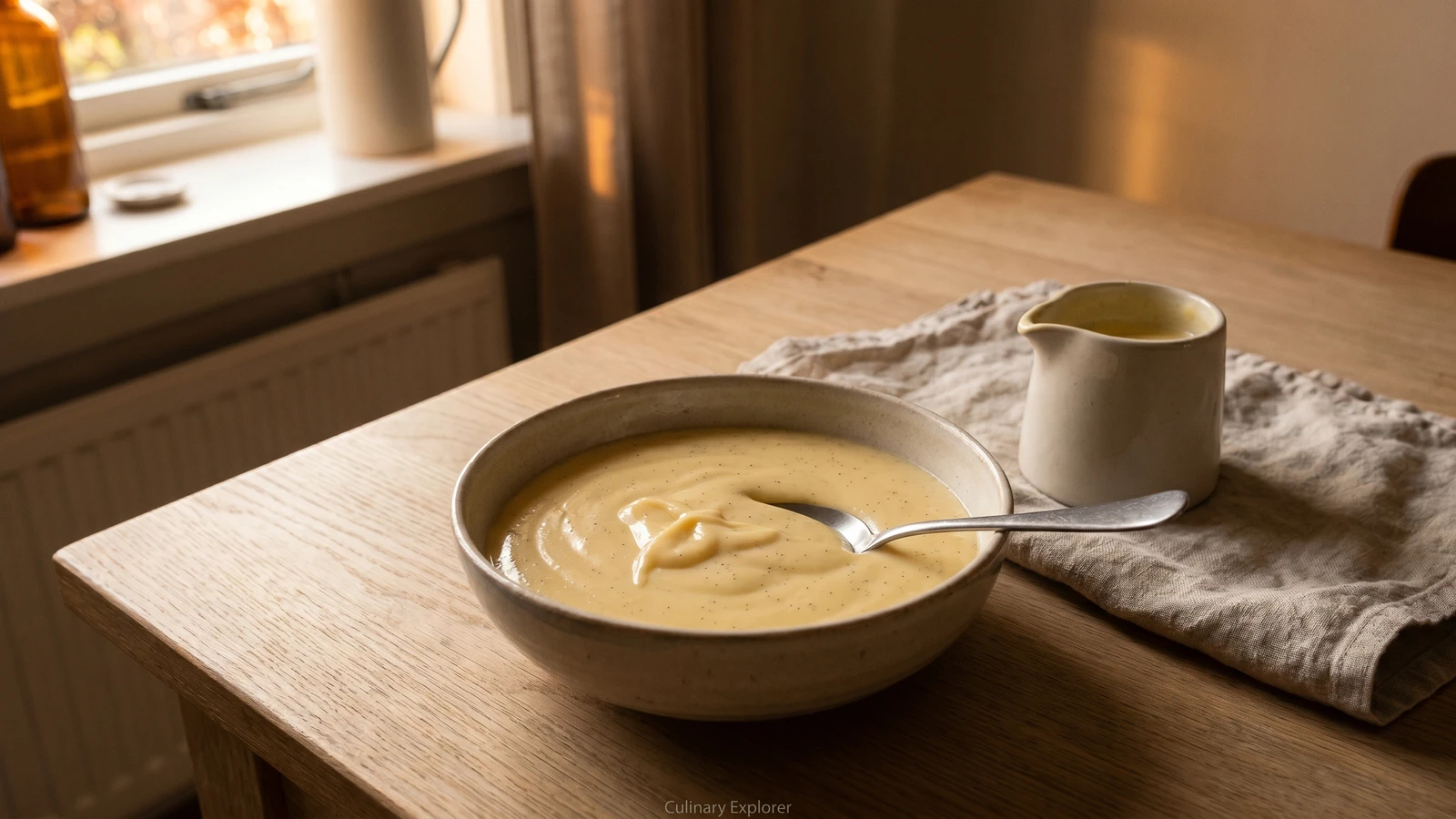
The Dutch everyday toetje: a pourable vanilla custard, thick enough to coat a spoon, loose enough to slide from the carton into every childhood bowl.
In my grandmother's second notebook, vanillevla hardly counts as a recipe. That is how you know it mattered. The grand dishes received measurements, warnings, margins full of corrections. Vla lived in the hand: milk, yolks, sugar, a little starch, and the patience not to let the pan bully you. It was the weeknight toetje, dessert after the meal, poured from a jug into small bowls while the table was still crowded with plates.
But let me tell you a secret. The Dutch did not invent custard, and we never pretended we did. What we did was make it domestic, pourable, and stubbornly useful: thinner than pudding, thicker than milk, gentle enough for children and respectable enough for adults who claim they only want a little. The name already tells you the mood. Vanille is the fragrant pod that travelled into European kitchens from Mexico through Spanish hands; vla is the plain Dutch word that refuses theatre. Exuberant history in a frugal bowl.
The whole method is a lesson in restraint. Heat the milk with the vanilla so the pod gives up its perfume, temper the yolks so they thicken rather than scramble, and keep the pan just below boiling. Hou het altijd simpel, always keep it simple. Vla should pour in a ribbon and coat the back of a spoon. If it stands stiff, you've made pudding. If it runs like milk, you've lost your nerve too early. Both are forgivable. Only scorched milk is rude.
Vla has been sold in Dutch dairies since the nineteenth century and became an everyday household dessert in the twentieth century, especially after packaged dairy made it easy to bring home by the carton. Dutch food law later defined vla as a thickened dairy product containing at least 50 percent cow's milk, which helps explain why it remains closer to drinkable custard than to a firm pudding. Vanillevla's quiet importance is cultural rather than ceremonial: it is the standard toetje, the small dessert after dinner, and one of the dishes by which Dutch children learn that sweetness can be plain and still beloved.
Quantity
1 liter
Quantity
1
split lengthwise
Quantity
2 teaspoons
Quantity
5
Quantity
90g
Quantity
30g
Quantity
1 pinch
| Ingredient | Quantity |
|---|---|
| whole milk | 1 liter |
| vanilla beansplit lengthwise | 1 |
| good vanilla extract (optional) | 2 teaspoons |
| large egg yolks | 5 |
| granulated sugar | 90g |
| cornstarch | 30g |
| fine salt | 1 pinch |
Pour the milk into a heavy saucepan. Scrape the seeds from the vanilla bean into the milk and add the pod as well. Warm it over medium heat until small bubbles gather at the edge of the pan, then turn off the heat and let it stand for 10 minutes. Vanilla is expensive for a reason; give it time to speak.
In a bowl, whisk the egg yolks, sugar, cornstarch, and salt until smooth and pale. The cornstarch is not cheating. It is the Dutch insurance policy, and a sensible one, because vla must pour cleanly without turning into sweet scrambled egg.
Lift the vanilla pod from the milk. Slowly pour about a third of the warm milk into the yolk mixture while whisking constantly, then pour everything back into the pan. This small courtesy keeps the yolks calm. Shock them with heat and they'll punish you at once.
Set the pan over medium-low heat and stir constantly with a wooden spoon or heatproof spatula, scraping the bottom and corners. After 6 to 8 minutes the mixture will thicken to a soft pourable custard that coats the spoon. Do not let it boil. A few lazy bubbles at the edge are enough warning; lower the heat and keep stirring.
Pour the vla through a fine sieve into a jug or bowl. Press plastic wrap directly onto the surface if you dislike a skin, or leave it uncovered if you grew up stealing that skin with a spoon, as certain people did. Chill for at least 3 hours, then stir once before serving so it pours in a slow ribbon.
1 serving (about 200g)
Culinary guides, cultural storytelling, and the editorial depth that makes cooking meaningful.
Discover Culinary ExplorerChef Joost
A French-Bavarian name, a Dutch party mould, and the quiet trick of gelatine: custard cooled just enough, cream folded gently, and a dessert made ahead like a host with sense.

Chef Joost
An old Dutch moulded toetje, where bitter-almond macaroons soften into milk pudding and turn thrift, patience, and one good puddingvorm into celebration.

Chef Joost
A bowl of vanillevla with bitterkoekjes folded through it is the quiet Dutch trick that turns milk, eggs, sugar, and a few almond biscuits into a proper toetje.

Chef Joost
Goat-hoof biscuits made into a whole taart: almond meringue, chocolate, advocaat, and cream, the Dutch bakery counter quietly becoming a dinner-party secret.