
Chef Joost
Bavarois met Frambozensaus
A French-Bavarian name, a Dutch party mould, and the quiet trick of gelatine: custard cooled just enough, cream folded gently, and a dessert made ahead like a host with sense.
A cooking platform built around craft, culture, and the stories behind what we eat.
Created by
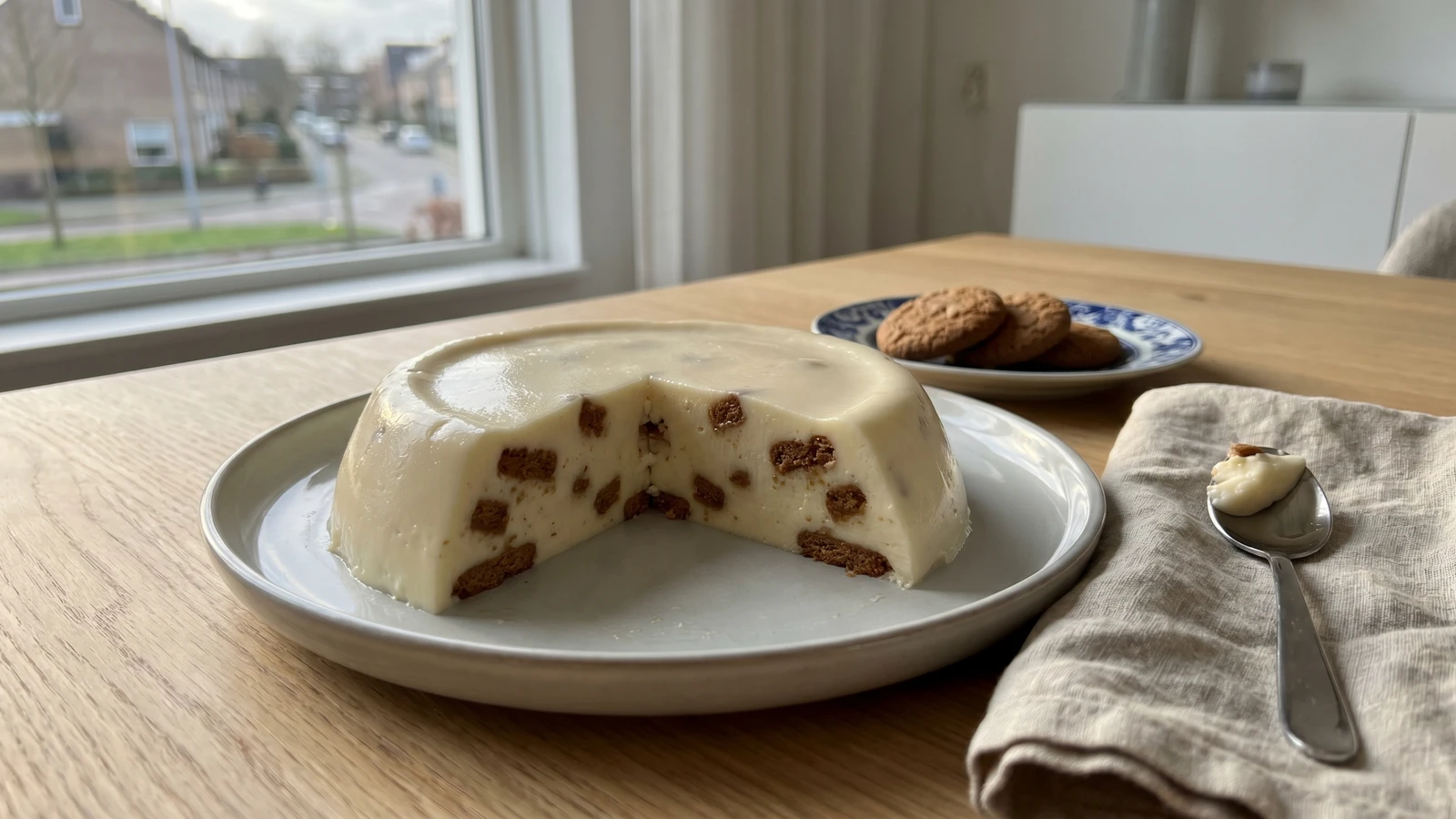
An old Dutch moulded toetje, where bitter-almond macaroons soften into milk pudding and turn thrift, patience, and one good puddingvorm into celebration.
In my grandmother's second notebook, the puddings have the neatest handwriting. Soups and stews are full of crossings-out, the honest chaos of daily food, but the puddings sit there like guests already wearing their Sunday clothes: griesmeelpudding, chipolatapudding, bitterkoekjespudding. A toetje, a little after-dish, was never meant to be grand. That is exactly why the Dutch made it ceremonial.
The name already tells you the secret, but only if you listen carefully. Bitterkoekjes are small almond macaroons, bitter not because they are unpleasant, but because bitter almonds and apricot kernels carry that sharp perfume we now call marzipan. Crush them into warm milk and they soften into the pudding, leaving little almond freckles and a fragrance that feels richer than the recipe has any right to be. Exuberant cookery in a frugal country, again. We do this often and pretend not to notice.
What matters here is restraint. Don't boil the milk hard, or the almond turns coarse. Don't drown the pudding in liqueur, or the old cookie loses its voice. Hou het altijd simpel: warm milk, a little sugar, softened gelatine, folded cream, and a proper cold rest in a mould. When it turns out onto the plate, pale and trembling, with those bitterkoekjes hidden inside, you understand the Dutch celebration instinct perfectly. We make the table festive, then insist it was no trouble at all.
Bitterkoekjes belong to the Dutch family of almond confections made from sugar, egg white, and bitter almond or apricot-kernel flavouring, close in method to older European macaroons that spread through elite and convent kitchens from the early modern period onward. By the nineteenth century, Dutch household manuals regularly used bought biscuits and macaroons to flavour puddings, charlottes, and creams, turning bakery goods into make-ahead desserts for Sunday meals and celebrations. Bitterkoekjespudding is part of that practical puddingvorm tradition: a milk pudding set in a mould, festive enough for guests but built from pantry ingredients.
Quantity
150g
lightly crushed
Quantity
500ml
Quantity
75g
Quantity
1 teaspoon
Quantity
1 small pinch
Quantity
6 sheets
or 12g powdered gelatine
Quantity
250ml
cold
Quantity
1 tablespoon
Quantity
a little
| Ingredient | Quantity |
|---|---|
| bitterkoekjeslightly crushed | 150g |
| whole milk | 500ml |
| granulated sugar | 75g |
| vanilla extract | 1 teaspoon |
| fine sea salt | 1 small pinch |
| gelatine sheetsor 12g powdered gelatine | 6 sheets |
| heavy creamcold | 250ml |
| dark rum or brandy (optional) | 1 tablespoon |
| neutral oil for the mould | a little |
Put the gelatine sheets in a bowl of cold water for 5 minutes until floppy. If using powdered gelatine, sprinkle it over 4 tablespoons cold milk taken from the measured milk and let it bloom. Gelatine must wake up gently; throw it straight into hot milk and it sulks in little grains.
Warm the milk, sugar, vanilla, and salt in a saucepan until the sugar dissolves and the milk is hot but not boiling. Take it off the heat. Squeeze the gelatine sheets dry and stir them into the milk until fully dissolved, or stir in the bloomed powdered gelatine until smooth.
Stir in the crushed bitterkoekjes and the rum or brandy if using. Leave the mixture for 10 minutes, so the cookies soften but do not vanish completely. You want almond perfume through the milk and a few tender pieces left in the pudding, not biscuit mud.
Set the saucepan in a bowl of cold water and stir now and then until the mixture cools to room temperature and begins to feel slightly thicker. Do not let it set. This pause keeps the cream from melting flat when you fold it in.
Whip the cold cream to soft peaks, the kind that bend at the tip rather than stand like church spires. Fold it through the cooled bitterkoekjes mixture with a spatula, slowly and without fuss, until no white streaks remain.
Lightly oil a 1-liter pudding mould and rinse it with cold water, leaving it wet inside. Pour in the pudding mixture, tap the mould once on the counter to settle it, cover, and refrigerate for at least 6 hours, preferably overnight.
To serve, dip the outside of the mould briefly in warm water for 5 to 10 seconds, then invert it onto a plate. If it hesitates, hold the plate and mould together and give one firm downward shake. Not violence. Persuasion.
1 serving (about 167g)
Culinary guides, cultural storytelling, and the editorial depth that makes cooking meaningful.
Discover Culinary ExplorerChef Joost
A French-Bavarian name, a Dutch party mould, and the quiet trick of gelatine: custard cooled just enough, cream folded gently, and a dessert made ahead like a host with sense.

Chef Joost
A bowl of vanillevla with bitterkoekjes folded through it is the quiet Dutch trick that turns milk, eggs, sugar, and a few almond biscuits into a proper toetje.

Chef Joost
Goat-hoof biscuits made into a whole taart: almond meringue, chocolate, advocaat, and cream, the Dutch bakery counter quietly becoming a dinner-party secret.

Chef Joost
Borstplaat began as sugar for the chest and ended as Sinterklaas candy: a pale slab of cream, crystals, and winter thrift that sets before you can change your mind.