Culinary Explorer

A cooking platform built around craft, culture, and the stories behind what we eat.
Discover Culinary Explorer
Chipolatapudding

Chipolatapudding

Created by

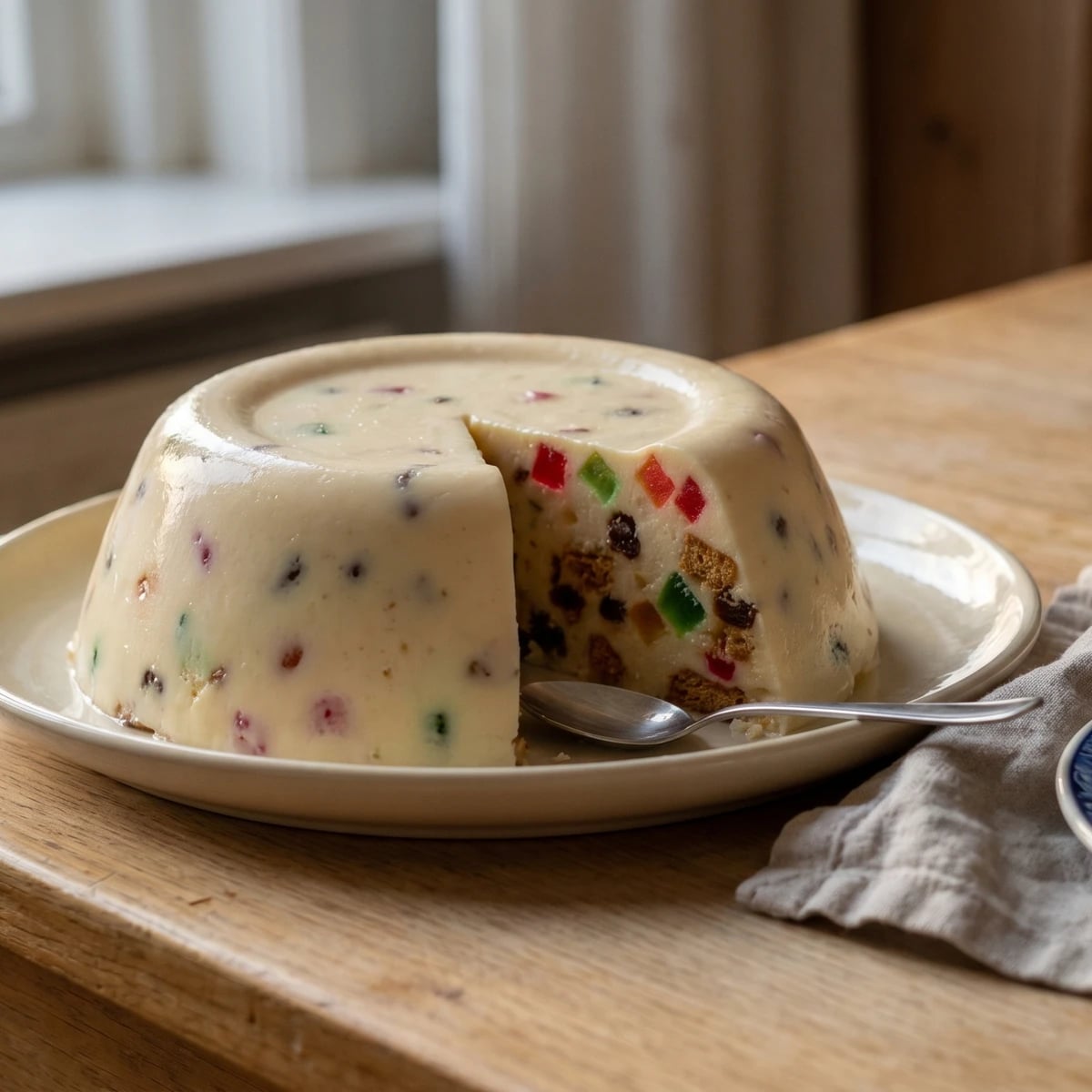
Despite the name, no sausage comes near it: chipolatapudding is the Dutch Sunday-best pudding, pale cream set around jewels of fruit, almond biscuits, and a little old-fashioned liqueur.

Desserts
Dutch
Celebration
Dinner Party
Holiday
35 min
Active Time
10 min cook6 hr 45 min total
Yield8 servings

The name already tells you trouble is coming. Chipolatapudding sounds, to any sensible person, like a dessert that has lost an argument with a sausage. But let me tell you a secret: Dutch festive cookery has always enjoyed a borrowed French word, especially when it could make a simple family pudding sound grand enough for the Sunday table.

Chipolata came into Dutch kitchens through French menu language, from dishes served a la chipolata, where small sausages and diced garnishes appeared together. Somewhere along the way, the little pieces mattered more than the sausage. In this pudding they become candied peel, raisins, bitterkoekjes, those chewy Dutch almond biscuits, and a discreet splash of marasquin. A proper toetje, dessert, with a dinner-party collar on.

This is not difficult cooking, but it asks you to behave calmly. Gelatine wants patience, custard wants gentle heat, and whipped cream wants folding rather than bullying. Soak the biscuits just enough that they perfume the pudding without collapsing into paste. Chill it long enough to turn out cleanly. Hou het altijd simpel, always keep it simple: a mold, a custard, a cold night in the refrigerator, and then the small theatre of turning it onto a plate while everyone pretends not to watch.

Chipolatapudding belongs to the Dutch bourgeois pudding tradition of the late nineteenth and early twentieth centuries, when molded gelatine desserts moved from hotel and restaurant menus into holiday home cooking. The name is borrowed from French culinary usage, a la chipolata, originally connected to small sausages and diced garnishes, but Dutch kitchens kept the idea of scattered little pieces and left the sausage behind. Its usual ingredients, bitterkoekjes, candied fruit, raisins, cream, and marasquin or rum, mark it as a celebration pudding rather than an everyday dairy dessert.

The technique, the tradition, and the story behind every dish.

Discover Culinary Explorer

Ingredients

gelatine sheets

Quantity

8 sheets or 12g powdered gelatine

whole milk

Quantity

500ml

vanilla pod or vanilla extract

Quantity

1 pod or 2 teaspoons

pod split

egg yolks

Quantity

4

caster sugar

Quantity

100g

whipping cream

Quantity

250ml

cold

bitterkoekjes

Quantity

100g

broken into small pieces

mixed candied fruit

Quantity

75g

finely diced

raisins

Quantity

50g

marasquin liqueur or rum

Quantity

3 tablespoons

neutral oil

Quantity

1 tablespoon

for the mold

Equipment Needed

  • 1.2 liter pudding mold
  • Small saucepan
  • Mixing bowls
  • Whisk
  • Wooden spoon

Instructions

  1. 1

    Soak the gelatine

    Put the gelatine sheets in a bowl of cold water and leave them for ten minutes until soft. If using powdered gelatine, sprinkle it over 4 tablespoons cold milk taken from the measured milk and let it swell. Gelatine is not difficult, only proud; give it cold liquid first and it behaves.

  2. 2

    Warm the milk

    Heat the milk with the vanilla pod until it is hot but not boiling, then take it off the heat and let it sit for five minutes. Fish out the pod, scraping the seeds back into the milk. If using vanilla extract, stir it in after the milk is warmed.

  3. 3

    Make the custard

    Whisk the egg yolks and sugar in a bowl until pale and thick. Pour in the hot milk slowly, whisking all the time, then return everything to the pan over low heat. Stir with a wooden spoon until the custard lightly coats the back of it, about 5 to 7 minutes. Do not let it boil, or the eggs will scramble and no amount of nostalgia will save them.

  4. 4

    Dissolve and cool

    Squeeze the softened gelatine sheets dry and stir them into the warm custard until completely dissolved. If using powdered gelatine, stir in the swollen mixture. Pour the custard into a clean bowl and let it cool until it is thickened but not set, about 30 to 40 minutes, stirring now and then.

  5. 5

    Prepare the filling

    Toss the broken bitterkoekjes, candied fruit, and raisins with the marasquin liqueur. Leave them for 10 minutes, just long enough to perfume the biscuits. You want almond pieces suspended through the pudding, not a sweet paste at the bottom of the bowl.

  6. 6

    Fold the cream

    Whip the cold cream to soft peaks. Fold it gently into the cooled custard, then fold in the soaked biscuit mixture. Turn the bowl slowly as you fold; the aim is an even, airy pudding with little pieces everywhere, not a custard beaten into obedience.

    If the custard is still warm, wait. Warm custard melts whipped cream, and then the pudding sets heavy instead of light.
  7. 7

    Fill the mold

    Lightly oil a 1.2 liter pudding mold and wipe out the excess with kitchen paper, leaving only a whisper of oil. Spoon in the pudding mixture, tap the mold once on the counter to settle it, cover, and refrigerate for at least 6 hours, preferably overnight.

  8. 8

    Turn it out

    Dip the outside of the mold briefly in warm water for 5 to 8 seconds, place a serving plate on top, and invert with confidence. If it hesitates, hold the mold and plate together and give them one firm shake. Serve cold, sliced in wedges, with nothing more than a little extra candied fruit if the table is feeling festive.

Chef Tips

  • Use real bitterkoekjes if you can find them. Italian amaretti are a decent stand-in, but choose the chewy kind rather than dry little rocks.
  • Marasquin is the old Dutch choice here, cherry-almond scented and slightly theatrical. Rum is acceptable, and orange juice can replace the liqueur for an alcohol-free table.
  • Oil the mold lightly and wipe it almost dry. Too much oil leaves a greasy shine; too little makes the pudding cling like a relative at the door.
  • Make it the day before a celebration. The flavor settles, the gelatine firms properly, and the cook gets to enjoy dinner instead of negotiating with dessert.

Advance Preparation

  • Can be made 1 day ahead and kept covered in the refrigerator until serving.
  • Best eaten within 2 days; after that the candied fruit begins to bleed color and the biscuit pieces soften too far.
  • Do not freeze; gelatine puddings turn watery and grainy after thawing.

Frequently Asked Questions

Nutrition Information

1 serving (about 145g)

Calories
320 calories
Total Fat
14 g
Saturated Fat
8 g
Trans Fat
0 g
Unsaturated Fat
5 g
Cholesterol
150 mg
Sodium
55 mg
Total Carbohydrates
42 g
Dietary Fiber
1 g
Sugars
35 g
Protein
6 g

Note: Chef personas and recipes are created with AI assistance. Cook with care: follow safe food-handling practices, check doneness with a thermometer when needed, and adapt for allergies and your kitchen.

Where cooking meets culture.

Culinary guides, cultural storytelling, and the editorial depth that makes cooking meaningful.

Discover Culinary Explorer

More from Toetjes: Vla, Pap & Pudding

Browse the full collection