Culinary Explorer

A cooking platform built around craft, culture, and the stories behind what we eat.
Discover Culinary Explorer
Twice-Baked Potatoes

Twice-Baked Potatoes

Created by

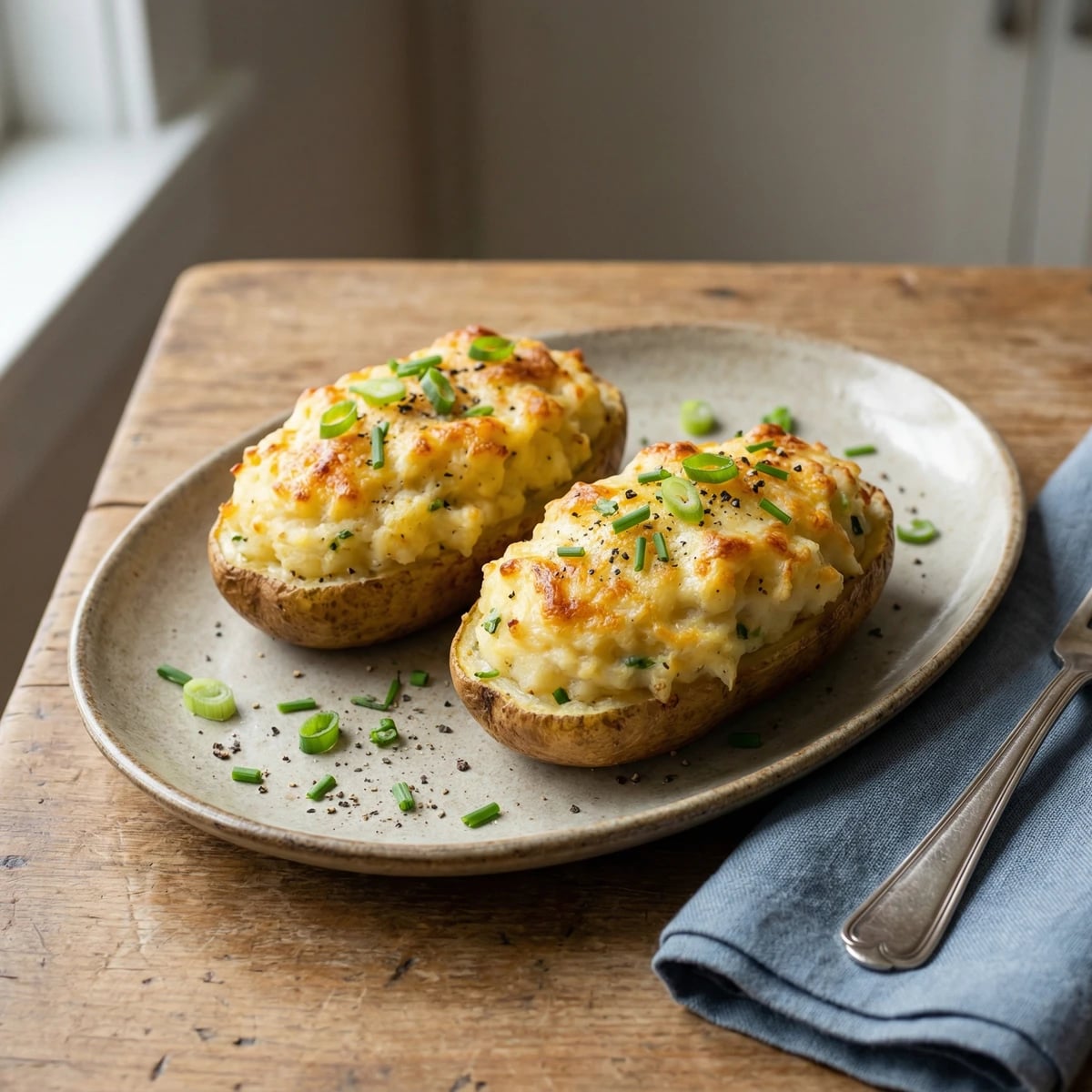
Fluffy potato filling enriched with sharp cheddar, smoky bacon, and sour cream, piled back into crisp shells and baked until golden. This is the potato that made steakhouses famous.

Side Dishes
American
Dinner Party
Make Ahead
25 min
Active Time
1 hr 30 min cook1 hr 55 min total
Yield8 servings

The twice-baked potato is American ingenuity at its most satisfying. Someone, somewhere, looked at a perfectly good baked potato and thought: what if we made it better? That question led to one of the great side dishes in our national repertoire, a creation that turns the humble russet into something worthy of a dinner party centerpiece.

The technique rewards patience. You bake the potatoes once until they're completely tender, scoop out the flesh while it's still warm, enrich it with butter and cheese and whatever else your heart desires, then pile it back into those beautiful shells and bake again. The result is a contrast of textures: creamy, almost whipped filling against the slightly crisp skin, topped with a golden cheese crust that shatters when your fork breaks through.

I've served these at Thanksgiving tables and Tuesday night suppers with equal success. They have the rare quality of feeling both homey and impressive. More importantly for the busy cook, they can be assembled hours or even a day ahead, waiting in the refrigerator until you're ready for that final bake. Few dishes offer this combination of make-ahead convenience and crowd-pleasing results.

The filling here is classic: sharp cheddar, crisp bacon, sour cream, and scallions. It's the version you'd find at a good American steakhouse, honest and unapologetic. Master this, and then make it your own. Add roasted garlic. Fold in some sautéed mushrooms. Swap the cheddar for gruyère. The basic method stays the same.

The technique, the tradition, and the story behind every dish.

Discover Culinary Explorer

Ingredients

russet potatoes

Quantity

4 large (about 12 oz each)

unsalted butter

Quantity

6 tablespoons

softened

sour cream

Quantity

3/4 cup

whole milk

Quantity

1/2 cup

warmed

sharp cheddar cheese

Quantity

1 1/2 cups

grated and divided

bacon

Quantity

6 slices

cooked crisp and crumbled

scallions

Quantity

4

thinly sliced, white and green parts separated

kosher salt

Quantity

1 teaspoon

freshly ground black pepper

Quantity

1/2 teaspoon

garlic powder

Quantity

1/4 teaspoon

fresh chives (optional)

Quantity

2 tablespoons

minced

Equipment Needed

  • Rimmed baking sheet
  • Potato masher or large fork
  • Large mixing bowl
  • Box grater or food processor with grating disk

Instructions

  1. 1

    Prepare and bake potatoes

    Heat your oven to 400°F. Scrub the potatoes under cold running water with a stiff brush. Dry them thoroughly. Prick each potato six or seven times with a fork, driving deep into the flesh. This allows steam to escape and prevents the occasional potato explosion that makes a mess of your oven. Rub the skins lightly with vegetable oil and sprinkle with coarse salt. Place directly on the oven rack with a sheet pan on the rack below to catch any drips.

    Never wrap potatoes in foil for baking. Foil traps steam and produces gummy, waterlogged flesh instead of the fluffy, dry interior we need.
  2. 2

    Test for doneness

    Bake for 60 to 75 minutes, until a paring knife slides into the center with no resistance. The potato should yield completely, feeling almost hollow inside when you squeeze it gently with an oven mitt. Underbaked potatoes produce a gluey filling. When in doubt, give them another ten minutes. Remove from the oven and let cool just until you can handle them, about 15 minutes. Reduce oven temperature to 375°F.

  3. 3

    Hollow out the shells

    Slice each potato in half lengthwise. Using a spoon, carefully scoop the flesh into a large bowl, leaving about a quarter-inch wall of potato attached to the skin. Work gently here. The shells should hold their shape but don't need to be perfect. Rustic is honest. Arrange the empty shells on a rimmed baking sheet, cut side up.

  4. 4

    Mash the filling

    While the potato flesh is still warm, add the softened butter and mash with a potato masher or large fork until the butter melts completely into the potato. Add the sour cream and warm milk, continuing to mash and stir until the mixture is smooth but still has some texture. You're not making wallpaper paste. Fold in one cup of the cheddar, the crumbled bacon, and the white parts of the scallions. Season with salt, pepper, and garlic powder. Taste it. Adjust. The filling should be aggressively seasoned because the potato shell will temper the flavors.

  5. 5

    Fill the shells

    Divide the filling generously among the eight potato shells, mounding it slightly above the rim. Don't pack it down. The filling should look abundant and inviting, not pressed into submission. Sprinkle the remaining half cup of cheddar over the tops, distributing it evenly so each potato gets a proper cheese cap.

  6. 6

    Second bake

    Bake at 375°F for 20 to 25 minutes, until the cheese is melted and beginning to turn golden in spots and the filling is heated through. For a deeper golden crust on top, run them under the broiler for the final two minutes, watching carefully. The cheese should bubble and take on patches of bronze without burning.

  7. 7

    Garnish and serve

    Remove from the oven and let rest for five minutes. The filling will be molten. Scatter the scallion greens and minced chives over the top. Serve immediately on warm plates. These potatoes wait for no one, though they'll forgive you for a few minutes if you're wrangling the rest of dinner.

Chef Tips

  • Choose russet potatoes of uniform size so they bake evenly. Look for specimens about the size of your fist, free of green spots or deep eyes. The starch content of russets is essential here; waxy potatoes like Yukon Golds will produce a gummy filling.
  • Grate your own cheese from a block. Pre-shredded cheese is coated with anti-caking agents that prevent it from melting smoothly. The extra two minutes of grating pays dividends in texture.
  • The bacon can be cooked in the oven alongside the potatoes. Lay strips on a sheet pan and bake at 400°F for 18 to 22 minutes until crisp. This frees up stovetop space and produces flat, evenly cooked strips.
  • For a vegetarian version, omit the bacon and add a quarter cup of finely chopped roasted red peppers or sun-dried tomatoes for texture and color.
  • These pair beautifully with any roasted meat: prime rib, pork tenderloin, roast chicken. A simple green salad dressed with sharp vinaigrette cuts through the richness.

Advance Preparation

  • Potatoes can be fully assembled through Step 5, covered tightly with plastic wrap, and refrigerated for up to 24 hours before the second bake. Add 10 to 15 minutes to the final baking time when starting from cold.
  • Bacon can be cooked, crumbled, and refrigerated in an airtight container up to 3 days ahead.
  • Leftover twice-baked potatoes reheat beautifully. Cover loosely with foil and bake at 350°F for 20 to 25 minutes until heated through, then remove foil for the last 5 minutes to re-crisp the top.

Frequently Asked Questions

Nutrition Information

1 serving (about 221g)

Calories
360 calories
Total Fat
24 g
Saturated Fat
14 g
Trans Fat
0 g
Unsaturated Fat
10 g
Cholesterol
125 mg
Sodium
1380 mg
Total Carbohydrates
26 g
Dietary Fiber
2 g
Sugars
1 g
Protein
12 g

Note: Chef personas and recipes are created with AI assistance. Cook with care: follow safe food-handling practices, check doneness with a thermometer when needed, and adapt for allergies and your kitchen.

Where cooking meets culture.

Culinary guides, cultural storytelling, and the editorial depth that makes cooking meaningful.

Discover Culinary Explorer

More from Comfort Food Classics

Browse the full collection