
Chef Ally
Chicken Enchilada Casserole
All the deep, earthy warmth of traditional enchiladas layered into a bubbling casserole that feeds a crowd and asks nothing more than good chicken, honest dried chiles, and corn tortillas that taste like corn.
A cooking platform built around craft, culture, and the stories behind what we eat.
Created by
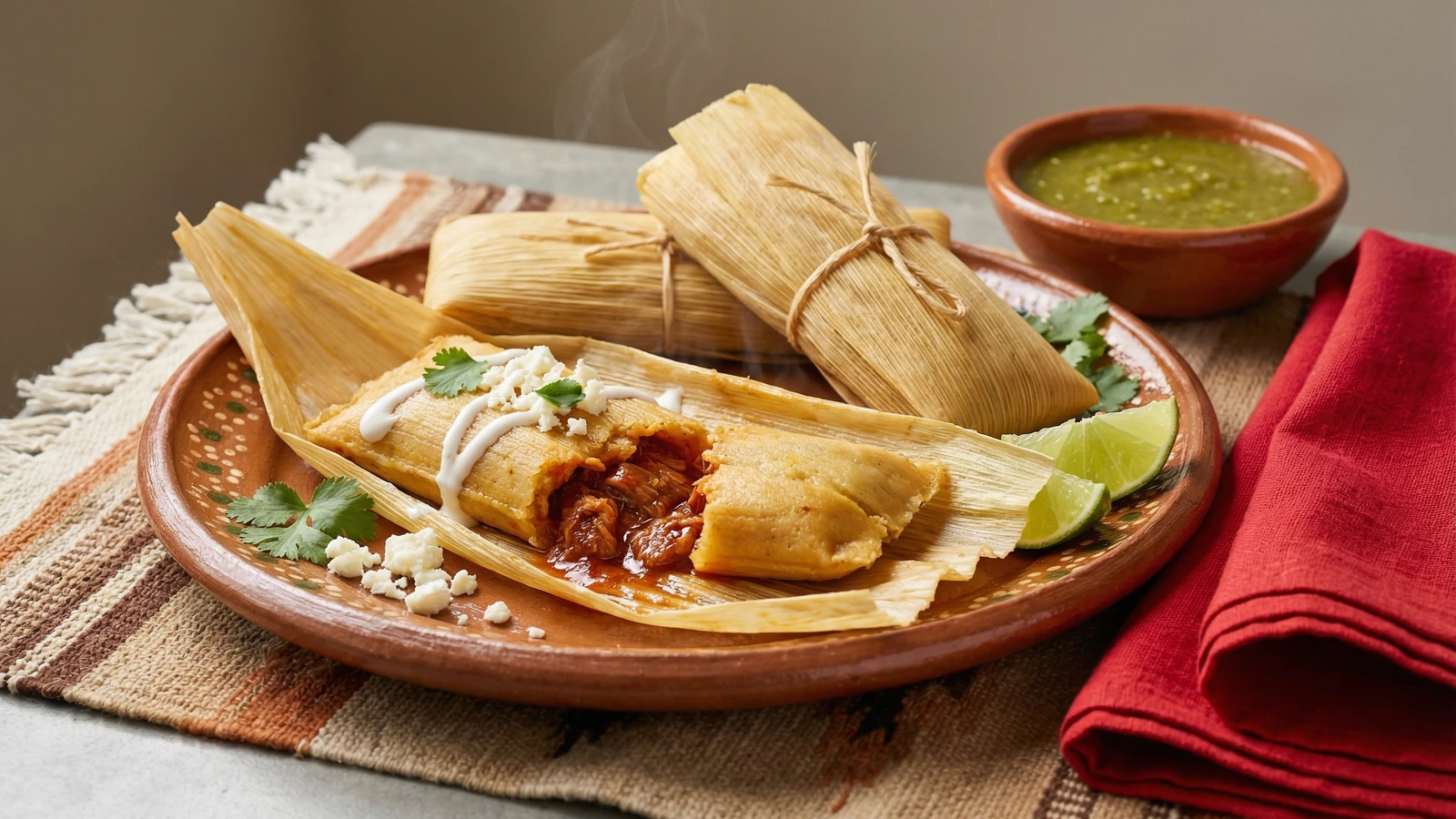
Tender corn masa enveloping slow-braised pork in red chile, wrapped in corn husks and steamed until the dough pulls away clean. This is the centerpiece of Mexican Christmas, a dish meant to be made with many hands and shared with open hearts.
Tamales existed long before the Spanish arrived. The Aztecs carried them into battle. Maya women prepared them for religious ceremonies. For thousands of years across Mesoamerica, this simple combination of corn masa and filling wrapped in leaves has sustained communities, marked celebrations, and brought families together around a common task. When you make tamales, you join a tradition older than most nations.
In Mexican households, Christmas means la tamalada: the great tamale-making gathering. Aunts, cousins, grandmothers, and children crowd into kitchens, each person taking a station. One spreads masa, another spoons filling, someone else ties the bundles. Stories pass between generations. Arguments break out over whose technique is superior. The work takes hours, and that's the point. Tamales are not fast food. They are an act of devotion.
Don't let the length of this recipe intimidate you. Each step is simple. The braised pork practically cooks itself. The masa comes together in minutes once you understand the texture you're seeking. Assembly becomes rhythmic after the first dozen. I've taught this recipe to students who'd never touched a corn husk, and by afternoon's end they were wrapping with confidence. You will be too.
The reward arrives when you unwrap that first steamed tamale and the masa releases cleanly from the husk, tender and fragrant, the red chile pork glistening inside. This is honest food. Food with history. Food worthy of your effort and your family's table.
Quantity
1 package (8 oz)
Quantity
4 pounds
Quantity
8
stemmed and seeded
Quantity
4
stemmed and seeded
Quantity
1 medium
quartered
Quantity
8
Quantity
2 teaspoons
Quantity
1 tablespoon
Quantity
2 tablespoons
Quantity
6 cups
Quantity
4 cups
Quantity
1 pound
Quantity
1 tablespoon
Quantity
1 tablespoon, plus more to taste
| Ingredient | Quantity |
|---|---|
| dried corn husks | 1 package (8 oz) |
| bone-in pork shoulder | 4 pounds |
| dried guajillo chilesstemmed and seeded | 8 |
| dried ancho chilesstemmed and seeded | 4 |
| white onionquartered | 1 medium |
| garlic cloves | 8 |
| ground cumin | 2 teaspoons |
| dried Mexican oregano | 1 tablespoon |
| apple cider vinegar | 2 tablespoons |
| pork or chicken broth | 6 cups |
| masa harina | 4 cups |
| lard or vegetable shortening | 1 pound |
| baking powder | 1 tablespoon |
| kosher salt | 1 tablespoon, plus more to taste |
Place the corn husks in a large container or clean sink and cover with very hot water. Weight them down with a plate to keep them submerged. Let them soak for at least 2 hours, or overnight. They should become pliable and silky, bending without cracking. Rinse each husk before using to remove any debris or silk.
Season the pork shoulder generously with salt on all sides. Place it in a Dutch oven or heavy pot with the quartered onion, 4 of the garlic cloves, and enough water to cover by two inches. Bring to a boil, then reduce heat to maintain a gentle simmer. Skim any foam that rises. Cook uncovered for 2 to 2½ hours, until the pork shreds easily when prodded with a fork. The meat should offer no resistance whatsoever.
While the pork braises, toast the guajillo and ancho chiles in a dry skillet over medium heat. Press them flat with a spatula, flipping occasionally, until fragrant and slightly darkened in spots, about 2 minutes per side. Transfer to a bowl and cover with 3 cups of boiling water. Let steep for 30 minutes until softened completely.
Drain the chiles, reserving 1 cup of the soaking liquid. Add the softened chiles to a blender with the remaining 4 garlic cloves, cumin, oregano, vinegar, 1 teaspoon salt, and the reserved soaking liquid. Blend on high until completely smooth, scraping down the sides as needed. The sauce should be thick but pourable. Strain through a fine mesh sieve, pressing to extract all the liquid, and discard the solids.
Remove the cooked pork from its liquid and let it cool enough to handle. Reserve 3 cups of the cooking liquid for the masa. Shred the meat with two forks, discarding any fat or gristle. Transfer the shredded pork to a large skillet and add 1½ cups of the chile sauce. Cook over medium heat, stirring frequently, until the sauce coats every strand and the mixture is fragrant and slightly reduced, about 10 minutes. Taste and adjust salt. The filling should be boldly seasoned since the masa will absorb some of its punch.
In the bowl of a stand mixer fitted with the paddle attachment, beat the lard on high speed until light and fluffy, about 3 minutes. It should look almost whipped. In a separate bowl, combine the masa harina, baking powder, and 1 tablespoon salt. Reduce mixer speed to low and add the masa mixture in three additions, alternating with the warm reserved pork broth. Beat until everything is incorporated, then increase speed to medium-high and beat for another 2 minutes until the masa is light and spreadable.
The masa should spread easily but hold its shape. It should feel like thick, smooth peanut butter. If too dry, add more broth one tablespoon at a time. If too wet, add a bit more masa harina. Taste a small pinch of the raw masa: it should be properly salted. Underseasoned masa makes bland tamales, no matter how flavorful your filling.
Select the largest, most pliable corn husks. Place one husk on your work surface with the wide end facing you. Spread about 3 tablespoons of masa in a rectangle on the upper two-thirds of the husk, leaving a 2-inch border on the sides and the narrow end bare. The masa should be about ¼ inch thick. Spoon 2 tablespoons of filling down the center of the masa.
Fold one long edge of the husk over the filling, then roll it toward the opposite edge, encasing the filling completely in masa. Fold the empty narrow end up toward the seam. You can leave the wide end open or fold it down for a neat packet. For security, tear a thin strip from a soaked husk and tie it around the tamale. Repeat with remaining husks, masa, and filling. Set assembled tamales upright in a baking dish as you work.
Fill the bottom of a large steamer pot or tamale steamer with 3 inches of water. Place a coin at the bottom (you'll hear it rattle when the water boils, and notice when it goes silent if the water runs dry). Line the steamer basket with remaining corn husks, overlapping them to create a nest. This prevents direct contact between tamales and the steamer walls.
Stand the tamales upright in the steamer, open end up, packing them snugly but not crushing them. They should support each other. Cover with additional husks, then a damp kitchen towel, then the lid. Steam over medium heat for 1 hour to 1 hour 15 minutes. Check water level periodically, adding more hot water if needed. The tamales are done when the masa pulls away cleanly from the husk without sticking.
Turn off the heat and let the tamales rest in the covered steamer for 10 minutes. This final rest allows the masa to set completely. Serve warm in their husks, instructing guests to unwrap before eating. Accompany with salsa verde, crema, pickled jalapeños, or simply a wedge of lime. Tradition holds that tamales taste best when eaten standing in the kitchen, before the rest of the family arrives.
1 serving (about 250g, 2 tamales)
Culinary guides, cultural storytelling, and the editorial depth that makes cooking meaningful.
Discover Culinary ExplorerChef Ally
All the deep, earthy warmth of traditional enchiladas layered into a bubbling casserole that feeds a crowd and asks nothing more than good chicken, honest dried chiles, and corn tortillas that taste like corn.

Chef Dean
Pillowy corn masa wrapped around shredded chicken bathed in bright tomatillo salsa, steamed in fragrant corn husks until tender. This is the tamale that brings families together every December.

Chef Juliette
John Dory has the delicacy of sole and the firmness of turbot. A light flouring, a quick butter sauté, and nut-brown beurre noisette show exactly why looks never mattered.

Chef Juliette
Fresh haddock proves its delicacy in the meunière pan: a fine flour crust, moist pearly flakes, and beurre noisette sharpened with lemon and parsley, ready from one skillet in half an hour.