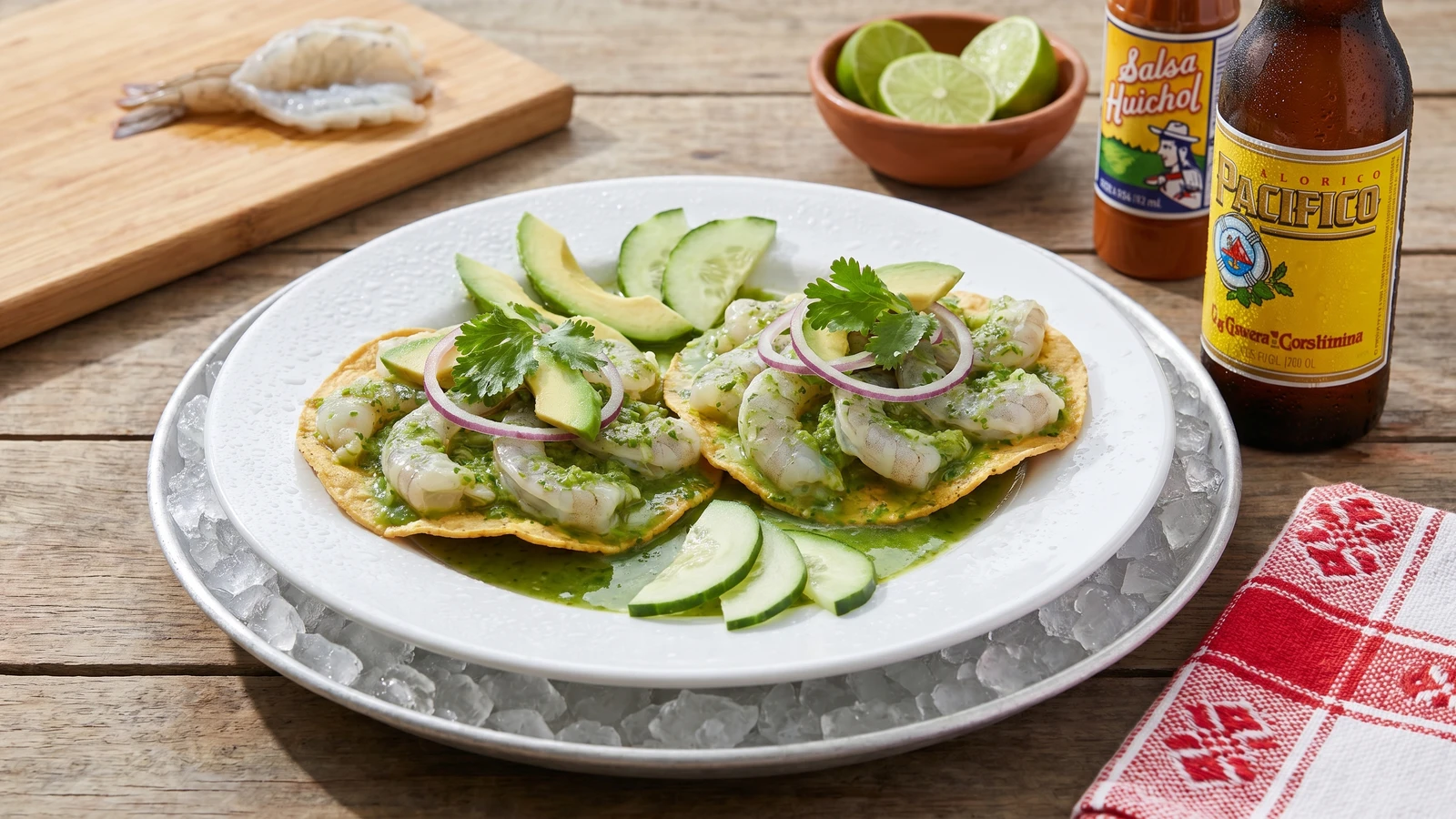
Sinaloa's bracing raw shrimp dish piled on a fried corn tostada, dressed in a vivid green sauce of lime, cilantro, and chile serrano. Built and eaten in the same minute.
Appetizers & Snacks
Mexican
Quick Meal
Outdoor Dining
Dinner Party
30 min
Active Time
5 min cook•35 min total
Yield8 tostadas, serving 4 as a starter
Aguachile is from Sinaloa. Specifically from the Pacific coast around Mazatlan and Culiacan, where the shrimp comes off the boat in the morning and is on a plate by lunchtime. The tostada version is what you eat standing up at a marisqueria on the malecon, a beer in one hand, the tostada cracking in the other. This is not ceviche. Ceviche cures for an hour in lime. Aguachile cures for two minutes and goes immediately to the table. The shrimp should still be bright at the center.
The sauce is the dish. Lime, cilantro, chile serrano, garlic, salt, a splash of cold water to round it out. Nothing else. The Sinaloa version is direct: bright, hot, herbaceous, with no apologies. The chiles vary by season and by cook. Three serranos for a guest who is not used to it. Four if you grew up with it. Cucumber and red onion go on top because they cool and crunch against the heat. The tostada is the platform that holds it all together long enough to get to your mouth.
This is a coastal dish from a state with a serious fishing tradition, and it carries the directness of cooks who do not need to dress up what they are working with. Sinaloa pulls more shrimp out of the Pacific than any other state in Mexico, and the marisquerias built their reputations on serving it as raw as possible. If your shrimp is good, the tostada is good. If your shrimp is mediocre, no amount of cilantro can fix it. Si no conoces el mercado, no conoces la cocina.
Aguachile descends from the pre-Columbian practice of curing fish and shrimp in the acidic juices of native bitter fruits, a method documented among the indigenous Cahita, Mayo, and Yoreme peoples of what is now Sinaloa and Sonora long before lime arrived with the Spanish. The modern green version, blended with cilantro and serrano, is a 20th-century evolution that emerged from the marisqueria boom in Culiacan and Mazatlan during the 1960s and 1970s. Sinaloa accounts for roughly 60 percent of Mexico's national shrimp production, and the tostada format, which lets the dish travel the few steps from the kitchen to a customer eating standing at the bar, is the working format of the coastal seafood economy.
The technique, the tradition, and the story behind every dish.
large raw shrimp (16/20 count)peeled, deveined, and butterflied open
1 pound
fresh lime juicedivided
1 cup (about 12 to 14 Mexican limes)
kosher salt
1 teaspoon, plus more to taste
fresh cilantro leaves and tender stems
1 cup, packed
fresh chile serranostemmed
3 (4 if you like it hot)
garlic cloves
2
cold water
3 tablespoons
small red onionsliced into paper-thin half-moons
1
English cucumbersliced into paper-thin half-moons
1
corn tortillaspreferably day-old
8
vegetable oil or pork lardfor frying the tostadas
1 cup
ripe avocado (optional)sliced thin
1
Maggi sauce or Salsa Huichol (optional)
for serving
lime halves (optional)
for serving
flaky sea salt (optional)
for finishing
Equipment Needed
•Sharp paring knife for butterflying the shrimp
•High-powered blender
•Heavy 10-inch skillet for frying the tostadas
•Slotted spatula or kitchen spider
•Wide chilled platter for serving
Instructions
1
Butterfly the shrimp
Rinse the shrimp under cold water and pat dry. Lay each one flat and slice down the curved back, opening it like a book without cutting all the way through. They should lie flat. This is the cut they make in the Mazatlan and Culiacan marisquerias and it lets the lime touch every surface evenly. Lay them on a chilled plate and slide them back into the refrigerator while you build the rest.
The shrimp must be raw and very fresh. If it smells like ammonia or anything other than clean ocean, do not use it. Sushi-grade is ideal. No me vengas con atajos on the shrimp.
2
Curtir the shrimp briefly
Pour 1/2 cup of the lime juice over the butterflied shrimp and add the teaspoon of salt. Toss gently. Refrigerate for exactly 5 minutes, no more. The shrimp should turn from translucent gray to soft pink at the edges only, with the centers still bright. Drain off the lime and discard it. This first quick cure firms the shrimp without cooking them through. The dressing comes next.
3
Soak the onion
Place the sliced red onion in a small bowl of ice water for 10 minutes. This pulls out the harsh bite and leaves the crunch and color. Drain and pat dry before using.
4
Blend the green sauce
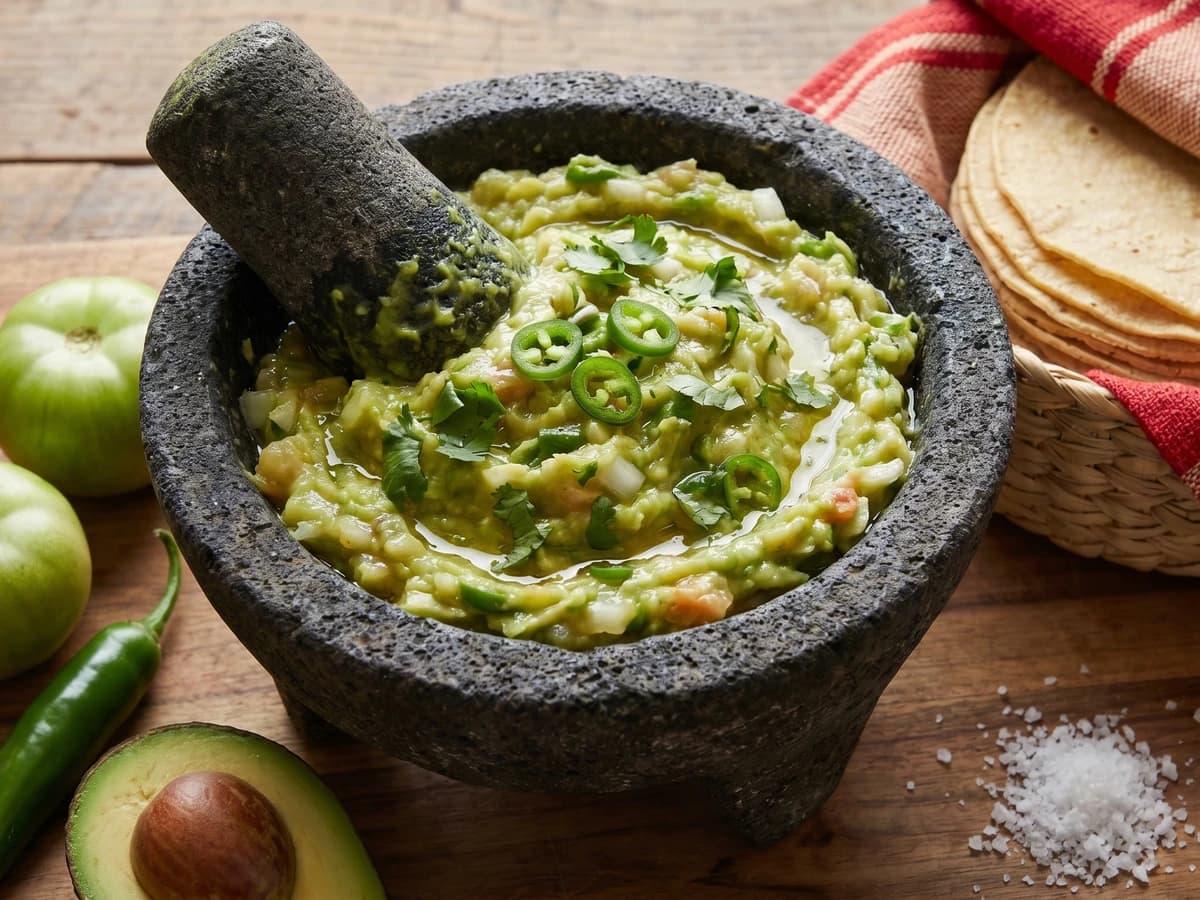
In a blender, combine the remaining 1/2 cup lime juice, the cilantro, serranos, garlic, cold water, and a generous pinch of salt. Blend on high until completely smooth and bright green. Taste it. It should be aggressive: sour, hot, herbaceous, and salty enough to make you blink. If it tastes shy, add another half teaspoon of salt and another piece of chile. The sauce sets the tone for the whole plate.
Do not strain the sauce. The texture from the cilantro and the chile is part of what makes it aguachile and not ceviche.
5
Fry the tostadas
Heat the oil or lard in a heavy skillet over medium-high until a corner of tortilla dropped in bubbles immediately. Fry the tortillas one at a time, about 45 seconds per side, pressing down with a spatula to keep them flat. They should turn deep gold and rigid. Drain on paper towels and salt them lightly while they are still warm. Day-old tortillas fry crisper than fresh ones. The marisquerias on the malecon do not buy bagged tostadas. Neither should you.
6
Dress the shrimp
Pull the shrimp from the refrigerator. Pour the green sauce over them and toss gently so every piece is coated. Let them sit for two minutes, no longer. Add the cucumber half-moons and the drained red onion. Toss once more. The shrimp should be barely opaque at the edges and still soft at the center. Aguachile is not ceviche. The lime is a kiss, not a bath.
7
Build and serve immediately
Lay the tostadas out on a wide platter. Spoon the dressed shrimp onto each one with a generous pour of the green sauce. Top with sliced avocado if using. Finish with a pinch of flaky salt and a few drops of Maggi or Salsa Huichol at the table. Serve with lime halves on the side. Eat them the moment they are built. The tostada softens within minutes and the shrimp tighten with every passing second. Aguachile waits for nobody. Asi se hace y punto.
Chef Tips
•The shrimp is the recipe. Buy the freshest you can find from a fishmonger you trust, or use sushi-grade frozen shrimp thawed slowly in the refrigerator. Frozen from a reliable source beats questionable fresh every time.
•Mexican lime, the small green ones sometimes sold as key lime, makes a more bracing sauce than the larger Persian lime. If you can find them, use them. If not, Persian limes will work but you may need an extra two or three.
•Day-old corn tortillas fry into crisper tostadas than fresh ones. If your tortillas are too fresh, lay them out on a rack for an hour to dry before frying. Bagged supermarket tostadas are a compromise. Once you fry your own, you will not buy them again.
•Aguachile cannot be made ahead. The moment the lime touches the shrimp, the clock starts. Have your guests at the table before you dress the shrimp, not after.
Advance Preparation
•The green sauce can be blended up to one hour ahead and held in the refrigerator. Past one hour, the cilantro oxidizes and the bright green dulls toward olive.
•The shrimp can be butterflied and held on ice in the refrigerator for up to four hours before the brief lime cure.
•The tostadas can be fried up to four hours ahead and held at room temperature, uncovered, on a wire rack. Do not seal them in a bag or they will go soft.
Frequently Asked Questions
Nutrition Information
1 serving (about 340g)
Calories
370 calories
Total Fat
15 g
Saturated Fat
2 g
Trans Fat
0 g
Unsaturated Fat
12 g
Cholesterol
185 mg
Sodium
560 mg
Total Carbohydrates
32 g
Dietary Fiber
7 g
Sugars
3 g
Protein
27 g
Where cooking meets culture.
Culinary guides, cultural storytelling, and the editorial depth that makes cooking meaningful.