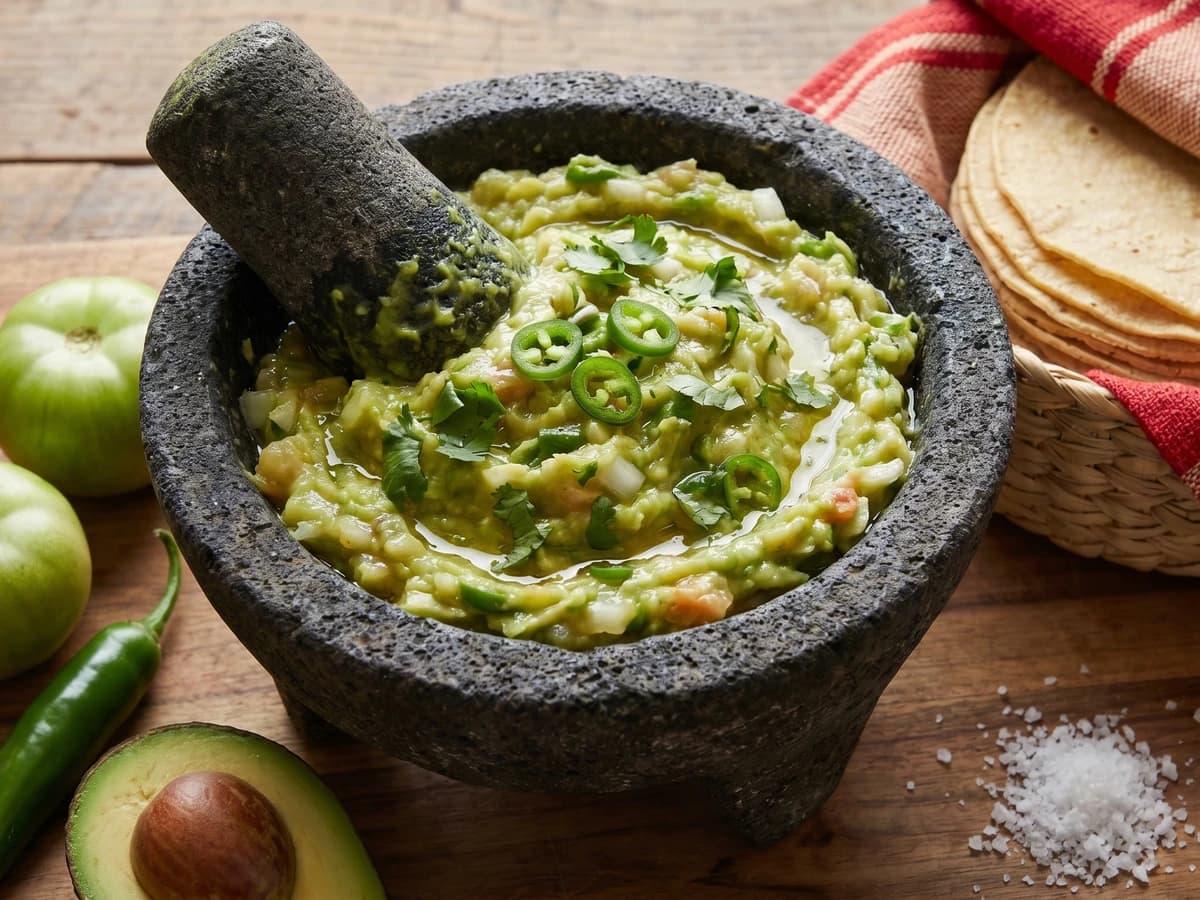
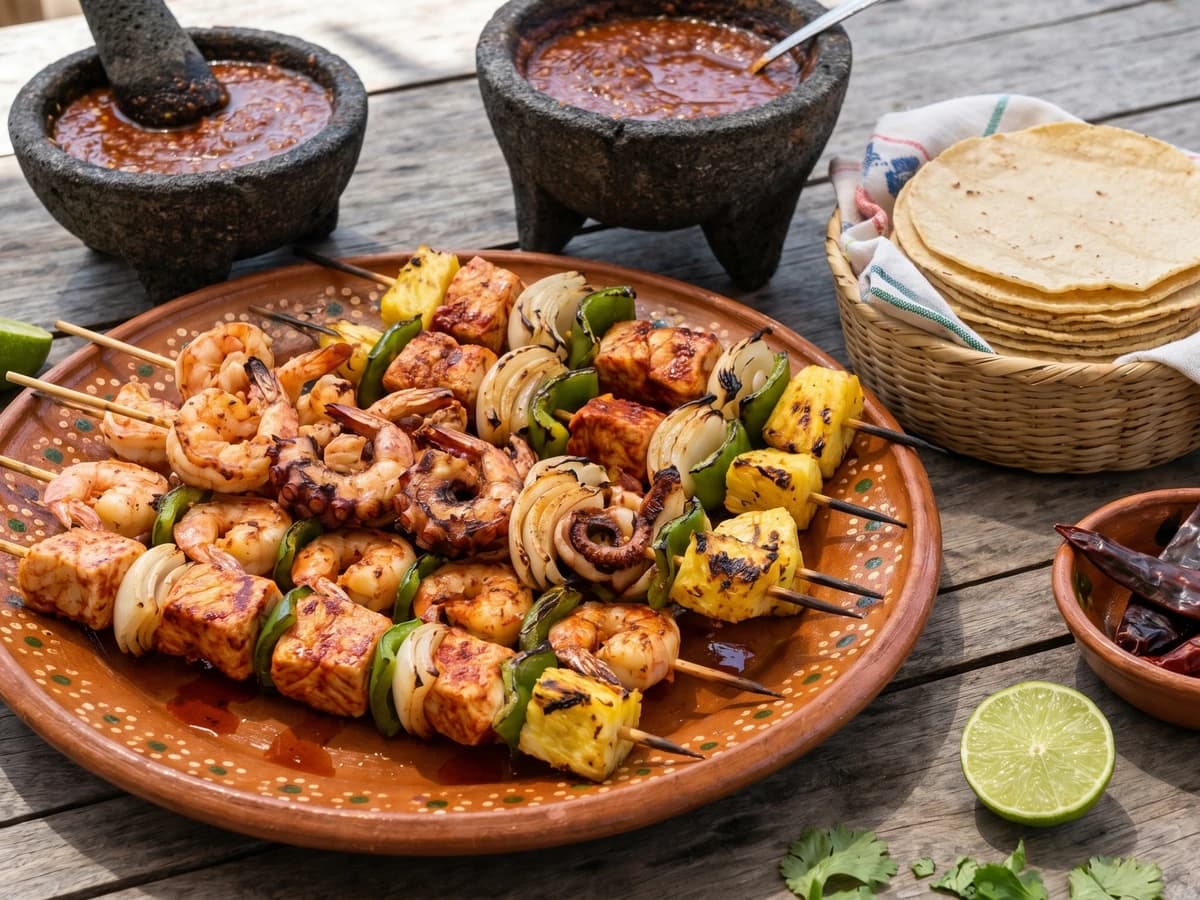
Mexicali's Chinese-Mexican wings, double-fried until the crust crackles, glazed sticky in soy, honey, ginger, and garlic, served with chiles toreados blistered in soy and lime.
Appetizers & Snacks
Mexican
Game Day
Super Bowl
Potluck
30 min
Active Time
30 min cook•1 hr total
Yield4 to 6 servings
These wings are from Mexicali, Baja California. Not from California, not from a sports bar, not from a chain in any other Mexican city. From Mexicali. Specifically from La Chinesca, the Chinese district that has fed this border city since the late 1800s, when Chinese laborers were brought to dig the irrigation canals of the Valle de Mexicali and stayed to open restaurants and small shops on Avenida Reforma. Mexicali has more Chinese restaurants per capita than any other city in Mexico. That is not a marketing claim. It is a census fact.
The technique here is Cantonese in its bones and Mexican in its hands. Double-fried for the crackle. Glazed in soy, honey, ginger, garlic. The Coca-Cola in the glaze is the Mexican fingerprint, the same caramelizing trick that finishes carnitas in Michoacan, used here to soften the edge of the soy and pull the honey into a rounder sweetness. The chiles toreados on the side are the northern Mexican accompaniment, blistered whole on a comal and dressed in soy and lime. They are not a garnish. They are the salsa. Pick one up by the stem and bite between bites of wing.
I spent two weeks in Mexicali in 2019, eating at La Misionera, El Dragon, and a half-dozen storefronts in La Chinesca whose names I could only read in Mandarin. The senoras and senores who taught me this recipe corrected me twice on the soy ratio and once on the second-fry temperature. Esto no es comida de un solo Mexico. This is a dish that exists because Chinese cooks in a Mexican border city built a cuisine that is fully theirs and fully ours. Cada estado, su propia cocina, and Baja California has two of them: the Pacific seafood tradition and the Chinese-Mexican kitchen of Mexicali.
Chinese migration to Mexicali began in the 1880s and accelerated after the United States passed the Chinese Exclusion Act of 1882, which redirected Chinese laborers south of the border to work the cotton fields and irrigation projects of the Colorado River Land Company in the Valle de Mexicali. By the 1920s, Mexicali's Chinese population briefly outnumbered its Mexican population, and La Chinesca, centered on Avenida Reforma, became the largest Chinatown in Mexico. The Chinese-Mexican wing tradition developed through the 20th century at restaurants like Restaurante Victoria and the now-closed China Town, where Cantonese-trained cooks adapted southern Chinese frying technique to Mexican palates by integrating chile, lime, and the comal-blistered chile toreado as a permanent fixture of the table.
The technique, the tradition, and the story behind every dish.
preferably Yuen's or another brand from La Chinesca
honey
Quantity
1/3 cup
rice vinegar
Quantity
3 tablespoons
Mexican Coca-Cola
Quantity
2 tablespoons
fresh ginger
Quantity
2 tablespoons
finely grated
garlic cloves
Quantity
6
finely minced
sesame oil
Quantity
1 teaspoon
cornstarch slurry
Quantity
1 teaspoon cornstarch dissolved in 1 tablespoon cold water
toasted sesame seeds
Quantity
2 tablespoons
for finishing
scallions
Quantity
4
thinly sliced on the bias, for finishing
fresh chile guero (yellow chile) or chile serrano
Quantity
12
soy sauce (for the chiles toreados)
Quantity
2 tablespoons
fresh lime juice (for the chiles toreados)
Quantity
1 tablespoon
lime wedges (optional)
Quantity
for serving
Ingredient
Quantity
chicken wingssplit into drumettes and flats, tips removed
3 pounds
kosher salt
1 tablespoon
freshly ground black pepper
1 teaspoon
cornstarch
1 cup
all-purpose flour
1/2 cup
baking powder
1 teaspoon
neutral oil for frying (peanut or canola)
about 6 cups
soy saucepreferably Yuen's or another brand from La Chinesca
1/2 cup
honey
1/3 cup
rice vinegar
3 tablespoons
Mexican Coca-Cola
2 tablespoons
fresh gingerfinely grated
2 tablespoons
garlic clovesfinely minced
6
sesame oil
1 teaspoon
cornstarch slurry
1 teaspoon cornstarch dissolved in 1 tablespoon cold water
toasted sesame seedsfor finishing
2 tablespoons
scallionsthinly sliced on the bias, for finishing
4
fresh chile guero (yellow chile) or chile serrano
12
soy sauce (for the chiles toreados)
2 tablespoons
fresh lime juice (for the chiles toreados)
1 tablespoon
lime wedges (optional)
for serving
Equipment Needed
•Heavy 6-quart Dutch oven or wok for frying
•Reliable deep-fry thermometer (the temperatures matter)
•Two wire racks set over sheet pans, one for between fries and one for after
•Spider strainer or slotted spoon
•Cast iron comal or heavy skillet for the chiles toreados
Instructions
1
Dry and season the wings
Pat the wings completely dry with paper towels. Wet wings do not crisp. Season with the salt and pepper, toss to coat, and let them sit on a wire rack for at least 20 minutes. The surface needs to feel tacky, not damp. This is the first decision in a dish full of small decisions that add up.
If you have time, salt them the night before and leave them uncovered in the refrigerator. The skin dries out and fries up like glass.
2
Build the dredge
Whisk the cornstarch, flour, and baking powder together in a wide bowl. The cornstarch is the backbone. It is what makes the Mexicali wing crackle the way it does. Straight flour gives you a soft American wing. Cornstarch with a little flour and baking powder is the Chinese-Mexican formula and it has been the formula on Avenida Reforma for over a century.
3
First fry at low heat
Heat the oil in a heavy pot or wok to 300F. Toss the wings in the dredge a handful at a time, pressing the coating onto the skin. Shake off the excess. Fry the wings in batches for 8 to 10 minutes, just until the meat is cooked through and the coating is set but still pale. They should look almost beige, not browned. Lift them out with a spider, drain on a wire rack, and let them rest for at least 10 minutes. This rest is not optional. The wing has to cool before the second fry or the crust will not snap.
4
Make the glaze
While the wings rest, combine the soy sauce, honey, rice vinegar, Coca-Cola, ginger, garlic, and sesame oil in a saucepan over medium heat. Bring to a simmer and cook for three to four minutes, until the garlic loses its raw bite. Stir in the cornstarch slurry. The sauce will tighten into a glossy glaze in about 30 seconds. Pull it off the heat. It should coat the back of a spoon and slide off slowly. The Coca-Cola is not a joke. La Chinesca cooks have used it for decades to round the soy and the vinegar without reaching for white sugar.
If your soy sauce is very salty, cut the amount to 1/3 cup and add a tablespoon of water. The honey carries the dish. The soy frames it. Do not let the salt run the show.
5
Blister the chiles toreados
Heat a dry comal or cast iron skillet over high heat. Lay the whole chiles down and let them char in spots, turning with tongs, for about four minutes. The skin should blister and the flesh should soften. Transfer to a small bowl, toss with the two tablespoons soy sauce and the lime juice, and cover. They will steep in their own heat while the wings finish. Chiles toreados are the northern table salsa. Every Mexicali Chinese restaurant sets a bowl down before the menu arrives.
6
Second fry at high heat
Bring the oil up to 375F. Fry the rested wings in batches for three to four minutes, until they turn a deep golden color and the crust crackles when you tap it with the spider. This is the fry that earns the dish. The first fry cooks the meat. The second fry sets the texture. Drain on a fresh wire rack.
7
Glaze and serve
Transfer the hot wings to a wide bowl. Pour the warm glaze over them. Toss until every wing is coated in glossy sauce. Move quickly, you want them coated while the crust is still hot enough to grip the glaze. Pile them on a platter. Scatter the sesame seeds and scallions over the top. Set the chiles toreados in their soy and lime alongside, with lime wedges. Eat them the moment they hit the table. Asi se hace y punto.
Chef Tips
•The double fry is the recipe. Do not skip it, do not shorten it, do not try to bake the wings instead. The first fry at 300F cooks the meat. The second fry at 375F builds the crust. One temperature does not do both jobs. No me vengas con atajos.
•Use a soy sauce with body, not the thin watery kind in supermarket jugs. If you can find a Chinese-brewed soy sauce at an Asian grocer, that is closest to what they use in La Chinesca. Pearl River Bridge or Lee Kum Kee will get you there.
•Chile guero is the traditional chile for chiles toreados in northern Mexico. If your mercado does not have them, chile serrano works. Chile jalapeno is too thick-walled and too mild for this purpose. The skin needs to blister fast and the heat needs to come through clean.
•Glaze the wings the second they come out of the second fry. If they cool, the glaze beads up instead of clinging. The whole dish is built around timing the glaze to the crust.
Advance Preparation
•The wings can be salted and dried uncovered in the refrigerator up to 24 hours ahead. The skin gets better, not worse, with this rest.
•The first fry can be done up to 4 hours ahead. Hold the wings on a wire rack at room temperature, then bring the oil up to 375F and do the second fry just before serving.
•The glaze can be made up to 2 days ahead and refrigerated. Reheat gently before tossing with the wings. It will tighten as it cools, so loosen with a teaspoon of water if needed.
•The chiles toreados are best blistered minutes before serving, while the comal is hot from the rest of the cooking.
Frequently Asked Questions
Nutrition Information
1 serving (about 285g)
Calories
830 calories
Total Fat
53 g
Saturated Fat
10 g
Trans Fat
0 g
Unsaturated Fat
40 g
Cholesterol
175 mg
Sodium
2740 mg
Total Carbohydrates
42 g
Dietary Fiber
1 g
Sugars
19 g
Protein
44 g
Where cooking meets culture.
Culinary guides, cultural storytelling, and the editorial depth that makes cooking meaningful.