
Chef Lupita
Agua de Alfalfa
Ciudad de México's highland market agua fresca, fresh alfalfa blended with pineapple and lime until bright green, strained clean, and poured cold from the vitrolero.
A cooking platform built around craft, culture, and the stories behind what we eat.
Created by
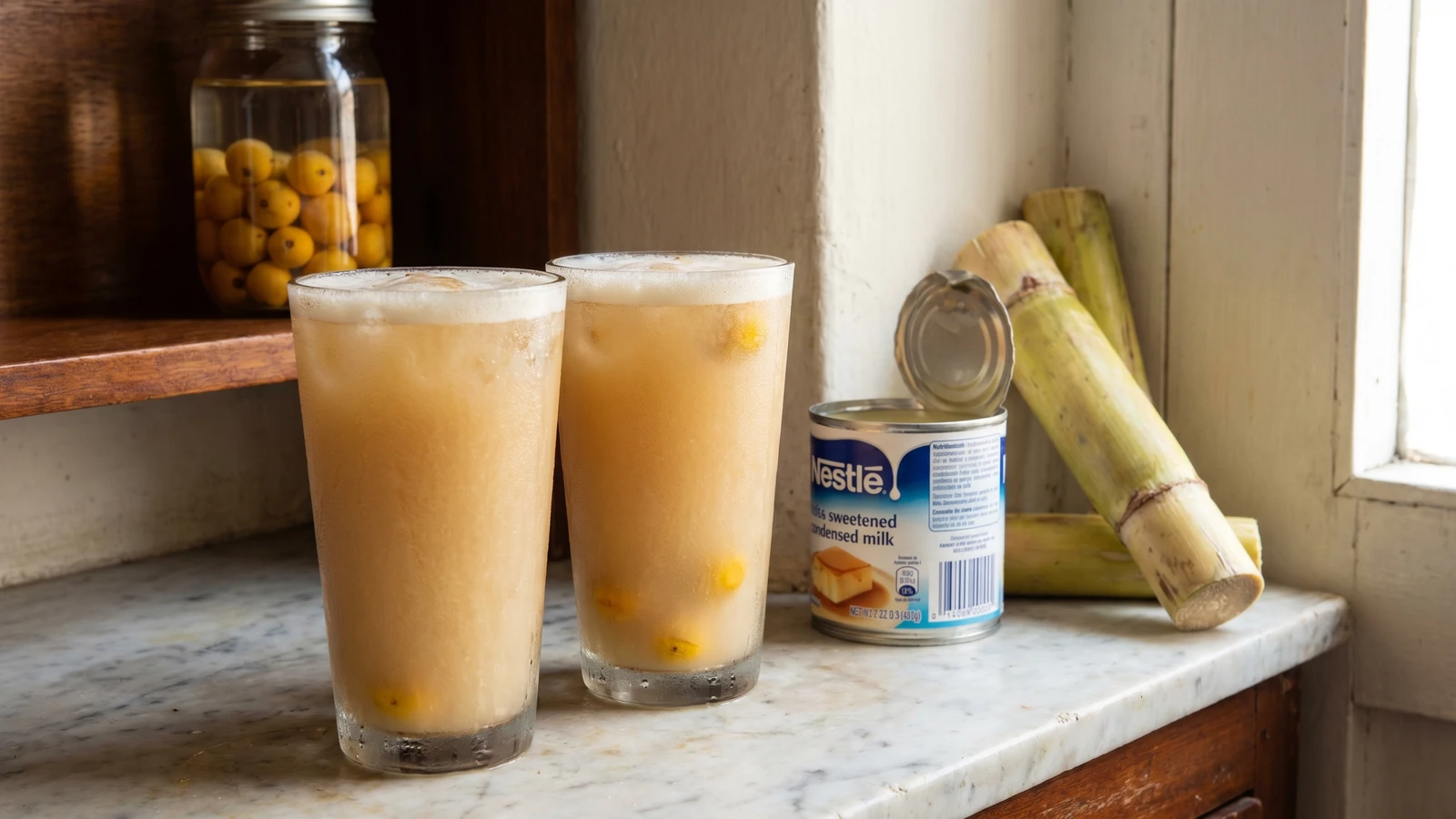
From the cantinas of Boca del Río, the torito jarocho: tart yellow nanche steeped in cane aguardiente, blended frosty with condensed milk. It looks like a cream cocktail. The aguardiente tells you it is not.
This is from Veracruz. Boca del Río specifically, where the Sotavento coast meets the port and the cantinas have marble counters worn smooth by eighty years of elbows. The torito is jarocho to the bone. Cane spirit, fruit, condensed milk, blended cold and drunk before the meal. Every cantina keeps its flavors lined up behind the bar: cacahuate, guanábana, jobo, fresa. This one is nanche.
Let me tell you what a torito is not. It is not a cream cocktail. The condensed milk fools people. It goes in soft and pale and sweet, and they think they are drinking something gentle. Then the aguardiente de caña arrives. That cane spirit is the spine of the whole thing. Veracruz grows sugarcane the way Jalisco grows agave, and the local aguardiente is what gives the torito its name, the little bull, for the kick. Take the cane spirit out and you have a milkshake. No me vengas con atajos.
Nanche is the yellow berry of the coast. Small, about the size of a cherry, with a stone in the middle and a smell that stops people who did not grow up with it. Funky, tart, a little like cheese left in the sun. That funk is the point. You macerate the berries in the aguardiente, cure them for a night, and the spirit pulls all that perfume out. Then you blend it with the milks and ice until it turns frosty and pale gold. Sweet and tart at once, with the cane underneath.
Nanche is a rainy-season fruit. On the Gulf coast it shows up in the markets around June and runs through the late summer. Right now, the end of May, you are at the very edge of it, so if the fresh berries are not in yet, buy them jarred in brine, the way the cantinas keep them all year. My mother was from Jalisco and never made a torito in her life, but she had a line I think about: una mujer que sabe cocinar no pasa hambre. A drink like this is the same logic. Cane, fruit, a can of milk. You make celebration out of what the coast already grows. Saber cocinar es saber vivir.
The torito took shape in the cantinas of Boca del Río in the mid-twentieth century, built on the aguardiente de caña of Veracruz's sugarcane country, an economy colonial New Spain ran on the labor of enslaved Africans landed at the port of Veracruz, the main entry point of the transatlantic slave trade into Mexico. That afromestizo heritage runs all through Sotavento, from son jarocho music to the cane spirits themselves, yet Afro-Mexican peoples were not recognized in the federal constitution until a 2019 reform and were counted in the national census for the first time in 2020. The fruit's name comes from the Nahuatl, and the tree, Byrsonima crassifolia, grew across the tropical lowlands long before cane spirit arrived to give the little bull its kick.
Quantity
2 cups
rinsed and stemmed, or use jarred nanche in brine, drained and rinsed
Quantity
1 1/2 cups
Quantity
1 can (14 ounces)
Quantity
1 can (12 ounces)
Quantity
4 cups
Quantity
1 pinch
Quantity
up to 1/2 cup
to adjust consistency
Quantity
for garnish
| Ingredient | Quantity |
|---|---|
| fresh nanche (nance)rinsed and stemmed, or use jarred nanche in brine, drained and rinsed | 2 cups |
| aguardiente de caña | 1 1/2 cups |
| sweetened condensed milk (leche condensada) | 1 can (14 ounces) |
| evaporated milk (leche evaporada) | 1 can (12 ounces) |
| ice | 4 cups |
| fine sea salt | 1 pinch |
| cold water or whole milk (optional)to adjust consistency | up to 1/2 cup |
| whole nanche (optional) | for garnish |
If you have fresh nanche, rinse the berries and pull off any stems. They are small and yellow, each one wrapped around a hard stone you will not eat, so leave them whole for now. If you are working with jarred nanche in brine, drain it and rinse it well under cold water to wash off the salt, or the torito will taste of the jar. Taste one berry. That funky, tart, almost cheesy note is nanche being itself. That is what you want.
Put the nanche in a clean glass jar and pour the aguardiente de caña over it. Press the berries lightly with a wooden spoon to bruise them, just enough to open the skins. Cover and let it sit at least 4 hours at room temperature, and overnight in the refrigerator if you can wait. This is the curado. The cane spirit pulls the perfume and the tartness out of the fruit and takes it on. The longer it macerates, the deeper it gets. No me vengas con atajos.
Pour the macerated nanche and all the aguardiente into the blender. Pulse in short bursts, four or five times, only to knock the flesh off the stones. Do not let it run. If you crack the pits, the drink turns bitter and there is no fixing it later. Pour everything through a medium sieve set over a bowl and press the pulp with the back of a spoon to push the liquid through. Throw out the stones and skins left behind.
Return the strained nanche liquid to the blender. Add the condensed milk, the evaporated milk, a pinch of salt, and the ice. Blend until it is frosty, pale gold, and foamy on top. Taste it. You should get sweet and tart at the same time, with the cane spirit clear underneath, not hidden. If it is too sharp, add a little more condensed milk. If it is too thick or too strong, loosen it with a splash of cold water or milk. The aguardiente de caña is the spine of this drink. Keep it standing.
Pour into tall glasses, frosted in the freezer beforehand if you thought ahead. Drop a few whole nanche into each glass. Serve it cold, right away, before the ice melts down and waters it out. On the Sotavento coast this is an aperitivo, the thing you drink standing at the bar before you sit down to eat. Recetas probadas y garantizadas.
1 serving (about 330g)
Culinary guides, cultural storytelling, and the editorial depth that makes cooking meaningful.
Discover Culinary ExplorerChef Lupita
Ciudad de México's highland market agua fresca, fresh alfalfa blended with pineapple and lime until bright green, strained clean, and poured cold from the vitrolero.

Chef Lupita
Aguascalientes' Lenten agua fresca, jewel-red from cooked beet and full of apple, banana, orange, lettuce, and ground peanuts, served cold when Holy Week meets the Feria de San Marcos.

Chef Lupita
Sonora and Sinaloa's creamy malted barley water, built on toasted cebada perla, Mexican canela, vanilla from Papantla, and evaporated milk. Pink-beige, rich, and served cold over heavy ice in a heavy glass tumbler. Liquid cookie comfort the northwest way.

Chef Lupita
Yucatán's everyday tonic of boiled chaya leaves blended with lima agria, sugar, and ice. The bright green jarra that sits on every Peninsula table from Mérida to Valladolid.