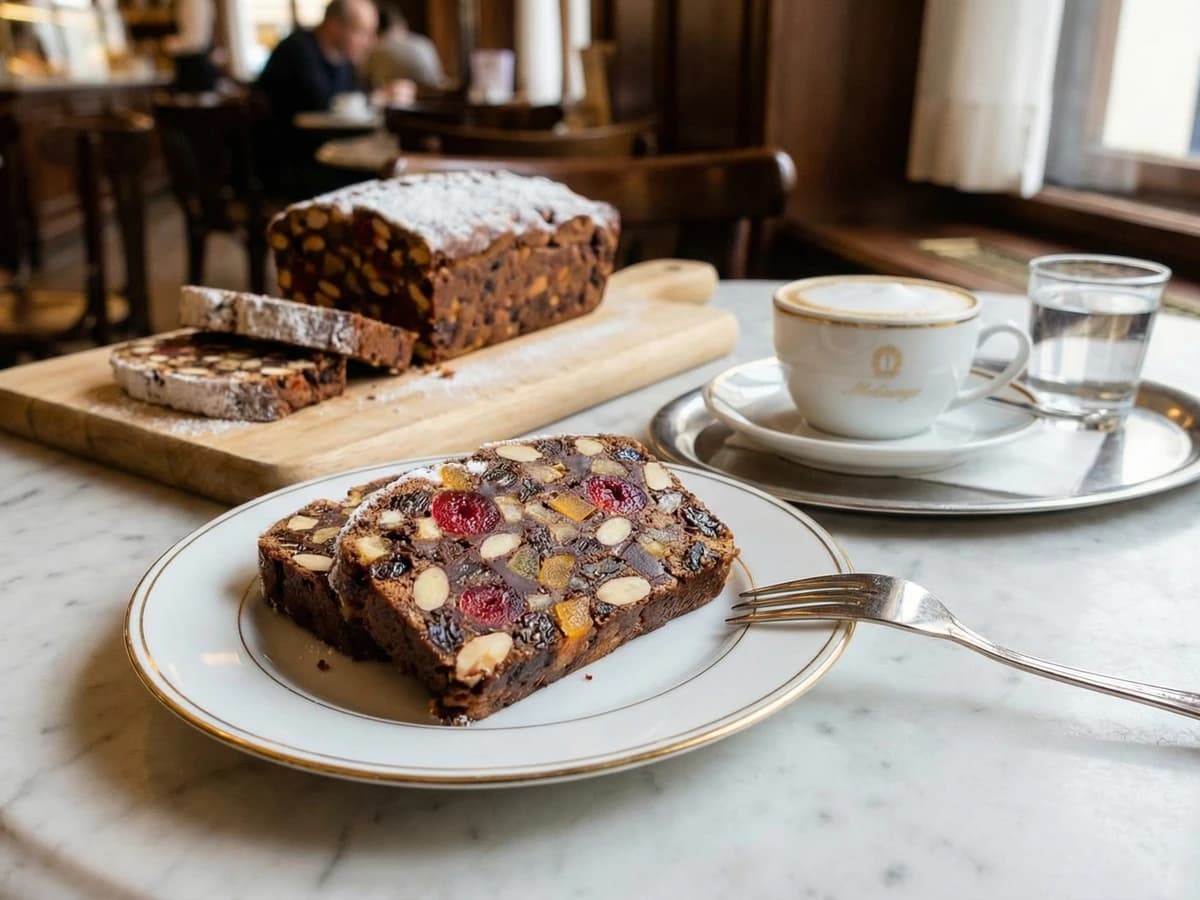
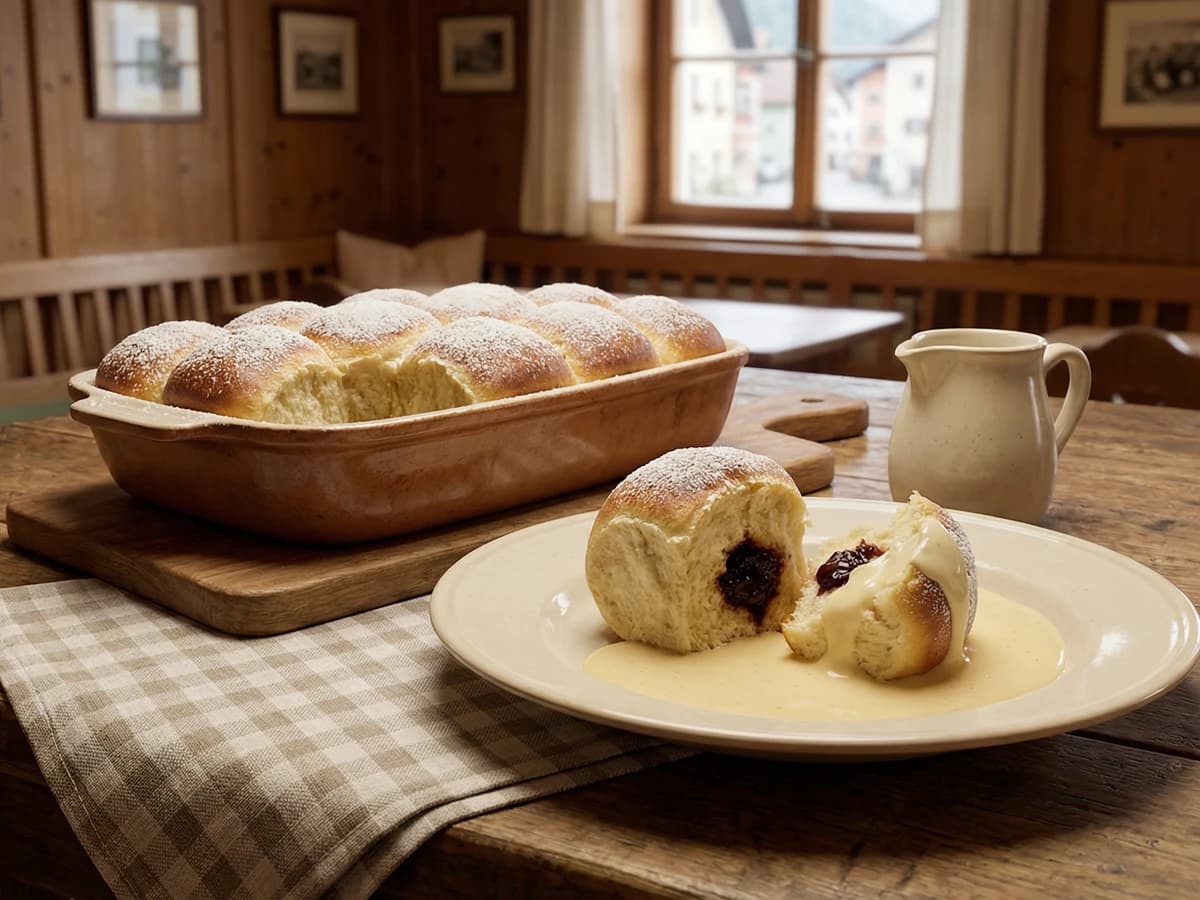
Austria's lighter, tangier answer to cheesecake, baked on a snapping Mürbteig base with fresh Topfen quark, lemon zest, and Vanillezucker. The cake Gretel and Eva made on a Tuesday because good quark deserved it.
Desserts
Austrian
Dinner Party
Comfort Food
30 min
Active Time
1 hr 5 min cook•2 hr 30 min total
Yield10 servings
Gretel always said that the difference between Topfentorte and what the rest of the world calls cheesecake comes down to one ingredient: Topfen. Fresh Austrian quark, soft and white, tangier than cream cheese and lighter by half. When I was small, watching her and my grandmother Eva bake in Kent, the Topfentorte was the cake that appeared most often. Not because it was special-occasion food, but because it was the kind of thing you made on a Tuesday when you had good quark and a few eggs and you wanted something beautiful without spending your whole afternoon on it.
The filling is barely sweet. That surprises people who've grown up on American cheesecake, which buries everything under sugar and cream cheese until all you taste is rich. Topfentorte wants you to taste the quark: its sourness, its freshness, the way it plays against lemon zest and Vanillezucker. The eggs get separated, the whites whipped stiff and folded in at the end, and this is the whole secret to the texture. Not dense. Not heavy. Something between a soufflé and a custard, set on a thin, buttery Mürbteig base that snaps clean when you press your fork through it.
I bake this at my restaurant in Salzburg year-round, but I love it most in late spring and summer when the quark from the local dairy is at its freshest. A thin slice, a cup of good coffee. No garnish, no sauce, maybe a little powdered sugar on top because the white against the golden surface looks right. This is good Austrian home cooking that also belongs in a Konditorei, and that's a rare thing.
Topfen has been central to Austrian baking for centuries, appearing in everything from Strudel fillings to Knödel to Torten. The Topfentorte as we know it developed in the Viennese Bürgerküche of the 19th century, where the abundance of fresh dairy from Alpine regions made quark-based cakes a staple of the home kitchen long before cheesecake became fashionable elsewhere. Unlike the New York cheesecake, which relies on cream cheese (an American invention from 1872), the Austrian version has always used fresh quark, producing a lighter cake with a clean, tangy finish that doesn't coat your mouth. Every region has its variation: Styrians might fold in ground pumpkin seeds, Tyrolean bakers sometimes add a splash of Obstler, and the Viennese insist on semolina rather than flour as the binder.
The technique, the tradition, and the story behind every dish.
unsalted butter (for Mürbteig)cold, cut into small cubes
80g
powdered sugar (Staubzucker)
50g
egg yolk (for Mürbteig)
1
lemon zest (for Mürbteig)
zest of half a lemon
salt (for Mürbteig)
pinch
Topfen (quark, 20% fat)well-drained
750g
granulated sugar
120g
Vanillezucker
1 packet (8g)
eggs (for filling)separated
4 large
lemon zest (for filling)
zest of 1 lemon
lemon juice
juice of half a lemon
fine semolina (Grieß)
40g
sour cream (Sauerrahm)
100g
unsalted butter (for filling)melted and cooled
50g
raisins (optional)soaked in rum for at least one hour
50g
salt (for egg whites)
pinch
butter and flour
for greasing pan
powdered sugar
for dusting
Equipment Needed
•26cm springform pan
•Electric hand mixer or stand mixer
•Fine grater or Microplane (for lemon zest)
•Large mixing bowl
•Clean bowl for egg whites
•Flexible spatula for folding
Instructions
1
Make the Mürbteig
Tip the flour onto a clean work surface and scatter the cold butter cubes over it. Add the powdered sugar, egg yolk, lemon zest, and a pinch of salt. Work everything together quickly with your fingertips, pressing and rubbing the butter into the flour until the mixture looks like coarse sand, then bring it together into a smooth dough. You want cold hands and quick work here. The longer you handle it, the more the butter warms and the tougher your base will be. Shape the dough into a flat disc, wrap it in cling film, and refrigerate for thirty minutes.
If your kitchen is warm, cut the butter straight from the fridge and run your hands under cold water before you start. Mürbteig (short pastry) depends on cold fat for its snap. Warm butter makes a dense, biscuity base instead of a crisp one.
2
Line and par-bake the base
Preheat your oven to 180°C (160°C fan). Butter a 26cm springform pan and dust it lightly with flour. Press the chilled dough evenly across the bottom of the pan. Use the heel of your hand and work from the center outward. You don't need to bring it up the sides, just a flat, even base about three to four millimeters thick. Prick it all over with a fork and bake for ten minutes, until it's set and just barely starting to turn golden at the edges. Pull it out. Turn the oven down to 160°C (140°C fan).
Par-baking the base keeps it from going soggy under all that wet filling. Ten minutes is enough. You're not trying to brown it fully, just set it so it holds its structure.
3
Prepare the Topfen filling
While the base par-bakes, beat the egg yolks with the granulated sugar and Vanillezucker until thick and pale, about three minutes with a hand mixer. You want the mixture to fall off the beaters in a slow, thick ribbon. Add the Topfen, sour cream, melted butter, lemon zest, and lemon juice. Beat until smooth and creamy. Stir in the semolina by hand. The semolina is your binder. It absorbs moisture from the quark as the cake bakes, giving the filling structure without making it stodgy the way flour would. If you're using rum-soaked raisins, fold them in now.
Grieß (fine semolina) is the traditional Austrian binder for Topfen fillings. It does something flour and cornstarch can't: it swells gently during baking and gives the filling a tender, slightly grainy texture that feels like custard. Don't substitute.
4
Whip and fold the egg whites
In a very clean bowl, beat the four egg whites with a pinch of salt until they hold stiff, glossy peaks. This is what makes Topfentorte light. Without the whipped whites, you'd have a dense quark cake. With them, you get something that rises and sets almost like a soufflé. Fold a third of the whites into the Topfen mixture first, stirring firmly to loosen it. Then fold in the remaining whites in two additions, gently, turning the bowl and cutting through the batter with a spatula. You'll still see a few white streaks. That's fine. Better a few streaks than a deflated filling.
Any trace of fat in the bowl will stop the whites from whipping properly. If you've been working with butter, wash the bowl and whisk with hot soapy water and dry them completely before you start.
5
Fill and bake
Pour the filling over the par-baked base. It will be airy and voluminous. Smooth the top gently with a spatula, but don't press down or you'll lose the air you just folded in. Place the pan in the center of the oven at 160°C and bake for fifty to fifty-five minutes. The cake will puff up beautifully during baking. The top should turn a pale gold and feel set when you touch it lightly. A slight wobble in the center is correct. It will firm as it cools. Don't open the oven door for the first forty minutes. Temperature shocks make Topfentorte crack, and while a crack doesn't change the flavor, you've come this far and you deserve a beautiful finish.
6
Cool slowly in the oven
When the baking time is up, turn the oven off. Prop the door open with a wooden spoon and let the cake cool inside for thirty minutes. This gradual cooling is not fussiness, it's physics. The filling is set by egg proteins, and if you pull it into a cold kitchen too fast, the sudden temperature drop causes it to shrink away from the edges and crack down the middle. After thirty minutes, move it to a wire rack and let it cool completely. The cake will sink slightly as it cools. Every Topfentorte does this. It's the soufflé-like whites settling back down and it means you did it right.
7
Unmold, dust, and serve
Run a thin knife around the inside of the springform and release the ring. Slide the Topfentorte onto a serving plate (or serve it on the springform base if you'd rather not risk moving it). Dust the top generously with powdered sugar just before serving. Serve at room temperature, not cold. Straight from the fridge, the filling tastes muted and the texture goes tight. Thirty minutes out of the fridge is all it needs. A thinslice, a fork, and a cup of strong coffee. Mahlzeit!
Chef Tips
•Topfen and quark are the same thing. If you're outside Austria, look for quark in the dairy aisle (it's becoming easier to find in the UK and US). Full-fat ricotta, drained overnight through cheesecloth until very dry, is the closest substitute. Do not use cream cheese. It's too heavy and too rich and you'll end up with a different cake entirely.
•Drain your Topfen before you start. Wrap it in a clean tea towel, set it in a colander over a bowl, and press gently. If your quark is too wet, the filling won't set properly and you'll have a soft, weeping center. Fifteen minutes of draining makes all the difference.
•Use real Vanillezucker, not vanilla extract. You can buy it in packets or make your own by burying a split vanilla pod in a jar of caster sugar for a week. Austrian baking runs on Vanillezucker. It gives a rounder, more fragrant sweetness than liquid extract.
•This cake is better on the second day. The flavors settle overnight and the texture becomes silkier. Store it loosely covered in the fridge and bring it to room temperature before serving.
Advance Preparation
•The Mürbteig can be made a day ahead, wrapped tightly, and refrigerated. It actually presses more easily when it's been chilled overnight.
•Raisins should be soaked in rum for at least one hour, but overnight is better. They'll plump up properly and carry the rum flavor through the whole cake.
•The finished Topfentorte keeps beautifully in the fridge for three to four days, covered loosely. It genuinely improves overnight as the Topfen flavor deepens and the texture smooths out.
Frequently Asked Questions
Nutrition Information
1 serving (about 155g)
Calories
410 calories
Total Fat
20 g
Saturated Fat
11 g
Trans Fat
0 g
Unsaturated Fat
8 g
Cholesterol
140 mg
Sodium
100 mg
Total Carbohydrates
45 g
Dietary Fiber
1 g
Sugars
25 g
Protein
15 g
Where cooking meets culture.
Culinary guides, cultural storytelling, and the editorial depth that makes cooking meaningful.