Culinary Explorer

A cooking platform built around craft, culture, and the stories behind what we eat.
Discover Culinary Explorer
Tiroler Gröstl

Tiroler Gröstl

Created by

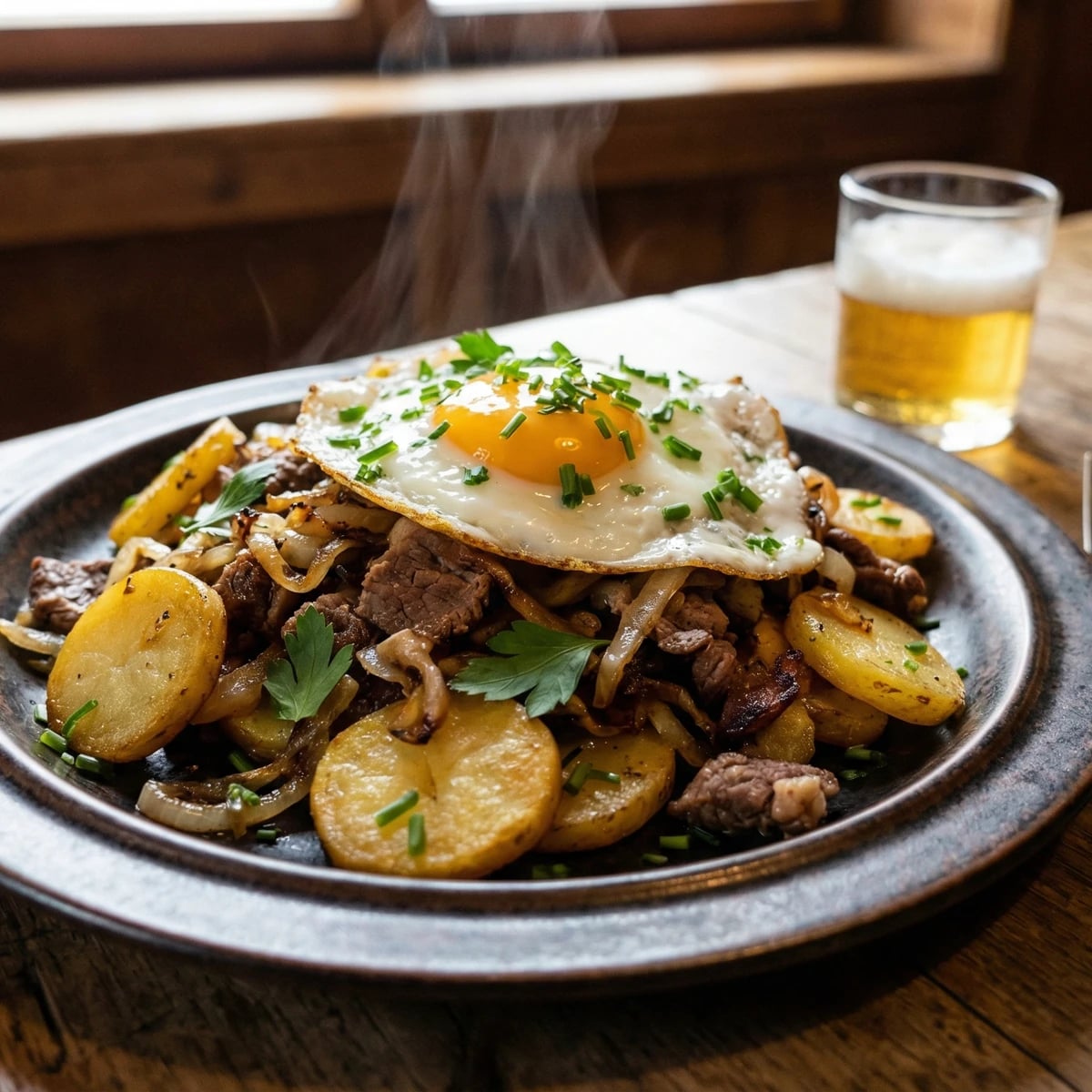
Tyrol's crispy pan-fried hash of yesterday's potatoes, leftover roast beef, and golden onions with caraway and paprika, crowned with a runny fried egg that becomes the only sauce it needs.

Main Dishes
Austrian
Weeknight
Comfort Food
Quick Meal
15 min
Active Time
25 min cook40 min total
Yield4 servings

On our childhood trips to Austria, Gretel and my grandmother Eva would take me through the Tyrolean Alps on the way to Salzburg. We'd stop at a Gasthaus somewhere between Innsbruck and the Salzkammergut, the kind of place with dark wood paneling, checked curtains, and a menu chalked on a board by the door. Gretel would order the Gröstl every time. She'd cut into the fried egg and let the yolk run across the potatoes and beef, and she'd tell me this was the smartest dish in all of Austria. Nothing wasted. Everything transformed.

Tiroler Gröstl is leftovers made glorious. It was born in farmhouse kitchens where yesterday's boiled beef and last night's potatoes were sliced, fried in butter or lard with plenty of onions, and served with an egg on top. That's the whole recipe. No sauce, no elaborate preparation, no technique that requires training. Just a hot pan, good fat, and the patience to let things get properly crisp before you touch them.

The trick is restraint. You fry the potatoes first, separately, and you leave them alone long enough to build a golden crust. Then the onions go soft and sweet with caraway and paprika. Then everything comes together in the pan for a final few minutes of heat. The egg on top is not optional. When the yolk breaks, it becomes a rich, silky dressing that ties the whole plate together. This is mountain food at its most honest, and it's one of the best things you can make on a weeknight with what's already in your kitchen.

Gröstl comes from the Tyrolean verb 'rösten,' meaning to roast or fry, and the dish has been a staple of Tyrolean farmhouse cooking for centuries, originally devised to make the most of leftover Sonntagsbraten (Sunday roast). In Tyrol, it's considered the regional Nationalgericht and every Alm (mountain hut) and Gasthaus has its own version. The debate over whether to use beef or pork (or a mix of both) is the kind of friendly argument that can occupy an entire table at a Tyrolean Wirtshaus for an hour.

The technique, the tradition, and the story behind every dish.

Discover Culinary Explorer

Ingredients

waxy potatoes

Quantity

500g

boiled in their skins the day before

leftover roast beef or boiled beef

Quantity

300g

sliced or torn into bite-sized pieces

onions

Quantity

2 medium

halved and sliced into half-moons

clarified butter or lard (Schmalz)

Quantity

3 tablespoons

unsalted butter

Quantity

1 tablespoon

salt

Quantity

to taste

black pepper

Quantity

freshly ground, to taste

caraway seeds (Kümmel)

Quantity

1/2 teaspoon

lightly crushed

sweet Hungarian paprika

Quantity

1 teaspoon

fresh flat-leaf parsley

Quantity

small handful

roughly chopped

eggs

Quantity

4 large

fresh chives

Quantity

for finishing

finely cut

Equipment Needed

  • Large heavy-bottomed skillet or cast-iron pan (28-30cm)
  • Small frying pan for eggs
  • Wide spatula

Instructions

  1. 1

    Prepare the potatoes and beef

    Peel the cold boiled potatoes and slice them about half a centimeter thick. Don't worry if some slices break or crumble at the edges. Those rough bits are the ones that turn the crispiest. Slice or tear your leftover beef into bite-sized pieces, roughly the same size as the potato slices. Tearing gives you ragged edges that catch the heat and get properly crisp. If you're using Tafelspitz, it pulls apart beautifully along the grain.

    The potatoes must be cold. Boil them the night before and refrigerate them. Warm potatoes stick to the pan and fall apart. Cold potatoes hold their shape and fry properly. This is not a shortcut you can skip.
  2. 2

    Fry the potatoes

    Heat two tablespoons of the clarified butter in a large, heavy pan over medium-high heat. When the fat shimmers, add the potato slices in a single layer. Let them sit. This is where most people go wrong. They start pushing the potatoes around the pan the moment they go in, and nothing ever gets a chance to form a crust. Leave them alone for three to four minutes until the underside turns deep golden. Then flip and do the same on the other side. Work in batches if your pan isn't big enough. Crowding the pan means the potatoes steam instead of fry, and you'll end up with something pale and soft instead of crisp and golden. Transfer the fried potatoes to a plate when done.

  3. 3

    Cook the onions and beef

    Add the remaining tablespoon of clarified butter to the same pan. Lower the heat to medium. Add the sliced onions and cook them slowly, stirring now and then, until they soften and turn golden brown. This takes about eight minutes. Don't rush them. Burnt onions are bitter and they'll ruin the whole dish. When the onions are golden, add the crushed caraway seeds and the paprika. Stir for thirty seconds until the spices bloom and the kitchen fills with that warm, earthy smell. Add the beef pieces and toss everything together, letting the meat heat through and pick up the spiced onion flavor. Two minutes is enough. You're warming leftover meat, not cooking it again.

  4. 4

    Combine and finish the Gröstl

    Return the fried potatoes to the pan. Toss everything together with the onions and beef, season generously with salt and pepper, and let it all cook together for another two minutes. Press it down gently with a spatula and leave it. You want a golden crust to form on the bottom where the potatoes and meat meet the hot pan. Fold the chopped parsley through at the end. Taste and adjust the salt. Mountain food can handle plenty of seasoning.

    Gretel always said the last minute in the pan is what makes Gröstl worth eating. That final crust, where the potatoes and onions and meat all press together against the hot metal, is where the flavor lives.
  5. 5

    Fry the eggs

    In a separate small pan, melt the tablespoon of butter over medium heat. Crack the eggs in and fry them until the whites set but the yolks stay runny. If you like, spoon a little of the hot butter over the tops to set a thin film over the yolks. They should wobble when you move the pan. A Tyrolean Gröstl without a runny egg on top is a missed opportunity. The yolk breaks across the hot hash and becomes the sauce.

  6. 6

    Plate and serve

    Divide the Gröstl among warm plates, spooning it out in generous mounds. Set a fried egg on top of each. Scatter the chives over the egg. Bring it to the table immediately, while the egg yolk is still trembling and the hash is crackling. Mahlzeit!

Chef Tips

  • Use waxy potatoes, not floury ones. In Austria, we'd use Kipfler or a similar speckig (firm) variety. Waxy potatoes hold their shape in the pan. Floury potatoes crumble into mash the moment you try to fry them, and then you've made a completely different dish.
  • Leftover Tafelspitz is the best meat for this. If you made Tafelspitz earlier in the week, this is what the leftover beef was always meant to become. Roast pork or a mix of beef and pork works just as well. What doesn't work is raw meat. Gröstl is a leftover dish. The meat should already be cooked and full of flavor.
  • Schmalz (rendered lard) is the traditional fat and it gives the best crust. Clarified butter is what I use at the restaurant and it's excellent. Regular butter burns too easily at the heat you need for proper frying. Don't use olive oil. It's the wrong flavor for this dish entirely.
  • If you want to serve this for dinner but don't have leftover beef, roast or simmer a piece of chuck the night before. Let it cool in its own juices. The next evening, you're twenty-five minutes away from Gröstl.

Advance Preparation

  • Boil the potatoes the night before and refrigerate them whole in their skins. Cold potatoes fry better than warm ones. This is the one step you cannot skip or rush.
  • The meat can be any leftover roast or boiled beef from earlier in the week. Tafelspitz kept in its broth will stay moist for three days in the fridge.
  • You can slice the potatoes and meat ahead and keep them covered in the fridge for a few hours, but the actual frying must happen just before serving. Gröstl doesn't wait.

Frequently Asked Questions

Nutrition Information

1 serving (about 280g)

Calories
455 calories
Total Fat
23 g
Saturated Fat
12 g
Trans Fat
0 g
Unsaturated Fat
11 g
Cholesterol
270 mg
Sodium
700 mg
Total Carbohydrates
33 g
Dietary Fiber
4 g
Sugars
4 g
Protein
29 g

Note: Chef personas and recipes are created with AI assistance. Cook with care: follow safe food-handling practices, check doneness with a thermometer when needed, and adapt for allergies and your kitchen.

Where cooking meets culture.

Culinary guides, cultural storytelling, and the editorial depth that makes cooking meaningful.

Discover Culinary Explorer

More from Austrian Meat & Fish Mains

Browse the full collection