
Chef Elsa
Bröselnudeln
Broad egg noodles tossed in golden butter-toasted breadcrumbs until every strand is coated and crackling. Four ingredients, fifteen minutes, and a dish that has kept Austrian families fed and happy for centuries.
A cooking platform built around craft, culture, and the stories behind what we eat.
Created by
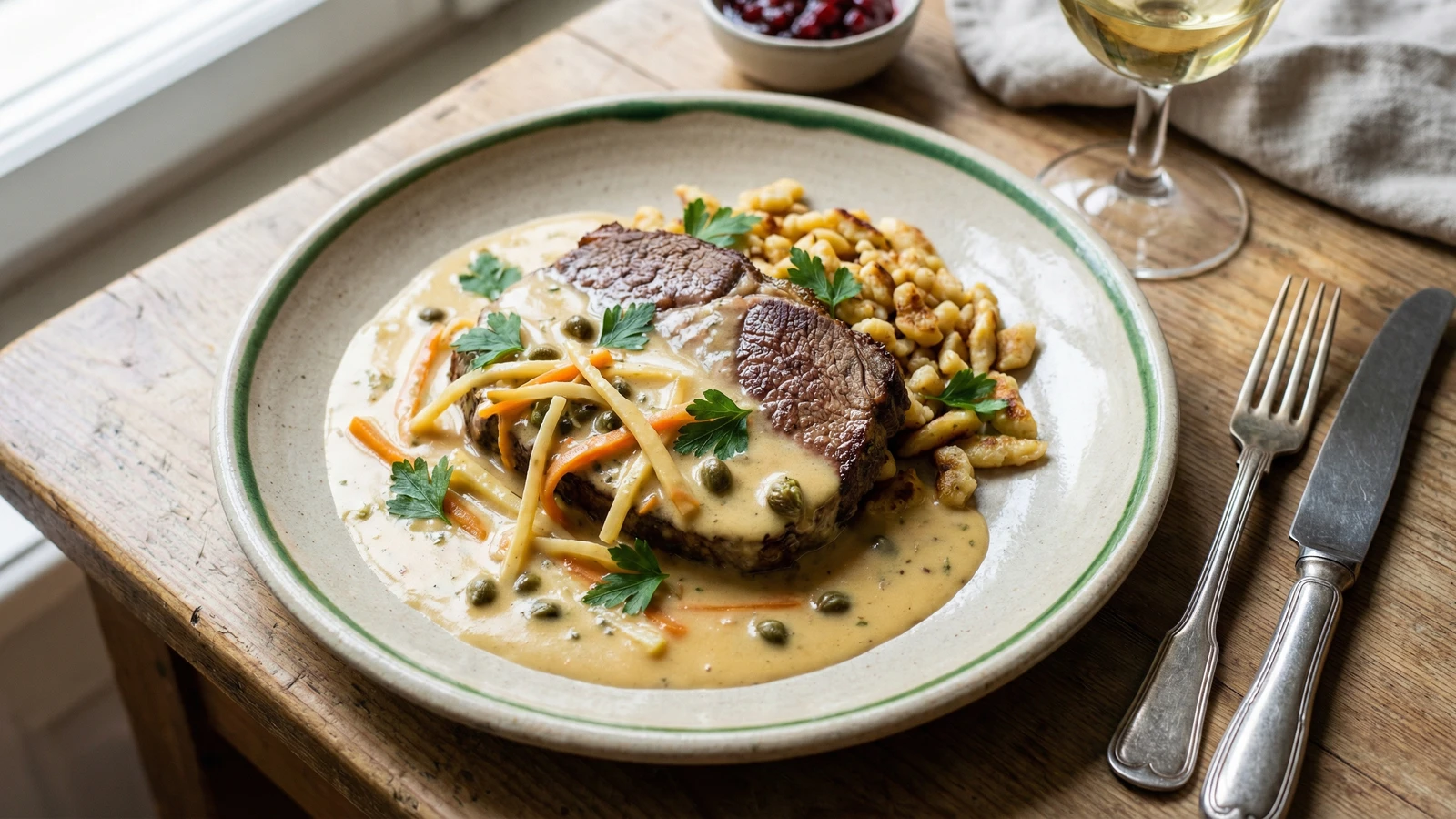
Braised beef steaks in a velvety sauce of julienned root vegetables, capers, mustard, and sour cream, the kind of dish that made the Esterházy name famous in kitchens long after it faded from politics.
Esterházy Rostbraten is the dish I cook when I want to remind someone that Austrian cuisine is not all Schnitzel and Strudel. It's a braise, but not the kind where you throw everything in a pot and forget about it. You sear beef steaks until they're deeply brown, then build a sauce around them from julienned root vegetables, capers, a good spoonful of mustard, and sour cream that pulls everything together into something rich and golden. The vegetables cook down into the sauce but keep their shape, thin little ribbons of carrot and celeriac and parsnip running through every spoonful.
Gretel always said this was a dish that showed you the Habsburg empire on a plate. Hungarian name, Viennese technique, root vegetables from every corner of the old empire. She made it for special occasions in my grandmother Eva's kitchen in Kent, and the whole house would smell of braising beef and sweet paprika for hours. I remember watching her cut the vegetables into perfect julienne, thin as matchsticks, and thinking it looked impossible. She handed me a knife and a carrot and said, 'You'll learn by doing it badly first.' I did. Many times.
The secret is patience with the sauce. You build it in layers. The fond from the seared beef, the sweetness from the slow-cooked vegetables, the sharpness from the capers and mustard, and then the sour cream at the end, stirred in off the heat so it doesn't split. When it's right, the sauce coats the back of a spoon with a pale golden cream that tastes like it took far more work than it actually did. Serve it with Butterspätzle or bread dumplings and let your guests think you've been cooking all day. You haven't. But there's no reason to tell them that.
The Esterházy family was one of the wealthiest and most influential noble houses in the Habsburg Empire, with estates stretching across Hungary and Austria. Their name became attached to several dishes in 19th-century Viennese cuisine, including both this Rostbraten and the layered Esterházy Torte. The dish reflects the Hungarian-Austrian culinary exchange that defined imperial cooking: Hungarian paprika, Viennese braising technique, and the root vegetables of the Alpine foothills, combined in a recipe that belongs fully to neither tradition and entirely to both.
Quantity
4, about 200g each
cut 2cm thick
Quantity
to taste
Quantity
2 tablespoons
Quantity
2 medium
finely diced
Quantity
2 medium
peeled and cut into fine julienne
Quantity
1
peeled and cut into fine julienne
Quantity
1/4
peeled and cut into fine julienne
Quantity
1 tablespoon
Quantity
1 tablespoon
Quantity
150ml
Quantity
500ml
Quantity
2
Quantity
5
Quantity
3
Quantity
1 strip
Quantity
1 tablespoon
Quantity
2 tablespoons
drained
Quantity
150ml
Quantity
1 teaspoon
Quantity
for garnish
finely chopped
| Ingredient | Quantity |
|---|---|
| beef steaks (rump or sirloin)cut 2cm thick | 4, about 200g each |
| salt and black pepper | to taste |
| clarified butter or neutral oil | 2 tablespoons |
| onionsfinely diced | 2 medium |
| carrotspeeled and cut into fine julienne | 2 medium |
| parsnippeeled and cut into fine julienne | 1 |
| celeriacpeeled and cut into fine julienne | 1/4 |
| sweet Hungarian paprika | 1 tablespoon |
| plain flour | 1 tablespoon |
| dry white wine | 150ml |
| beef stock | 500ml |
| bay leaves | 2 |
| whole black peppercorns | 5 |
| allspice berries | 3 |
| lemon zest | 1 strip |
| sharp mustard (Dijon or Kremser Senf) | 1 tablespoon |
| capersdrained | 2 tablespoons |
| sour cream (Sauerrahm) | 150ml |
| lemon juice | 1 teaspoon |
| fresh flat-leaf parsleyfinely chopped | for garnish |
Pat the steaks dry with kitchen paper. This matters. Wet meat doesn't brown, it steams, and browning is where half the flavor in this dish comes from. Season generously with salt and pepper on both sides. Heat the clarified butter in a heavy braising pan or Dutch oven over high heat until it shimmers. Sear the steaks for two to three minutes per side, until you get a deep mahogany crust. Don't crowd the pan. If your pan isn't big enough, work in batches. Set the browned steaks on a plate and save every drop of juice that collects.
Lower the heat to medium. Add the diced onions to the same pan with all those brown bits stuck to the bottom. Stir and cook for five minutes until the onions turn soft and translucent. Now add the julienned carrots, parsnip, and celeriac. Cook for another five minutes, stirring occasionally. The vegetables should soften slightly but hold their shape. You want to see those thin ribbons in the finished sauce. They're not just flavoring, they're part of the texture.
Sprinkle the paprika and flour over the vegetables and stir for one minute. The flour will thicken the sauce later, and cooking it now removes the raw, pasty taste. Pour in the white wine and scrape the bottom of the pan to lift all those caramelized bits. Let the wine bubble and reduce by half, about two minutes. Add the beef stock, bay leaves, peppercorns, allspice berries, and the strip of lemon zest. Stir once and bring to a gentle simmer.
Nestle the seared steaks back into the sauce along with any juices from the plate. The liquid should come about two-thirds up the sides of the meat. If it doesn't, add a splash more stock. Cover the pan with a tight-fitting lid and reduce the heat until you see the barest, laziest simmer. Cook for one and a half hours. Check once or twice: if the surface is bubbling actively, your heat is too high. You want the liquid to tremble, not roll. The beef is done when it yields easily to a fork but still holds its shape.
Lift the steaks out carefully and set them on a warm plate covered loosely with foil. Fish out the bay leaves, lemon zest, peppercorns, and allspice berries. Stir the mustard and capers into the sauce. Let it simmer for two minutes. Now take the pan off the heat. This is important: sour cream splits if it hits boiling liquid and you'll end up with a curdled, grainy mess instead of a smooth, velvety sauce. Off the heat, stir in the sour cream until the sauce turns a pale golden cream. Add the lemon juice and taste. Adjust salt if needed. The sauce should be tangy, a little sharp from the mustard and capers, rich from the cream, with the sweetness of those braised root vegetables running through everything.
Return the steaks to the sauce just long enough to warm through, about one minute. Place each steak on a warm plate, spoon the sauce generously over and around it, making sure each serving gets plenty of the julienned vegetables and capers. Scatter fresh parsley on top. Serve with Butterspätzle, Semmelknödel (bread dumplings), or buttered egg noodles. A good Rostbraten is not shy about its sauce, so give people enough to soak into whatever you put beside it. Mahlzeit!
1 serving (about 370g)
Culinary guides, cultural storytelling, and the editorial depth that makes cooking meaningful.
Discover Culinary ExplorerChef Elsa
Broad egg noodles tossed in golden butter-toasted breadcrumbs until every strand is coated and crackling. Four ingredients, fifteen minutes, and a dish that has kept Austrian families fed and happy for centuries.

Chef Elsa
Vienna's weeknight answer to everything: soft flour Nockerl fried golden in butter, scrambled through with eggs and buried under fresh chives. A sharp green salad on the side because the Viennese know that richness needs a counterpoint.

Chef Elsa
Soft Austrian potato dumplings in browned butter with warm, caraway-scented sauerkraut. A meatless Gasthaus meal that's been filling up Alpine kitchens for centuries.

Chef Elsa
Tyrolean meatless bread dumplings stuffed with handfuls of fresh herbs and soft onions, poached until they float, and served in broth or with brown butter and a sharp green salad.