
Chef Dimitra
Anginares a la Polita, Constantinople Artichokes (Αγκινάρες αλά Πολίτα)
Constantinople's spring artichokes, pale and lemony, braised with potato, carrot, peas, dill, and enough olive oil to make the sauce shine.
A cooking platform built around craft, culture, and the stories behind what we eat.
Created by
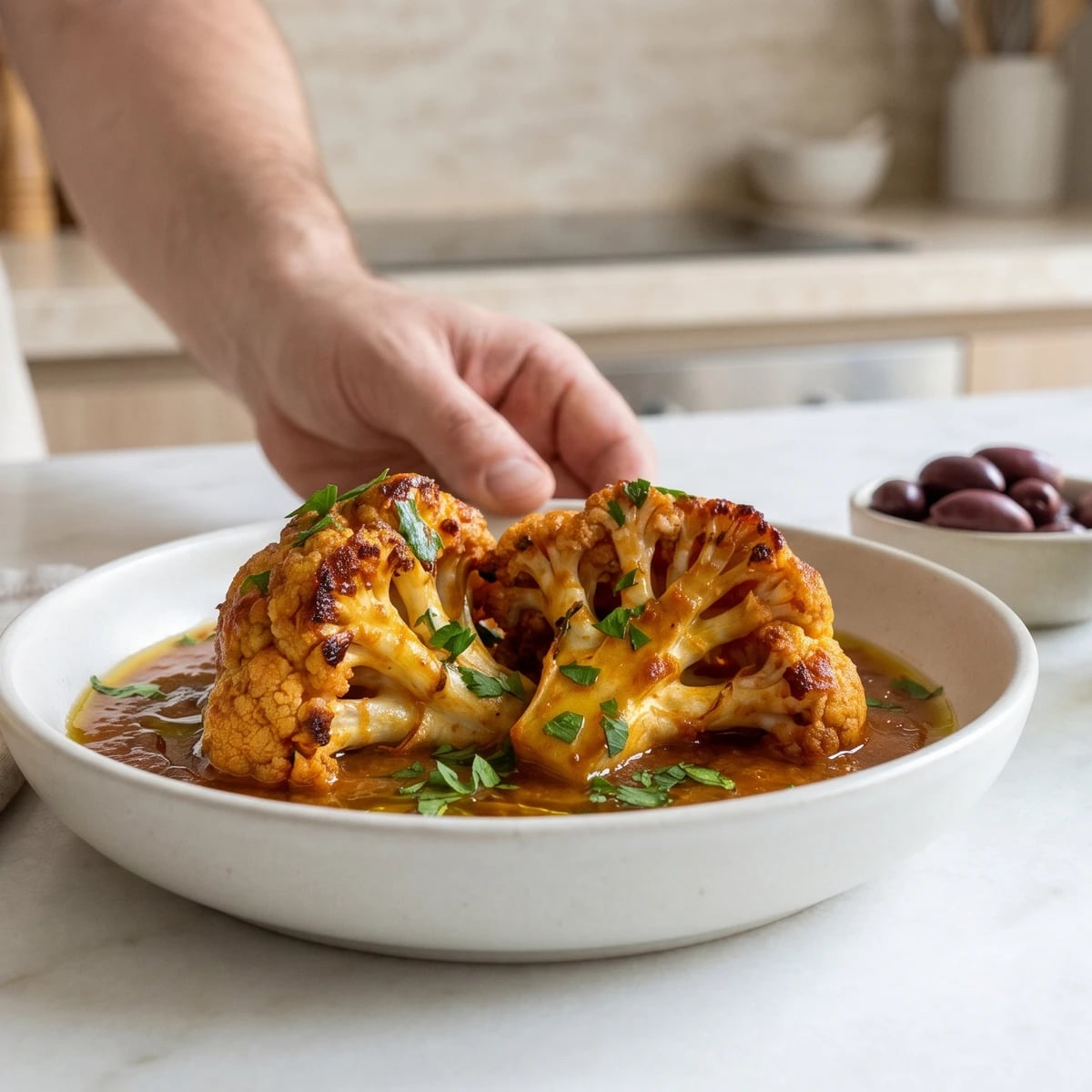
A Thessaloniki winter ladero: cauliflower browned in olive oil, then tucked into tomato with cinnamon until the florets stay tender, saucy, and intact.
Thessaloniki kounoupidi kapama is cauliflower stewed in olive oil and tomato, warmed with cinnamon in the northern and Politiki way. It is a winter ladero, meatless but not thin, with sauce thick enough to drag bread through and florets that stay whole on the plate.
The one thing you must not skip is the first browning. Raw cauliflower dropped straight into tomato gives up water, softens too quickly, and turns timid. Brown it first in olive oil, then let it finish under the lid with tomato, onion, and cinnamon. The edges hold, the sauce clings, and the vegetable tastes like itself.
This is fasting food when the calendar calls for it, and ordinary comfort when it doesn't. In my Thessaloniki notebook I keep this one plain: no potatoes to stretch it, no cheese to dress it up, no cleverness. I don't invent it. I find it, I test it, I write it down.
Kapama comes from the Turkish word for a covered cooking method, and in Greek kitchens it became the name for dishes slowly cooked under a lid with oil, tomato, and warm spices. In Thessaloniki and other northern cities shaped by refugees from Constantinople and Asia Minor after 1922, cinnamon and allspice entered vegetable pots as naturally as they did meat braises. Cauliflower kapama belongs to the winter ladera and to the Orthodox fasting table, where olive oil carries depth without meat or dairy.
Quantity
1 large, about 900g
cut into large florets
Quantity
90ml
Quantity
1 large, about 180g
finely chopped
Quantity
2
thinly sliced
Quantity
400g
grated, or use 400g canned crushed tomatoes
Quantity
30g
Quantity
1
Quantity
1
Quantity
1/2 teaspoon
Quantity
1 teaspoon
plus more to taste
Quantity
1/2 teaspoon
Quantity
180ml
Quantity
15ml
Quantity
2 tablespoons
chopped, for finishing
Quantity
as needed
for serving
| Ingredient | Quantity |
|---|---|
| cauliflower (kounoupidi)cut into large florets | 1 large, about 900g |
| extra virgin Koroneiki olive oil | 90ml |
| yellow onionfinely chopped | 1 large, about 180g |
| garlic clovesthinly sliced | 2 |
| ripe tomatoesgrated, or use 400g canned crushed tomatoes | 400g |
| tomato paste | 30g |
| cinnamon stick | 1 |
| bay leaf | 1 |
| ground allspice | 1/2 teaspoon |
| fine sea saltplus more to taste | 1 teaspoon |
| freshly ground black pepper | 1/2 teaspoon |
| hot water | 180ml |
| red wine vinegar | 15ml |
| flat-leaf parsleychopped, for finishing | 2 tablespoons |
| country bread (optional)for serving | as needed |
Trim the cauliflower and cut it into large florets, not little crumbs. Keep the pieces close in size so they cook together. Rinse them, drain well, and pat dry, because wet cauliflower spits in the oil and browns poorly.
Warm 60ml of the olive oil in a wide, heavy pot over medium-high heat. Add the cauliflower in one layer, working in two batches if needed, and brown it on two or three sides, about 6 to 8 minutes per batch. This is the step that decides the dish: browning firms the outside and gives the florets flavor, so they stew in the tomato without collapsing into mash.
Lift the browned cauliflower to a plate. Lower the heat to medium and add the remaining 30ml olive oil, the onion, and a pinch of the measured salt. Cook for 8 minutes, stirring often, until the onion is soft and pale gold. Add the garlic and cook for 1 minute, just until it smells sweet.
Stir in the tomato paste and let it darken for 1 minute. Add the grated tomato, cinnamon stick, bay leaf, allspice, salt, pepper, and hot water. Bring to a steady simmer and cook uncovered for 8 minutes, until the sauce thickens slightly and the cinnamon warms the tomato without taking over.
Nestle the cauliflower back into the pot, stem sides down where you can. Spoon sauce over the top, cover, and simmer gently for 20 to 25 minutes. Shake the pot now and then instead of stirring hard. The florets should be tender when pierced with a knife, but still holding their shape.
Uncover the pot and simmer for 5 to 8 minutes more if the sauce looks thin. Pull out the cinnamon stick and bay leaf. Stir in the vinegar, taste for salt, and let the kapama rest off the heat for 10 minutes. Finish with parsley and a small thread of olive oil if the pot looks thirsty.
Serve warm or at room temperature, with country bread for the sauce. Like most ladera, olive-oil dishes, it tastes even better after it sits a little. That is not a trick. That is Tuesday dinner in a Greek kitchen.
1 serving (about 370g)
Culinary guides, cultural storytelling, and the editorial depth that makes cooking meaningful.
Discover Culinary Explorer
Chef Dimitra
Constantinople's spring artichokes, pale and lemony, braised with potato, carrot, peas, dill, and enough olive oil to make the sauce shine.

Chef Dimitra
Attica gemista orfana are the summer tray of tomatoes and green peppers, rice loose with mint, dill, and parsley, baked with potatoes until the vegetables slump and sweeten.

Chef Dimitra
Peloponnesian bamies laderes are high-summer okra in tomato and olive oil, a nistisimo pot that depends on one small mercy: vinegar before the braise.

Chef Dimitra
Cycladic briam is the summer tray of zucchini, potato, eggplant, tomato, and good olive oil, sliced thin and baked until the vegetables surrender into one sweet, red-gold pan.