
Chef Dimitra
Aegean Island Chtapodi me Kritharaki (Χταπόδι με Κριθαράκι)
Aegean island octopus, tomato, red wine, and toasted kritharaki share one pot, so the pasta drinks the briny sauce and stays glossy instead of turning heavy.
A cooking platform built around craft, culture, and the stories behind what we eat.
Created by
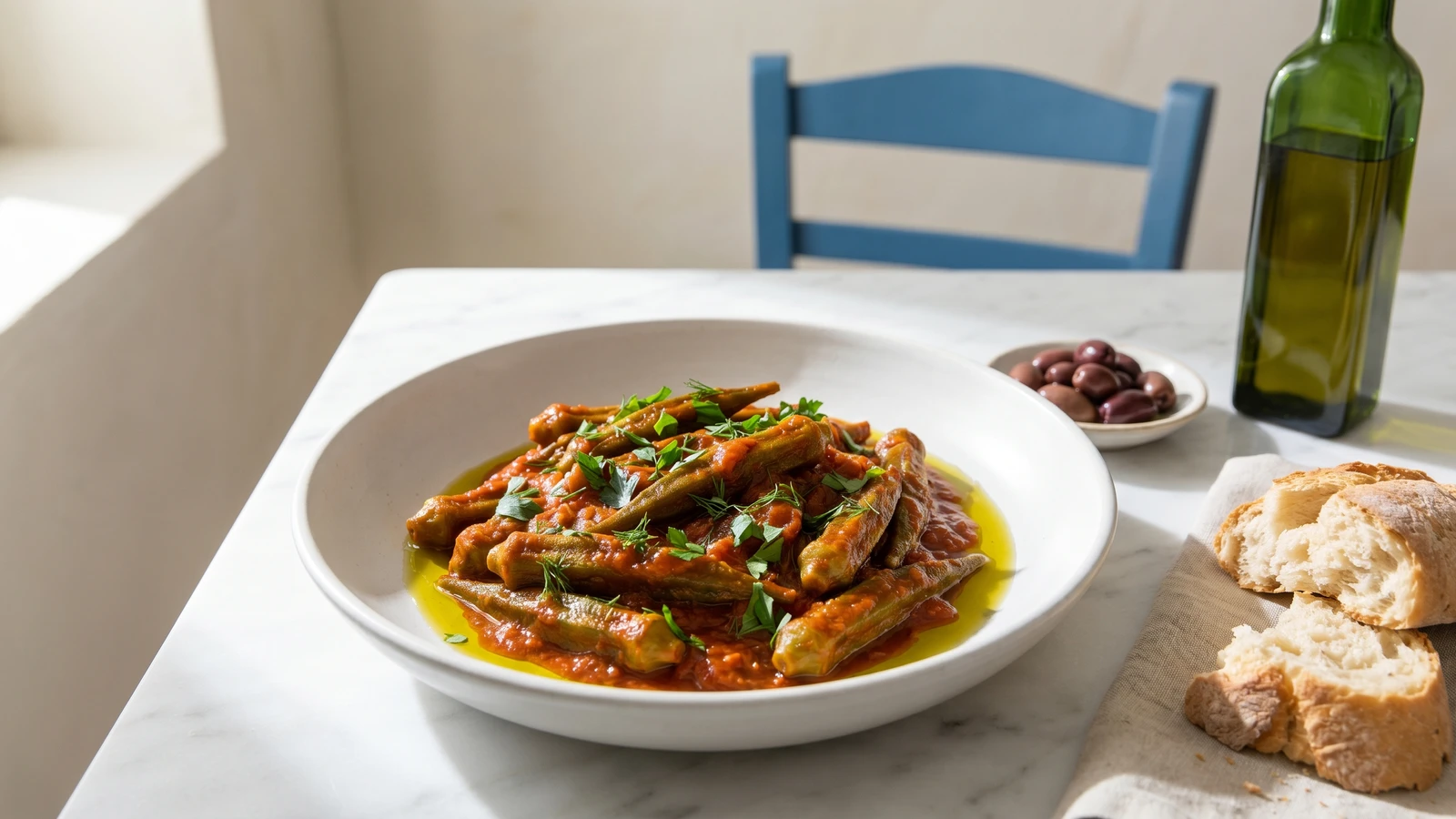
Peloponnesian bamies laderes are high-summer okra in tomato and olive oil, a nistisimo pot that depends on one small mercy: vinegar before the braise.
Peloponnesian bamies laderes are okra cooked the ladero way: slowly, in tomato and olive oil, until the pods are tender and the sauce turns glossy enough to drag bread through. This is high-summer food from the warm south, when okra is small, tomatoes are heavy, and a pot like this can feed a table without meat and without apology.
The whole dish depends on how you treat the okra before it meets the pot. Trim the caps without cutting into the pods, then leave them with vinegar and salt for half an hour. That small sour bath keeps them whole and clean in the braise. Skip it and you may still have dinner, but it won't be bamies as a Greek kitchen means them.
Serve them warm or at room temperature, never rushed straight from the flame. Add bread, olives, and feta if you aren't keeping the fast. For a nistisimo table, the okra needs nothing more than good olive oil and patience.
Okra entered Greek regional cooking through the eastern routes of the Ottoman period and took firm root in the warmer parts of the country, especially the Peloponnese, Crete, and the islands. Bamies laderes belong to the broad Greek family of ladera, vegetables braised generously in olive oil, a style tied closely to the Orthodox fasting calendar. The vinegar treatment is an old household method, used before refrigeration and before imported okra became common, to keep tender summer pods intact in the tomato pot.
Quantity
700g
stems trimmed into cones, pods left whole
Quantity
45ml
for soaking
Quantity
1 teaspoon
for soaking
Quantity
100ml
Quantity
1 large, 180g
finely sliced
Quantity
3
thinly sliced
Quantity
500g
grated
Quantity
1 tablespoon
Quantity
150ml
Quantity
1 teaspoon
Quantity
1 teaspoon
plus more to taste
Quantity
1/2 teaspoon
Quantity
2 tablespoons
chopped
Quantity
1 tablespoon
chopped
Quantity
1 tablespoon
to finish
| Ingredient | Quantity |
|---|---|
| fresh small okra (bamies)stems trimmed into cones, pods left whole | 700g |
| red wine vinegarfor soaking | 45ml |
| fine sea saltfor soaking | 1 teaspoon |
| extra virgin Koroneiki olive oil | 100ml |
| yellow onionfinely sliced | 1 large, 180g |
| garlic clovesthinly sliced | 3 |
| ripe summer tomatoesgrated | 500g |
| tomato paste | 1 tablespoon |
| water | 150ml |
| sugar (optional) | 1 teaspoon |
| fine sea saltplus more to taste | 1 teaspoon |
| freshly ground black pepper | 1/2 teaspoon |
| flat-leaf parsleychopped | 2 tablespoons |
| dillchopped | 1 tablespoon |
| red wine vinegar or lemon juiceto finish | 1 tablespoon |
Trim the stem end of each okra pod like a little pencil point, shaving around the cap without cutting into the seed chamber. Keep the pods whole. If you open them, they bleed their mucilage into the sauce, and then you fight the pot instead of cooking dinner.
Put the okra in a wide tray. Sprinkle with 1 teaspoon salt and 45ml vinegar, toss gently, and leave it in strong light or on the counter for 25 to 30 minutes. This is the method that decides bamies. The vinegar firms the outside just enough that the pods stay intact in the tomato instead of turning slippery.
Warm the olive oil in a wide, heavy pot over medium heat. Add the onion and cook for 8 minutes, until soft and sweet but not browned. Add the garlic for 1 minute, then stir in the tomato paste until it stains the oil red.
Add the grated tomatoes, water, salt, pepper, and sugar if your tomatoes need it. Let the sauce bubble for 5 minutes so the raw edge of the tomato passes. It should look loose and glossy, because the okra will braise in it, not fry.
Add the okra and shake the pot to settle it into the sauce. Don't stir hard. Cover and simmer on low for 30 to 35 minutes, shaking the pot now and then, until the pods are tender and the sauce has thickened around them.
Uncover the pot for the last 5 to 10 minutes if the sauce is watery. Scatter in the parsley and dill, then finish with 1 tablespoon vinegar or lemon juice. Let the bamies rest for at least 15 minutes before serving. Ladera taste better once the oil and tomato have settled into each other.
1 serving (about 340g)
Culinary guides, cultural storytelling, and the editorial depth that makes cooking meaningful.
Discover Culinary ExplorerChef Dimitra
Aegean island octopus, tomato, red wine, and toasted kritharaki share one pot, so the pasta drinks the briny sauce and stays glossy instead of turning heavy.

Chef Dimitra
Aegean coast psari plaki is the quiet whole-fish bake: onions and tomato softened first, fish laid on top, and olive oil doing its slow work until the bones release cleanly.

Chef Dimitra
Astakomakaronada is the Aegean islands' celebration pasta: spiny lobster, tomato, olive oil, and long noodles cooked in the shell broth, never drowned in cream or cheese.

Chef Dimitra
Aegean Easter goat on the spit, lean and full-flavored, turned slowly over charcoal and basted with lemon, oregano, garlic, and good olive oil.