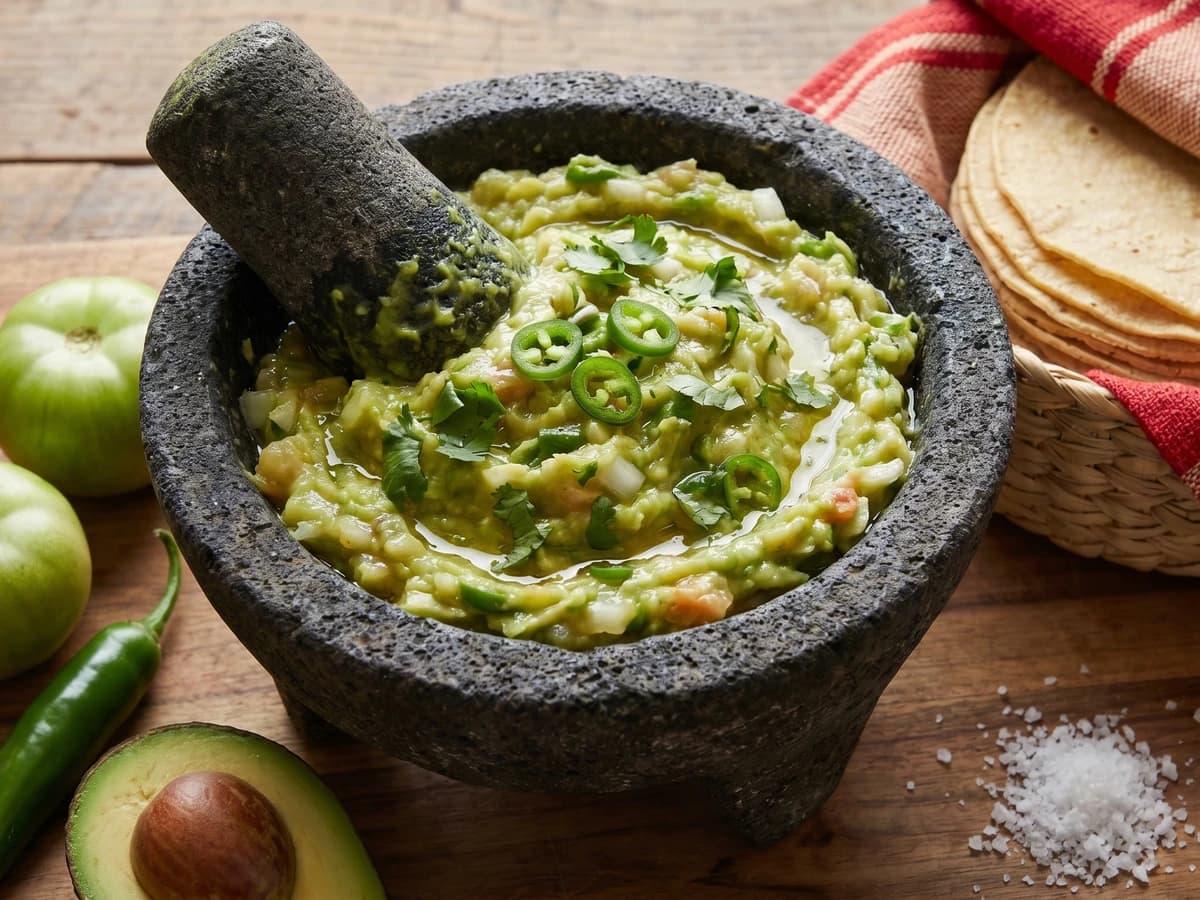
Jalisco's cenaduria tacos, rolled tight with potato or beans, fried until crisp in manteca, then drowned in tomato salsa sharpened with chile de arbol.
Appetizers & Snacks
Mexican
Game Day
Budget Friendly
Potluck
35 min
Active Time
45 min cook•1 hr 20 min total
Yield18 tacos, 6 servings
Jalisco, Guadalajara, the evening cenadurias. That is where these tacos live. Not in a restaurant pretending to be a market, but at a metal table with a clay bowl of salsa, a basket of tortillas, and a woman behind the counter who has rolled two hundred tacos before you arrived.
Tacos dorados ahogados are not flautas with sauce. The tortilla is small, the filling is modest, the frying is hard and crisp, and then the whole thing is drowned until the salsa softens the edges while the center still cracks under your teeth. That balance is the dish. The salsa is tomato and chile de arbol, not a sweet bottled sauce, not ketchup, not chile powder. The arbol gives it the bite that Guadalajarans expect.
My mother made the potato version when money was tight. She was from Jalisco, so she knew how far a kilo of tortillas and three potatoes could go. She wrote in her notebook: 'la salsa manda' (the salsa commands). She was right. If the salsa is thin, the taco tastes poor. If the taco is fried weakly, the salsa kills it. La cocina no es decoracion, es trabajo.
Serve them in a wide barro plate, flooded with salsa, cabbage and onion on top, queso Cotija if the table has it. Cada estado, su propia cocina. This is Jalisco's botana, sharp, practical, and built to feed people without ceremony.
Tacos dorados ahogados belong to the cenaduria tradition of Guadalajara, where evening kitchens built inexpensive suppers from corn tortillas, beans, potatoes, salsas, and fried masa antojitos. The ahogado technique became strongly associated with Jalisco through tortas ahogadas in the early 20th century, but rolled fried tacos drowned in tomato and chile de arbol salsa developed as a cheaper, faster companion on cenaduria menus. Chile de arbol is central to the flavor of Jalisco's table salsas, especially in Guadalajara and the Los Altos region, where its clean heat cuts through fried food.
The technique, the tradition, and the story behind every dish.
cooked flor de mayo beans or pinto beans (optional)
Quantity
1 1/2 cups
drained, for bean filling option
bean broth or water (optional)
Quantity
3 tablespoons
for bean filling option
ripe Roma tomatoes
Quantity
2 pounds
dried chile de arbol
Quantity
12
stemmed
dried chile guajillo
Quantity
2
stemmed and seeded
garlic cloves
Quantity
2
unpeeled
white onion
Quantity
1/4 medium
apple cider vinegar
Quantity
1 tablespoon
kosher salt
Quantity
1 teaspoon, plus more to taste
light chicken broth or water
Quantity
2 cups
manteca de cerdo
Quantity
2 cups, or enough to come 1 inch up the pan
for frying
green cabbage
Quantity
2 cups
finely shredded
white onion
Quantity
1/2 cup
finely diced
queso Cotija or queso anejo (optional)
Quantity
1/2 cup
crumbled
lime halves (optional)
Quantity
for serving
Ingredient
Quantity
small corn tortillaspreferably from a tortilleria, kept warm
18
white potatoespeeled and cut into chunks
3 medium
kosher salt
1/2 teaspoon, plus more to taste
manteca de cerdofor the potato filling
2 tablespoons
white onionfinely chopped
1/4 small
garlic cloveminced
1
dried Mexican oreganocrumbled
1/2 teaspoon
cooked flor de mayo beans or pinto beans (optional)drained, for bean filling option
1 1/2 cups
bean broth or water (optional)for bean filling option
3 tablespoons
ripe Roma tomatoes
2 pounds
dried chile de arbolstemmed
12
dried chile guajillostemmed and seeded
2
garlic clovesunpeeled
2
white onion
1/4 medium
apple cider vinegar
1 tablespoon
kosher salt
1 teaspoon, plus more to taste
light chicken broth or water
2 cups
manteca de cerdofor frying
2 cups, or enough to come 1 inch up the pan
green cabbagefinely shredded
2 cups
white onionfinely diced
1/2 cup
queso Cotija or queso anejo (optional)crumbled
1/2 cup
lime halves (optional)
for serving
Equipment Needed
•Cast iron comal for tortillas, chiles, and tomatoes
•Heavy skillet for frying in manteca de cerdo
•Clay cazuela or medium saucepan for the salsa
•High-powered blender
•Wire rack set over a tray
•Wide shallow barro plates for serving
Instructions
1
Cook the potatoes
Put the potatoes in a saucepan and cover with cold water by one inch. Add the salt and simmer until the potatoes crush easily with a fork, about 18 minutes. Drain well and let them sit in the hot pan for two minutes so the extra moisture leaves. Watery potato makes a soft taco. We are not doing that.
2
Season the filling
Melt 2 tablespoons manteca de cerdo in a skillet over medium heat. Add the chopped onion and cook until soft but not brown, about 4 minutes. Add the minced garlic and oregano, then the drained potatoes. Mash directly in the skillet until rough and thick. Taste for salt. The filling should be savory enough to stand up to the salsa.
3
Prepare bean option
If you are making bean tacos instead of potato, mash the cooked flor de mayo beans or pinto beans in the same skillet with the onion, garlic, oregano, and 3 tablespoons bean broth. Cook until thick enough to hold its shape on a spoon. Beans that slide around will burst the tortilla in the fat.
4
Toast the chiles
Heat a dry comal over medium. Toast the chile de arbol for 10 to 15 seconds, just until fragrant and a shade darker. Toast the chile guajillo about 20 seconds per side until the skin softens and smells fruity. Do not blacken them. Burned arbol turns the salsa harsh, and then the whole plate suffers.
Chile de arbol is thin and fast. Keep your hand moving. If it goes black, throw it away and start with another chile. No me vengas con atajos.
5
Char the vegetables
On the same comal, roast the Roma tomatoes, unpeeled garlic cloves, and onion until the tomatoes blister and collapse in spots, about 10 to 12 minutes. Peel the garlic. The tomatoes should taste cooked and concentrated, not raw. This is how the salsa gets body without flour or tricks.
6
Blend the salsa
Put the toasted chiles, roasted tomatoes, peeled garlic, roasted onion, vinegar, salt, and 1 cup broth or water in a blender. Blend until completely smooth. Add the remaining broth or water until the salsa is pourable but not weak. It should coat a spoon in red-orange tomato and chile. Strain only if your blender leaves chile skins behind.
7
Simmer the salsa
Pour the salsa into a clay cazuela or saucepan and simmer for 10 minutes. Taste for salt and vinegar. It should be bright, fierce, and tomato-forward, with the chile de arbol arriving at the end. Keep it hot on low while you fry the tacos. A cold salsa on hot tacos is bad manners.
8
Soften the tortillas
Warm the tortillas on a comal until flexible, then wrap them in a clean cotton servilleta. Do not try to roll cold tortillas. They crack, and then you blame the recipe. The tortilla has to bend before it can hold the filling.
9
Roll the tacos
Place 1 heaping tablespoon of potato or bean filling across the lower third of each warm tortilla. Roll tightly, but do not squeeze the filling out. Set seam side down on a tray. If the tortillas are stubborn, pin each taco with a wooden toothpick. The roll should be narrow, closer to a cenaduria taco than a large flauta.
10
Fry in lard
Melt the 2 cups manteca de cerdo in a heavy skillet over medium-high heat until a tortilla edge sizzles immediately when dipped in. Fry the tacos seam side down in batches, turning once, until golden and firm, 3 to 4 minutes per batch. La manteca es el sabor. The lard gives the tortilla a clean corn flavor and the right crisp shell.
11
Drain and hold
Move the fried tacos to a wire rack set over a tray. Do not stack them while they are fresh from the fat or they will soften before the salsa reaches them. Remove toothpicks if you used them. The tacos should sound crisp when they touch the rack.
12
Drown and serve
Arrange 3 tacos per person in a wide shallow barro plate. Ladle the hot tomato and chile de arbol salsa over them until they are properly ahogados, drowned, not politely dotted. Top with shredded cabbage, diced white onion, and queso Cotija or queso anejo if using. Serve with lime halves. Eat immediately, while the edges are softening and the centers still resist. Recetas probadas y garantizadas.
Chef Tips
•Use small corn tortillas from a tortilleria, not thick supermarket tortillas that taste like cardboard. If the tortilla is stale, pass it quickly through hot manteca before filling so it becomes flexible.
•Chile de arbol from Yahualica, Jalisco has real regional weight here. If you find it, buy it. If you use a generic arbol, the salsa will still work, but you lose that clean Jalisciense heat.
•Potato and beans are both correct cenaduria fillings. Shredded chicken appears in some stalls, but the budget version, the one that feeds a family without showing off, is papa or frijol.
•The salsa should be thin enough to flood the plate but strong enough to taste after the tortilla absorbs it. If it tastes gentle in the blender, it will taste weak on the taco.
•Do not use cheddar, sour cream, iceberg lettuce, or flour tortillas. That plate belongs somewhere else. This one belongs to Guadalajara.
Advance Preparation
•The potato or bean filling can be made one day ahead and refrigerated. Bring it to room temperature before rolling so it does not tear the tortillas.
•The salsa can be made two days ahead. Reheat it until hot and loosen with a little broth or water before drowning the tacos.
•The tacos can be rolled up to 4 hours ahead, covered with a barely damp towel, and refrigerated. Fry them just before serving. Fried tacos wait badly.
Frequently Asked Questions
Nutrition Information
1 serving (about 450g)
Calories
645 calories
Total Fat
38 g
Saturated Fat
15 g
Trans Fat
0 g
Unsaturated Fat
20 g
Cholesterol
25 mg
Sodium
1090 mg
Total Carbohydrates
66 g
Dietary Fiber
11 g
Sugars
10 g
Protein
13 g
Where cooking meets culture.
Culinary guides, cultural storytelling, and the editorial depth that makes cooking meaningful.