
Chef Remy
Bananas Foster Cheesecake
New Orleans' most famous dessert transformed into a showstopping cheesecake, with layers of buttery caramelized bananas, dark rum caramel, and a silky filling so rich it could make Brennan's jealous.
A cooking platform built around craft, culture, and the stories behind what we eat.
Created by Chef Remy
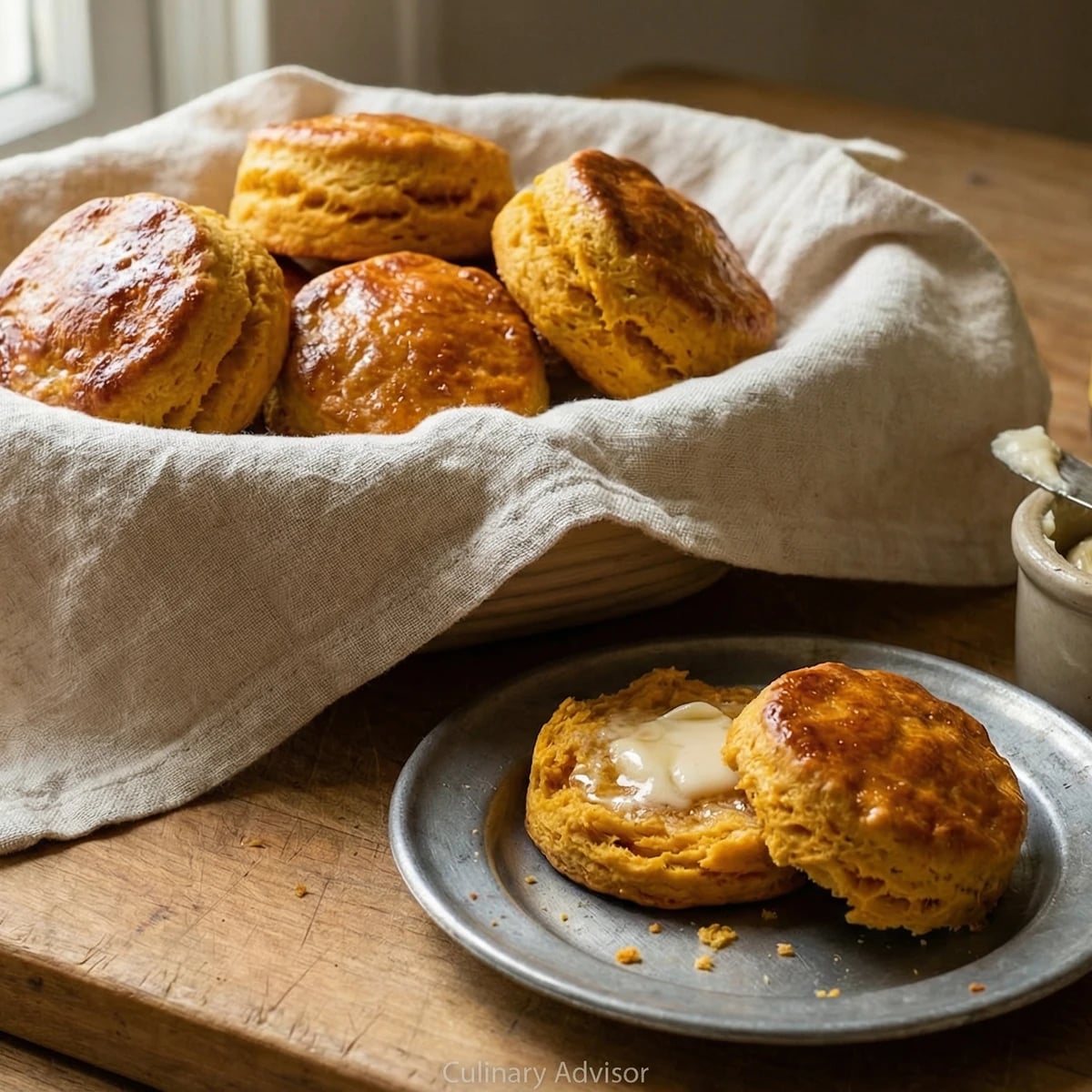
Tender, golden biscuits bursting with roasted Louisiana sweet potato, brushed with butter while hot and served with whipped cane syrup butter that melts into every flaky layer, the kind of bread that makes you reach for seconds before finishing firsts.
My grandmother Evangeline made these biscuits every Thanksgiving morning before the sun came up. The sweet potatoes came from her garden, dug the week before and cured in the shed until their sugars concentrated. She'd roast them in the wood-burning oven while she mixed the dough, and by the time the family arrived, the whole house smelled like brown butter and warm spices.
The secret to these biscuits is twofold. First, roast your sweet potato until it's almost caramelized. Boiling washes away flavor and adds water you don't want. Second, keep everything cold and work the dough as little as possible. Biscuit making rewards a light hand and punishes fussiness.
That cane syrup butter is pure Louisiana. Steen's has been pressing sugarcane in Abbeville since 1910, and nothing else tastes quite the same. It's darker than honey, less cloying than molasses, with a complexity that reminds you of roasted nuts and burnt sugar edges. Whipped into good butter with a touch of salt, it transforms an already wonderful biscuit into something you'll dream about.
At Lagniappe, we serve these biscuits at Sunday brunch, and people order them by the basket. They come out of the oven, get brushed with butter, and disappear before they've had time to cool. That's exactly as it should be.
Quantity
1 large (about 12 ounces)
Quantity
2 1/2 cups (312g), plus more for dusting
Quantity
1/4 cup (50g)
Quantity
1 tablespoon
Quantity
1/2 teaspoon
Quantity
1 teaspoon
Quantity
1/2 teaspoon
Quantity
1/4 teaspoon
Quantity
1/2 cup (1 stick/113g)
cubed
Quantity
3/4 cup
Quantity
1 teaspoon
Quantity
2 tablespoons
melted
Quantity
1 cup (2 sticks/226g)
softened
Quantity
1/3 cup
Quantity
1/4 teaspoon
Quantity
pinch
| Ingredient | Quantity |
|---|---|
| Louisiana sweet potato | 1 large (about 12 ounces) |
| all-purpose flour | 2 1/2 cups (312g), plus more for dusting |
| granulated sugar | 1/4 cup (50g) |
| baking powder | 1 tablespoon |
| baking soda | 1/2 teaspoon |
| fine sea salt | 1 teaspoon |
| ground cinnamon | 1/2 teaspoon |
| freshly grated nutmeg | 1/4 teaspoon |
| cold unsalted butter (for biscuits)cubed | 1/2 cup (1 stick/113g) |
| cold buttermilk | 3/4 cup |
| pure vanilla extract | 1 teaspoon |
| unsalted butter (for brushing)melted | 2 tablespoons |
| unsalted butter (for cane syrup butter)softened | 1 cup (2 sticks/226g) |
| pure Louisiana cane syrup | 1/3 cup |
| fine sea salt (for cane syrup butter) | 1/4 teaspoon |
| ground cinnamon (for cane syrup butter) | pinch |
Preheat your oven to 400F. Pierce the sweet potato several times with a fork and place it directly on the oven rack with a sheet pan below to catch drips. Roast until completely tender when pierced with a knife, about 45 minutes to an hour depending on size. The skin will be caramelized and pulling away from the flesh. This is what you want. Roasting concentrates the natural sugars and gives you a depth of flavor that boiling never will.
Once cool enough to handle, split the potato and scoop the flesh into a bowl. Mash it smooth with a fork, leaving no lumps. You need exactly one cup of puree. If you have extra, save it for another use (stir it into oatmeal or spread it on toast). Let the puree cool to room temperature. Warm potato will melt your butter and ruin everything.
While the potato cools, beat the softened butter in a bowl with a wooden spoon or hand mixer until fluffy and light, about two minutes. Drizzle in the cane syrup slowly, beating constantly. The mixture will look broken at first, but keep beating and it will come together into something beautiful. Add the salt and cinnamon, beat once more, then taste. Adjust sweetness if needed. Transfer to a small crock or ramekin.
Reduce oven to 425F. In a large bowl, whisk together the flour, sugar, baking powder, baking soda, salt, cinnamon, and nutmeg. Whisk thoroughly so the leavening distributes evenly. Uneven baking powder means some biscuits rise beautifully while others sit there like hockey pucks.
Add the cold cubed butter to the flour mixture. Using a pastry cutter, two forks, or your fingertips, work the butter into the flour until it resembles coarse meal with some pea-sized pieces remaining. Those butter chunks are the secret to flaky layers. They'll melt in the oven and create steam pockets. Don't overwork this. Stop when you can still see butter.
In a small bowl, whisk together the cooled sweet potato puree, cold buttermilk, and vanilla until smooth. Make a well in the center of the flour mixture and pour in the wet ingredients. Using a wooden spoon or rubber spatula, stir gently just until a shaggy dough forms. You should still see streaks of flour. Stop stirring the moment it comes together. Overworking biscuit dough is the fastest way to tough results.
Turn the dough onto a well-floured surface. With floured hands, pat it into a rough rectangle about one inch thick. Fold the dough in thirds like a business letter. Turn it ninety degrees and pat it out again. Repeat this folding process three more times. This laminating technique builds the layers that make biscuits rise tall and flaky. After the final fold, pat the dough to about one inch thickness.
Using a sharp 2 1/2-inch round cutter dipped in flour, cut biscuits by pressing straight down without twisting. Twisting seals the edges and prevents proper rise. Place biscuits on a parchment-lined baking sheet with sides touching. Biscuits that touch rise higher because they support each other. Gather scraps gently, pat out once more, and cut remaining biscuits. The second-cut biscuits won't be quite as tender, but they'll still be delicious.
Bake at 425F for 15 to 18 minutes until the tops are golden brown and the sides look set. The kitchen will smell like Thanksgiving morning. When you tap the top of a biscuit, it should sound hollow. Remove from oven and immediately brush the hot tops with melted butter. Let them glisten.
Serve these biscuits warm with the cane syrup butter. Split them open (use your hands, not a knife, to keep the interior tender), and let a generous pat of that sweet butter melt into all the crevices. Close your eyes with the first bite. That's the bayou way.
1 serving (about 110g)
Culinary guides, cultural storytelling, and the editorial depth that makes cooking meaningful.
Discover Culinary Explorer
Chef Remy
New Orleans' most famous dessert transformed into a showstopping cheesecake, with layers of buttery caramelized bananas, dark rum caramel, and a silky filling so rich it could make Brennan's jealous.

Chef Remy
Golden choux puffs shatter under your spoon to reveal cold banana ice cream, then comes the warm cascade of buttery rum sauce with tender caramelized bananas, a collision of hot and cold that captures everything magnificent about New Orleans desserts.

Chef Remy
Shattery sheets of amber candy studded with toasted Louisiana pecans and kissed with good bourbon, the kind of homemade sweet that disappears from holiday tables before the wrapping paper hits the floor.

Chef Remy
Silky bittersweet chocolate custard steeped with chicory coffee from a New Orleans morning, baked low and slow until it trembles like velvet, served cold with clouds of sweetened cream.