
Chef Klaus
Allgäuer Krautkrapfen
The Allgäu pan dish that makes a meal from noodle dough, winter kraut, onion, and fat: brown the cut sides first, then cook gently so the rolls hold.
A cooking platform built around craft, culture, and the stories behind what we eat.
Created by
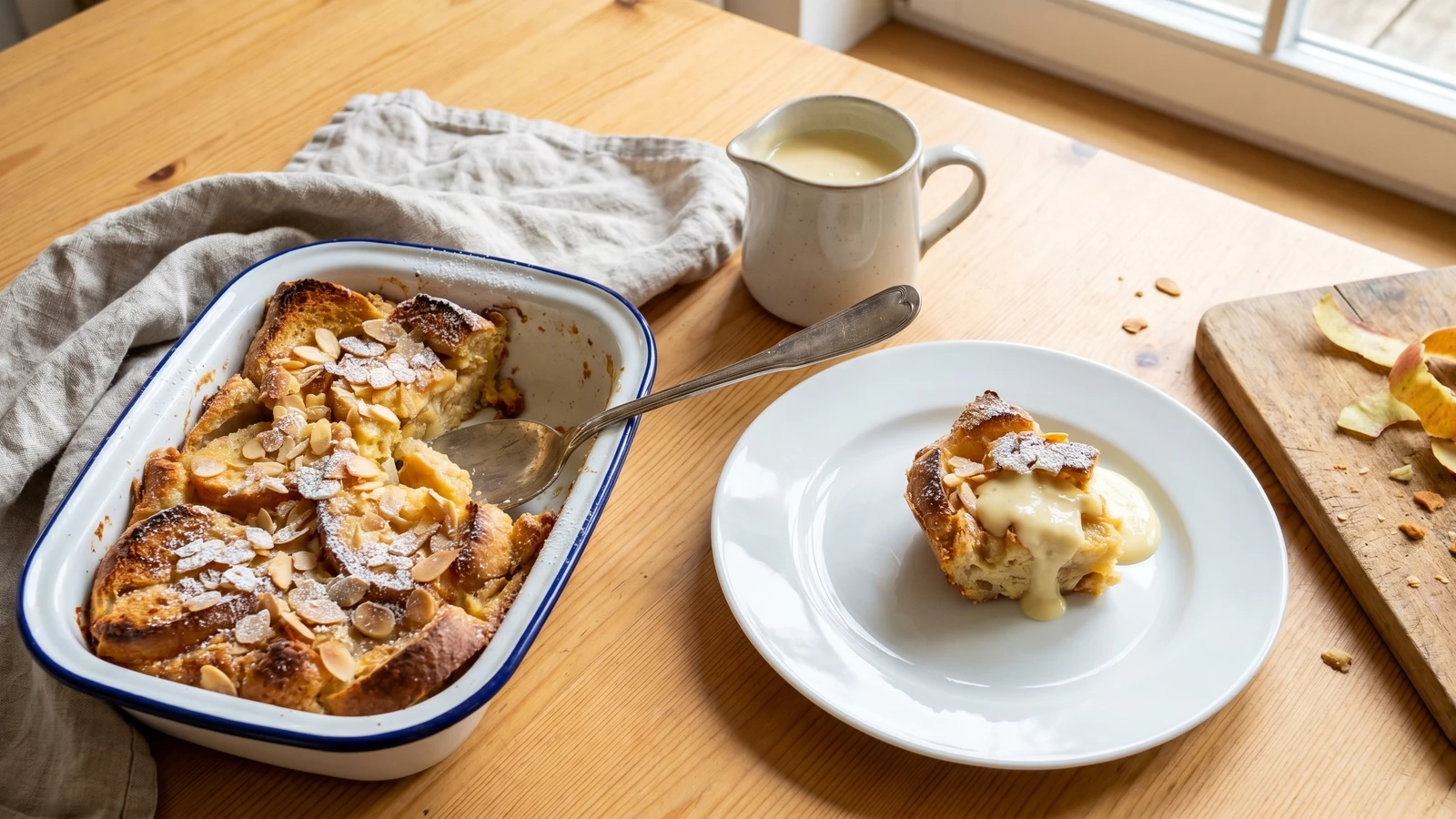
The Swabian bread bake that rescues yesterday's rolls, layers them with apple, raisins, and almonds, then lets a patient custard turn scraps into supper.
Ofenschlupfer belongs to Swabia, and it belongs to the thrift table. Stale Wecken, the white rolls left from yesterday, don't go in the bin. They go into a buttered dish with apples, raisins, almonds, and a vanilla milk custard. Weggeworfen wird nichts.
In Swabia this can be a sweet main dish after soup, the kind of meal that makes sense on a weeknight and still sits well on a Sunday table. Further south and east, Bavaria and Austria argue for Scheiterhaufen, often taller and sometimes finished with beaten egg white; in the Palatinate, Kirschenmichel takes the same stale-bread logic and gives it cherries. Im Norden anders, im Süden anders. This one stays Swabian: apple, old rolls, custard, no theatre.
The technique is the soak. The bread has to drink the custard before the dish goes into the oven, because dry slices will bake into tough islands while wet slices set into one tender body. Press the layers down, wait ten minutes, and only then bake. Das braucht seine Zeit, not much, but enough.
Watch the top. You want gold at the edges, puffed custard in the middle, and apples soft but still there. Too hot and the top scorches before the custard sets. Runter mit der Temperatur if it browns too fast. Schön ist, was schmeckt.
Ofenschlupfer sits in the Swabian and Württemberg tradition of sweet main dishes, where a vegetable soup followed by a flour, potato, or bread-based Süßspeise was a normal household meal, especially in the 19th and early 20th centuries. The dish belongs to the same economy as Arme Ritter and Semmelknödel: stale white bread was a stored ingredient, not waste, and milk, eggs, orchard apples, and dried fruit turned it into a filling bake. Regional relatives mark the map clearly, with Austrian and Bavarian Scheiterhaufen and the Palatine Kirschenmichel showing how one thrift method changes with the local fruit bowl.
Quantity
6, about 300g
sliced 1cm thick
Quantity
500ml
Quantity
3
Quantity
60g
Quantity
1 teaspoon
Quantity
1 pinch
Quantity
700g
peeled, cored, and thinly sliced
Quantity
60g
Quantity
3 tablespoons
for soaking the raisins
Quantity
60g
Quantity
1 teaspoon
Quantity
40g, plus more for the dish
Quantity
2 tablespoons
for the dish
Quantity
to dust
| Ingredient | Quantity |
|---|---|
| stale white rolls (Wecken or Semmeln)sliced 1cm thick | 6, about 300g |
| whole milk | 500ml |
| large eggs | 3 |
| sugar | 60g |
| vanilla sugar or vanilla extract | 1 teaspoon |
| salt | 1 pinch |
| tart applespeeled, cored, and thinly sliced | 700g |
| raisins | 60g |
| apple juice or rumfor soaking the raisins | 3 tablespoons |
| sliced almonds | 60g |
| ground cinnamon | 1 teaspoon |
| butter | 40g, plus more for the dish |
| fine breadcrumbsfor the dish | 2 tablespoons |
| icing sugar (optional) | to dust |
Put the raisins in the apple juice or rum for 15 minutes while you slice the bread and apples. Dry raisins pull moisture out of the bake; soaked raisins give it back and stay soft under the teeth.
Butter a 2 litre baking dish and dust it with the fine breadcrumbs. The butter gives the edges colour, and the crumbs make a thin dry coat so the custard sets cleanly instead of welding itself to the dish.
Whisk the milk, eggs, sugar, vanilla, and salt until the eggs are fully broken into the milk. Don't leave streaks of egg white; they set into rubbery patches, while a smooth custard soaks the rolls evenly.
Lay a third of the bread in the dish, then cover it with half the apples, half the raisins, a little cinnamon, and a scattering of almonds. Repeat, then finish with the last bread slices and the remaining almonds. Keep the top mostly bread, because bread browns and crisps better than apple.
Pour the custard slowly over the layers, then press the bread down with clean hands or a spatula and leave it for 10 minutes. This pause decides the dish: the bread must drink before it bakes, or the top turns dry while the bottom swims.
Dot the top with the butter and bake at 180C for 40 to 45 minutes, until the top is golden, the almonds are toasted, and the middle gives a soft set when you press it. If the top colours too quickly, cover it loosely with foil and turn the heat down a little. Runter mit der Temperatur.
Let the Ofenschlupfer stand 10 minutes before spooning it out. Straight from the oven the custard is still loose; a short rest lets it settle so you get soft layers instead of sweet collapse. Dust with icing sugar if you like, and serve warm, plain or with vanilla sauce.
1 serving (about 285g)
Culinary guides, cultural storytelling, and the editorial depth that makes cooking meaningful.
Discover Culinary ExplorerChef Klaus
The Allgäu pan dish that makes a meal from noodle dough, winter kraut, onion, and fat: brown the cut sides first, then cook gently so the rolls hold.

Chef Klaus
Swabian egg pasta turned toward the apple cellar: fresh Spätzle tossed with browned butter, tart apples, cinnamon, and enough restraint to stay supper, not cake.

Chef Klaus
Hesse's pork goulash belongs to Apfelwein country: shoulder, onions, and tart cider cooked low until the cheap cut turns soft and the sauce lands sweet-sour, not sour-sweet.

Chef Klaus
The old sweet supper that saves yesterday's loaf: stale bread drinks eggy milk, the pan stays moderate, and butter browns the outside only after the centre has set.