
Chef Elsa
Bröselnudeln
Broad egg noodles tossed in golden butter-toasted breadcrumbs until every strand is coated and crackling. Four ingredients, fifteen minutes, and a dish that has kept Austrian families fed and happy for centuries.
A cooking platform built around craft, culture, and the stories behind what we eat.
Created by
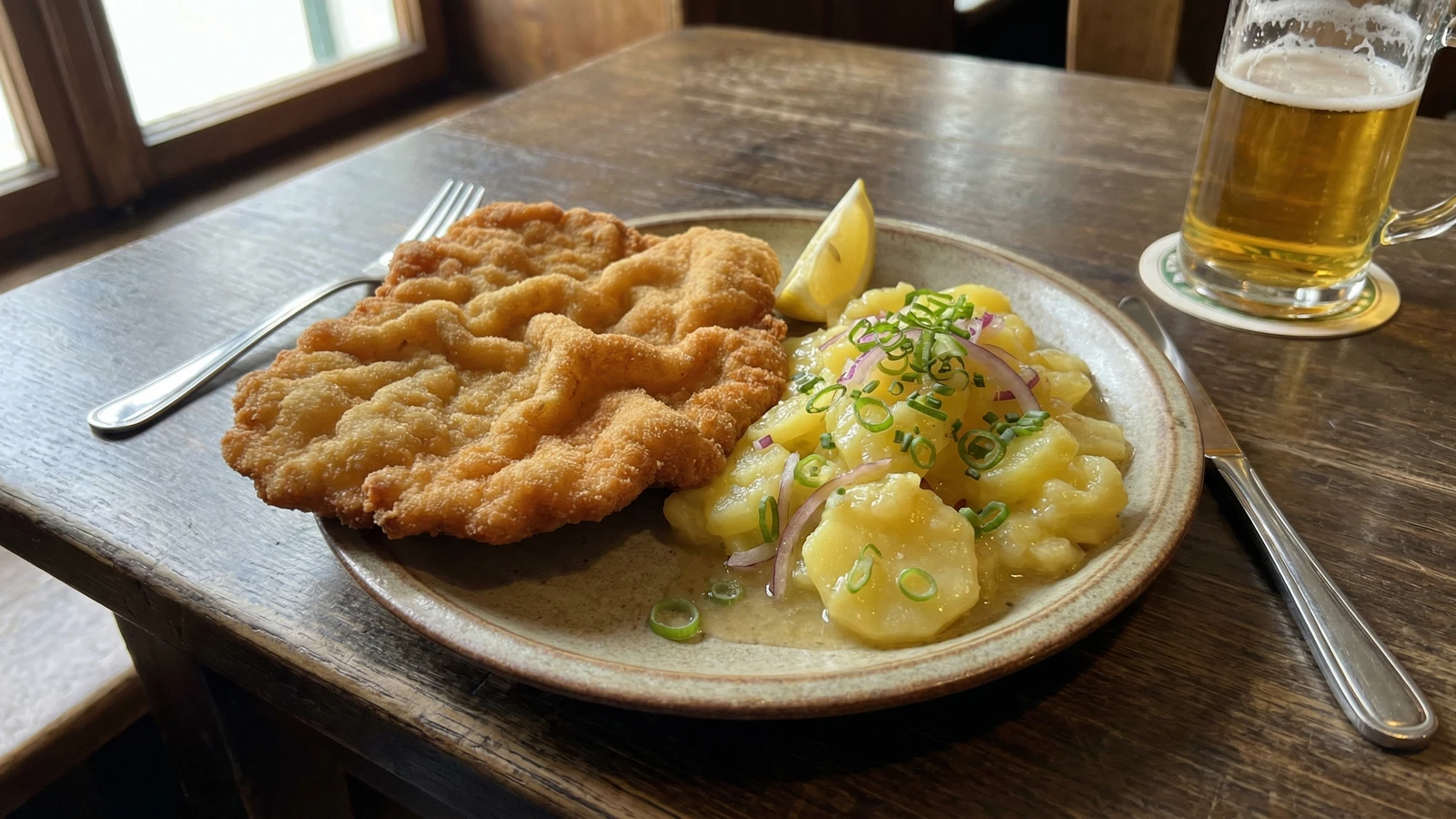
Brined pork loin pounded thin, breaded in the Viennese three-step, and fried golden in clarified butter. The Schnitzel that feeds Austria on any given Tuesday, with warm Erdäpfelsalat on the side.
Every Gasthaus in Salzburg has Surschnitzel on the board. Not in the specials, not as a seasonal feature. On the board, permanently, because taking it off would cause a small uprising. This is the Schnitzel Austrians actually eat during the week. Not veal, not expensive, not reserved for Sunday lunch. Cured pork, breaded and fried, with warm potato salad and maybe a cold beer if the day earned it.
The "Sur" in Surschnitzel means the pork has been cured, brined in salt and spices until the meat turns rosy pink all the way through and develops a gentle tang you won't get from fresh pork. It's the same curing tradition behind Surfleisch, the boiled cured pork that's been feeding Austrian families through long winters for centuries. When you bread and fry that cured meat, something wonderful happens. The salt in the cure seasons the Schnitzel from the inside, so every bite has flavor right to the center. Fresh pork can't do that.
I grew up eating Surschnitzel at Gasthäuser on our annual trips through the Salzkammergut with Gretel and my grandmother Eva. It was the dish you ordered when you were hungry and didn't want to think too hard about it. The plate would arrive, golden and generous, overlapping the edges of the dish, with a mound of Erdäpfelsalat glistening beside it. Nobody took a photograph. Everybody ate. That's how you know a dish has earned its place.
The technique is straightforward. Pound the cured pork thin, run it through the classic Viennese breading (flour, egg, breadcrumbs, in that order, always in that order), and fry it in enough clarified butter that the Schnitzel floats. The coating puffs and turns wavy and golden. The meat inside stays juicy because the cure has already done the work of seasoning and tenderizing. This is good Austrian home cooking at its most honest.
Surfleisch, the wet-cured pork behind Surschnitzel, is rooted in Alpine preservation traditions that predate refrigeration by centuries. Farmers in Upper Austria, Salzburg, and Styria brined pork in stone crocks through autumn to carry protein through winter. The practice of breading and frying the cured meat as a Schnitzel likely developed in the 19th century as the Viennese breading technique spread beyond the capital into regional Gasthaus kitchens. Today Surschnitzel remains one of the most ordered dishes in rural Austrian Gasthäuser, outselling Wiener Schnitzel in many provinces because it costs less, feeds well, and tastes like the kind of cooking people actually grew up on.
Quantity
4, about 150g each
Quantity
100g
for dredging
Quantity
3 large
beaten
Quantity
150g
Quantity
to taste
Quantity
150g
for frying
Quantity
1
quartered, for serving
Quantity
800g
Quantity
1 small
finely sliced
Quantity
200ml
Quantity
3 tablespoons
Quantity
4 tablespoons
Quantity
1 teaspoon
Quantity
1 pinch
Quantity
to taste
Quantity
for garnish
finely cut
| Ingredient | Quantity |
|---|---|
| cured pork loin cutlets (Surschopf or gepökeltes Schweinskarree) | 4, about 150g each |
| plain flourfor dredging | 100g |
| eggsbeaten | 3 large |
| fine dry breadcrumbs (Semmelbrösel) | 150g |
| salt and black pepper | to taste |
| clarified butter (Butterschmalz)for frying | 150g |
| lemonquartered, for serving | 1 |
| waxy potatoes (Kipfler or similar) | 800g |
| red onionfinely sliced | 1 small |
| warm beef broth | 200ml |
| white wine vinegar | 3 tablespoons |
| neutral oil (sunflower or rapeseed) | 4 tablespoons |
| smooth mustard | 1 teaspoon |
| sugar | 1 pinch |
| salt and black pepper (for salad) | to taste |
| fresh chivesfinely cut | for garnish |
Boil the potatoes whole and unpeeled in salted water until a knife slides in with no resistance but the center still holds its shape. This takes about twenty to twenty-five minutes depending on size. Don't overcook them or your salad turns to mush. Drain and peel while they're still hot. Use a kitchen towel to hold them. Cut into slices about four millimeters thick. They should hold together but look like they might not.
While the potatoes are still warm, layer them in a wide bowl with the sliced red onion. Whisk together the warm beef broth, vinegar, oil, mustard, sugar, salt, and pepper. Pour the dressing over the potatoes gently. Don't stir, don't toss. Let it sit. Warm potatoes drink up dressing the way cold ones never will. That's the whole secret of Austrian Erdäpfelsalat. After fifteen minutes, give it a gentle turn with a spatula. Taste and adjust for salt and vinegar. Scatter the chives over the top just before serving.
Place each cured pork cutlet between two sheets of cling film. Pound with a meat mallet or the bottom of a heavy pan until about five millimeters thick. Even thickness matters more than exact measurement. If one end is thicker than the other, the thin part overcooks while the thick part stays underdone. The cure means you won't need much salt. Taste a small piece if you're unsure, since cured pork varies in saltiness. Add a light grind of black pepper on both sides.
Line up three shallow dishes: flour in the first, beaten eggs in the second, breadcrumbs in the third. This is the Viennese Panier, the same three-step breading used for Wiener Schnitzel, and the order matters. Flour first gives the egg something to cling to. Egg gives the crumbs something to cling to. Skip a step and the whole coating falls apart in the pan. Dredge each cutlet in flour, shake off the excess, dip through the beaten egg, then press into the breadcrumbs. Don't pack them tight. You want a loose, airy coat that puffs when it hits the fat.
Heat the clarified butter in a wide, heavy pan over medium-high heat. You need enough that the Schnitzel floats, not sits. Test with a breadcrumb: it should sizzle immediately and rise to the surface. Slide the first cutlet in carefully, away from you, and gently swirl the pan so hot fat washes over the top of the Schnitzel. This is what creates the signature wavy, puffed crust. Fry for about two to three minutes on the first side until deep gold. Flip once. Once. Cook another two minutes until the second side matches. Lift it out and let it rest on a wire rack, never on paper towels, which trap moisture and make the bottom go soggy.
Place each Surschnitzel on a warm plate, overlapping the edge the way a proper Gasthaus does. A lemon quarter goes on the plate. The Erdäpfelsalat goes beside it, not under it, not on a separate plate. Squeeze the lemon over the Schnitzel at the table. The acid cuts through the richness and wakes up the cured pork flavor. No sauce. Not ever. Mahlzeit!
1 serving (about 430g)
Culinary guides, cultural storytelling, and the editorial depth that makes cooking meaningful.
Discover Culinary ExplorerChef Elsa
Broad egg noodles tossed in golden butter-toasted breadcrumbs until every strand is coated and crackling. Four ingredients, fifteen minutes, and a dish that has kept Austrian families fed and happy for centuries.

Chef Elsa
Vienna's weeknight answer to everything: soft flour Nockerl fried golden in butter, scrambled through with eggs and buried under fresh chives. A sharp green salad on the side because the Viennese know that richness needs a counterpoint.

Chef Elsa
Soft Austrian potato dumplings in browned butter with warm, caraway-scented sauerkraut. A meatless Gasthaus meal that's been filling up Alpine kitchens for centuries.

Chef Elsa
Braised beef steaks in a velvety sauce of julienned root vegetables, capers, mustard, and sour cream, the kind of dish that made the Esterházy name famous in kitchens long after it faded from politics.