Culinary Explorer

A cooking platform built around craft, culture, and the stories behind what we eat.
Discover Culinary Explorer
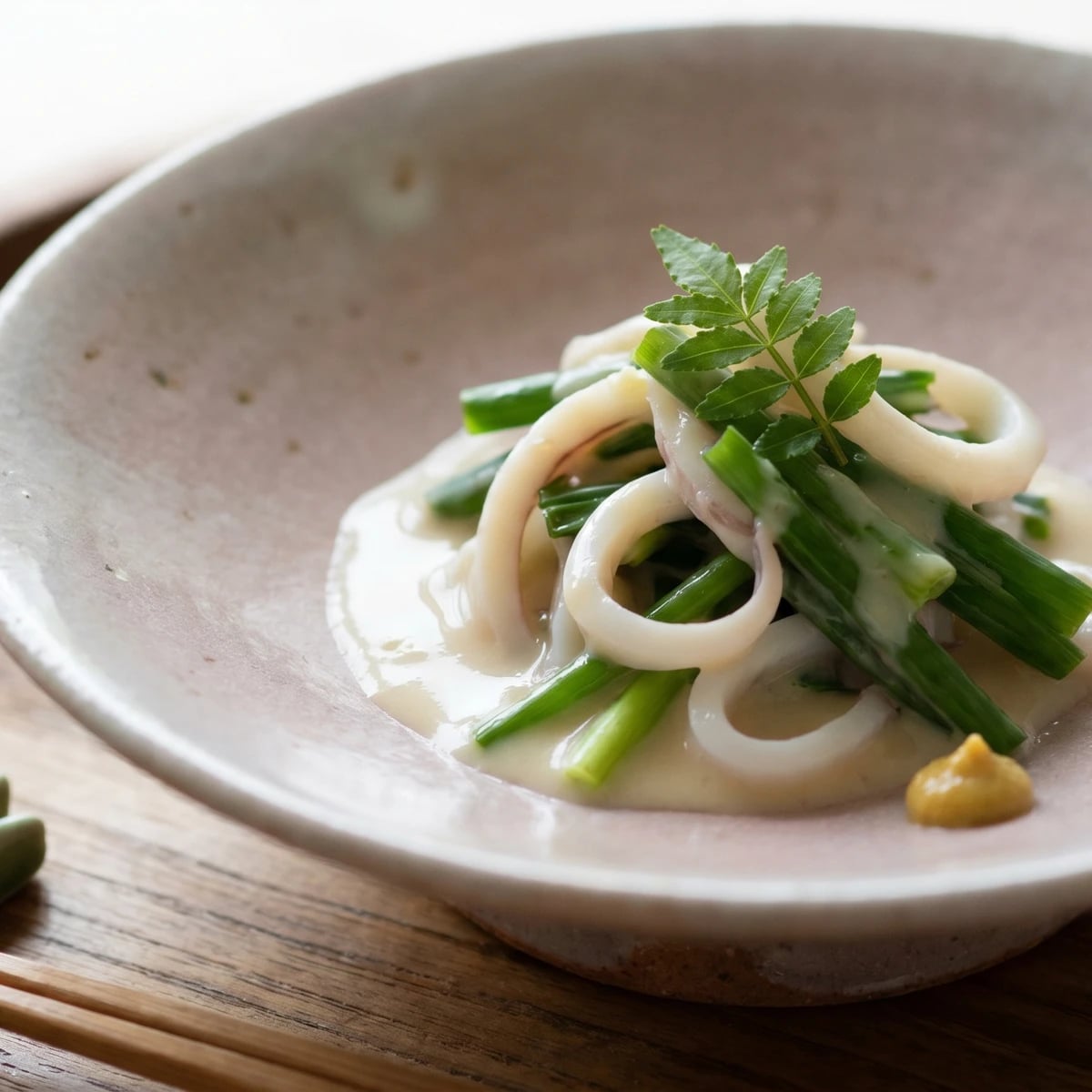
Squid and Wakegi with Vinegared Miso (いかとわけぎのぬた, Ika to Wakegi no Nuta)

Squid and Wakegi with Vinegared Miso (いかとわけぎのぬた, Ika to Wakegi no Nuta)

Created by

Spring nuta is a quiet composed salad: sweet wakegi, tender squid, and sumiso sharp enough to wake them without covering them. Blanch briefly, dry carefully, dress at the last moment.

Salads
Japanese
Dinner Party
Special Occasion
Quick Meal
20 min
Active Time
5 min cook25 min total
Yield4 small servings

Wakegi comes into its own in spring, sweeter and rounder than a common scallion, with just enough green bite to keep a plate awake. Pair it with tender squid and sumiso, vinegared miso, and you have nuta: one of those small dishes that looks as if it requires a secret handshake. It doesn't. It asks for good squid, a brief blanch, and a dressing that knows when to stop.

The deciding detail is water. Blanch the wakegi only until it turns a deeper green, then cool it and press it dry. Blanch the squid even faster, just until it turns opaque and relaxes. If either goes into the bowl wet, the sumiso loosens and slides away; if either cooks too long, the dish turns dull. We want each ingredient to stay itself, because nothing here is meant to be hidden.

Nuta belongs to aemono, the dressed dishes that often sit quietly beside rice, soup, and a grilled or simmered dish. In spring, wakegi gives it 旬 (shun), the clean timing of an ingredient at its prime. Dress it at the last moment and serve a small mound in a bowl with space around it. Leave it room. The vinegar should lift, the miso should round, and the squid should still taste clean.

Nuta belongs to aemono, the dressed dishes set beside rice and soup, and miso-vinegar dressings were already part of practical cookery by the early Edo period; Ryōri Monogatari, printed in 1643, records household seasonings and dressings in plain form. The name is usually linked to nuta or numata, a muddy field, a reference to the thick, pale miso dressing rather than to any roughness in the dish. Wakegi has been especially familiar in western Japan, with Hiroshima Prefecture known for its production, and the squid-and-wakegi pairing is treated as spring food because the allium's sweetness is then at its peak.

The technique, the tradition, and the story behind every dish.

Discover Culinary Explorer

Ingredients

cleaned fresh squid (ika)

Quantity

250g

body opened, tentacles separated

wakegi green onions

Quantity

200g, about 8 slender stalks

trimmed

sea salt

Quantity

1 teaspoon

for the blanching water

shiro miso or Saikyō miso

Quantity

3 tablespoons

rice vinegar

Quantity

1 1/2 tablespoons

mirin

Quantity

1 tablespoon

sugar

Quantity

2 teaspoons

use less if the miso is very sweet

dashi

Quantity

1 to 2 tablespoons

preferably ichiban dashi; use konbu-shiitake dashi for a meatless table

prepared karashi (Japanese mustard) (optional)

Quantity

1/4 teaspoon

kinome leaves (optional)

Quantity

4 small

Equipment Needed

  • Suribachi (Japanese grinding bowl), or a small bowl and whisk
  • Saibashi cooking chopsticks, or small tongs
  • Zaru or fine-mesh strainer
  • Clean kitchen towel for drying

Instructions

  1. 1

    Make the sumiso

    Warm the mirin in a small pan just until it bubbles, 20 to 30 seconds, then stir in the sugar until it dissolves. Let it cool. Put the miso in a suribachi or small bowl and work in the rice vinegar a little at a time, smoothing after each addition. Whisk in the cooled mirin syrup, 1 tablespoon dashi, and the karashi if using. Add the remaining dashi only if the dressing is stiff. It should fall from a spoon in a thick ribbon, because nuta needs to cling to the squid and wakegi, not run to the bottom of the bowl.

    Warming the mirin drives off the raw alcohol edge and dissolves the sugar cleanly. Adding the vinegar slowly keeps the miso smooth instead of lumpy.
  2. 2

    Cut the wakegi

    Cut the wakegi into 4cm lengths, keeping the thicker white bases separate from the green tops. The bases need a short head start in the water, while the greens only need enough heat to soften and brighten.

  3. 3

    Blanch the wakegi

    Bring a medium pot of water to a boil and salt it lightly. Add the white wakegi pieces first. After 30 seconds, add the green tops and cook 20 to 30 seconds more, just until the color deepens and the pieces bend without collapsing. Lift them into cold water, then drain well and press them dry in a clean towel. The cold water stops the cooking; the drying protects the dressing.

    Water is the quiet enemy here. Wet wakegi thins the sumiso, and a thin sumiso cannot hold the dish together.
  4. 4

    Slice the squid

    Pat the squid dry. Lay the body open, inside face up, and score it very shallowly on the diagonal, then cut it into 5mm strips. Cut the tentacles into bite-size lengths. The shallow scoring shortens the muscle and gives the dressing a place to sit; cut too deep and the squid turns ragged. This is one place the knife does more than the sauce.

  5. 5

    Blanch the squid

    Bring the blanching water back to a lively boil. Add the squid, stir once with saibashi or tongs, and lift it out as soon as it turns milky white and the edges curl, 20 to 40 seconds. Cool it briefly in cold water, then drain and spread it on a towel. Don't let it soak, because water steals the clean sweetness you bought the squid for.

    Squid toughens fast. Pull it when it has just turned opaque, and let the towel finish the work by taking away the surface water.
  6. 6

    Dress and plate

    Blot the wakegi and squid once more. Put them in a bowl and fold in about two-thirds of the sumiso, adding more only until each piece is lightly coated. Dress at the last moment, because vinegar and salt draw out moisture as the dish sits. Mound the nuta in small bowls, set one kinome leaf or a tiny dab of karashi on top if using, and serve cool or at room temperature.

Chef Tips

  • Choose squid that looks glossy and firm, with a clean sea scent and no sour or fishy smell. If the squid is tired, don't hide it under miso. Grill it or simmer it instead, and make nuta another day.
  • Wakegi is the spring ingredient here. If you can't find it, use the youngest, sweetest scallions you can buy as a sensible stand-in, but know what has changed: wakegi is rounder, softer, and more at home in this dish.
  • Taste the sumiso before dressing. It should seem a little brighter than you want on its own, because the sweetness of the wakegi and the clean flesh of the squid soften it once everything meets.
  • For a meatless table, use konbu and dried shiitake dashi to loosen the dressing. That's honmono, not a compromise. What you should not use is instant powder, which brings salt before it brings clarity.

Advance Preparation

  • The sumiso can be made up to 2 days ahead and refrigerated. Stir it before using, and loosen it with a few drops of dashi if it tightens.
  • The wakegi can be blanched, dried, and wrapped in a towel up to 4 hours ahead. Keep it chilled, then blot again before dressing.
  • The squid may be blanched a few hours ahead and kept covered in the refrigerator, but it should be dried carefully before it meets the sumiso.
  • Do not combine the salad until just before serving. Finished nuta is at its best within 30 minutes.

Frequently Asked Questions

Nutrition Information

1 serving (about 125g)

Calories
125 calories
Total Fat
2 g
Saturated Fat
0 g
Trans Fat
0 g
Unsaturated Fat
1 g
Cholesterol
145 mg
Sodium
580 mg
Total Carbohydrates
13 g
Dietary Fiber
2 g
Sugars
6 g
Protein
12 g

Note: Chef personas and recipes are created with AI assistance. Cook with care: follow safe food-handling practices, check doneness with a thermometer when needed, and adapt for allergies and your kitchen.

Where cooking meets culture.

Culinary guides, cultural storytelling, and the editorial depth that makes cooking meaningful.

Discover Culinary Explorer

More from Sunomono & Aemono: Vinegared and Dressed Sides

Browse the full collection