
Chef Takumi
Bamboo Shoot and Wakame Salad (若竹和え, Wakatake-ae)
Two spring things meet here: pale bamboo shoot, green wakame, and a vinegar-miso dressing thin enough to let both speak. The work is sourcing, then restraint.
A cooking platform built around craft, culture, and the stories behind what we eat.
Created by
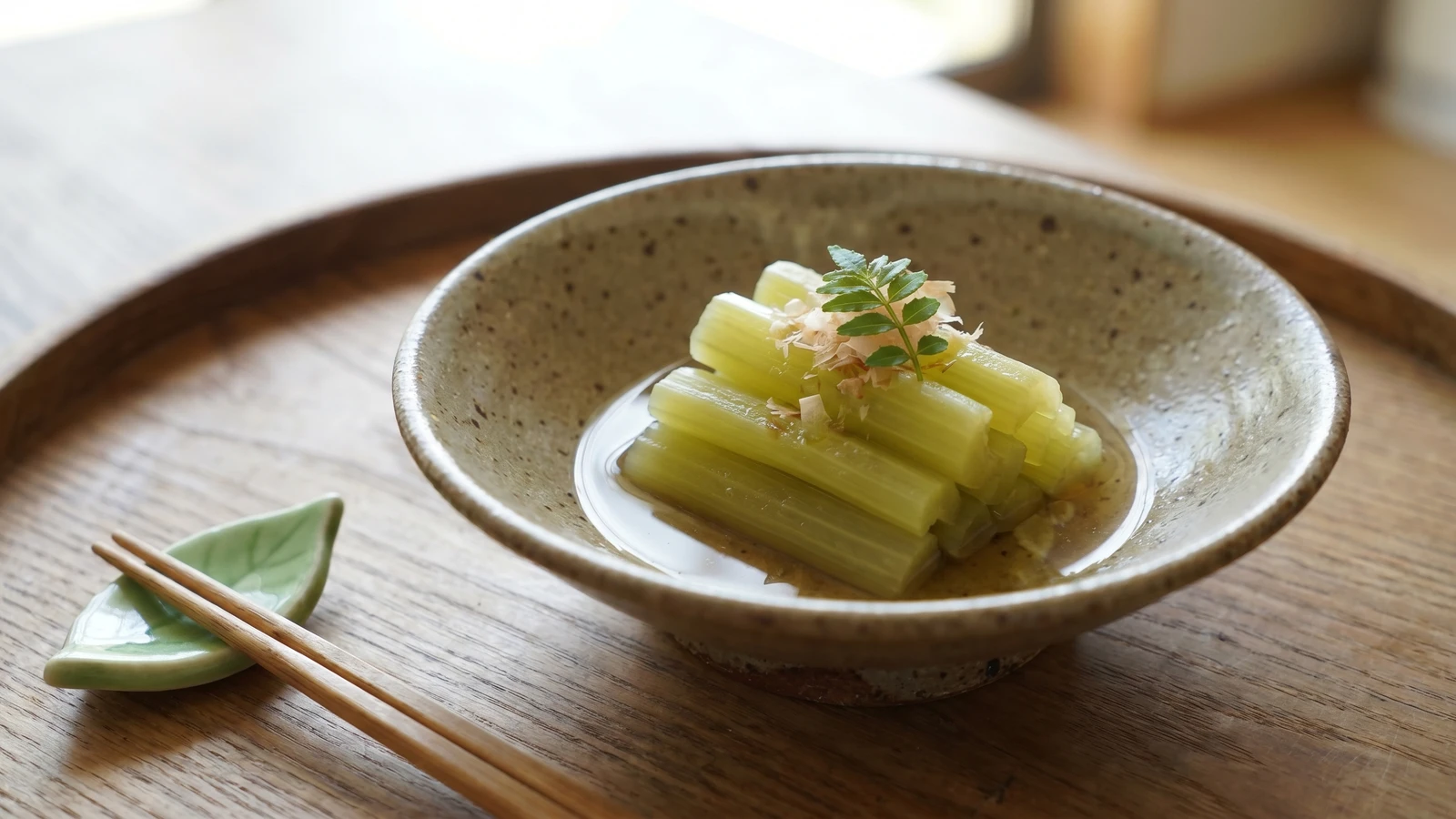
Fuki is spring's bitter green stem, softened by salt, boiling water, and a calm soak in dashi. Peel it cleanly, steep it patiently, and the season announces itself without shouting.
Fuki is the stem that tells you spring has stopped being shy. It is pale green, faintly bitter, and grassy in a way no winter vegetable can imitate. If you meet it for the first time, the peeling may look like work for a very serious person with too much string in his life. It isn't. Salt, boiling water, cold water, patience. That is most of it.
The one detail that decides fuki no ohitashi is aku-nuki, removing the harshness without washing away the character. We roll the stems with salt so the fine surface roughens and the green wakes up, then blanch just long enough for the skin to loosen. Peel after the cold bath, while the stem is firm and bright. Skip the peeling and every bite reminds you. Soak too long and the bitterness disappears, which sounds helpful until you notice the fuki has gone quiet.
After that, ohitashi does what its name says: it soaks. A clear dashi, a little usukuchi shōyu, and mirin carry seasoning into the stems while leaving their spring bitterness in plain view. This is a composed salad by the method, not the menu, and it belongs beside rice, soup, and something grilled or simmered. Serve it cool or at room temperature, with a few bonito flakes or one kinome leaf. Leave it room. Fuki is thin, but it knows exactly what season it is.
Fuki, Japanese butterbur (Petasites japonicus), is a native perennial of damp ground in Japan, and both its flower buds, fukinotō, and its leaf stalks have long been treated as spring sansai. Cultivation became especially associated with Aichi Prefecture, where Aichi wase-buki, an early variety selected for tender stalks, remains a leading market fuki. Ohitashi means "soaked," a plain name for the washoku practice of blanching greens and letting seasoned dashi carry flavor into them.
Quantity
400g
leaves removed
Quantity
1 tablespoon
for itazuri salt-rolling
Quantity
2 1/2 cups
Quantity
1 piece (about 5g)
Quantity
12g, plus a little more for serving
Quantity
2 tablespoons
Quantity
1 tablespoon
Quantity
1/4 teaspoon, plus more to taste
Quantity
1
| Ingredient | Quantity |
|---|---|
| fresh fuki (Japanese butterbur stems)leaves removed | 400g |
| coarse sea saltfor itazuri salt-rolling | 1 tablespoon |
| cold water | 2 1/2 cups |
| konbu | 1 piece (about 5g) |
| katsuobushi (bonito flakes) | 12g, plus a little more for serving |
| mirin | 2 tablespoons |
| usukuchi shōyu (light soy sauce) | 1 tablespoon |
| sea salt | 1/4 teaspoon, plus more to taste |
| kinome leaf (optional) | 1 |
Wipe the konbu with a damp cloth, but don't wash it. Put it in the cold water and bring it up slowly over low heat. Pull the konbu just before the water boils, when small bubbles climb the sides of the pot. Add the katsuobushi all at once, take the pot off the heat, and let the flakes sink for two or three minutes. Strain through a cloth or fine sieve and let it drip without pressing.
Measure 1 1/2 cups of the dashi for the ohitashi. Bring the mirin to a brief simmer in a small pan for about thirty seconds, just to soften its raw edge, then add the dashi, usukuchi shōyu, and sea salt. Taste it. It should be clean and lightly seasoned, not soy-dark. Cool it completely, because a hot soaking liquid dulls the fuki's color and keeps cooking what you have just blanched.
Trim the fuki stems to fit your widest pot, keeping them as long as you can. Sprinkle them with the coarse salt on a cutting board and roll them firmly under your palms until the surface looks damp and slightly roughened. This is itazuri. It removes the fine fuzz, draws out some harsh green juices, and helps the stems blanch to a clearer color.
Bring a wide pot of water to a strong boil. Add the salted fuki, salt and all, and blanch for 3 to 5 minutes, depending on thickness, until a stem bends without snapping but is not limp. Lift the stems straight into cold water. The blanch loosens the skin and tames the aku, the raw harshness of spring greens. The cold water stops the cooking so the stems stay crisp enough to peel cleanly.
Starting at the thick end, catch the outer skin with a fingernail or the tip of a small knife, gather several strings together, and pull them down the length of the stem. Turn the stem and repeat until the tough outer layer is gone. If a strip breaks, start again from the other end. The peel is the one thing that punishes impatience here. Leave it on and every bite turns fibrous.
Put the peeled stems in fresh cold water for 20 to 30 minutes, changing the water once. Taste a small end piece. It should still be pleasantly bitter and grassy, not harsh on the tongue. Drain well, then cut the stems on a slight diagonal into 4cm lengths. The diagonal gives each piece a clean face and lets the dashi enter without making the plate look busy.
Lay the cut fuki in a shallow dish and pour over the cooled seasoned dashi. Press a piece of parchment or plastic wrap directly on the surface so every piece stays covered. Refrigerate at least 1 hour, and up to overnight. This is ohitashi, soaked food. The seasoning enters slowly, so the stems taste of fuki first and broth second.
Lift the fuki from the dashi and arrange five or seven pieces in a small bowl, building a little height and leaving empty space at one side. Spoon over just enough soaking liquid to give a clear shine at the bottom. Finish with a few flakes of katsuobushi, or one kinome leaf if you have it. Serve cool or at room temperature.
1 serving (about 120g)
Culinary guides, cultural storytelling, and the editorial depth that makes cooking meaningful.
Discover Culinary ExplorerChef Takumi
Two spring things meet here: pale bamboo shoot, green wakame, and a vinegar-miso dressing thin enough to let both speak. The work is sourcing, then restraint.

Chef Takumi
Tender spring bamboo meets kinome ground fresh with white miso, vinegar, and dashi. The dressing is green, fragrant, and brief by nature, so make it when the leaves are young.

Chef Takumi
Komatsuna no ohitashi is the home cook's reliable green: a quick blanch, a careful press, and a short rest in dashi until the stems taste clean and seasoned through.

Chef Takumi
This is the everyday sunomono: salted cucumber, wakame brought back to green life, and sanbaizu that clings because you took the water out before the vinegar went in.