
Chef Ally
California Seafood Chowder with Fresh Herbs
A bowlful of Pacific abundance where the sea speaks clearly through fennel, fresh herbs, and a restrained splash of cream, letting clams, mussels, and firm white fish taste of what they are.
A cooking platform built around craft, culture, and the stories behind what we eat.
Created by
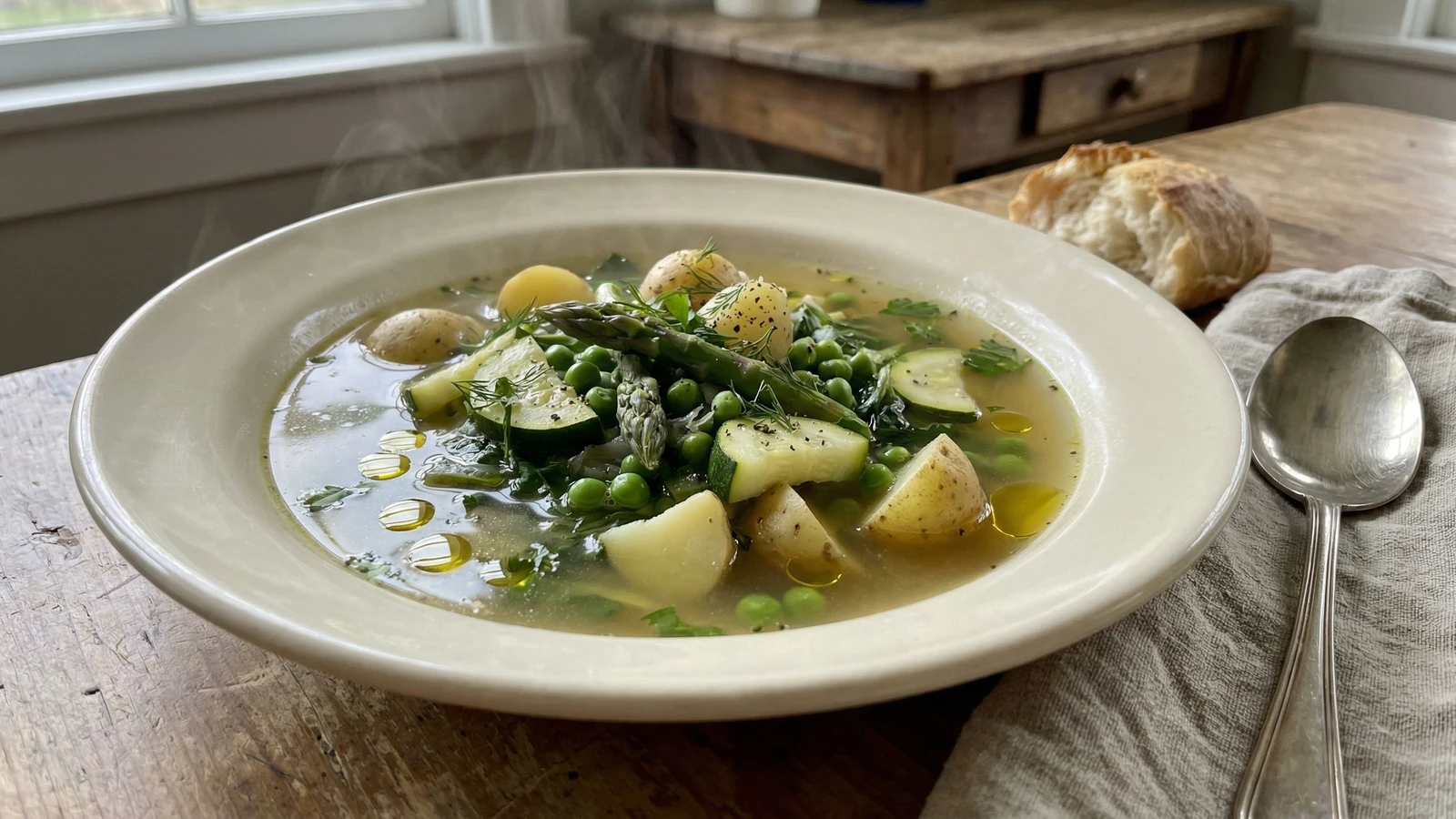
The first tender vegetables of the season, barely simmered in golden homemade stock until just cooked through, finished with a handful of herbs so fresh they still smell of the garden.
This soup begins at the market. You are looking for vegetables that arrived that morning, the kind that still have dirt on them, that feel alive in your hand. Asparagus with tight tips. Peas so sweet you eat half of them standing at the stall. Spring onions with bright green tops. New potatoes no bigger than your thumb.
When you have ingredients like this, your job is to get out of the way. A good stock, some gentle heat, and the courage to stop cooking before you think you should. The vegetables want to taste of themselves, not of the pot they sat in too long.
I learned this in France, watching grandmothers make soup. They added things at the last moment. They tasted constantly. They served the soup the minute it was ready, never letting it sit. The aliveness of the vegetables survived from garden to bowl.
Every meal is a meaningful choice. This soup is a vote for the farmers who grow spring vegetables with care, who pick them at perfect ripeness instead of before. Find those farmers. Learn their names. Your soup will be better for it.
Quantity
2 quarts
Quantity
2 tablespoons
Quantity
2 spring onions or 1 small leek
white and light green parts, sliced thin
Quantity
8 ounces
scrubbed and quartered
Quantity
1 pound
woody ends snapped off, cut into 1-inch pieces
Quantity
1 cup
shelled (about 1 pound in pods)
Quantity
1 cup
trimmed and cut into 1-inch pieces
Quantity
2
halved lengthwise and sliced
Quantity
2 cups
spinach, young chard, or pea shoots
Quantity
1/4 cup
roughly chopped
Quantity
2 tablespoons
snipped
Quantity
1 tablespoon
chopped
Quantity
1 tablespoon
torn
Quantity
to taste
Quantity
to taste
freshly cracked
Quantity
for finishing
Quantity
1 piece
| Ingredient | Quantity |
|---|---|
| homemade vegetable or chicken stock | 2 quarts |
| good olive oil | 2 tablespoons |
| spring onions or leekwhite and light green parts, sliced thin | 2 spring onions or 1 small leek |
| new potatoesscrubbed and quartered | 8 ounces |
| asparaguswoody ends snapped off, cut into 1-inch pieces | 1 pound |
| fresh English peasshelled (about 1 pound in pods) | 1 cup |
| young green beanstrimmed and cut into 1-inch pieces | 1 cup |
| small zucchinihalved lengthwise and sliced | 2 |
| tender greensspinach, young chard, or pea shoots | 2 cups |
| fresh flat-leaf parsleyroughly chopped | 1/4 cup |
| fresh chivessnipped | 2 tablespoons |
| fresh dillchopped | 1 tablespoon |
| fresh tarragon or minttorn | 1 tablespoon |
| fine sea salt | to taste |
| black pepperfreshly cracked | to taste |
| best olive oil | for finishing |
| Parmesan rind (optional) | 1 piece |
Pour the stock into a large pot and set it over medium heat. If you have a Parmesan rind, drop it in now. It will melt slowly into the broth, adding a quiet depth that rounds out the vegetables. Bring the stock to a gentle simmer, not a boil. You want lazy bubbles, the kind that rise slowly from the bottom.
In a separate wide pot or Dutch oven, warm the olive oil over medium-low heat. Add the sliced spring onions or leek and a pinch of salt. Cook gently, stirring occasionally, until they turn translucent and soft, about five minutes. They should not brown. You want sweetness, not caramelization.
Add the quartered potatoes to the softened onions and stir to coat them with the oil. Pour in the warm stock (fish out the Parmesan rind and add it here if you used one). Raise the heat slightly and bring to a simmer. Cook until the potatoes are nearly tender, about twelve minutes. Test with the tip of a knife. It should slide in with just a bit of resistance.
Add the asparagus pieces and green beans. These take longer than the delicate things. Simmer for four minutes. The asparagus should brighten to vivid green but still have a bit of snap when you bite into a piece.
Add the peas and zucchini. These cook quickly. Two to three minutes is enough. The peas should be bright green and barely cooked through, still sweet and slightly firm. Taste one. If it tastes raw in the center, give it another minute. If it is soft and starchy, you have gone too far.
Remove the pot from the heat. Add the tender greens and stir gently. The residual heat will wilt them in about thirty seconds. They should collapse and turn silky but keep their color. This is not the time for stirring vigorously. You want the vegetables to stay whole, not battered.
Season with salt and pepper. Taste the broth. It should be light but full, with each vegetable's flavor distinct. If it tastes flat, it needs more salt. Add it gradually, tasting after each addition. The salt should lift the flavors, not announce itself.
Scatter the parsley, chives, dill, and tarragon over the soup. Do not stir them in. Ladle the soup into warm bowls immediately, distributing vegetables and broth evenly. Drizzle each bowl with your best olive oil. Finish with a crack of black pepper. Serve at once.
1 serving (about 480g)
Culinary guides, cultural storytelling, and the editorial depth that makes cooking meaningful.
Discover Culinary ExplorerChef Ally
A bowlful of Pacific abundance where the sea speaks clearly through fennel, fresh herbs, and a restrained splash of cream, letting clams, mussels, and firm white fish taste of what they are.
Chef Ally
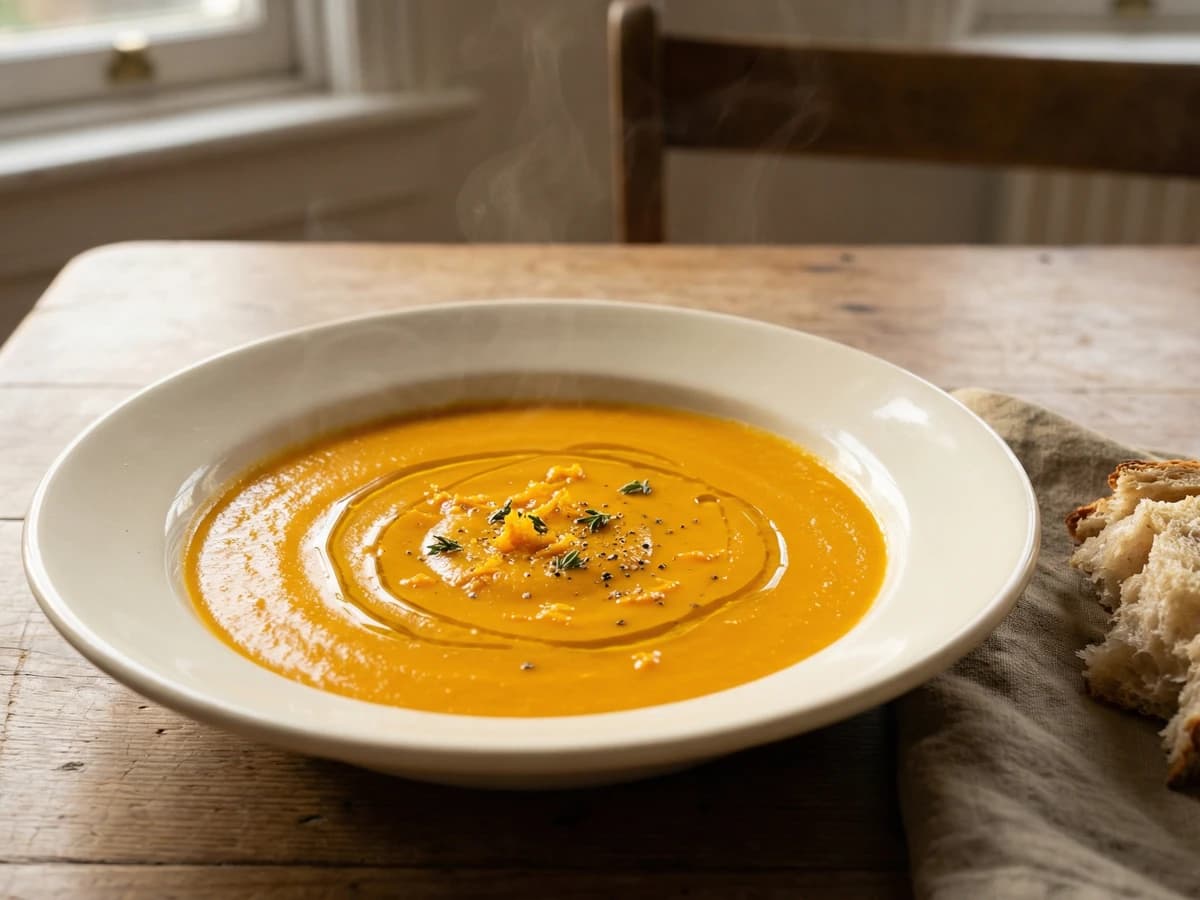
Winter carrots at their sweetest, simmered until tender and blended silky smooth, then lifted with fresh ginger and a squeeze of citrus that makes the whole bowl sing.

Chef Ally
Golden summer corn pureed into silk, barely touched by cream, and crowned with purple chive blossoms that taste faintly of onion and look like something from a garden you wish you had.

Chef Ally
Ripe summer tomatoes simmered with garlic and finished with hand-torn basil, a soup so pure it tastes like the garden itself. Good bread is not optional.