
Chef Ally
Celery Root Soup with Walnut Oil
A silky winter soup that proves the most overlooked vegetables are often the most rewarding, finished with a drizzle of fragrant walnut oil that deepens every spoonful.
A cooking platform built around craft, culture, and the stories behind what we eat.
Created by
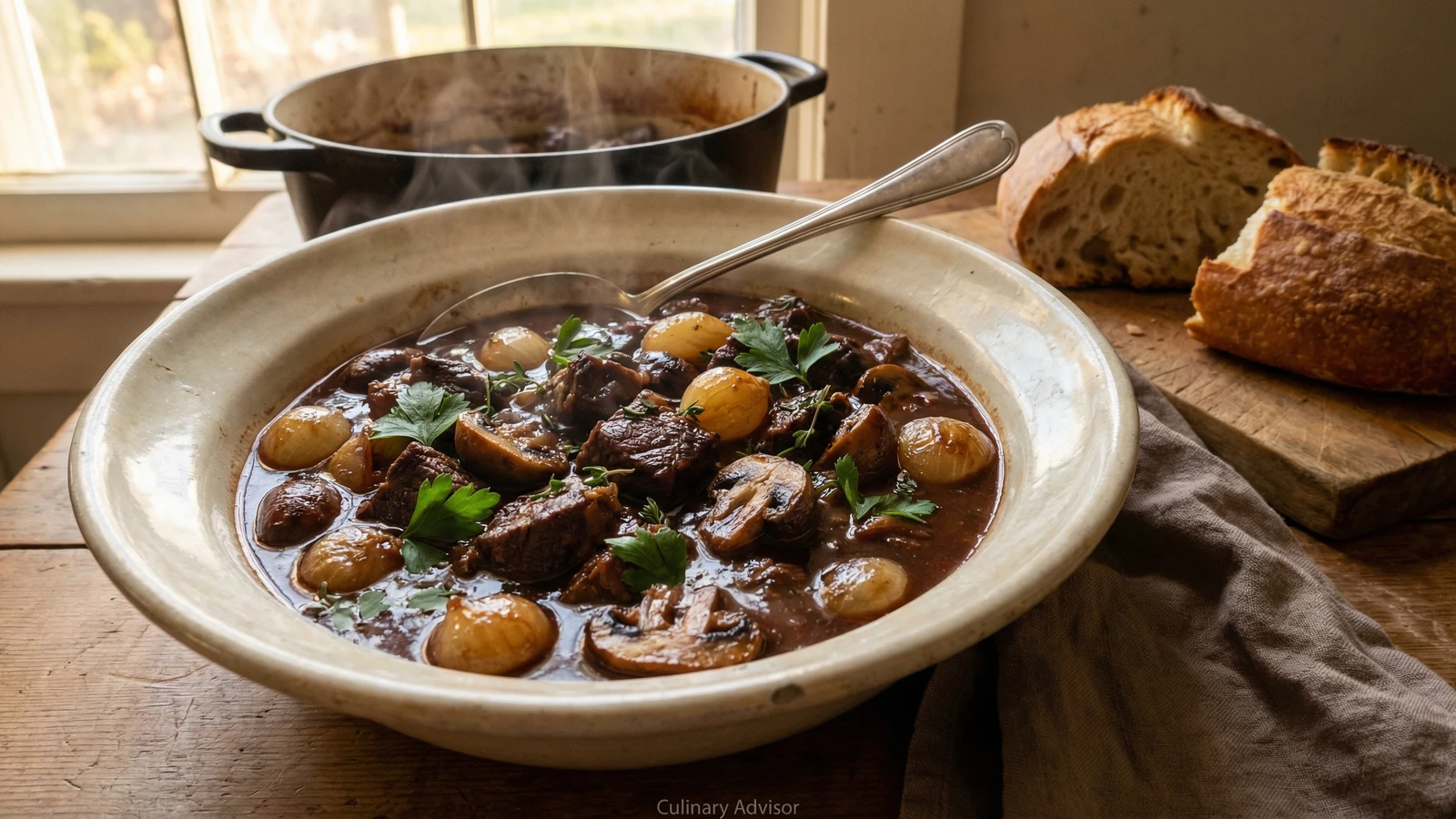
The French country stew that asks for nothing but good wine, honest beef, and the patience to let time do the work. Pearl onions and earthy mushrooms join the braise in the final act, turning a simple pot of meat into something worth gathering around.
Start with the beef. Find a butcher who knows the name of the farm, or at least the region. You want chuck from the shoulder, well-marbled and deep red. This cut has the fat and connective tissue that transforms during long, slow cooking. Lean meat makes tough stew.
Beef bourguignon is a peasant dish that became famous because it works. The wine braises the meat until it falls apart. The sauce reduces to something silky and profound. Pearl onions sweeten. Mushrooms add earthiness. Nothing complicated. Nothing hidden.
I learned this in France, not from a chef but from a grandmother in Burgundy who laughed when I asked for the recipe. There is no recipe, she said. There is good beef, good wine, and three hours. She was right. The technique is patience.
This is a dish for cold evenings and long tables. Make it ahead. It improves overnight as the flavors settle into each other. Warm it gently and serve it with crusty bread or buttered noodles. Let people help themselves from the pot. That is the point.
Quantity
3 pounds
cut into 2-inch pieces
Quantity
6 ounces
cut into lardons
Quantity
1 bottle (750ml)
Quantity
2 cups
Quantity
2 tablespoons
Quantity
4 cloves
smashed
Quantity
1 pound
quartered
Quantity
1 pound
peeled
Quantity
3 tablespoons, divided
Quantity
2 tablespoons
Quantity
2 medium
peeled and cut into 1-inch pieces
Quantity
1 medium
roughly chopped
Quantity
4 sprigs
Quantity
2
Quantity
3 tablespoons
chopped
Quantity
to taste
Quantity
to taste
freshly ground
Quantity
2 tablespoons
| Ingredient | Quantity |
|---|---|
| beef chuckcut into 2-inch pieces | 3 pounds |
| thick-cut bacon or salt porkcut into lardons | 6 ounces |
| Burgundy or Pinot Noir | 1 bottle (750ml) |
| homemade beef or chicken stock | 2 cups |
| tomato paste | 2 tablespoons |
| garlicsmashed | 4 cloves |
| cremini or button mushroomsquartered | 1 pound |
| pearl onionspeeled | 1 pound |
| unsalted butter | 3 tablespoons, divided |
| all-purpose flour | 2 tablespoons |
| carrotspeeled and cut into 1-inch pieces | 2 medium |
| yellow onionroughly chopped | 1 medium |
| fresh thyme | 4 sprigs |
| bay leaves | 2 |
| fresh flat-leaf parsleychopped | 3 tablespoons |
| fine sea salt | to taste |
| black pepperfreshly ground | to taste |
| neutral oil | 2 tablespoons |
Pat the beef completely dry with paper towels. Season generously with salt and pepper on all sides. Moisture is the enemy of browning. Wet meat steams instead of searing, and you lose the deep caramelization that gives this stew its soul. Let the seasoned meat sit at room temperature for thirty minutes before cooking.
Set a heavy Dutch oven over medium heat. Add the bacon lardons and cook slowly, stirring occasionally, until the fat has rendered and the pieces are golden and crisp, about eight to ten minutes. Remove with a slotted spoon and set aside. Leave the fat in the pot. This is your flavor base.
Increase heat to medium-high. Working in batches of four or five pieces, brown the beef on all sides. Do not crowd the pot. Each piece needs contact with hot metal. You are looking for deep mahogany color, not gray. This takes three to four minutes per side. Transfer browned meat to a plate and continue with remaining beef, adding a splash of oil between batches if the pot looks dry.
Reduce heat to medium. Add one tablespoon of butter to the pot. Add the chopped onion and carrots, stirring to coat in the fat. Cook until the onion softens and begins to color at the edges, about five minutes. Add the garlic and tomato paste, stirring for one minute until fragrant and the paste darkens slightly.
Pour in the entire bottle of wine. Use a wooden spoon to scrape up every browned bit from the bottom of the pot. These fond bits are concentrated flavor. Bring to a simmer and let the wine reduce by about one third, eight to ten minutes. The raw alcohol will cook off, leaving depth and fruit.
Return the beef and any accumulated juices to the pot. Add the stock, thyme sprigs, and bay leaves. The liquid should come about two-thirds up the sides of the meat. Bring to a gentle simmer. Cover and transfer to a 325°F oven. Braise for two and a half to three hours, until the beef yields easily to a fork but still holds its shape.
While the beef braises, melt one tablespoon of butter in a skillet over medium heat. Add the pearl onions in a single layer with a pinch of salt. Cook, shaking the pan occasionally, until golden on all sides and just tender when pierced with a knife, about fifteen minutes. Set aside.
In the same skillet, add the remaining tablespoon of butter. When it foams, add the quartered mushrooms. Do not stir immediately. Let them sit and develop color on one side, about three minutes, then toss and continue cooking until golden and slightly crisp at the edges, another three to four minutes. Season with a pinch of salt. Set aside with the onions.
When the beef is tender, remove the pot from the oven. Transfer the meat to a plate. Strain the braising liquid through a fine-mesh sieve into a saucepan, pressing on the solids. Discard the spent aromatics. Skim any fat from the surface. Bring the liquid to a simmer and cook until it coats a spoon lightly, about ten minutes. Taste. Adjust the salt.
Return the beef to the Dutch oven. Add the pearl onions, mushrooms, and crispy bacon. Pour the reduced sauce over everything. Warm gently over low heat for five minutes to let the flavors marry. Scatter the fresh parsley over the top. Serve directly from the pot, spooning the stew into warm shallow bowls.
1 serving (about 520g)
Culinary guides, cultural storytelling, and the editorial depth that makes cooking meaningful.
Discover Culinary ExplorerChef Ally
A silky winter soup that proves the most overlooked vegetables are often the most rewarding, finished with a drizzle of fragrant walnut oil that deepens every spoonful.
Chef Ally
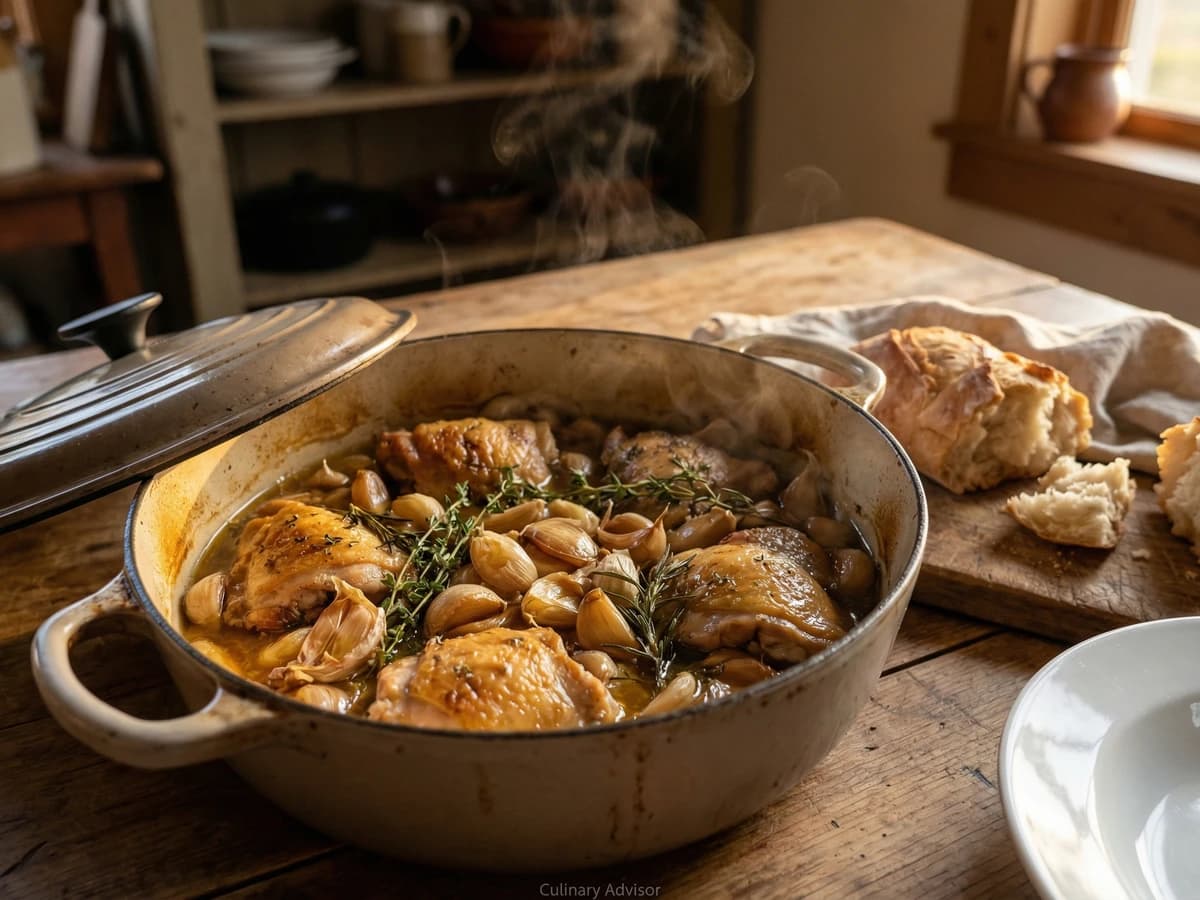
A Provençal farmhouse classic where a whole chicken braises with forty cloves of garlic until the meat falls from the bone and the garlic becomes a sweet, spreadable gift you smear on crusty bread.

Chef Ally
The ancient, golden-crusted bean casserole of Languedoc, layered with succulent duck confit and garlicky sausage, baked slowly until the crust cracks and the beans turn creamy with rendered fat.

Chef Dean
Deeply caramelized onions in rich beef broth, crowned with garlic-rubbed croutons and a bubbling cap of molten Gruyère that cracks to reveal steaming, soul-warming spoonfuls beneath.