
Chef Thomas
A Ploughman's Salad
The old pub ploughman's, shaken loose from its board and laid across butter lettuce with a sharp mustard dressing, for the kind of lunch that feels like you've given yourself the afternoon off.
A cooking platform built around craft, culture, and the stories behind what we eat.
Created by Chef Thomas
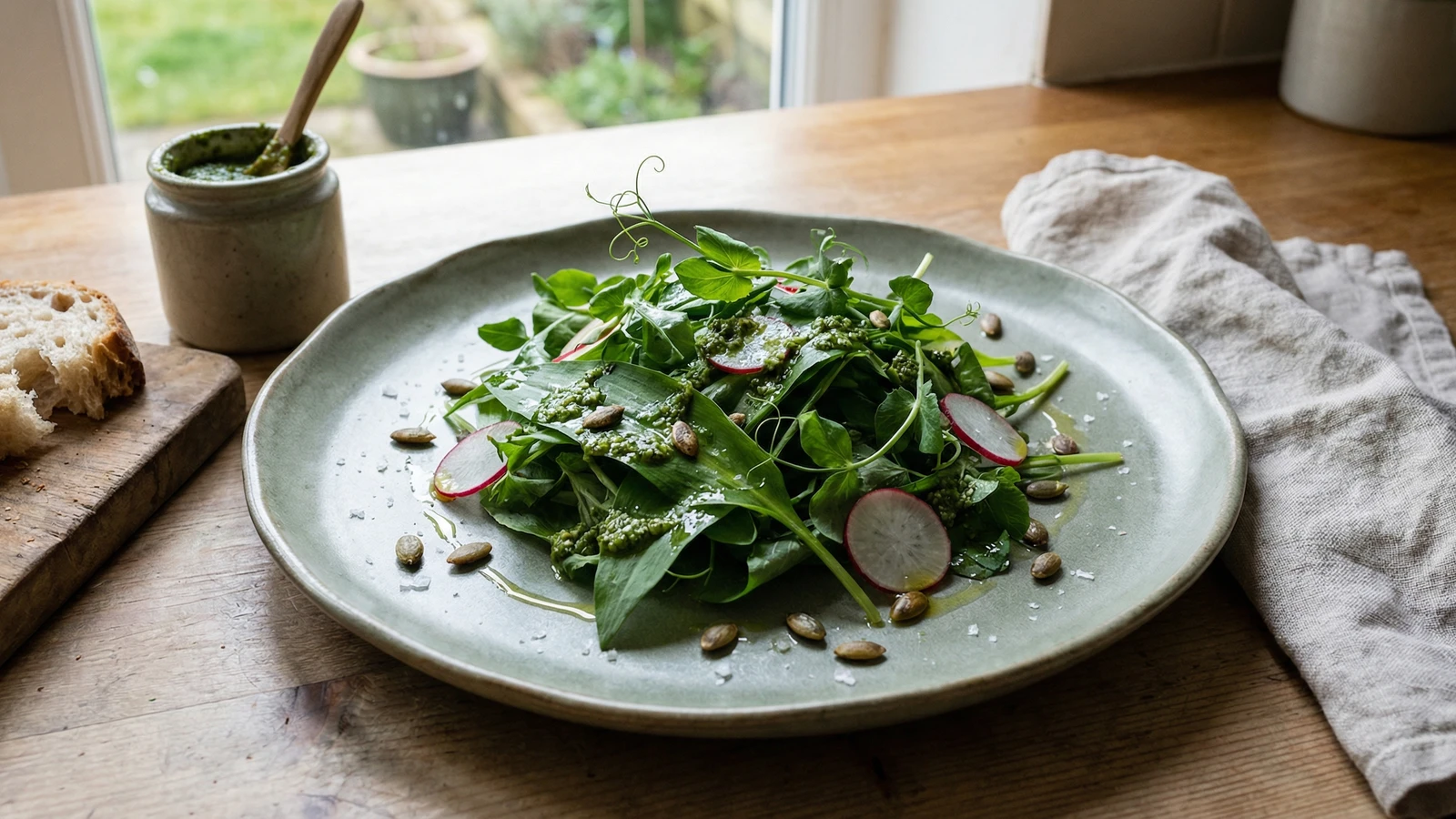
A tangle of pea shoots and tender spring leaves dressed with wild garlic pesto made from what the woodland floor offered this morning, gone in a few bites, gone in a few weeks.
There's a week in April, sometimes two if you're lucky, when the woods smell of garlic before you see a single leaf. You catch it on the path, that green, peppery warmth rising from the ground, and then you look down and there it is: a carpet of broad, bright leaves pushing through the leaf litter. Pick a carrier bag full. They won't last, and neither will the season.
Pea shoots arrived at the market on Saturday, the first of the year, pale-stemmed and curling at the tips like something still deciding which way to grow. I bought two bags without a plan, which is how the best meals start. The plan came later, standing in the kitchen with the wild garlic already pounded into a rough pesto that smelled like spring condensed into a jar.
This is barely a recipe. It's a bowl of leaves dressed with something good, eaten quickly, in the narrow window when everything tastes of itself and nothing needs improving. The pea shoots are sweet and grassy. The wild garlic pesto is sharp and green and faintly hot. Together they taste like the turning point of the year, that moment when the cold lifts and the garden starts to mean something again.
I wrote it down in the notebook: wild garlic pesto, pea shoots, April light through the kitchen window. Some meals don't need more than a sentence.
Quantity
2 large handfuls
washed and dried
Quantity
30g
Quantity
30g
finely grated
Quantity
enough to bring it together
Quantity
a squeeze
Quantity
to taste
Quantity
200g
lamb's lettuce, young spinach, watercress, baby chard
Quantity
100g
Quantity
a few
sliced thinly
Quantity
a handful
pumpkin or sunflower
Quantity
for finishing
| Ingredient | Quantity |
|---|---|
| wild garlic leaveswashed and dried | 2 large handfuls |
| pine nuts or walnuts | 30g |
| Parmesan or hard British cheesefinely grated | 30g |
| good olive oil | enough to bring it together |
| lemon juice | a squeeze |
| fine sea salt | to taste |
| mixed spring leaveslamb's lettuce, young spinach, watercress, baby chard | 200g |
| pea shoots | 100g |
| radishes (optional)sliced thinly | a few |
| toasted seeds (optional)pumpkin or sunflower | a handful |
| flaky sea salt | for finishing |
Put the wild garlic leaves in a mortar with a pinch of salt and pound them to a rough paste. Add the nuts and crush them in, not too smooth, you want some texture. Stir in the grated cheese. Now pour in the olive oil, slowly, stirring as you go, until the pesto is loose enough to dress leaves without clogging them. It should coat a spoon but still drip from it. Add a squeeze of lemon and taste. More salt, more lemon, more oil. You'll know when it's right. It will smell like a damp woodland floor in the best possible way.
Wash the spring leaves and pea shoots gently in cold water and dry them thoroughly. A salad spinner is useful here, or lay them out on a clean tea towel and pat dry. Wet leaves refuse a dressing. They slide off it, and everything tastes diluted. This step matters more than people think.
Put the leaves and pea shoots in a wide bowl. Spoon over a few generous tablespoons of the pesto and toss gently with your hands. Not a spoon. Your hands. You can feel when each leaf has been touched by the dressing. Scatter the radish slices through and toss once more. Pile it onto a serving plate or into individual bowls, letting the pea shoots tangle and curl upward rather than pressing them flat.
Scatter the toasted seeds over the top. A pinch of flaky salt. Another thread of olive oil if the mood takes you. Serve immediately, while the leaves still have life in them and the pesto smells of the woods. This is not a salad that waits.
1 serving (about 135g)
Culinary guides, cultural storytelling, and the editorial depth that makes cooking meaningful.
Discover Culinary ExplorerChef Thomas
The old pub ploughman's, shaken loose from its board and laid across butter lettuce with a sharp mustard dressing, for the kind of lunch that feels like you've given yourself the afternoon off.

Chef Thomas
Double-podded broad beans and sweet peas, dressed simply with torn mint, lemon, and good olive oil. The kind of bowl that tastes the way a June garden smells.

Chef Thomas
Celeriac cut into pale matchsticks and dressed in sharp mustard and crème fraîche, the sort of thing you make on a Sunday and find yourself eating from the bowl with a fork on Tuesday.

Chef Thomas
Bitter chicory leaves carrying sharp apple, crumbled Stilton, and toasted walnuts, dressed with cider vinegar and honey. A winter salad that earns its place at the table when the garden has shut up shop.