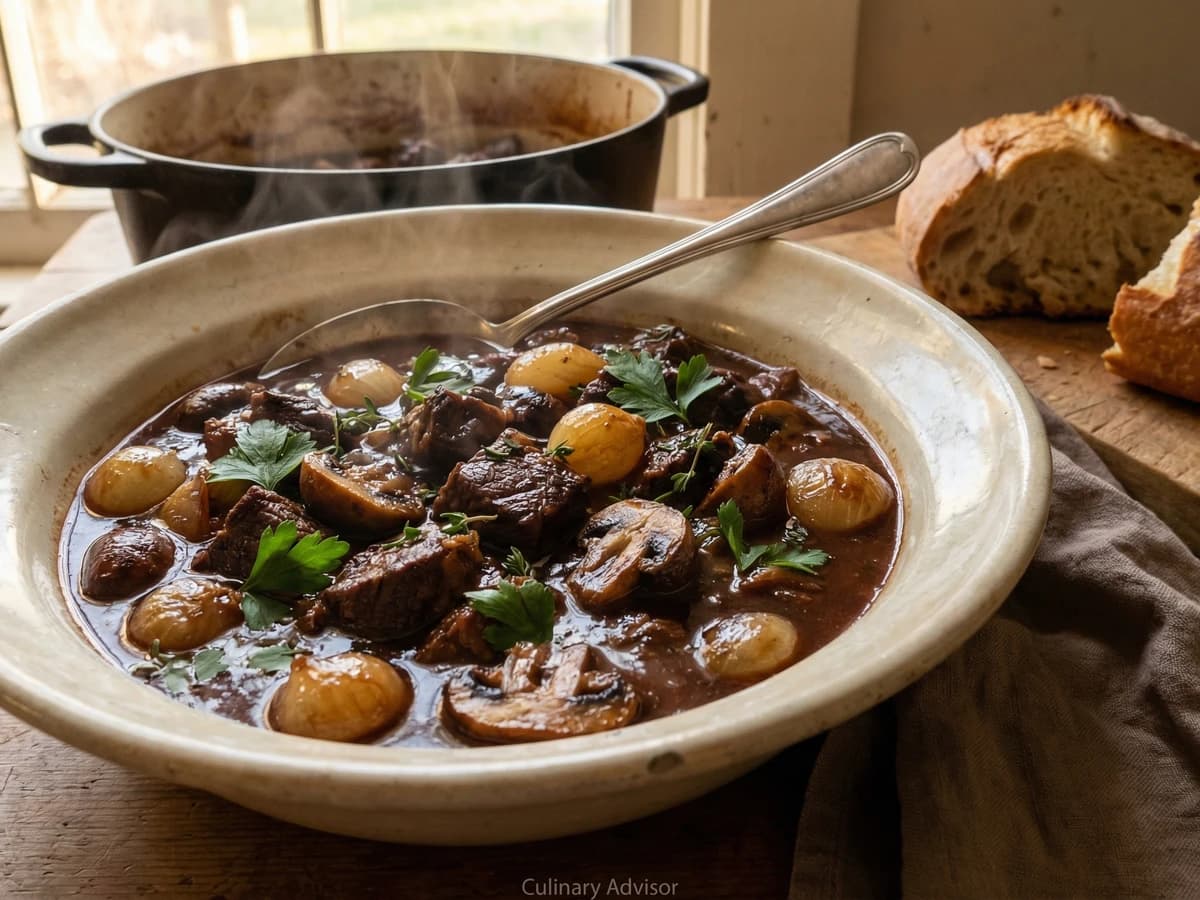
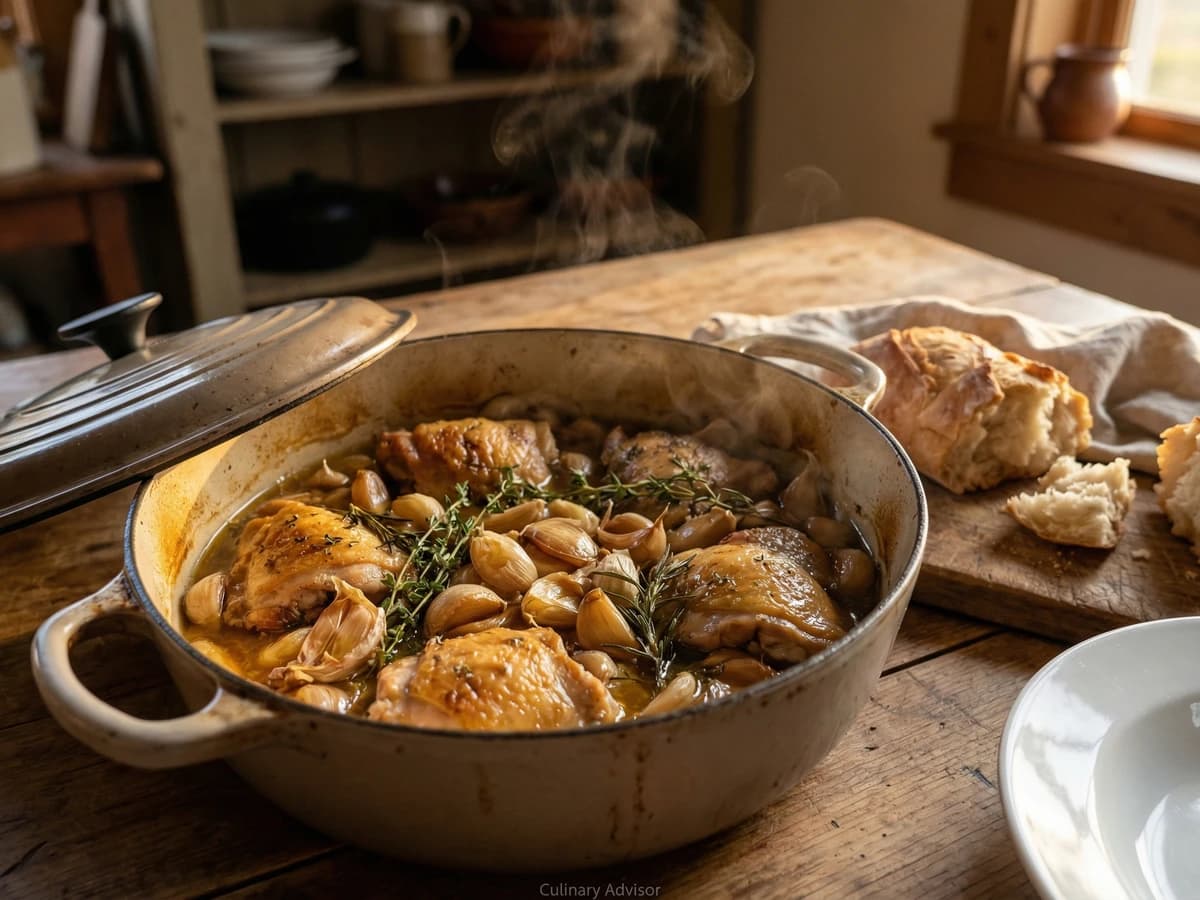
Young lamb braised until tender with the first new potatoes of spring and sweet peas added at the last moment, finished with fresh mint and parsley. A celebration of the season in one pot.
Soups & Stews
French
Easter
Special Occasion
30 min
Active Time
2 hr cook•2 hr 30 min total
Yield6 servings
Spring lamb is a fleeting thing. The animals are young, the meat is mild and tender, and the window is short. When you find it at the market, buy it. This is the moment.
New potatoes arrive at the same time, no bigger than a walnut, with skins so thin you could rub them off with your thumb. And the peas, the first ones of the year, sweet enough to eat raw while you shell them. These three ingredients belong together. The calendar arranged it that way.
The cooking is simple. Brown the lamb well, braise it gently in good stock, add the potatoes partway through, and scatter the peas in at the very end so they keep their color and snap. Fresh mint and parsley at the finish. That is all. Perfect ingredients need almost nothing done to them.
This is the kind of dish you make for Easter, or for any Sunday when the farmers market has finally shaken off winter. The sort of thing you bring to the table in the pot itself, steam rising, letting everyone serve themselves. Every meal is a meaningful choice, and choosing to cook what the season offers connects you to something larger than dinner.
The technique, the tradition, and the story behind every dish.
•Large Dutch oven or heavy-bottomed pot with lid (5-7 quart)
•Tongs for turning meat
•Wooden spoon
Instructions
1
Season the lamb
Pat the lamb pieces thoroughly dry with clean towels. Season generously with salt and pepper on all sides. The meat should sit at room temperature for twenty minutes before cooking. Cold meat will not brown properly, and browning is where the flavor begins.
2
Brown the lamb
Heat the olive oil in a large Dutch oven over medium-high heat until it shimmers. Working in batches so you do not crowd the pot, brown the lamb pieces on all sides, turning every two to three minutes. Each batch takes about eight minutes. The meat should develop a deep golden crust. Transfer to a plate as each batch finishes.
Crowding steams the meat instead of browning it. Give each piece space. This patience pays off in flavor.
3
Build the base
Pour off all but two tablespoons of fat from the pot. Add the butter and let it foam. Add the onion and cook, stirring occasionally, until soft and beginning to color at the edges, about five minutes. Add the garlic, carrots, and celery. Cook until the vegetables soften and the kitchen smells sweet, another five minutes.
4
Deglaze and add stock
Pour in the wine and scrape up all the browned bits clinging to the bottom of the pot. These are flavor. Let the wine bubble and reduce by half, about three minutes. Return the lamb and any accumulated juices to the pot. Pour in the stock. It should nearly cover the meat. Nestle in the thyme, bay leaves, and rosemary.
5
Braise low and slow
Bring the liquid to a gentle simmer. Cover the pot with a lid slightly ajar and reduce the heat to low. The surface should show lazy bubbles, not a vigorous boil. Braise for one hour, then check the lamb. It should be tender but not yet falling apart.
6
Add the potatoes
Tuck the new potatoes into the braising liquid, pressing them down so they are mostly submerged. Cover again and continue cooking for another thirty to forty minutes, until the potatoes are tender when pierced with a knife and the lamb yields easily to a fork.
New potatoes hold their shape better than storage potatoes. Their waxy flesh absorbs the braising liquid without falling apart.
7
Finish with peas and herbs
Remove and discard the herb sprigs and bay leaves. Scatter the fresh peas over the surface of the stew. Cover and cook just until the peas turn bright green and tender, three to four minutes for fresh, slightly less if using frozen. The peas should keep their aliveness. Stir in the parsley, mint, and lemon zest. Taste. Adjust salt and pepper. Serve immediately in warmed bowls.
Chef Tips
•Ask your butcher for lamb shoulder from a local farm. Shoulder has more connective tissue than leg, which melts during braising and makes the sauce silky.
•Homemade stock transforms this dish. If you roast a chicken, save the carcass. Simmer it with onion, carrot, and celery for two hours. Strain. That is your foundation.
•Shell the peas just before you need them. They begin to lose their sweetness the moment they leave the pod.
•If fresh peas are not in season, frozen peas picked at peak ripeness are honest. Thaw them briefly and add at the end. Do not apologize for using what is available.
•A crusty loaf of bread, warmed and torn at the table, is the only accompaniment this stew needs. The bread soaks up the braising liquid, and that is the best part.
Advance Preparation
•The stew can be braised through step five, cooled, and refrigerated for up to two days. The flavor deepens as it sits.
•Reheat gently before adding potatoes, then continue with the recipe. Add peas and fresh herbs just before serving.
•Do not add the peas ahead of time. They will turn gray and lose their sweetness.
Frequently Asked Questions
Nutrition Information
1 serving (about 500g)
Calories
920 calories
Total Fat
65 g
Saturated Fat
26 g
Trans Fat
0 g
Unsaturated Fat
35 g
Cholesterol
182 mg
Sodium
720 mg
Total Carbohydrates
33 g
Dietary Fiber
6 g
Sugars
5 g
Protein
43 g
Where cooking meets culture.
Culinary guides, cultural storytelling, and the editorial depth that makes cooking meaningful.