
Chef Freja
Danablu Mad med Rå Æggeblomme
Danish blue cheese layered on dark rye with a raw egg yolk nestled on top, red onion rings, and chives. The last piece at a Danish lunch, and the one that stays with you longest.
A cooking platform built around craft, culture, and the stories behind what we eat.
Created by Chef Freja
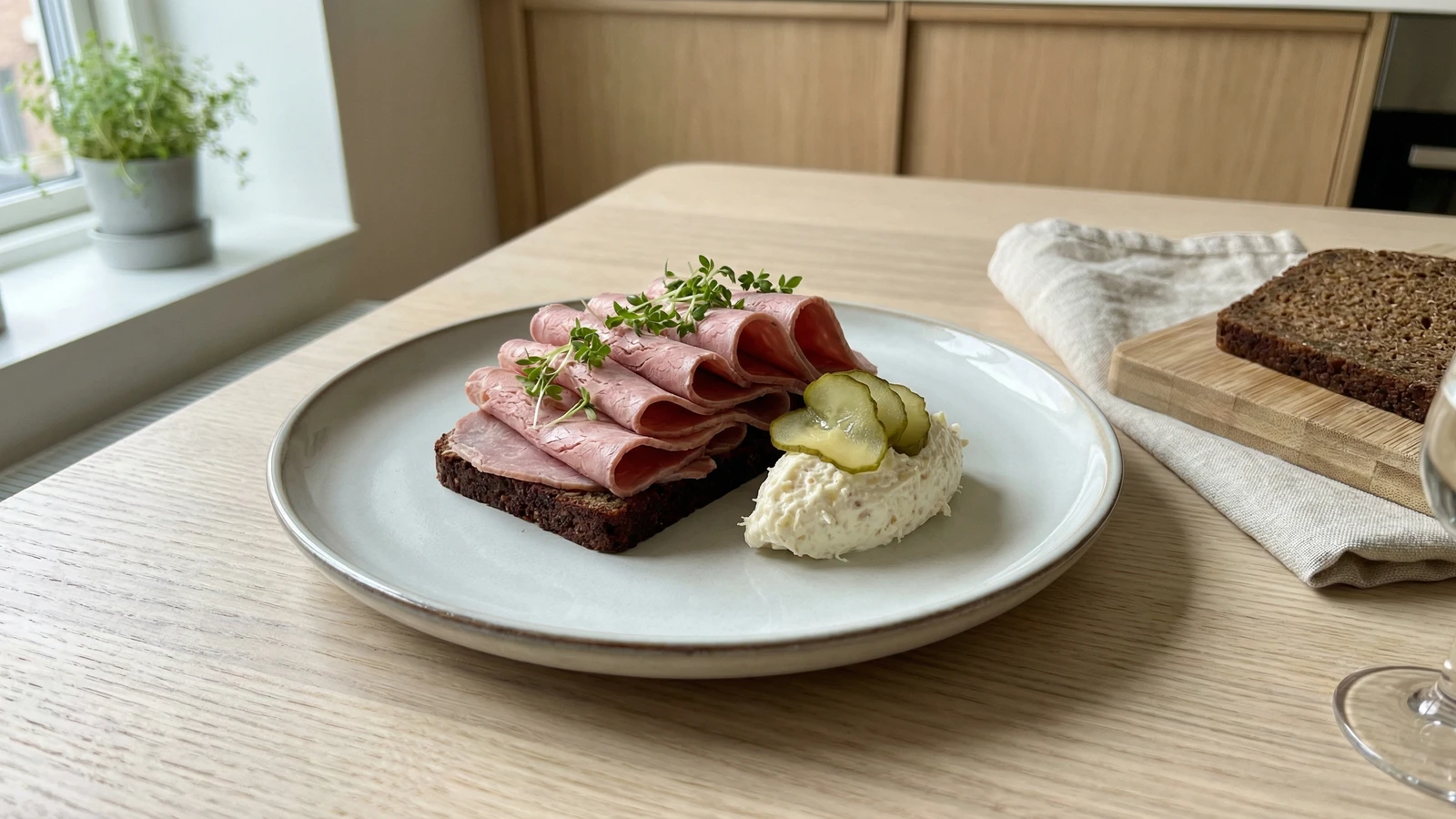
Danish salt-cured brisket, brined for four days and simmered slowly, sliced paper-thin onto buttered rugbrod with a cold horseradish cream that rises through the cream in sharp waves.
There's a moment in November when the Danish year tilts toward its long lunch season. The light has gone low, the herring jars are lined up in the pantry, and the first julefrokost invitations start to arrive. This is the season of spraengt oksebryst, the salt-cured brisket that sits at the heart of any proper cold table in Copenhagen.
Spraengt means burst, and it describes what the salt does to the meat during those four days in the brine: it drives its way in, pushes the moisture around, and transforms the brisket into something pink, firm, and deeply seasoned all the way through. This is not a dish you rush. The brine takes its time, the simmer takes its time, the overnight press takes its time. You give the dish four days and it gives you something you cannot get any other way. The joy of waiting is built into the method.
What I want you to pay attention to is the slicing. Paper-thin is not a suggestion. The whole character of spraengt oksebryst lives in how the meat is cut. Thick slices taste heavy and salty. Thin slices, laid in soft folds on buttered rugbrod with a cold horseradish cream beside them, taste like one of the great things the Danish kitchen has ever done. You'll know when it's right because the slices will almost fall apart under their own weight, and the cream will catch on the edges of the meat, and the first bite will tell you everything. This is how we greet each other at the lunch table in winter.
Salt-curing beef was how Danish households preserved meat through the long winters before refrigeration, and spraengt oksebryst evolved from that practical necessity into one of the defining dishes of the Copenhagen lunch tradition. By the late 1800s it had become a fixture of the city's bryggeri kaeldere, the beer-hall lunch cellars where dock workers and office clerks ate side by side at long wooden tables. The pairing with fresh horseradish, grated at the counter and folded into cold cream, comes from the kitchens of the smorrebrodsjomfruer, the trained cold-kitchen specialists who understood that the sharpness of the root was the only thing that could cut cleanly through the richness of the cured beef.
Quantity
1.5kg
trimmed but with a thin layer of fat intact
Quantity
2 litres
Quantity
200g
Quantity
80g
Quantity
2
Quantity
1 tablespoon
Quantity
1 tablespoon
lightly crushed
Quantity
4
Quantity
1 small bunch
Quantity
1 large
halved
Quantity
2
roughly chopped
Quantity
1
white part only, split and rinsed
Quantity
200ml
very cold
Quantity
4 tablespoons
finely grated
Quantity
1 teaspoon
Quantity
1 teaspoon
Quantity
to taste
Quantity
8 to 10 thick slices
Quantity
softened, for the bread
Quantity
to serve
sliced lengthwise
Quantity
to finish
| Ingredient | Quantity |
|---|---|
| beef briskettrimmed but with a thin layer of fat intact | 1.5kg |
| cold water | 2 litres |
| coarse sea salt | 200g |
| light brown sugar | 80g |
| bay leaves | 2 |
| black peppercorns | 1 tablespoon |
| juniper berrieslightly crushed | 1 tablespoon |
| whole allspice berries | 4 |
| fresh thyme | 1 small bunch |
| yellow onionhalved | 1 large |
| carrotsroughly chopped | 2 |
| leekwhite part only, split and rinsed | 1 |
| double creamvery cold | 200ml |
| fresh horseradish rootfinely grated | 4 tablespoons |
| white wine vinegar | 1 teaspoon |
| caster sugar | 1 teaspoon |
| fine sea salt | to taste |
| dark rugbrod | 8 to 10 thick slices |
| unsalted butter | softened, for the bread |
| pickled gherkinssliced lengthwise | to serve |
| fresh cress or small watercress leaves | to finish |
Pour the water into a large pot. Add the salt, brown sugar, bay leaves, peppercorns, juniper berries, and allspice. Bring to a gentle simmer, stirring until the salt and sugar have completely dissolved. Take it off the heat and let it cool completely. Cold brine is the only brine you want near raw meat. Warm brine begins to cook the edges of the brisket and the texture goes wrong before the cure even starts.
Place the brisket in a non-reactive container just large enough to hold it. A deep glass dish or a food-grade plastic tub works well. Pour the cold brine over the meat so it is completely submerged. If the brisket floats, weigh it down with a small plate. Cover and refrigerate for four full days. This is the joy of waiting. The salt is working its way into the meat slowly and evenly, seasoning it all the way through and giving it the pink, firm character that defines spraengt oksebryst.
After four days, lift the brisket out of the brine and rinse it under cold running water. Discard the brine. Rinsing is not optional. The surface of the meat holds a heavy load of salt that needs to come off, or the finished brisket will be inedible. Pat the meat dry and place it in a clean pot that fits it snugly.
Add the halved onion, carrots, leek, and fresh thyme to the pot with the brisket. Cover everything with fresh cold water by about two centimetres. Bring to a gentle simmer over medium heat, then turn the heat down so the surface barely trembles. A hard boil will make the meat tough and stringy. A gentle simmer is what gives you brisket you can almost cut with a spoon. Cook for two and a half to three hours, until a knife slides through the thickest part with no resistance at all.
Lift the cooked brisket carefully onto a deep plate or tray with a lip. Lay a piece of parchment over the surface, then set a second plate on top and weigh it down with two or three tins from the pantry. Let it cool to room temperature, then move the whole arrangement to the fridge overnight. Pressing compacts the fibres so the meat slices cleanly into paper-thin sheets the next day. Without pressing, the slices tear. With pressing, they hold together in silky ribbons.
Pour the cold cream into a chilled bowl and whip it with a whisk until it holds soft peaks. Stop before it goes stiff. You want a cream that falls softly from the spoon, not one that stands to attention. Fold in the grated fresh horseradish, the vinegar, the sugar, and a small pinch of salt. Taste it. The heat should rise through the cream in waves, sharp but cushioned. Adjust with more horseradish if you like it fiercer. Only by tasting do you really understand it.
Take the pressed brisket out of the fridge. Using your sharpest knife, slice it against the grain as thinly as you can manage. Paper-thin is the goal. The slices should almost be translucent where the light hits them. If the knife is dragging, sharpen it or switch to a long serrated blade and use a steady sawing motion. Thick slices of spraengt oksebryst will taste salty and heavy. Thin slices taste balanced and alive.
Butter each slice of rugbrod generously, right to the edges. Butter is not optional on Danish smorrebrod. It is the glue and the insulation that keeps the bread from soaking through. Lay the slices of brisket on top in soft, overlapping folds so the meat has height and movement, never flat. Spoon a generous quenelle of horseradish cream to one side. Lay a few fans of pickled gherkin alongside. Finish with a small handful of fresh cress scattered across the top. Serve at once, cold, with the rest of a cold lunch spread around it. Tak for mad.
1 serving (about 200g)
Culinary guides, cultural storytelling, and the editorial depth that makes cooking meaningful.
Discover Culinary ExplorerChef Freja
Danish blue cheese layered on dark rye with a raw egg yolk nestled on top, red onion rings, and chives. The last piece at a Danish lunch, and the one that stays with you longest.

Chef Freja
Thick-sliced Danbo on properly buttered rugbrod with sweet pepper rings and a crown of garden cress. The cheese smorrebrod that lives in every Danish lunchbox, from the first day of school to the last day at the office.

Chef Freja
Copenhagen's most storied smorrebrod: leverpostej, cold salt beef, trembling aspic, onion rings, and fresh cress on dark rugbrod. Invented at Oskar Davidsen's in the 1880s for a hungry veterinarian and still one of the great pieces of the Danish lunch table.

Chef Freja
Pungent Esrom from North Zealand on dark rye with paper-thin radish and fresh chives. The cheese course that closes a proper Danish smorrebrod spread, one of the quietest, most satisfying bites in the whole tradition.