
Chef Freja
Danablu Mad med Rå Æggeblomme
Danish blue cheese layered on dark rye with a raw egg yolk nestled on top, red onion rings, and chives. The last piece at a Danish lunch, and the one that stays with you longest.
A cooking platform built around craft, culture, and the stories behind what we eat.

Created by Chef Freja
Copenhagen's most storied smorrebrod: leverpostej, cold salt beef, trembling aspic, onion rings, and fresh cress on dark rugbrod. Invented at Oskar Davidsen's in the 1880s for a hungry veterinarian and still one of the great pieces of the Danish lunch table.
Copenhagen in late November. The afternoon light fails by three, and the old lunch restaurants along the inner canals fill up with people who need a proper meal before the dark closes in. Dyrlaegens natmad belongs to this hour. It's the piece of smorrebrod you order when you want something that will stay with you until dinner, and maybe past it.
The name translates as the veterinarian's midnight snack, and there is a real vet behind it. He walked into Oskar Davidsen's smorrebrodsrestaurant in the 1880s after a long day of rounds, hungry and cold, and asked for something substantial. What the kitchen made him became one of the most recognizable pieces of smorrebrod ever invented and a fixture of the Danish lunch table.
The whole dish is architecture. A thick slice of rugbrod spread with cold butter. A generous layer of leverpostej, the coarse liver pate that every Danish household keeps in the fridge. Cold salt beef, sliced thin. Diced aspic, the trembling jelly made from beef stock. Onion rings. Cress. Five layers, each doing its job, and the whole thing eaten with a knife and fork because lifting it would collapse everything.
I'll walk you through it step by step, and I'll tell you why each layer matters so you're never guessing. The only thing you have to plan ahead is the aspic, which needs a couple of hours in the fridge to set. Start with that and the rest will come together quickly. You'll know when it's right, because the moment you cut through all five layers and they hold together on your fork, you've made it properly.
Dyrlaegens natmad was invented at Oskar Davidsen's smorrebrodsrestaurant in Copenhagen in the 1880s, when the city's lunch culture was being codified by a handful of establishments that turned the open sandwich into a written repertoire. The story the Davidsen family still tells is that a local veterinarian came in late one evening asking for a hearty combination, and the layered piece the kitchen improvised became his standard order and then a fixture of the menu. The Davidsen dynasty eventually printed its smorrebrod list on a roll of paper nearly two metres long, more than 250 pieces in all, and dyrlaegens natmad remained one of its defining offerings. The restaurant still operates under direct descendants of the founder, a living link to the moment the dish was born.
Quantity
4 thick slices
Quantity
40g
cold, softened slightly for spreading
Quantity
200g
Quantity
150g
cold, very thinly sliced
Quantity
200ml
Quantity
3 (or 1 teaspoon powdered gelatin)
Quantity
1 small
sliced paper-thin into rings
Quantity
1 small punnet
Quantity
freshly ground, to taste
| Ingredient | Quantity |
|---|---|
| dark rugbrod | 4 thick slices |
| unsalted buttercold, softened slightly for spreading | 40g |
| coarse leverpostej (Danish liver pate) | 200g |
| salt beef (saltet oksebryst)cold, very thinly sliced | 150g |
| beef stock (for the aspic) | 200ml |
| gelatin leaves | 3 (or 1 teaspoon powdered gelatin) |
| yellow onionsliced paper-thin into rings | 1 small |
| fresh garden cress (karse) | 1 small punnet |
| black pepper | freshly ground, to taste |
Start with the aspic. It needs at least two hours in the fridge and you can't rush it, so do this first. Soak the gelatin leaves in a bowl of cold water for five minutes until they go soft and floppy. While they soften, warm the beef stock in a small saucepan until it's hot but not boiling. Lift the gelatin out of the water, squeeze gently, and drop it into the warm stock. Stir until it dissolves completely. Pour the stock into a shallow dish, about a centimetre deep, and refrigerate until fully set. The aspic is the thing that makes this dish what it is. Without the cool trembling cubes against the pate, you've just got a pile of cold cuts on rye.
Peel the onion and slice it into rings as thin as you can make them. A mandoline is the right tool. Thick rings stay harsh and dominate the whole piece; paper-thin ones sit softly on top and carry just enough bite. Separate the rings with your fingers and set them aside on a plate.
Lay the four slices of rugbrod on your work surface. Spread each one with a generous layer of butter, going right to the edges. Don't be shy. The butter isn't just flavor here. It's a barrier between the dense rye and the pate, and without it the bread drinks up all the fat and the whole thing goes heavy. Cold butter, soft enough to spread, is what you want.
Spread a thick, even layer of leverpostej over the buttered rugbrod. Use the coarse kind with visible fat and pieces of liver, never the smooth spreadable version. That smooth pate is for a different dish. Go right to the edges so every bite has pate underneath. This is the foundation of the architecture, and it needs to be generous.
Drape the thinly sliced salt beef over the leverpostej, covering most of the surface but letting a little of the pate show at the edges. Slightly folded and lifted, never flat. Cold cuts pressed flat look sad, and this dish deserves better. Saltet oksebryst is the Danish name for this salted brisket; if you can't find it, a good quality corned beef works, sliced very thin.
Take the set aspic out of the fridge. Turn it out onto a cutting board and cut it into small cubes, about five millimetres across. Scatter the cubes over the salt beef, leaving some of the meat visible through them. Don't cover everything. The aspic is meant to shimmer in little pools across the top, not form a lid. This is the detail that tells you this is dyrlaegens natmad and not any other smorrebrod.
Arrange two or three onion rings on top of each piece, stacked loosely so they catch the light. Then take the cress and snip a generous pinch over each one with kitchen scissors. The cress is not garnish. It's a flavor: peppery, fresh, alive, the green note that cuts through all those dense browns and pinks. Finish with a twist of black pepper and serve immediately. Knife and fork, never fingers. You'll know when it's right because when you cut through all five layers and lift a piece onto your fork, everything holds together. Tak for mad.
1 serving (about 160g)
Culinary guides, cultural storytelling, and the editorial depth that makes cooking meaningful.
Discover Culinary ExplorerChef Freja
Danish blue cheese layered on dark rye with a raw egg yolk nestled on top, red onion rings, and chives. The last piece at a Danish lunch, and the one that stays with you longest.

Chef Freja
Thick-sliced Danbo on properly buttered rugbrod with sweet pepper rings and a crown of garden cress. The cheese smorrebrod that lives in every Danish lunchbox, from the first day of school to the last day at the office.

Chef Freja
Pungent Esrom from North Zealand on dark rye with paper-thin radish and fresh chives. The cheese course that closes a proper Danish smorrebrod spread, one of the quietest, most satisfying bites in the whole tradition.
Chef Freja
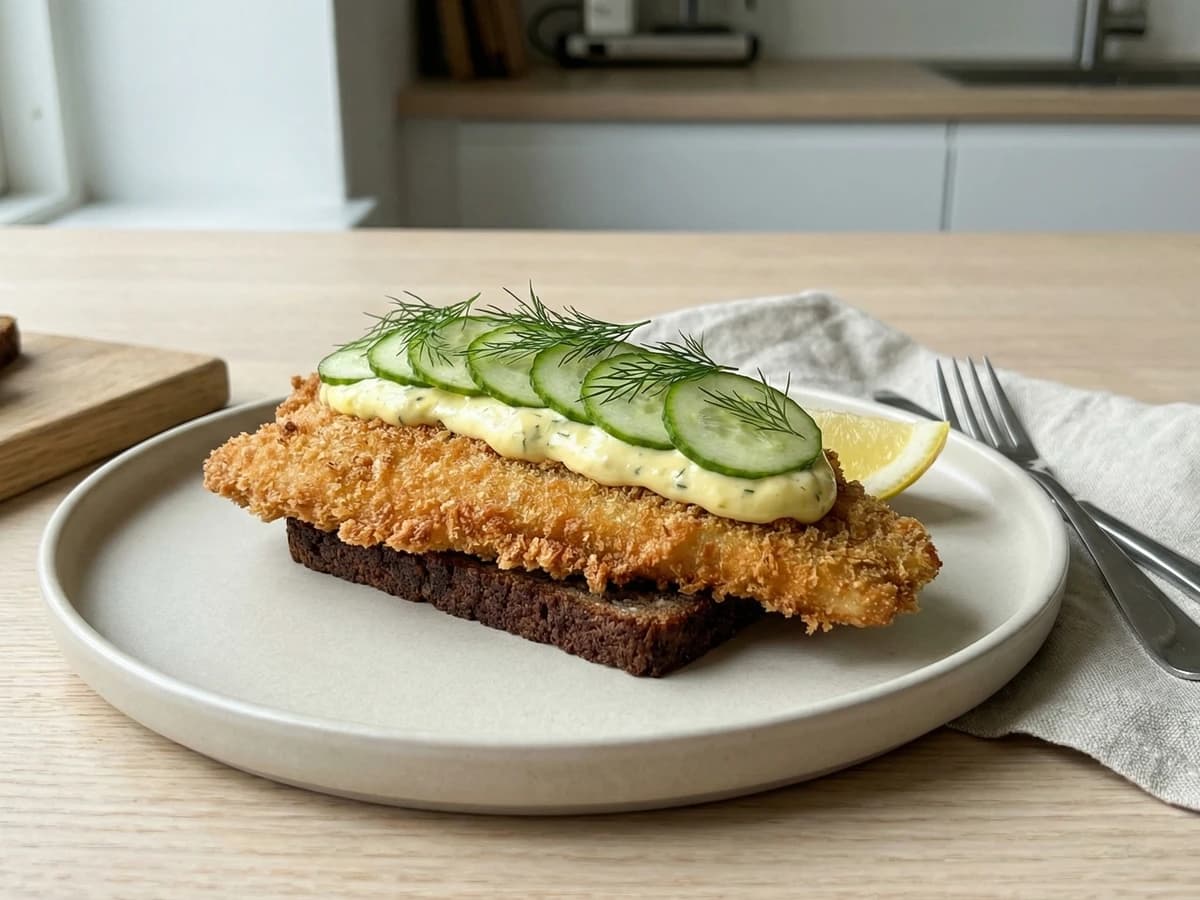
Crisp breaded plaice on dark rugbrod with a stripe of remoulade, paper-thin cucumber, and a squeeze of lemon. The Danish weeknight sandwich that turns a simple fish into something worth setting the table for.