
Chef Dean
Amish Buttered Egg Noodles
The humblest side dish in the Pennsylvania Dutch tradition, where wide egg noodles and good butter need nothing more than salt and a warm bowl to become the thing everyone remembers from the church supper.
A cooking platform built around craft, culture, and the stories behind what we eat.
Created by
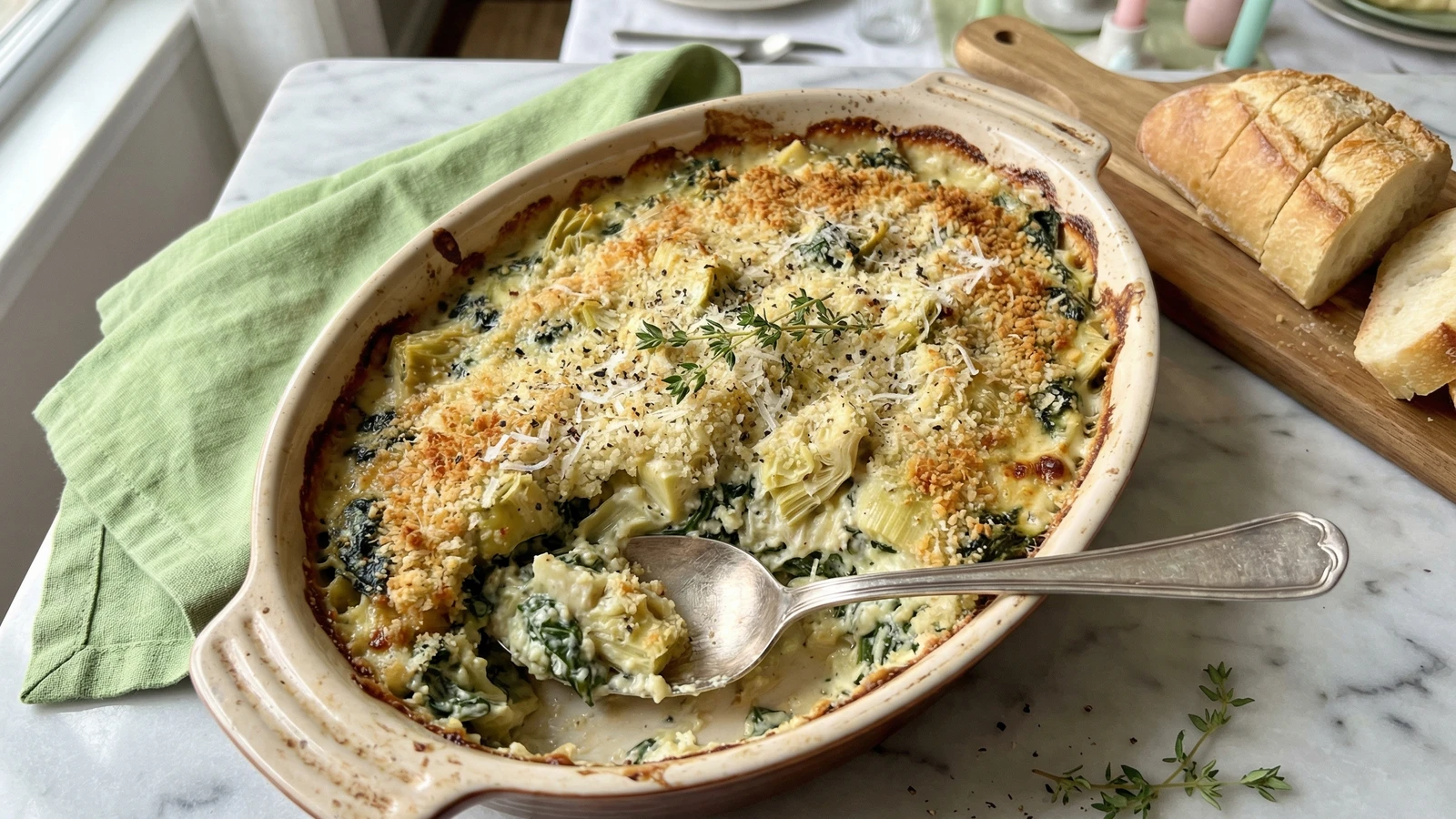
Tender spinach and artichoke hearts bound in a garlic-laced cream sauce, crowned with a shatteringly crisp Parmesan crust. This is the dish that disappears first at every gathering.
The spinach artichoke combination has become so ubiquitous at American gatherings that we've forgotten to treat it with respect. Most versions drown in mayonnaise or emerge from the oven as gray, soupy affairs better suited for hiding than celebrating. This gratin reclaims the dignity of both vegetables.
I first encountered the pairing not at some chain restaurant but in a Roman trattoria where the cook sautéed both with nothing more than garlic, olive oil, and a shower of Pecorino. Simple. Honest. The flavors actually tasted like something. That memory guided this recipe, though I've adapted it for the American table where we want our gratins rich, bubbly, and capable of feeding a crowd.
The technique matters here. Squeeze your spinach aggressively. Moisture is the enemy of a proper gratin. The artichoke hearts should be quartered and patted dry before they meet the cream. What you're building is a dish with structure, not a dip with pretensions. Though I won't judge you for dragging crusty bread through the leftovers.
For Easter and spring gatherings, this gratin sits beautifully at room temperature for the better part of an hour, making it ideal for buffet service. Assemble it the night before if you like. The flavors only improve.
Quantity
2 pounds
or 20 oz frozen, thawed
Quantity
2 cans (14 oz each)
drained and quartered
Quantity
4 tablespoons
divided
Quantity
3 large
minced
Quantity
4 cloves
minced
Quantity
1/4 cup
Quantity
1 1/2 cups
warmed
Quantity
1 cup
Quantity
8 ounces
softened and cubed
Quantity
1 1/2 cups
divided
Quantity
1/2 teaspoon
freshly grated
Quantity
1/4 teaspoon
Quantity
1 teaspoon
Quantity
1/2 teaspoon
freshly ground
Quantity
1 cup
from day-old bread
Quantity
2 tablespoons
Quantity
1 tablespoon
| Ingredient | Quantity |
|---|---|
| fresh spinach, stems removedor 20 oz frozen, thawed | 2 pounds |
| artichoke heartsdrained and quartered | 2 cans (14 oz each) |
| unsalted butterdivided | 4 tablespoons |
| shallotsminced | 3 large |
| garlicminced | 4 cloves |
| all-purpose flour | 1/4 cup |
| whole milkwarmed | 1 1/2 cups |
| heavy cream | 1 cup |
| cream cheesesoftened and cubed | 8 ounces |
| Parmesan cheese, freshly grateddivided | 1 1/2 cups |
| nutmegfreshly grated | 1/2 teaspoon |
| cayenne pepper | 1/4 teaspoon |
| kosher salt | 1 teaspoon |
| black pepperfreshly ground | 1/2 teaspoon |
| fresh breadcrumbsfrom day-old bread | 1 cup |
| extra-virgin olive oil | 2 tablespoons |
| fresh thyme leaves | 1 tablespoon |
If using fresh spinach, bring a large pot of salted water to a rolling boil. Add spinach in batches, pushing it down with a spoon until wilted, about 30 seconds per batch. Transfer immediately to a bowl of ice water to preserve that vivid green color. Drain thoroughly. If using frozen spinach, skip the blanching. Either way, take handfuls of spinach and squeeze with genuine force over the sink until no more liquid drips out. This step is non-negotiable. Wet spinach creates a watery gratin. Roughly chop the spinach and set aside.
Spread the quartered artichoke hearts on a clean kitchen towel or several layers of paper towels. Pat them firmly, pressing out the brine they've been swimming in. You want them dry to the touch. The canned variety works perfectly here. Fresh artichokes require hours of preparation for marginal improvement in a gratin this rich.
Melt 3 tablespoons of butter in a large, heavy-bottomed saucepan over medium heat. When the foam subsides, add the shallots. Cook, stirring occasionally, until softened and translucent, about 3 minutes. Add the garlic and cook until fragrant, another 30 seconds. You'll smell it change from raw to sweet. Don't let it brown.
Sprinkle the flour over the shallot mixture and stir constantly for 2 minutes. This cooks out the raw flour taste and creates the roux that will thicken your sauce. The mixture should smell nutty and look like wet sand. Reduce heat to medium-low if it begins to color.
Pour in the warm milk in a slow, steady stream while whisking continuously. The sauce will seize up at first, then smooth out as you add more liquid. Once all the milk is incorporated, whisk in the heavy cream. Increase heat to medium and cook, stirring often, until the sauce thickens enough to coat the back of a spoon, about 5 minutes. It should leave a clear trail when you draw your finger across the spoon.
Remove the pan from heat. Add the cream cheese cubes and stir until completely melted and smooth. Fold in 1 cup of the Parmesan, reserving the rest for the topping. Season with the nutmeg, cayenne, salt, and black pepper. Taste it now. The sauce should be rich but not cloying, with a gentle warmth from the cayenne and the mysterious depth that nutmeg always brings to spinach. Adjust seasoning as needed.
Fold the squeezed spinach and dried artichoke hearts into the cream sauce, coating everything evenly. The mixture should be thick and cohesive, not soupy. Transfer to a buttered 9x13 inch baking dish or two smaller gratin dishes for easier serving. Use the remaining tablespoon of butter to grease the dish generously. Spread the mixture evenly, pressing gently to eliminate air pockets.
In a small bowl, combine the breadcrumbs, remaining 1/2 cup Parmesan, olive oil, and thyme leaves. Toss with your fingers until the crumbs are evenly coated and clump slightly when pressed. Scatter this mixture over the gratin, covering the surface completely. The breadcrumbs should look golden and rough, promising that satisfying crunch.
Position a rack in the upper third of your oven and heat to 375°F. Bake the gratin until the filling bubbles around the edges and the topping turns deep golden brown, 30 to 35 minutes. The center should be hot throughout. If the top browns too quickly, tent loosely with foil for the final 10 minutes. The bubbling will slow as you remove it from the oven, leaving behind those caramelized edges everyone fights over.
Let the gratin rest for 10 minutes before serving. This allows the filling to set slightly, making it easier to portion. Serve directly from the baking dish for family-style gatherings, or scoop generous portions onto warmed plates. The gratin holds well at room temperature for up to 45 minutes, making it ideal for buffet service at Easter dinner or any spring celebration.
1 serving (about 100g)
Culinary guides, cultural storytelling, and the editorial depth that makes cooking meaningful.
Discover Culinary ExplorerChef Dean
The humblest side dish in the Pennsylvania Dutch tradition, where wide egg noodles and good butter need nothing more than salt and a warm bowl to become the thing everyone remembers from the church supper.

Chef Dean
Golden-topped, impossibly creamy shredded potato casserole with a shattering cornflake crust. This is the dish that appears at every church supper, potluck, and time of need across the American heartland.

Chef Dean
Golden-topped stuffing with tender, savory bread cubes perfumed by fresh sage and sweet onions. This is the dish people return to year after year, the one that makes Thanksgiving taste like Thanksgiving.

Chef Dean
Plump hominy kernels braised in smoky bacon fat with roasted Hatch chiles, cumin, and a bright hit of lime. This is the side dish that disappears first at every potluck, the one neighbors ask you to bring again and again.