
Chef Dean
Buttermilk Bread
A soft, tangy sandwich loaf with a golden crust and remarkable staying power, this buttermilk bread turns out tender every time and keeps beautifully for days on your counter.
A cooking platform built around craft, culture, and the stories behind what we eat.

Created by
Golden-crusted cornbread baked in a screaming-hot cast iron skillet, shattering at the edges while staying tender at its heart. This is the bread that built the South.
Cornbread is America's oldest bread. Native peoples were grinding corn and baking it on hot stones centuries before European settlers arrived with their wheat flour and bread pans. What we call Southern cornbread today represents generations of adaptation: African American cooks in plantation kitchens, Appalachian families stretching meager supplies, church ladies perfecting their recipes for Wednesday night suppers. This bread carries history in every crumb.
The cast iron skillet isn't optional. It's the whole point. You preheat that pan until it's smoking, slick it with fat, and pour in your batter. The bottom crust begins forming before you can close the oven door. That's the sizzle you're listening for. That's the sound of proper cornbread.
Now, I'll address the great Southern debate: sugar. Traditionalists from the Deep South will tell you sugar has no place in cornbread. They're not wrong for their tradition. But plenty of Southern grandmothers added a spoonful or two, and I won't argue with grandmothers. This recipe includes a modest amount. You can reduce it or omit it entirely. The cornbread will be honest either way.
What matters more than sugar is your cornmeal. Stone-ground if you can find it. The texture is rougher, more interesting on the tongue. Industrial cornmeal works, but you'll miss something. Like the difference between a tomato from your garden and one shipped across the country in January. Both are tomatoes. Only one tastes like summer.
Quantity
1 1/2 cups
Quantity
1/2 cup
Quantity
2 tablespoons
Quantity
1 tablespoon
Quantity
1/2 teaspoon
Quantity
1 teaspoon
Quantity
1 1/2 cups
Quantity
2
Quantity
4 tablespoons
melted and slightly cooled
Quantity
3 tablespoons
| Ingredient | Quantity |
|---|---|
| yellow cornmeal, preferably stone-ground | 1 1/2 cups |
| all-purpose flour | 1/2 cup |
| sugar | 2 tablespoons |
| baking powder | 1 tablespoon |
| baking soda | 1/2 teaspoon |
| fine salt | 1 teaspoon |
| buttermilk | 1 1/2 cups |
| large eggs | 2 |
| unsalted buttermelted and slightly cooled | 4 tablespoons |
| bacon drippings or unsalted butter for skillet | 3 tablespoons |
Position a rack in the center of your oven and place a 10-inch cast iron skillet directly on it. Heat the oven to 425°F. The skillet needs at least 20 minutes in that hot oven. Don't rush this. A properly heated pan is the difference between cornbread that releases cleanly and cornbread that sticks and tears.
Whisk together the cornmeal, flour, sugar, baking powder, baking soda, and salt in a large bowl. Use your whisk aggressively. You want the leaveners evenly distributed throughout, or you'll get pockets of bitter baking powder in the finished bread. The mixture should look uniformly golden with no white streaks.
In a separate bowl or large measuring cup, whisk the buttermilk and eggs until the yolks are fully broken and incorporated. The mixture should be pale yellow and slightly frothy. Add the melted butter in a steady stream while whisking. It may clump slightly when it hits the cold buttermilk. That's fine. Keep whisking until mostly smooth.
Pour the wet ingredients into the dry and stir with a wooden spoon or spatula until just combined. You'll see some lumps. Leave them. Overmixing develops gluten, and gluten makes cornbread tough and chewy instead of tender. Twenty strokes, maybe twenty-five. Then stop. The batter will be thick but pourable, like pancake batter with more texture.
Carefully remove the screaming-hot skillet from the oven using heavy oven mitts. Set it on a heat-safe surface. Add the bacon drippings or butter. It will sizzle and pop and begin to smoke almost immediately. Tilt the pan to coat the bottom and sides completely. Work quickly here. You want to pour in the batter while the fat is still dancing.
Pour the batter into the center of the hot skillet. Listen for the sizzle. That's the bottom crust forming on contact. Don't stir, don't spread, don't fuss. The batter will find the edges on its own. Transfer immediately to the oven and bake for 20 to 25 minutes, until the top is golden brown and a toothpick inserted in the center comes out clean or with just a few moist crumbs.
Let the cornbread rest in the skillet for 5 minutes. Run a butter knife around the edge to loosen it, then invert onto a cutting board or serving plate. The bottom should be deeply golden, almost bronze, and crisp to the touch. Cut into wedges and serve warm with soft butter. If you're feeling generous, a drizzle of honey isn't out of place.
1 serving (about 106g)
Culinary guides, cultural storytelling, and the editorial depth that makes cooking meaningful.
Discover Culinary ExplorerChef Dean
A soft, tangy sandwich loaf with a golden crust and remarkable staying power, this buttermilk bread turns out tender every time and keeps beautifully for days on your counter.
Chef Dean
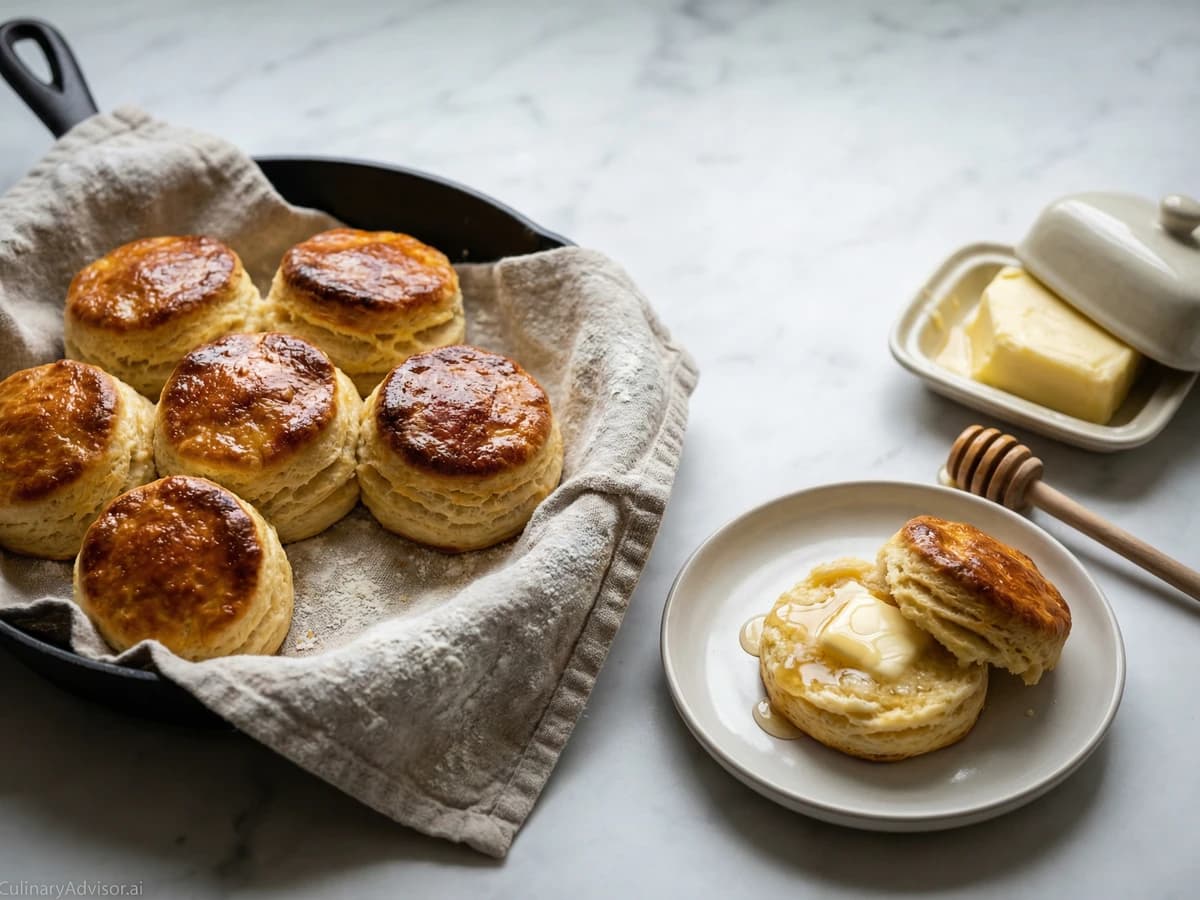
Towering golden biscuits with layers that shatter and pull apart in buttery sheets. The kind your grandmother made if she knew her way around a flour bin and a cold stick of butter.

Chef Dean
Golden-crusted cornbread baked in a screaming-hot cast iron skillet, ribboned with melting honey butter that pools into pockets of sweetness. The crust shatters. The crumb stays tender. This is the cornbread that makes people ask for seconds before finishing their first piece.
Chef Remy
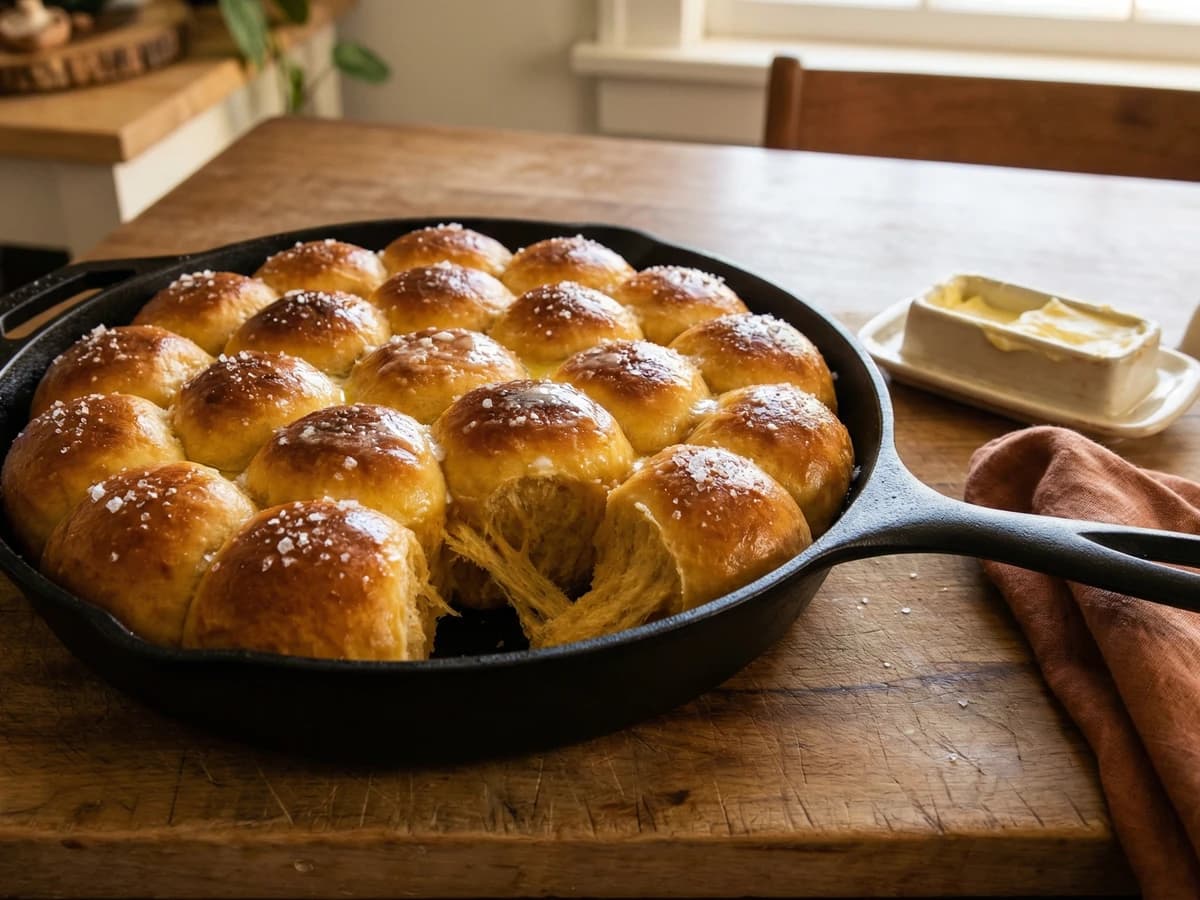
Pillowy, golden dinner rolls enriched with roasted Louisiana sweet potatoes and brushed with butter, the kind that disappear before the turkey gets carved and have guests asking for your grandmother's recipe.