
Chef Margarida
Açorda de Bacalhau
Two Portuguese icons meet in one humble bowl: the bread soup of Alentejo embracing flakes of salt cod. Peasant genius that proves scarcity breeds invention, that pão and bacalhau together can feed the soul.
A cooking platform built around craft, culture, and the stories behind what we eat.
Created by
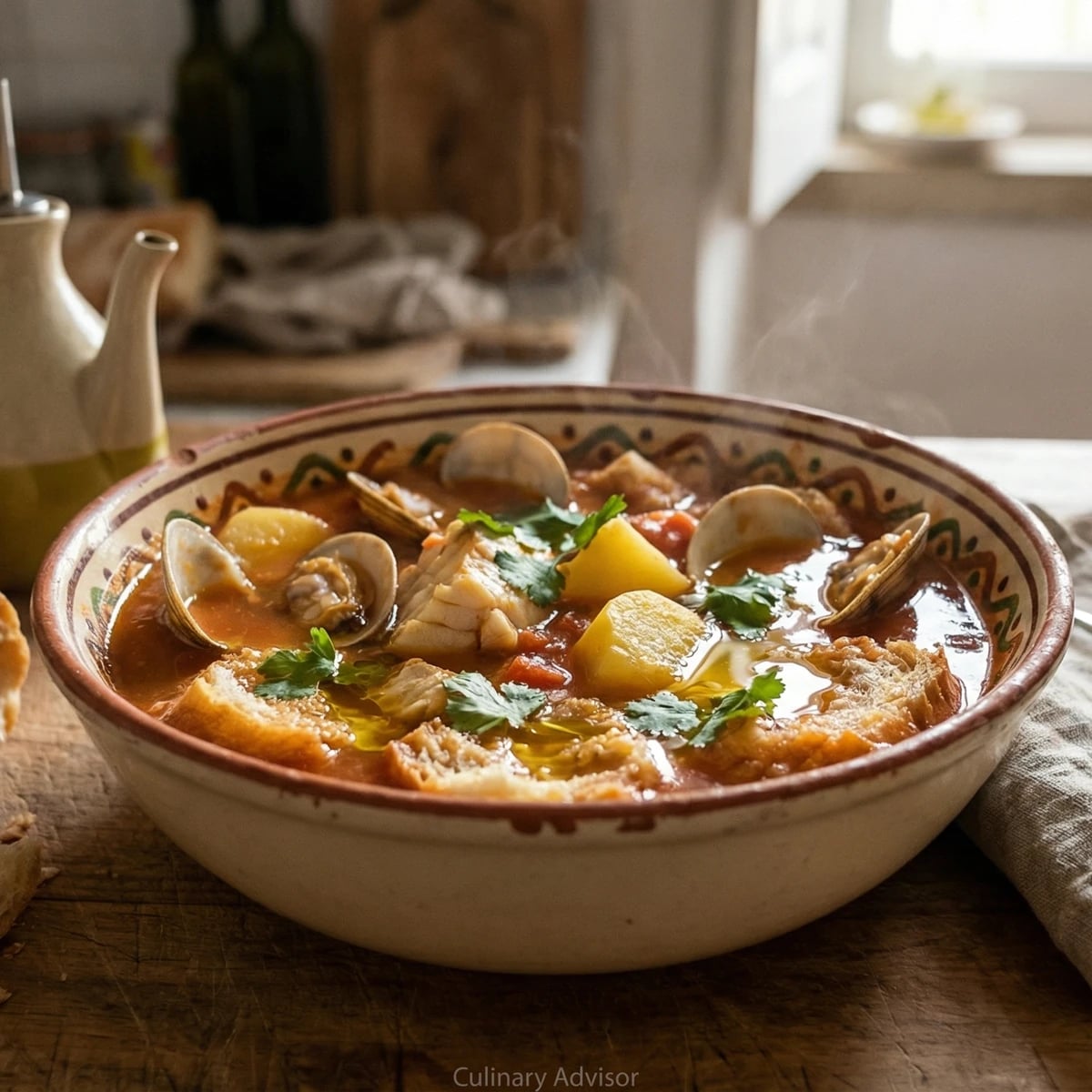
The fish soup of Portuguese coastal kitchens, where the morning catch meets the slow refogado and stale bread waits in the bowl to drink every drop of that golden broth.
This is what happens when fishermen come home and their wives make do with what the sea gave that day. No recipe, really. Just the refogado that starts everything, whatever fish was too battered to sell, some potatoes, and bread waiting in the bowl.
Avó Leonor didn't cook much fish (Alentejo is landlocked, after all), but when we'd visit cousins in Setúbal, their grandmother made this soup. I remember standing in her kitchen watching her build the refogado with the patience of someone who understood that this step was everything. Cebola, alho, tomate. Onion, garlic, tomato. Low heat. No rushing. The tomatoes had to collapse completely before she added water.
The fish goes in at the end. This is important. Overcooked fish turns to mush and disappears into the broth. You want pieces you can see, tender but holding their shape. And you want variety: a firm white fish for texture, something oilier for richness. The boats didn't bring one perfect fillet. They brought whatever they had.
The bread is not a side dish here. Tear it into chunks and put it in the bowl before you ladle the soup. The bread drinks the broth. That's the point. That's why day-old bread exists in Portuguese cooking: not because we were too poor for fresh bread, but because stale bread does things fresh bread cannot.
Sopa de peixe evolved in fishing villages along Portugal's coast, from the Algarve to Minho, as a way to use fish too damaged or small to sell at market. Each region developed its own version: the Algarve adds more tomato and coentros, the north uses less tomato and sometimes adds rice. The soup represents the Portuguese philosophy of waste nothing, flavor everything.
Quantity
1/3 cup
Quantity
2 medium
halved and sliced thin
Quantity
4 cloves
minced
Quantity
2
Quantity
1 teaspoon
Quantity
400g
peeled and chopped
Quantity
1.5 liters
Quantity
500g
peeled and cut into chunks
Quantity
800g
cut into large pieces
Quantity
200g
scrubbed
Quantity
1 large bunch
roughly chopped
Quantity
to taste
Quantity
to taste
freshly ground
Quantity
300g
torn into chunks
Quantity
for drizzling
| Ingredient | Quantity |
|---|---|
| extra virgin olive oil (azeite) | 1/3 cup |
| onionshalved and sliced thin | 2 medium |
| garlicminced | 4 cloves |
| bay leaves | 2 |
| sweet paprika (pimentão doce) | 1 teaspoon |
| ripe tomatoespeeled and chopped | 400g |
| fish stock or water | 1.5 liters |
| waxy potatoespeeled and cut into chunks | 500g |
| mixed firm white fishcut into large pieces | 800g |
| clams or mussels (optional)scrubbed | 200g |
| fresh cilantro (coentros)roughly chopped | 1 large bunch |
| fine sea salt | to taste |
| black pepperfreshly ground | to taste |
| day-old crusty breadtorn into chunks | 300g |
| extra virgin olive oil | for drizzling |
Heat the olive oil in a large heavy pot over medium-low heat. Add the onions and cook slowly, stirring occasionally, until they become completely soft and golden, about 15 minutes. The onions should practically melt. Add the garlic, bay leaves, and paprika. Stir for another minute until fragrant. This is the foundation of everything. Não tenhas pressa.
Add the chopped tomatoes to the pot. Increase heat slightly and cook, stirring often, until the tomatoes break down completely and the mixture becomes thick and jammy, about 10 minutes. The color will deepen to a rich brick red. You should be able to draw a wooden spoon across the bottom of the pot and see the trail before it fills in. That's when you know it's ready.
Pour in the fish stock or water. Add the potato chunks. Season with salt and pepper. Bring to a gentle boil, then reduce to a simmer. Cook until the potatoes are just tender when pierced with a knife, about 15 to 20 minutes. The broth should taste good on its own at this point. Taste it. Adjust the salt.
Nestle the fish pieces into the simmering broth, pushing them down gently so they're submerged. If using clams or mussels, add them now as well. Cover and cook until the fish is just opaque and flakes easily, about 8 to 10 minutes. The shellfish should open. Don't stir vigorously or you'll break the fish apart. Gentle is the word here.
Remove the pot from heat. Stir in most of the chopped coentros, reserving some for garnish. The residual heat will wilt the herbs just enough. Taste once more. Adjust seasoning if needed.
Divide the torn bread among deep bowls. Ladle the soup over the bread, making sure each bowl gets fish, potatoes, and plenty of broth. The bread will drink the liquid and soften but not dissolve. Scatter the remaining coentros on top. Drizzle generously with your best olive oil. Serve immediately with more bread on the side for those who want to mop up every last drop. They will.
1 serving (about 630g)
Culinary guides, cultural storytelling, and the editorial depth that makes cooking meaningful.
Discover Culinary Explorer
Chef Margarida
Two Portuguese icons meet in one humble bowl: the bread soup of Alentejo embracing flakes of salt cod. Peasant genius that proves scarcity breeds invention, that pão and bacalhau together can feed the soul.

Chef Margarida
The fishwives of Porto built this stew in layers, never stirring, letting the fish steam gently over potatoes and peppers. Whatever the market offered that morning became dinner by evening.

Chef Margarida
The soup that unites Portugal, from Minho in the north to Lisbon's June festivals. Just potatoes and couve sliced thin as breath, a ring of chouriço floating like a promise, proof that poverty breeds genius in the kitchen.

Chef Margarida
The soup that heals everything, from broken hearts to winter colds. Golden broth, falling-apart chicken, rice that drinks the goodness, and fresh mint because this is how Portuguese grandmothers have always done it.