Chef Juliette
Bouillabaisse à la Marseillaise
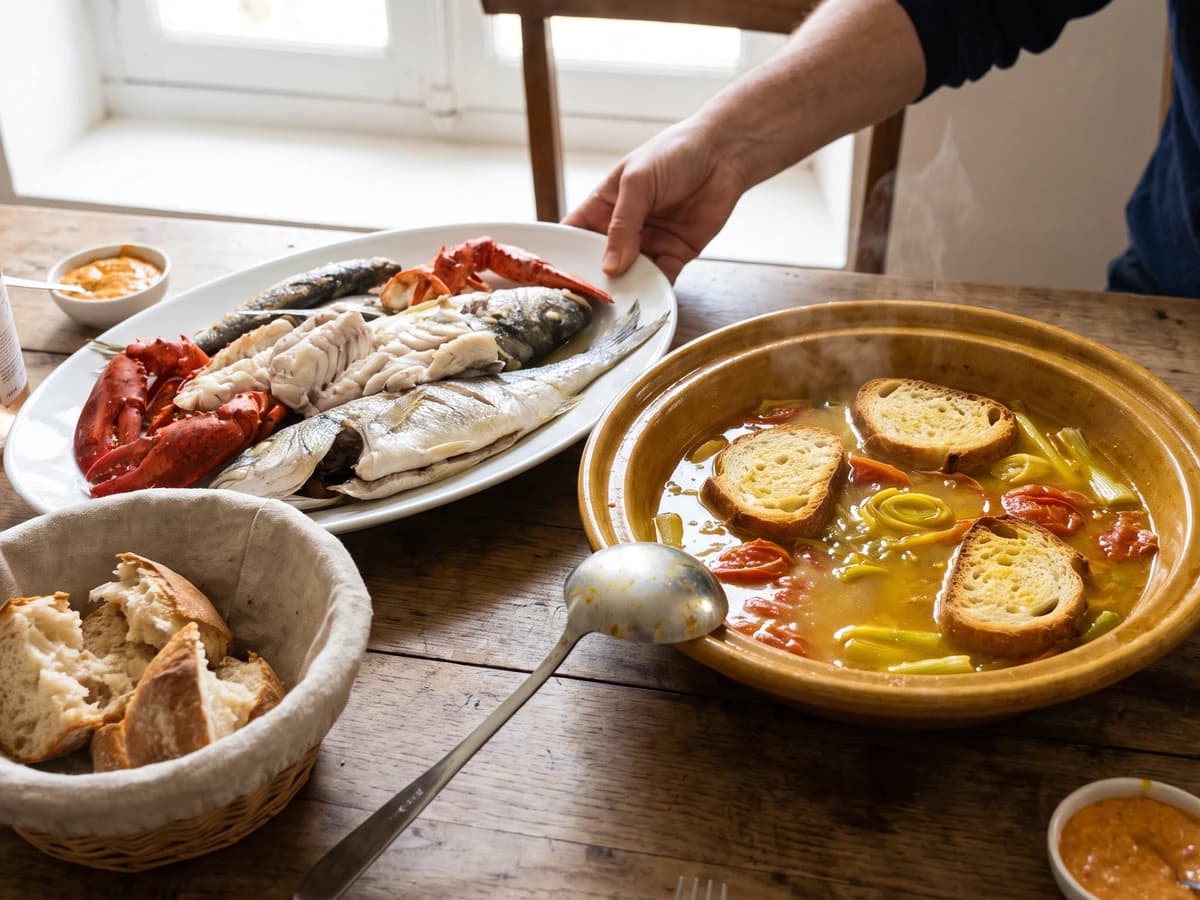
Marseille's great fish stew, saffron-gold and garlic-scented, proves that a hard boil can be the careful choice: it binds olive oil into broth before the whole pot meets bread.
A cooking platform built around craft, culture, and the stories behind what we eat.
Created by
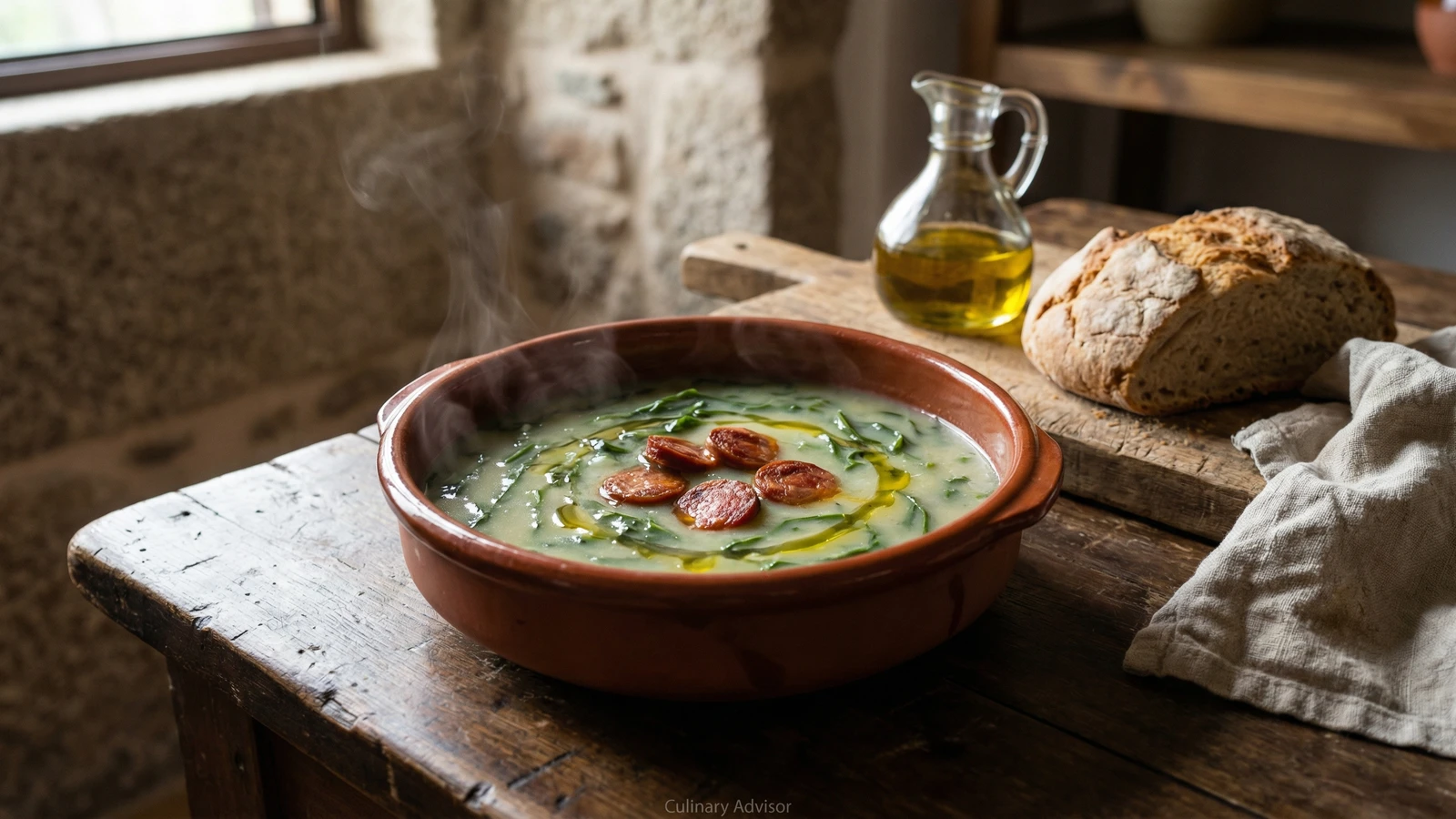
The soup that unites Portugal, from Minho in the north to Lisbon's June festivals. Just potatoes and couve sliced thin as breath, a ring of chouriço floating like a promise, proof that poverty breeds genius in the kitchen.
This is the soup that unites Portugal. From Minho in the north where it was born, to Lisbon's Santos Populares festivals, to my grandmother's kitchen in Alentejo. Every household makes it slightly differently, and every household is right.
The couve must be sliced thin. Thin as breath, thin as paper. Avó Leonor used to say if you could see through the strips, they were ready. Any thicker and you lose the delicacy, that way the greens melt into the potato broth but still hold their texture. She'd stack the leaves, roll them tight like a cigar, and run her knife through so fast I was afraid she'd lose a finger. She never did. Sixty years of making this soup, and she never did.
The chouriço is not optional. It's the soul of the soup. One ring per bowl, sliced at the table if you want to be traditional. The smoky fat melts into the broth and everything comes together. Some people cook the chouriço in the soup. Avó Leonor fried hers separately in a dry pan until the edges crisped and the fat rendered out. Both ways are right.
This isn't health food in the modern sense. This is survival food, nourishment food, the kind of cooking that kept people alive through winter. Pão, azeite, vinho, sempre. You eat this with broa on the side, olive oil drizzled on top, a glass of vinho verde. That's the complete meal. At Mesa da Avó, we serve it this way. Strangers become friends over bowls of caldo verde. As avós sabem.
Caldo verde originated in the Minho province of northern Portugal, where couve galega grows abundantly in the cool, wet climate. The soup dates back at least to the 15th century, making it one of Portugal's oldest surviving recipes. It spread nationally during the Santos Populares June festivals and is now considered the country's unofficial national dish.
Quantity
1 kg
peeled and cut into chunks
Quantity
1 large
chopped
Quantity
3 cloves
minced
Quantity
1/4 cup, plus more for serving
Quantity
2 liters
Quantity
250g
ribs removed, leaves rolled and sliced hair-thin
Quantity
200g
sliced into 1cm rounds
Quantity
to taste
Quantity
to taste
freshly ground
| Ingredient | Quantity |
|---|---|
| floury potatoespeeled and cut into chunks | 1 kg |
| onionchopped | 1 large |
| garlicminced | 3 cloves |
| extra virgin olive oil (azeite) | 1/4 cup, plus more for serving |
| water | 2 liters |
| couve galega or Portuguese kaleribs removed, leaves rolled and sliced hair-thin | 250g |
| chouriçosliced into 1cm rounds | 200g |
| fine sea salt | to taste |
| black pepperfreshly ground | to taste |
In a large heavy pot, warm the olive oil over medium heat. Add the onion and cook gently, stirring occasionally, until soft and translucent, about 8 minutes. Don't let it brown. You want sweetness here, not caramelization. Add the garlic in the last minute, stirring until fragrant.
Add the potato chunks and water to the pot. Season generously with salt. Bring to a boil, then reduce to a steady simmer. Cook until the potatoes are completely tender and falling apart, about 25 minutes. They should offer no resistance when pierced with a knife.
Using a potato masher or the back of a wooden spoon, crush the potatoes directly in the pot until you have a thick, slightly textured broth. Don't use a blender. You want some small pieces remaining, not a perfectly smooth purée. This rustic texture is part of what makes caldo verde what it is. Taste and adjust the salt.
While the potatoes cook, heat a small dry skillet over medium heat. Add the chouriço rounds and cook, turning once, until the edges crisp and the fat renders out, about 3 minutes per side. The kitchen should smell of smoke and paprika. Set aside.
Stack the kale leaves, roll them tightly into a cigar shape, and slice crosswise as thin as you possibly can. The strips should be almost translucent, fine as ribbons. This is the skill that separates good caldo verde from great. Take your time.
Bring the potato broth back to a simmer. Add the sliced couve and cook for just 3 to 5 minutes, until the greens are tender but still bright green and have some texture. Don't overcook them into army green mush. Remove from heat immediately.
Ladle the soup into deep bowls. Float a few rounds of chouriço on top of each serving. Drizzle generously with your best olive oil. The oil should pool golden on the surface. Finish with freshly ground pepper. Serve immediately with crusty broa or bread on the side for dipping.
1 serving (about 530g)
Culinary guides, cultural storytelling, and the editorial depth that makes cooking meaningful.
Discover Culinary ExplorerChef Juliette
Marseille's great fish stew, saffron-gold and garlic-scented, proves that a hard boil can be the careful choice: it binds olive oil into broth before the whole pot meets bread.
Chef Juliette
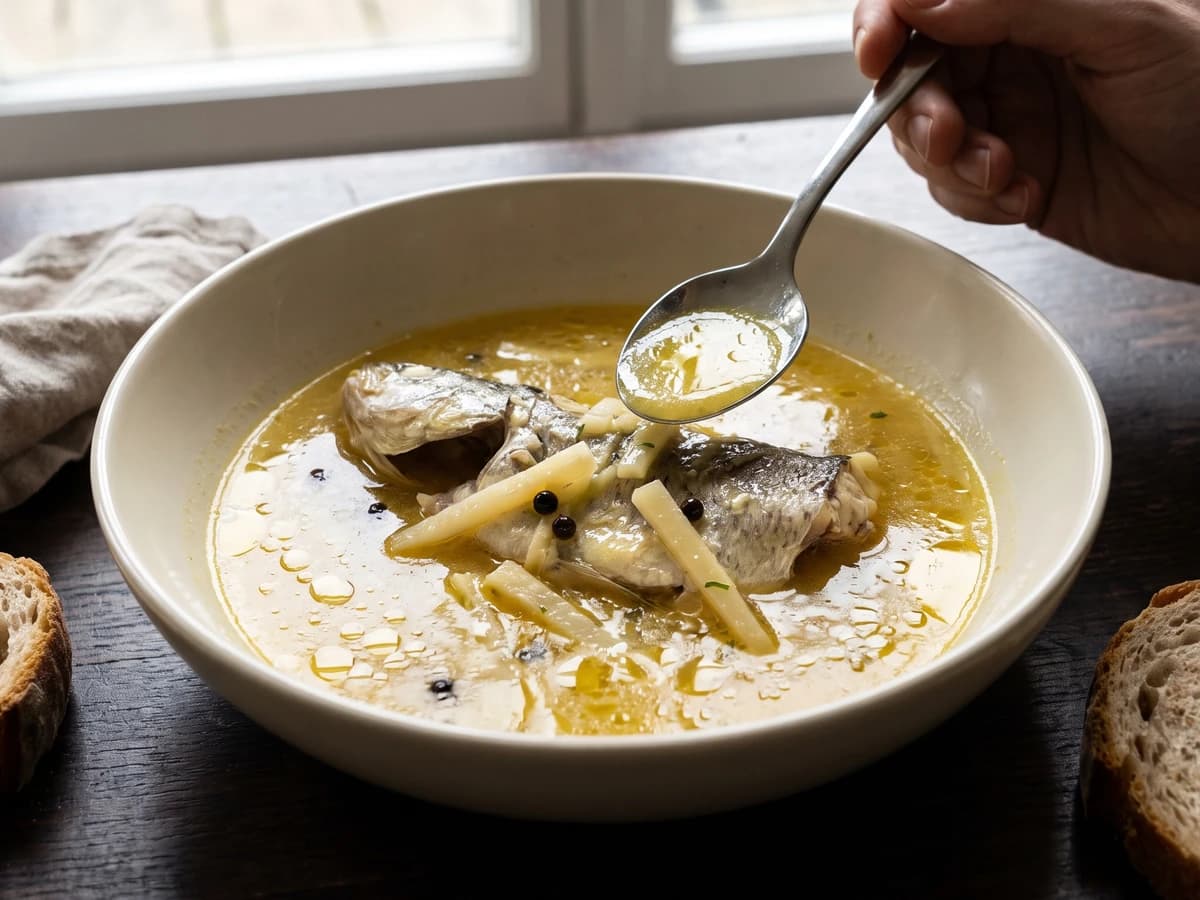
Waterzoi asks fresh, bone-in river fish to thicken its own buttery broth, with parsley root and pepper for company. No flour, no stockpot, just a brisk simmer watched closely.
Chef Juliette
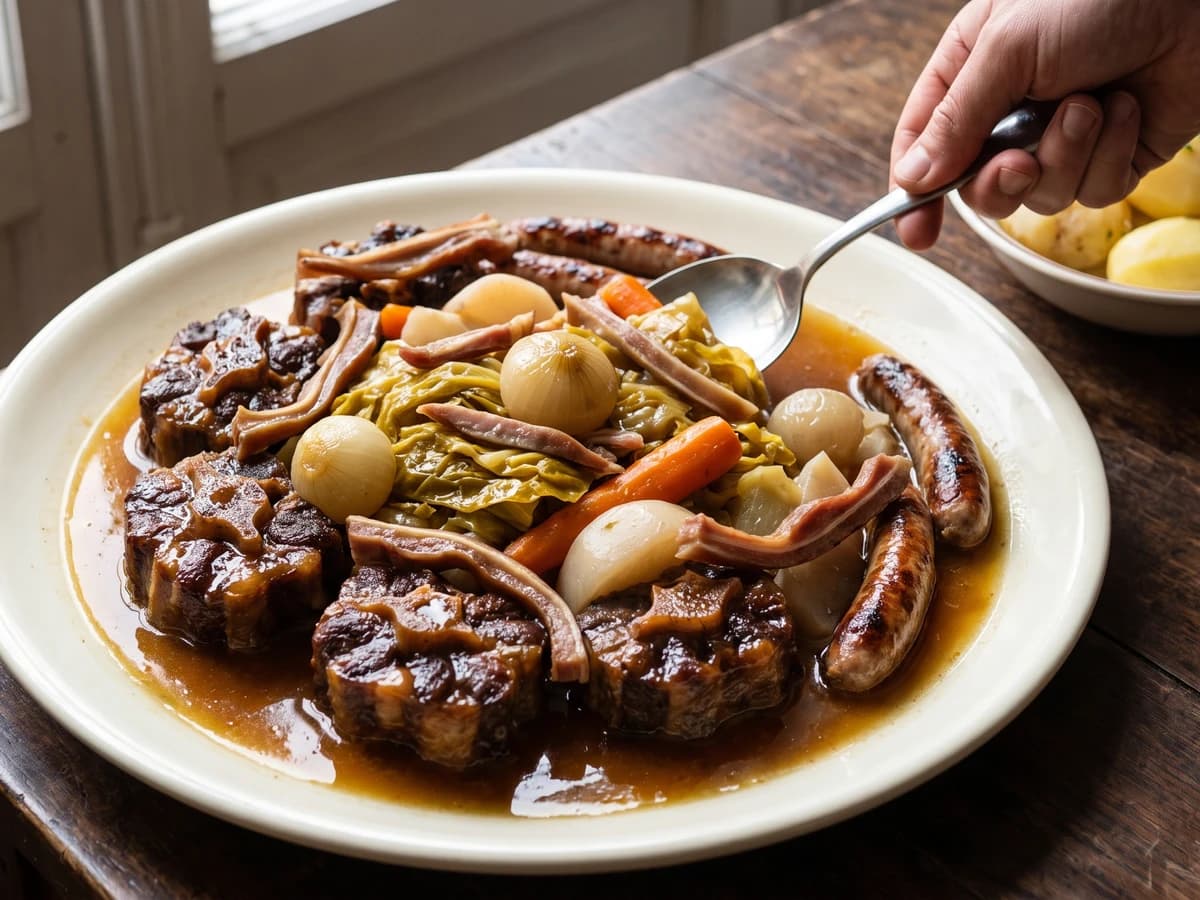
Queue de Bœuf en Hochepot gathers oxtail, pig's trotter and ear, cabbage, roots, and grilled chipolatas around a clear, gelatin-rich broth whose quiet simmer keeps every piece tender and distinct.
Chef Juliette
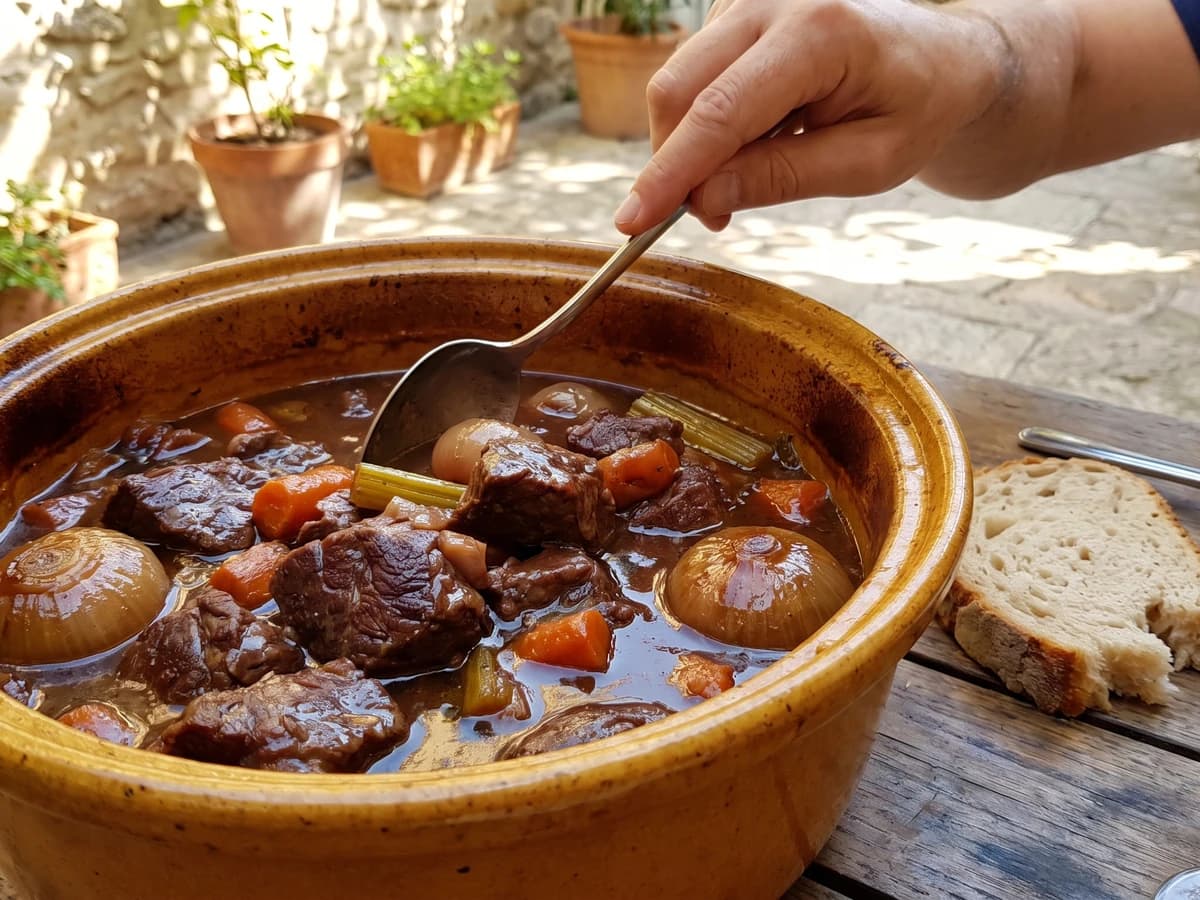
Beef shoulder larded with bacon, sharpened by red wine and vinegar, then sealed with garlic, vegetables, and dry lemon peel until the low oven turns it yielding and the gravy darkly glossy.